Key Points
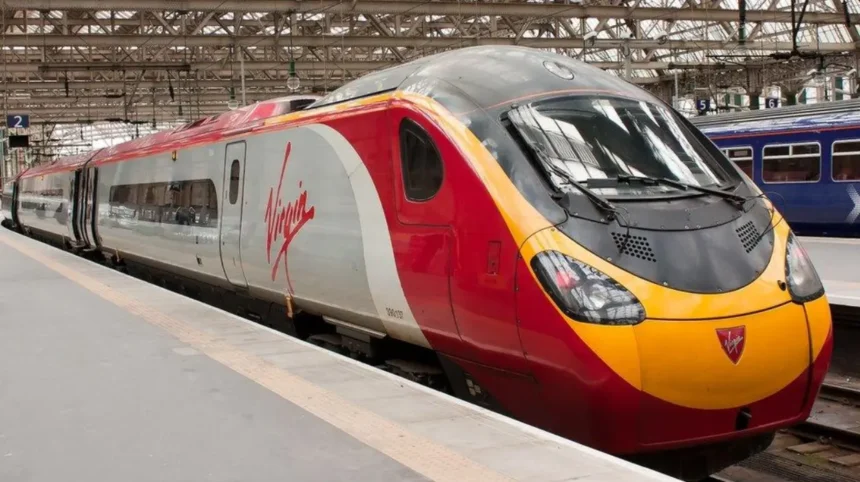
- Stratford International Station at East London is under consideration for being included into Virgin Group’s cross-Channel train routes from London to Paris.
- This idea is highly supported by Sir Stephen Timms, the Member of Parliament for East Ham, and he mentions the considerable commercial potential of the region.
- In addition, such an inclusion will become a great addition to the current terminal at St Pancras International Station, helping to ease passenger pressure and improve transport links within the region.
- The local MP stressed the point that East London became the developing commercial zone which makes it reasonable to provide a high-speed international railway station here.
- Integration of transport at Stratford Station may result in attracting investments into the region.
East London (East London Times) September 8, 2026 – Sir Richard Branson’s Virgin Group is to consider incorporating a station stop at Stratford International in East London for its planned cross-Channel passenger train services operating between the United Kingdom and France. The commercial venture, which aims to challenge the long-standing monopoly on direct passenger rail travel through the Channel Tunnel, is currently assessing regional infrastructure integration to maximize passenger capacity and operational efficiency. The move follows formal representations from senior regional political figures seeking to secure international rail access for the rapidly developing East London corridor.
- Key Points
- Why Is Virgin Group Considering a Stratford International Stop?
- How Could an International Rail Hub Benefit East London Regeneration?
- What Are the Operational and Logistics Implications for Cross-Channel Rail?
- What Is the Background to Cross-Channel Rail Infrastructure at Stratford?
- What Is the Prediction for How This Development Will Affect Passengers and Regional Businesses?
Why Is Virgin Group Considering a Stratford International Stop?
The decision to evaluate Stratford International as an active station call comes amidst strategic planning by Virgin Group to establish viable cross-Channel operations to mainland Europe. Under current proposals, the transport operator is examining potential route configurations that would allow passenger trains to call at East London prior to reaching or departing from the primary central terminal at St Pancras International.
Sir Stephen Timms, the Member of Parliament for East Ham, has actively pushed the case for international rail services to serve both Stratford International and St Pancras International hubs. Highlighting the changing demographic and commercial landscape of the capital, Timms stressed that the inclusion of Stratford International represents a compelling economic prospect for private rail operators.
As stated by the Member of Parliament for East Ham, Sir Stephen Timms:
“It’s a big and fast growing commercial opportunity.”
The proposal centres on leveraging existing high-speed rail infrastructure that runs directly through East London, where international platforms were originally built but have remained unused by cross-Channel passenger services since the line opened.
How Could an International Rail Hub Benefit East London Regeneration?
Regional policymakers argue that enabling passenger stops at Stratford International would act as a major catalyst for sustained economic investment across East London. Sir Stephen Timms noted that international connectivity directly supports local urban regeneration strategies, driving infrastructure development, commercial development, and job creation in surrounding boroughs.
The constituency of East Ham and the wider Stratford region have experienced significant economic growth and population increases over the past decade. The provision of direct international travel links to France and mainland Europe from Stratford would further integrate the area into broader European business networks, potentially attracting international commercial tenants, retail operators, and service industries to the location.
Furthermore, local transport advocates highlight that utilizing Stratford International would offer enhanced connectivity to local transport networks, including the Elizabeth Line, the London Underground, the Docklands Light Railway (DLR), and National Rail services. This multi-modal transit connectivity provides direct access to London’s financial districts in Canary Wharf and the City of London, as well as suburban communities across Essex and the South East.
What Are the Operational and Logistics Implications for Cross-Channel Rail?
Integrating Stratford International into cross-Channel itineraries introduces distinct operational considerations for border control, security, and train scheduling. Unlike standard domestic stations, international rail facilities processing cross-Channel passengers require dedicated UK Border Force and French Police Aux Frontières (PAF) passport control checkpoints, security screening equipment, and sterile departure lounges.
While Stratford International was constructed with spatial provision for international processing facilities along High Speed 1 (HS1), operationalising these platforms would require substantial capital investment in modern security technology, station staffing, and border control infrastructure.
From an operational standpoint, stopping high-speed trains at an additional station impacts overall journey times between London and European destinations such as Paris, Brussels, or Amsterdam. Transport planners must weigh the potential time penalty incurred by an additional station call against the commercial yield generated by tapping into the East London market.
Virgin Group’s ongoing exploratory process will assess whether passenger demand at Stratford offsets the operational complexity and infrastructure costs required to activate the international platforms, whilst maintaining competitive journey times against existing rail and air services.
What Is the Background to Cross-Channel Rail Infrastructure at Stratford?
Stratford International station was designed and constructed as part of the High Speed 1 (HS1) railway line project—formerly known as the Channel Tunnel Rail Link (CTRL)—which opened its second section in 2007 to connect the Channel Tunnel directly to St Pancras International. The station layout included provision for international platforms intended to serve regional cross-Channel trains that were originally envisioned to run to destinations north of London.
However, since the station’s opening, no international passenger trains have routinely stopped at Stratford International. Eurostar, the sole passenger operator through the Channel Tunnel since 1994, elected to consolidate all London operations at St Pancras International due to operational costs, border control staffing requirements, and train path scheduling efficiency. Consequently, Stratford International has exclusively served domestic high-speed services operated by Southeastern between St Pancras and various destinations in Kent.
In recent years, regulatory changes and open-access rail initiatives have encouraged new entrants to explore cross-Channel operations. Virgin Group is among several private consortiums and operators seeking to utilize spare capacity on HS1 and within the Channel Tunnel, prompting a re-evaluation of unused high-speed rail infrastructure throughout East London and Kent.
What Is the Prediction for How This Development Will Affect Passengers and Regional Businesses?
If Virgin Group successfully incorporates Stratford International into its operational network, the development is predicted to deliver measurable impacts across several key stakeholder groups:
- Passengers and Commuters: Travelers based in East London, Essex, and the wider Thames Gateway region would experience significantly reduced transit times to continental Europe by bypassing central London entirely. The availability of an alternative boarding location would also alleviate passenger congestion at St Pancras International during peak travel periods, offering a more streamlined travel experience.
- Local Businesses and Commercial Real Estate: The activation of direct international services would enhance East London’s status as a primary commercial center. Commercial developments around Stratford, including office complexes, retail centers, and hospitality venues, are likely to see increased valuation, foreign direct investment, and higher business tourism footprint due to direct continental rail access.
- The Regional Economy: Broader economic benefits are expected to extend into the local labor market, creating direct employment opportunities in rail operations, station management, border logistics, and customer service. Additionally, improved international visibility could accelerate planned regeneration projects in surrounding East London boroughs, supporting local government housing and infrastructure targets.
- Competitive Dynamics in Rail Transport: The introduction of a new operator offering alternative station stops would introduce market competition to cross-Channel travel, potentially influencing ticket pricing, service quality, and overall network capacity to the benefit of international consumers.