Key Points
- The V&A East Museum officially opened on Saturday, April 18, 2026, in the Queen Elizabeth Olympic Park, Stratford, east London.
- Once known as “London’s scrapyard,” Stratford has undergone significant regeneration since the 2012 Olympics, transforming from industrial decline to a cultural and business hub.
- The museum forms part of the East Bank cultural district, featuring galleries like “Why We Make” with over 500 objects, including works by designers Yinka Ilori, Molly Goddard, photographer Jamie Hawkesworth, and ceramicist Bisila Noha.
- The London 2012 Olympics spurred over £9 billion in investment, creating 46,000 jobs, 20,000 homes, improved rail capacity, new schools, GP clinics, and world-class sports facilities in Stratford.
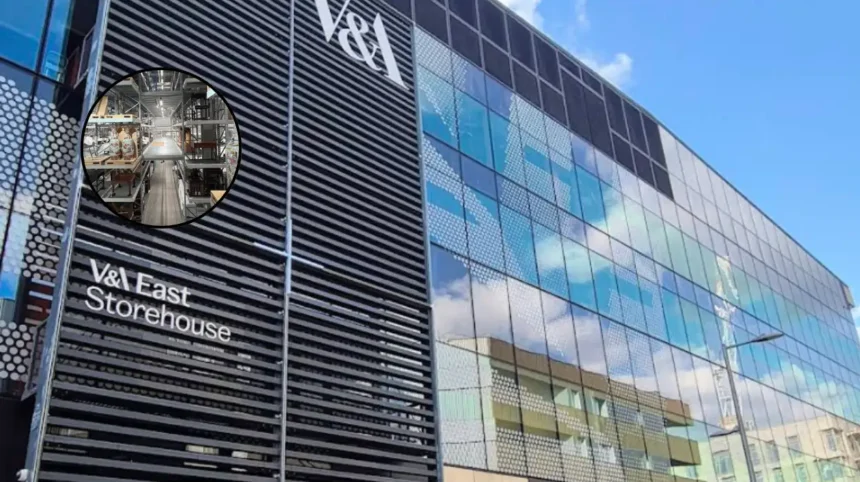
- The V&A East project, conceived in 2016 as part of Olympic legacy plans, includes the V&A East Storehouse (opened previously) and the new museum at 107 Carpenters Road, E20 2AR.
- Pre-Olympics, Stratford faced de-industrialisation after the 1960s London Docks closure, leading to job losses and abandoned land around the River Lea.
- Post-Games developments include the Queen Elizabeth Olympic Park, repurposed venues like the London Stadium, Aquatics Centre (capacity reduced from 17,500 to 3,500), and Lee Valley VeloPark.
Stratford (East London Times) April 18, 2026 –The V&A East Museum opened its doors on Saturday in Stratford’s Queen Elizabeth Olympic Park, representing a key milestone in east London’s ongoing regeneration sparked by the 2012 Olympics. Once dubbed “London’s scrapyard,” the area has evolved dramatically over the past 14 years, with the museum’s launch highlighting sustained cultural investment. Located at 107 Carpenters Road, the venue spotlights contemporary global culture through galleries, exhibitions, and events.
Why Did the 2012 Olympics Transform Stratford?
The bid for the 2012 London Olympics succeeded in part due to regeneration plans for Stratford in Newham, where the main venues were sited.
As reported by Internet Geography, development of the Olympic Park began in 2007 on land previously occupied by factories, businesses, and weeds around the River Lea, which was not empty but industrially degraded. Stratford hosted the athletes’ Olympic Village, London Stadium, London Aquatics Centre, and Lee Valley VeloPark, injecting over £9 billion into the Lower Lea Valley.
De-industrialisation in the late 20th century hit Stratford hard, with the 1960s closure of London Docks causing tens of thousands of job losses.
The Olympics promised prosperity, delivering 46,000 new jobs, a 30% rail capacity increase at Stratford station, over 20,000 homes, three new secondary schools, and 23 GP clinics. Post-Games, seven venues were removed or repurposed; for instance, the Aquatics Centre’s wings were dismantled to reduce capacity from 17,500 to 3,500 for community and elite use, while basketball arena materials were reused elsewhere.
What Is the Role of V&A East in This Regeneration?
The V&A East Museum, opening on April 18, 2026, builds on Olympic legacy plans conceived in 2016. As detailed by Time Out, it joins the V&A East Storehouse (opened last year with 250,000 objects and 350,000 books) and the Young V&A in Bethnal Green (revamped in 2023 for £13 million).
BBC News notes the museum as the latest addition to the East Bank cultural district in the Queen Elizabeth Olympic Park.
Permanent free galleries include “Why We Make,” displaying over 500 objects from the V&A collection plus new acquisitions by Yinka Ilori, Molly Goddard, Jamie Hawkesworth, and Bisila Noha.
The project aligns with broader East Bank developments, turning former Olympic sites into hubs for art, fashion, culture, and history. V&A’s official site confirms the spring 2026 opening, positioning it as a space for inspiration and fresh ideas.
How Has Stratford Changed Since 2012?
From severe economic decline, Stratford emerged as a tourism, retail, and business centre post-Olympics.
The Queen Elizabeth Olympic Park was named after the Games, providing lasting public access to facilities. Bloomberg highlights how prioritising economic regeneration over sport made Stratford, host to most Olympic events, almost unrecognisable today.
Infrastructure upgrades included expanded transport links, with Stratford station handling increased passenger flow. Residential and health developments addressed local needs, while sports venues like the London Stadium transitioned to multi-use.
The area’s shift from “scrapyard” status underscores long-term planning, with cultural anchors like V&A East sustaining momentum.
What Facilities and Events Does V&A East Offer?
V&A East combines the museum and Storehouse, offering a “radically different” museum experience as praised by TIME.
Galleries focus on people, ideas, and creativity shaping global culture. Visitors can plan trips to the E20 2AR address for exhibitions and events.
The venue’s decade-long development ties into Olympic promises of community benefit. Free entry to key galleries ensures accessibility, featuring diverse makers from fashion to ceramics. Integration with East Bank enhances Stratford’s appeal as a cultural destination.
Background of the Development
The regeneration traces to the 2005 Olympic bid, awarded at 12:49pm in Singapore, edging Paris due to Stratford’s potential. Pre-2012, the Lower Lea Valley was contaminated and underused, but Games planning cleared and redeveloped it starting 2007.
Over £9 billion transformed the site into Queen Elizabeth Olympic Park, with legacy goals for housing, jobs, education, health, and leisure. Cultural extensions like V&A East, planned from 2016, extend this vision, complementing earlier Storehouse and Young V&A openings. Sustainability featured prominently, with venue repurposing minimising waste.
Prediction for East London Residents
This development can provide East London residents, particularly in Newham and surrounding boroughs, with enhanced cultural access through free galleries and events at V&A East. Improved local facilities may support tourism-related jobs, building on the 46,000 created post-Olympics.
Integration into Queen Elizabeth Olympic Park could boost community engagement with arts, potentially increasing footfall at nearby venues and aiding economic stability in areas like Stratford. Residents may benefit from sustained infrastructure like transport upgrades, fostering long-term vibrancy without displacing existing communities.