Tower Hamlets is one of East London’s most varied sightseeing areas, combining the Tower of London, Tower Bridge, historic markets, museums, canals, parks, Docklands and modern Canary Wharf. Its attractions work well as connected walking and public-transport routes rather than isolated visits.
- What makes Tower Hamlets an important destination for touring East London?
- Which historic landmarks should visitors include in a Tower Hamlets tour?
- How can visitors explore Tower Hamlets markets and East End shopping areas?
- Which museums and cultural attractions are worth visiting in Tower Hamlets?
- Which parks and green spaces should visitors see in Tower Hamlets?
- How can visitors tour Canary Wharf and the modern Docklands?
- What waterways and riverside areas can visitors explore?
- What is a practical one-day Tower Hamlets sightseeing route?
- How should visitors plan transport around Tower Hamlets?
- How can visitors combine Tower Hamlets attractions into themed tours?
- Why does Tower Hamlets remain important for East London tourism?
What makes Tower Hamlets an important destination for touring East London?
Tower Hamlets brings together major London landmarks, historic East End streets, museums, markets, parks, waterways and Docklands within one borough. Its compact transport network makes it practical to combine heritage, culture, food, nature and modern architecture in one sightseeing itinerary.
The London Borough of Tower Hamlets occupies a strategic part of East London beside the River Thames. The borough includes districts such as Whitechapel, Spitalfields, Bethnal Green, Stepney, Wapping, Limehouse, Poplar, Bow and the Isle of Dogs.
Its southern edge follows the River Thames, while the central and northern areas contain historic neighbourhoods, canals, parks and market streets. The council describes Tower Hamlets as the heart of London’s East End, with archaeological evidence extending back thousands of years.
The borough also contains internationally recognised heritage. The Tower of London is a UNESCO World Heritage Site, inscribed in 1988, while Tower Bridge provides a major Victorian engineering attraction beside the Thames.
This combination gives visitors several distinct sightseeing themes. A heritage route can focus on the Tower of London and Tower Bridge. A market route can cover Brick Lane, Spitalfields and Petticoat Lane. A green route can use Victoria Park, Mile End Park and the canal network. A modern route can concentrate on Canary Wharf and the Isle of Dogs.
The borough therefore works particularly well for visitors who want to see different sides of London without travelling across the entire capital between every attraction.
Which historic landmarks should visitors include in a Tower Hamlets tour?
The Tower of London and Tower Bridge form the essential historic landmark pairing, while Wapping, St Katharine Docks, Limehouse and historic East End streets provide additional context. Together they show Tower Hamlets as a centre of royal, maritime, industrial and urban history.
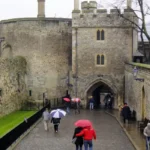
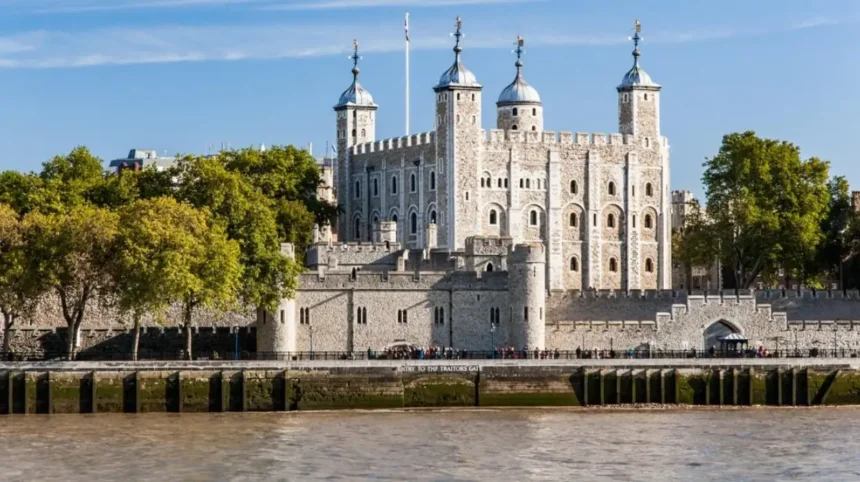
The Tower of London is the most significant historic attraction in the borough. The fortress developed from the Norman conquest and the White Tower was constructed under William the Conqueror. Historic England identifies the site as a World Heritage Site and describes the White Tower as an important example of Norman military architecture.
The Tower also served several functions across its long history. It operated as a royal residence, fortress, prison, execution site, armoury and royal institution. Historic Royal Palaces states that it has welcomed visitors as a tourist attraction since the eighteenth century.
Tower Bridge stands immediately downstream and provides a second major attraction. Completed in 1894, it is a combined bascule and suspension bridge. Its visitor attraction includes the North and South Towers, high-level walkways, glass floors and Victorian Engine Rooms.
Visitors can therefore build a practical riverside route around the two landmarks. Starting near Tower Hill provides direct access to the Tower of London before continuing towards Tower Bridge and the Thames riverside.
Wapping adds another historical layer. The district contains former docks, warehouses, riverside streets and surviving maritime architecture. The area connects the royal and commercial history around the Tower with the working port that later expanded eastwards.
St Katharine Docks sits beside the Tower and provides another waterside environment. Limehouse further east introduces historic canals and former dockland landscapes.
As you explore these modern attractions, you are crossing land with a deep heritage. Read about the full to understand its origins.
How can visitors explore Tower Hamlets markets and East End shopping areas?
Tower Hamlets markets provide a practical way to experience East London’s commercial and cultural identity. Brick Lane, Columbia Road, Petticoat Lane, Roman Road and Whitechapel offer distinct environments for food, flowers, clothing, antiques, crafts and everyday shopping.
Markets are a major part of the visitor experience in Tower Hamlets. The council lists ten street markets, including Brick Lane, Bethnal Green Road, Chrisp Street, Columbia Road, Petticoat Lane, Roman Road, Roman Road Square, Sclater Street, Watney Market and Whitechapel Market.
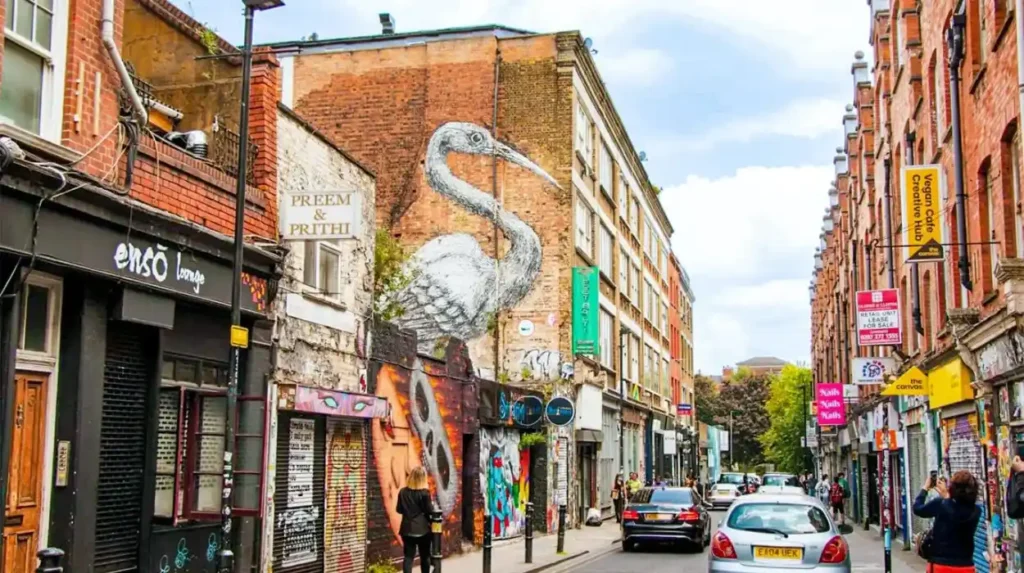
Brick Lane is particularly important for visitors exploring the East End. The council records the market as established in 1888 and describes its association with fashion, food, art, flea-market stalls, jewellery and retro clothing. The street also has a strong connection with the Bangladeshi community and earlier Huguenot and Jewish settlement.
Columbia Road offers a different market experience. Its identity centres on flowers and plants, making it particularly suited to visitors interested in gardens, photography and East London street life.
Petticoat Lane, associated with the historic commercial area around Middlesex Street and Wentworth Street, provides another traditional market environment. Whitechapel Market extends the shopping experience towards the eastern edge of the City.
Roman Road offers a different neighbourhood character. The market sits within Bow and connects commercial activity with residential East End streets.
A practical market itinerary works best when visitors check operating days before travelling. Market schedules vary, and individual stalls operate independently. Sunday is particularly significant for Brick Lane and Columbia Road, while other markets have different trading patterns.
Markets also provide useful food stops. Visitors can combine breakfast or lunch with sightseeing rather than treating food as a separate journey.
Which museums and cultural attractions are worth visiting in Tower Hamlets?
London Museum Docklands provides the clearest introduction to the borough’s port history, while smaller museums and cultural institutions explore education, immigration, medicine, social history, art and East London community life through more specialised collections and experiences.
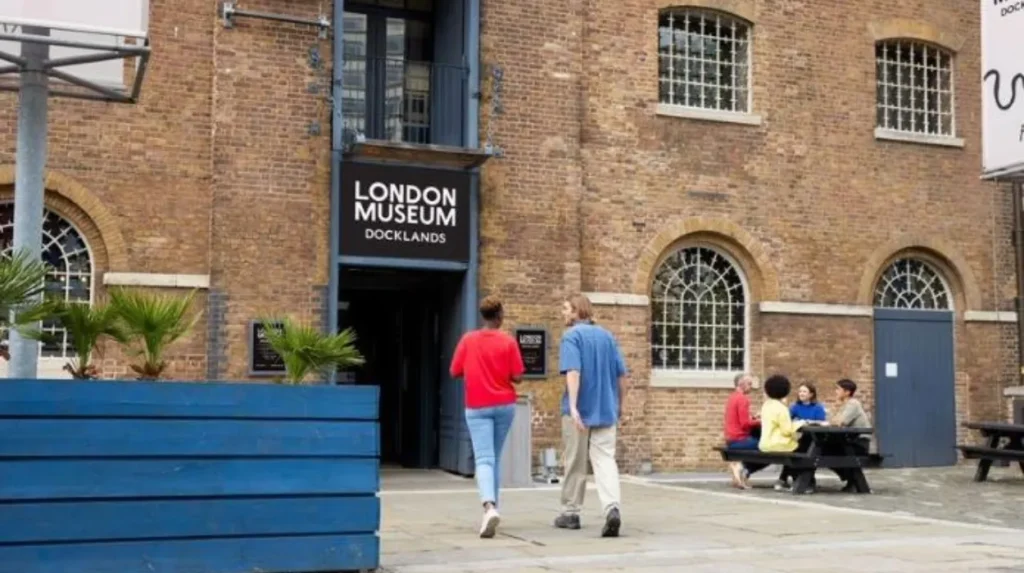
London Museum Docklands is one of the strongest cultural stops for understanding the area. Located at West India Quay, the museum occupies a historic warehouse and presents around 400 years of London Docklands history. Entry is currently free.
The museum explains how the River Thames, docks, international trade and port industries shaped London. This makes it particularly useful after visiting Canary Wharf because modern financial architecture stands directly within the landscape of former docks.
The museum is also practical for itinerary planning. It is served by Canary Wharf and West India Quay stations and currently lists opening hours of 10am to 5pm from Monday to Sunday.
The Ragged School Museum provides another perspective on East London. It occupies a former Victorian school site and interprets the history of education and working-class life.
The Royal London Hospital Museum explores the history of healthcare in the East End. Its collections provide a different way to understand social change in the area.
Dennis Severs’ House in Spitalfields offers a specialised historic-house experience based around the imagined domestic world of a Huguenot silk-weaving household.
Cultural touring therefore works best when visitors choose museums according to their interests rather than attempting to enter every institution in one day.
The borough’s heritage is protected through a substantial planning framework. Tower Hamlets currently identifies 58 conservation areas, where buildings, land and trees receive specific protection because of architectural or historic interest.
Which parks and green spaces should visitors see in Tower Hamlets?
Victoria Park is the borough’s largest major park and receives more than nine million visits annually. Mile End Park, Tower Hamlets Cemetery Park, Mudchute Park and Farm and smaller gardens provide additional green spaces for walking, wildlife, recreation and quieter sightseeing.
Tower Hamlets has more than 120 parks and green spaces, ranging from major public parks to smaller gardens and squares. Fourteen parks currently hold Green Flag Awards, according to the council.
Victoria Park is the central green attraction. It opened in 1845 and covers about 86 hectares. The council identifies it as London’s oldest public park and states that it receives more than nine million visitors each year.
The park contains lakes, mature trees, historic features, sports facilities, cafés, playgrounds and open lawns. It also forms part of a wider green corridor connecting areas around the Regent’s Canal, Mile End Park and the Queen Elizabeth Olympic Park.
Mile End Park provides a more linear green-space experience. It contains the Art Pavilion, Ecology Park, sports facilities and routes linking different parts of the borough.
Tower Hamlets Cemetery Park provides a contrasting environment. The former cemetery dates from the nineteenth century and now functions as a wooded open space and local nature reserve.
Mudchute Park and Farm is another distinctive destination on the Isle of Dogs. It combines open space with a working city farm environment.
The council identifies several Tower Hamlets green spaces as Sites of Importance for Nature Conservation. These include the River Thames and Bow Creek, London’s canals, Mudchute Park and Farm, Mile End Park, Victoria Park, East India Dock Basin and Tower Hamlets Cemetery Park.
These locations allow visitors to add nature to an itinerary dominated by buildings and streets.
How can visitors tour Canary Wharf and the modern Docklands?
Canary Wharf provides a concentrated modern East London experience built around former docks, high-rise architecture, waterside public spaces, shopping, dining, art and transport connections. It works particularly well as a separate afternoon or evening section of a Tower Hamlets itinerary.
Canary Wharf occupies the former West India Docks area on the Isle of Dogs. The district combines commercial towers with public squares, gardens, waterside routes, restaurants, retail spaces and cultural programming.
Visit London describes Canary Wharf as a district where modern architecture is combined with repurposed warehouses and former dockland landscapes. Its current visitor offer includes waterside dining, public gardens, outdoor art and cultural experiences.
The public realm is important for visitors. Canary Wharf’s own visitor material describes interconnected districts that can be explored on foot, with parks, gardens, docks and boardwalks integrated into the neighbourhood.
Crossrail Place Roof Garden is a particularly useful stop because it combines architecture, planting and transport infrastructure in one location.
The district also contains a substantial public art programme. Outdoor artworks and temporary cultural events provide sightseeing options beyond conventional museums.
Canary Wharf is also useful for digital nomads and business travellers. Cafés, restaurants, public spaces and transport links create several practical locations for a short break between appointments.
The area has strong transport connections. Canary Wharf is served by the Jubilee line, DLR and Elizabeth line, as well as buses and Santander Cycles.
This makes Canary Wharf an effective final stop after touring central and northern parts of Tower Hamlets.
What waterways and riverside areas can visitors explore?
Tower Hamlets has an extensive network of rivers, docks and canals that connect historic neighbourhoods with modern developments. The Thames, Limehouse Basin, Regent’s Canal, Limehouse Cut and dock basins provide routes for walking and waterside sightseeing.
The River Thames defines the southern edge of Tower Hamlets and provides some of the borough’s most recognisable views.
The Tower Bridge area offers views towards the Tower of London, the City of London and the river. Further east, the riverside becomes increasingly associated with former docks and modern residential development.
Limehouse Basin connects the Regent’s Canal with the River Thames. It provides a useful transition between canal-side walking and riverside sightseeing.
The council identifies London’s canals as metropolitan Sites of Importance for Nature Conservation, including Regent’s Canal, Limehouse Cut, Limehouse Basin and the Hertford Union Canal.
The Hertford Union Canal also provides a connection between Victoria Park and the wider canal network. This creates practical walking opportunities for visitors who want to move between green spaces without remaining on main roads.
The Isle of Dogs contains another network of docks. West India Docks, Millwall Dock and Millwall Park show how industrial waterfronts have been transformed into mixed-use urban environments.
Waterside routes are also useful for photography. The contrast between historic warehouses, modern towers, bridges, boats and open water provides varied visual environments within a relatively small area.
What is a practical one-day Tower Hamlets sightseeing route?
A practical one-day route starts around the Tower of London and Tower Bridge, continues through Wapping or Spitalfields, reaches Brick Lane or another market area, and finishes at London Museum Docklands or Canary Wharf, depending on opening times and interests.
The most efficient itinerary groups attractions geographically instead of crossing the borough repeatedly.
Begin in the western part of Tower Hamlets around Tower Hill. Visit the Tower of London first because it is one of the borough’s largest individual attractions and requires dedicated sightseeing time.
Continue towards Tower Bridge. The official visitor attraction is open daily from 9.30am to 6pm, with last entry at 5pm, although visitors should check current opening information before travelling.
After Tower Bridge, continue east towards Wapping or north-east towards Spitalfields. The choice depends on whether the priority is riverside heritage or markets and food.
A Spitalfields route can include Brick Lane, historic streets and cultural attractions before continuing towards Whitechapel.
For a museum-focused itinerary, London Museum Docklands provides a strong afternoon destination. It explains the Docklands history that connects many of the places visited earlier.
For a modern architecture route, continue towards Canary Wharf instead. The district offers public art, gardens, restaurants, retail and waterside spaces.
Victoria Park is better suited to an itinerary focused on open space. It is large enough to require substantial walking, so it should not be added as a brief detour to an already packed historic itinerary.
How should visitors plan transport around Tower Hamlets?
Public transport is the most practical way to connect Tower Hamlets attractions. The Underground, DLR, Elizabeth line, London Overground, buses, walking and river services provide multiple connections, while journey planning should account for station access and temporary service changes.
Tower Hamlets benefits from several major transport corridors.
Canary Wharf has Jubilee line, DLR and Elizabeth line connections. This makes it one of the borough’s most useful interchange points for visitors travelling between central London, Stratford, East London and the wider Elizabeth line network.
Whitechapel provides connections with the District and Hammersmith & City lines, London Overground and Elizabeth line.
Walking remains important because many attractions are geographically close even when their stations are different. The Tower of London and Tower Bridge, for example, form a natural walking pair.
The DLR is particularly useful for Docklands sightseeing. Stations around Canary Wharf and the Isle of Dogs provide access to the commercial and waterside areas.
Visitors should use live Transport for London information on the day of travel. Station accessibility, engineering works, weekend closures and event-related diversions change over time.
Accessibility planning is also important. Transport for London publishes step-free information for Underground, DLR, Overground and Elizabeth line stations.
A practical sightseeing plan therefore uses attraction opening times first, then builds transport connections around those fixed commitments.
Explore More Area Guide
Tower Hamlets London Guide: Attractions, Markets and Experiences
Best Places to Discover Tower Hamlets Culture in London
How can visitors combine Tower Hamlets attractions into themed tours?
Themed touring makes Tower Hamlets easier to explore because attractions naturally group around heritage, markets, parks, waterways, Docklands and modern architecture. Each theme supports a focused route without requiring visitors to cross the borough unnecessarily.
A heritage route can connect the Tower of London, Tower Bridge, Wapping and St Katharine Docks.
A market and food route can combine Spitalfields, Brick Lane, Petticoat Lane and Whitechapel.
A green route can connect Victoria Park, the Regent’s Canal, Mile End Park and selected smaller green spaces.
A museum route can centre on London Museum Docklands and continue to specialised institutions such as the Ragged School Museum or Royal London Hospital Museum.
A Docklands route can focus on Limehouse Basin, West India Docks, Canary Wharf and the Isle of Dogs.
A family-oriented route can incorporate Victoria Park, Stepney City Farm and suitable museum activities. Stepney City Farm covers three acres, offers access to farm animals and runs educational activities. The farm is free to visit and currently opens Tuesday to Sunday.
A business traveller route can focus on Canary Wharf, London Museum Docklands and nearby waterside spaces because these locations combine sightseeing with strong transport connections.
These routes do not need to remain rigid. Visitors can select one major attraction, one cultural stop, one food area and one outdoor location to create a balanced day.
Why does Tower Hamlets remain important for East London tourism?
Tower Hamlets remains important because its historic landscapes and modern districts continue to evolve together. Protected heritage, regenerated docks, major transport links, public parks, cultural institutions and markets give the borough long-term relevance for East London visitors.
The borough’s future visitor appeal depends on both preservation and change.
Tower Hamlets currently has 58 conservation areas, while its heritage framework also covers listed buildings, locally listed assets, registered parks and gardens, archaeological sites and World Heritage interests.
The Tower of London remains internationally significant. Tower Bridge continues to operate as both infrastructure and visitor attraction. Former docklands now support offices, homes, cultural venues, restaurants and public spaces.
Canary Wharf demonstrates this transformation particularly clearly. The district combines financial activity with parks, gardens, art, retail, leisure and waterside environments.
Green infrastructure is also becoming increasingly important. Victoria Park, Mile End Park, canals, nature sites and smaller gardens provide ecological and recreational value within a densely developed part of London.
This gives Tower Hamlets a broad tourism structure rather than a single attraction. Visitors can experience medieval royal history, Victorian engineering, industrial docklands, migration history, contemporary finance, street markets and urban nature within the same borough.
For travellers planning East London sightseeing, that range makes route planning more valuable than simply collecting individual attractions. Grouping nearby places reduces travel time and creates a clearer understanding of how Tower Hamlets developed from historic East End communities and working docks into one of London’s most diverse urban districts
What is Tower Hamlets known for?
Tower Hamlets is known for the Tower of London, Tower Bridge, Brick Lane, Spitalfields Market, Victoria Park, London Museum Docklands, Canary Wharf and its historic East End neighbourhoods.