Key Points
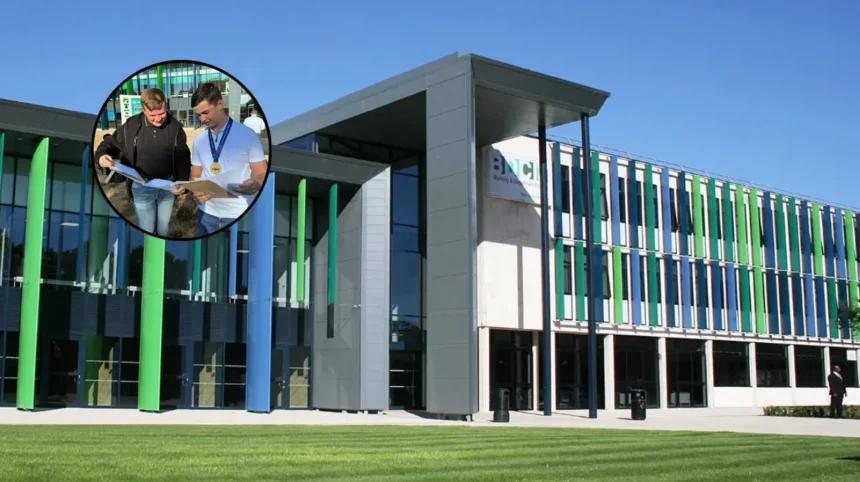
- Barking & Dagenham College saw a 100% pass rate in all T Level qualifications in the 2025/26 academic year.
- T Levels denote a two-year technical course equivalent to three A Levels with 80% theory and 20% work experience with an employer for 45 days.
- More than 200 employers have worked with the institution on developing the curriculum to resolve a lack of skills in the technical field.
- Engineering T Level student Harvey McLaughlin earned himself a Merit grade after winning a Gold medal in Additive Manufacturing at the WorldSkills UK Finals.
- The vocational courses lead to career opportunities and entry into university and higher apprenticeship programmes.
Dagenham (East London Times) September 16, 2026 – Every student enrolled in T Level programmes at Barking & Dagenham College successfully completed their technical qualifications during the 2025/26 academic year, marking a 100% pass rate for the institution. The outcome highlights the performance of post-16 candidates undertaking two-year technical qualifications designed as direct equivalents to three traditional A Levels.
What Are T Levels and How Are They Structured at Barking & Dagenham College?
T Levels function as two-year technical education pathways tailored for students who have completed their General Certificate of Secondary Education (GCSE) examinations. The curriculum split requires learners to devote approximately 80% of their timetabled study to developing practical skills and theoretical knowledge within a college environment. The remaining 20% comprises an industry placement with an employer, covering at least 45 days (315 hours) of real-world workplace experience.
The qualification structure was developed in partnership with more than 200 businesses and industrial employers to align technical training with regional and national workforce demands. Alongside sector-specific competencies, candidates undertake training in foundational digital capabilities, core mathematics, English language, and broader workplace standards required for entry-level professional roles. Successful completion grants entry pathways into full-time industry roles, higher-level apprenticeships, or undergraduate courses at universities.
Who Is Harvey McLaughlin and What Did He Achieve?
Among the cohort securing their results was Engineering T Level student Harvey McLaughlin, who earned a Merit grade in his final assessment. Prior to receiving his qualification results alongside his father in August, McLaughlin established himself in national technical skills competitions by earning a Gold medal at the WorldSkills UK Finals in Additive Manufacturing, competing against young engineering talent from across the country.
Reflecting on his academic journey upon receiving his results, Harvey McLaughlin stated:
“I’m really happy. T Levels are hard work but that hard work has paid off. This will help me with my engineering apprenticeship.”
McLaughlin plans to leverage his academic Merit and national competition award to advance into a specialized engineering apprenticeship.
Background of the T Level Qualifications Framework
The Department for Education introduced T Levels in England in September 2020 as part of a structural overhaul of technical post-16 education. Intended to streamline a complex landscape of vocational awards, T Levels were established following recommendations from the 2016 Sainsbury Review, which highlighted a need for clear technical pathways matching the rigour of academic A Levels.
Developed in direct collaboration with industrial panels, each T Level covers structural units designed by employers in sectors including engineering, manufacturing, construction, health, and digital technology. The 45-day industry placement requirement distinguishes T Levels from traditional vocational diplomas, ensuring students participate directly in commercial operations before completing their studies.
Explore More Barking and Dagenham News
Entire London Borough Could Face Parking Restrictions: Barking and Dagenham 2026
Barking and Dagenham College Celebrates Outstanding BTEC T-Level Results 2026
Future Outlook: How This Development Affects Students, Employers, and Further Education
The 100% pass rate achieved by Barking & Dagenham College offers distinct implications across key stakeholder groups in the region:
- For Prospective Students and School Leavers: The total pass rate validates technical education as a viable, rigorous alternative to traditional A Levels. As local employment sectors demand proven practical skills, secondary school graduates gain confidence that choosing technical pathways can yield strong progression outcomes into degree programmes or paid higher apprenticeships.
- For Local Employers and Industry Partners: The consistent delivery of fully qualified T Level graduates provides local businesses with a reliable talent pipeline. Employers participating in the 45-day placement schemes can reduce recruitment costs and shape candidates to fill specific technical skill shortages within East London’s expanding industrial and engineering sectors.
- For Further Education Colleges and Policy Makers: Perfect pass rates across technical cohorts strengthen the government’s position on technical education reform. These results serve as a benchmark for further education institutions expanding their T Level provisions, demonstrating that structured industry involvement effectively supports student attainment and retention.