Key Points
- Call for Reversal: Hackney Council has formally requested Transport for London (TfL) to abandon proposed alterations and reductions to six key bus routes serving the borough: the 42, 67, 106, 149, 253, and 254.
- Political Context: The intervention follows public criticism three weeks prior from the local Labour opposition, which had accused the borough’s Green Party administration of failing to challenge the strategic transport body over service reductions.
- Impacted Communities: Municipal leaders warn that cumulative network alterations will disproportionately impact low-income families, female commuters, and global majority communities across East London.
- Route 254 Withdrawal Concerns: Particular concern centers on the proposed withdrawal of route 254, which would leave route 106 as the sole direct bus service operating on key sections between Whitechapel and Hackney.
- Counter-Proposal: Hackney Council has advocated for converting route 254 into an express “Superloop” corridor rather than axing the service entirely.
- TfL Consultation: Transport for London maintains that restructuring is essential to address surplus capacity and changing travel habits, with public feedback collection concluding on Sunday, 20 September.
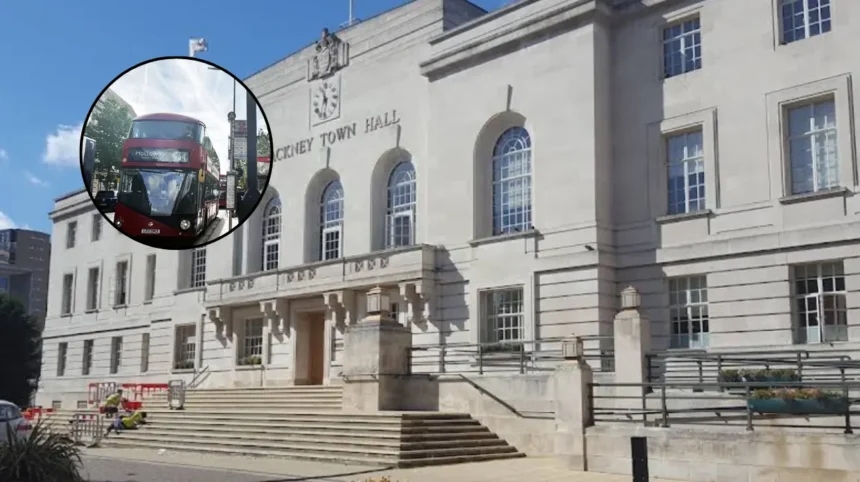
Hackney (East London Times) September 17, 2026 — Hackney Council has urged Transport for London to abandon proposed changes to six bus routes serving the borough, three weeks after Labour accused the Green administration of failing to speak out over the cuts.
- Key Points
- Why is Hackney Council Opposing the Proposed TfL Bus Route Reductions?
- What Specific Changes is Transport for London Proposing Across the Six Routes?
- What Alternative Solutions Has Hackney Council Put Forward to TfL?
- Background of the Bus Network Restructuring
- Prediction: How This Development May Affect Passengers and Local Commuters
The local authority has formally submitted its response to Transport for London (TfL), requesting the passenger transport executive rethink plans affecting bus routes 42, 67, 106, 149, 253, and 254. Town Hall representatives expressed severe concern that the cumulative impact of repeated service adjustments over recent years represents a structural decline in the quality and frequency of East London’s public transit network.
Why is Hackney Council Opposing the Proposed TfL Bus Route Reductions?
The council’s formal stance follows intense political debate within the borough. As reported by Noah Vickers of the Evening Standard, opposition Labour group leader Councillor Anntoinette Bramble had previously criticized the local administration’s handling of the proposals, noting that in peak periods, services including the 254, 253, and 106 operate at high capacity. Bramble stated:
“In a borough like ours, with people struggling with the cost of living, a reduction in the bus service will hit people who rely on the bus network for work and other use”.
In its official response, Hackney Council emphasized that public transport reductions hit vulnerable demographics hardest. Municipal officers highlighted that low-income households, women, and global majority residents represent the highest proportion of regular bus users in the borough, making them particularly vulnerable to increased interchange delays and reduced frequencies.
The administration’s primary concern surrounds the full withdrawal of route 254, which currently operates between Holloway, Nag’s Head, and Aldgate. Under TfL’s proposal, route 106 would be extended to Aldgate to cover parts of the lost service. However, the council argues this leaves route 106 as the only direct service along crucial corridors connecting Whitechapel to Hackney, removing direct links between Finsbury Park and areas south of Hackney Central.
As reported by local democracy reporters, Councillor Jacob Cable, Cabinet Member for Climate, Clean Air, Energy and Transport, reiterated the borough’s commitment to mass transit infrastructure. Cable stated:
“We are calling on TfL to protect our vital bus network from further cuts. This council is pushing for a reliable, high-quality bus network that supports the borough’s growth and ensures people can get around easily and affordably”.
Cable added that the borough has already introduced bus gates in Church Street, Stoke Newington, and Amhurst Road, maintaining London’s highest coverage of dedicated bus lanes to facilitate efficient transit flow.
What Specific Changes is Transport for London Proposing Across the Six Routes?
Transport for London’s broader consultation scheme involves major modifications across multiple arterial corridors serving Hackney, Haringey, Islington, and Tower Hamlets:
- Route 254: Complete withdrawal of the route between Holloway Nag’s Head and Aldgate Bus Station.
- Route 106: Restructuring and extending the route from Finsbury Park to Aldgate via Clapton and Hackney Central, intended to absorb the southern portion of the current 254 path. Frequency would increase from every 10 minutes to every 8 minutes during daytime hours.
- Route 253: Retaining its geographic corridor between Holloway and Hackney Central, with daytime frequencies increased from every 8 minutes to every 6 minutes to compensate for the loss of route 254.
- Route 42: Restructuring to terminate south of Tower Bridge, severing historical direct north-south connections between Shoreditch and South London.
- Routes 67 and 149: Withdrawal of route 67, combined with a structural re-routing of route 149 towards Wood Green, altering direct links between London Bridge, Edmonton Green, and Stamford Hill.
As reported by the Local Democracy Reporting Service, TfL transport planners maintain that overall bus demand across inner London has dropped by roughly 25 percent since 2015 due to shifting work patterns. A TfL spokesperson noted that the changes are designed to align overall capacity with post-pandemic passenger numbers while reducing surplus bus operations along overlapping corridors.
What Alternative Solutions Has Hackney Council Put Forward to TfL?
Rather than accepting the complete termination of route 254, Hackney Council has submitted a counter-proposal urging TfL to convert the line into inner London’s first “Superloop” express bus route. Under this proposal, route 254 would operate as a faster service with limited stops, providing orbital connectivity between East and North London town centers while relieving pressure on standard local stopping routes.
The local authority contends that strategic investment in express infrastructure would boost bus usage, support economic development, and align with regional air quality targets far more effectively than reducing total service mileage.
Background of the Bus Network Restructuring
The dispute over Hackney’s bus network is part of a broader ongoing financial and operational restructuring across London’s surface transport system. Following the global pandemic, changing working arrangements and decreased patronage in inner-city zones severely affected TfL’s revenue streams. Under funding agreements established between Central Government and City Hall, TfL was mandated to achieve operational self-sufficiency, leading to network review strategies aimed at efficiency and removing redundant parallel services.
Over the past three years, inner London has seen multiple routes curtailed, merged, or withdrawn. Corridors like the 253 and 254—which run virtually parallel for large stretches between North and East London—were flagged by transport analysts as exhibiting excess passenger capacity. While TfL has introduced initiatives such as the “Hopper Fare,” allowing unlimited bus transfers within one hour for a single fare, local residents and community advocacy groups have consistently voiced concern over the physical disruption, extra journey time, and accessibility barriers created by requiring passengers to change buses mid-journey.
In Hackney, where car ownership rates are among the lowest in Greater London and reliance on public transport is exceptionally high, public buses serve as a fundamental pillar of daily transport infrastructure. The political debate between the borough’s governing Green Party administration and the Labour opposition group highlights the heightened sensitivity surrounding local bus services in East London.
Prediction: How This Development May Affect Passengers and Local Commuters
If Transport for London proceeds with the proposed service adjustments in full following the close of the consultation on 20 September, the immediate impact will be felt most acutely by daily bus passengers traveling between North East London, Hackney Central, and the City margin.
- Impact on Low-Income and Vulnerable Commuters: Approximately 2,430 daily journeys currently made on route 254 will require a physical interchange. Although the Hopper Fare mitigates additional financial cost, requiring passengers to change vehicles—particularly at busy hubs like Clapton or Hackney Central—introduces physical obstacles for elderly residents, disabled passengers, and parents travelling with young children or pushchairs.
- Increased Bus Crowding: While TfL plans to increase run frequencies on routes 106 and 253, removing an entire route line (the 254) from shared corridors risks heightened onboard crowding during morning and evening rush hours. Passengers boarding at intermediate stops along Cambridge Heath Road and Stamford Hill may face full buses during peak travel times.
- Longer Journey Times: The loss of direct north-south transit options via route 42 across Tower Bridge and the re-routing of route 149 will add cumulative travel time for commuters traveling into South London and the Square Mile.
- Policy and Network Implications: Should Hackney Council’s Superloop counter-proposal gain traction, it could set a strategic precedent for how TfL manages bus corridors in inner London, shifting the focus from service cuts to high-speed, limited-stop express connectivity. Conversely, if the current plans are adopted, local advocacy groups are likely to intensify pressure on municipal leaders and City Hall for mitigations along high-volume corridors.