Key Points
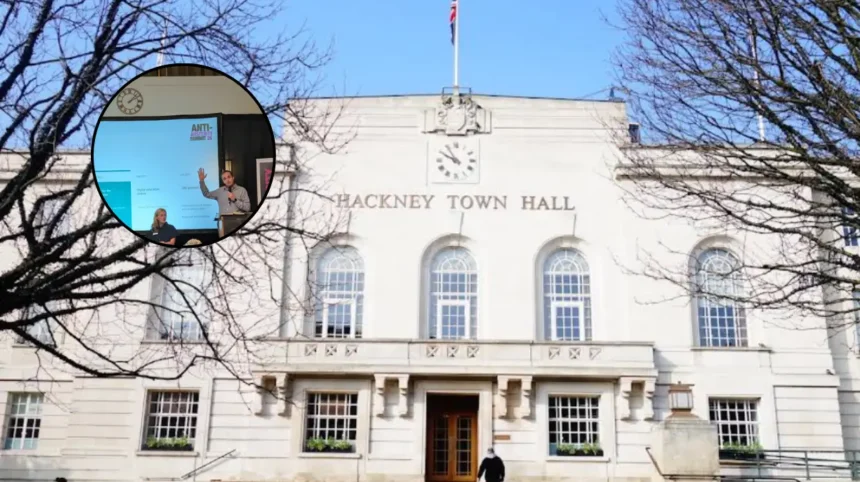
- Around 200 participants, predominantly councillors, trade unionists, and Green Party members, gathered for the Green-run Hackney Council’s daytime anti-austerity summit.
- A primary point of debate focused on whether local authorities should refuse to set cuts budgets in spring 2027 and instead adopt “no-cuts” or “social needs” budgets.
- Zoë Garbett, Mayor of Hackney, explicitly stated that her administration would not risk government commissioner intervention, establishing a clear boundary on how far the council is willing to challenge central government.
- Attendees agreed on five principal campaign demands, which include restoring pre-2010 local government funding levels, cancelling local authority debt, funding council homes, reforming council tax, and systematically ending privatisation.
- Immediate campaign proposals were set out, including supporting a trade union anti-austerity protest on 27 October, a demonstration against Palantir, and initiating plans for local anti-cuts committees.
- Strategic differences emerged among participants regarding the balance between demanding central government funding versus seeking expanded local tax-raising powers, as well as the reliance on Modern Monetary Theory arguments.
Hackney (East London Times) September 21, 2026 – Around 200 attendees—comprising primarily local councillors, trade union representatives, and Green Party members—gathered at the Green-run Hackney Council’s “anti-austerity summit” on Wednesday daytime to debate the future of municipal resistance against budget reductions. The assembly aimed to formulate a strategy to resist ongoing financial pressures facing local authorities across the United Kingdom. However, despite reaching consensus on a broad platform of policy demands, the summit highlighted deep strategic divisions regarding how local government should confront central government funding limits.
- Key Points
- How Were the Five Principal Demands Formulated and Agreed Upon?
- What Are the Immediate Action Plans and Campaign Steps?
- Can “No-Cuts” Budgets Work Without External Mass Mobilisation?
- How Does the Current Anti-Austerity Movement Differ From 2010?
- Should Councils Demand Central Cash or Local Tax Powers?
- Background
- Prediction
The core dilemma confronting delegates was whether local councils, particularly those controlled or influenced by the Green Party, should actively refuse to pass legally mandated cuts budgets in the spring of 2027. Proponents suggested adopting “no-cuts” or “social needs” budgets instead. Yet, the feasibility of this strategy was immediately constrained by key leadership. Zoë Garbett, the Mayor of Hackney, made it clear that her administration would not take steps that could result in central government appointing commissioners to run the borough. Mayor Garbett’s stance effectively signaled a limit on the extent to which Hackney Council is prepared to engage in direct constitutional or legal conflict with Westminster, raising questions among participants about whether a critical mass of councils could ever be mobilized to resist simultaneously.
How Were the Five Principal Demands Formulated and Agreed Upon?
The summit eventually established five core campaign asks through a consensus-building process, though observers noted the procedure was heavily influenced by the executive leadership’s support for specific floor proposals. Attendees successfully intervened to amend the initial text, sharpening a general demand for “social housing” into an explicit call for council housing, and upgrading a request for pay “improvements” to demand a full restoration of lost wages for public sector workers. An attempt from the floor to adopt a more aggressive stance against council tax was less successful.
The final platform approved by the delegates consists of five distinct structural demands:
- Restoration of Government Funding: A demand to restore and replace Local Government Financial Settlements to at least pre-2010 levels, providing guaranteed funding for both statutory and non-statutory services based primarily on local community need.
- Cancellation of Local Authority Debt: The complete wiping of historical municipal debt to break the cycle of local councils scrambling for financial stability, allowing them to redirect resources directly to residents.
- Capital Funding for Council Homes: A commitment to provide direct capital funding to build high-quality, sustainable council housing annually, alongside ending the Right to Buy scheme and moving away from developer-led housing models.
- Fairer Local Wealth Taxation: A comprehensive reform of the council tax system, introducing new mechanism to ensure wealthy property and land owners contribute a significantly higher share of local revenues.
- Strengthening Public Services: Systematically ending public sector outsourcing and privatisation through national regulations, expanding council powers, introducing four-day working week models, and restoring public sector pay and workplace conditions.
What Are the Immediate Action Plans and Campaign Steps?
While the five demands established a broad policy wishlist, delegates faced challenges in determining exactly how these goals would be operationalised into a sustained national campaign. Several immediate proposals were brought forward for participant support:
- Supporting an anti-austerity demonstration organised by local Hackney trade unions on the eve of the national Budget on 27 October.
- Mobilising support for a targeted protest against technology firm Palantir.
- Organising a follow-up, expanded anti-austerity summit later in the year.
- Working towards the coordination of a major national demonstration in early 2027.
- Establishing local anti-cuts structures involving supportive councillors, trade union branches, trades councils, and community groups.
Although the eve-of-Budget demonstration received endorsement, several attendees expressed skepticism about whether a protest occurring so close to the Chancellor’s announcement could meaningfully alter cabinet decision-making. The long-term proposals for a second summit and a 2027 national demonstration remained formally unresolved as the session concluded.
Can “No-Cuts” Budgets Work Without External Mass Mobilisation?
A central point of debate involved the practical mechanics of refusing to set balanced budgets. A number of Green Party councillors, notably representatives from Haringey, expressed a desire to refuse to implement cuts budgets in spring 2027, provided that a collective group of local authorities could be organised to act in unison. One attending councillor explicitly warned that Green-led administrations must avoid becoming “Labour 2.0” by repeating the historical role of Labour councils in administering central government austerity measures.
However, discussions failed to produce a clear roadmap for handling the legal and administrative consequences if central government responds to budget defiance by imposing financial restrictions or sending in external commissioners. Critics highlighted that unless councils build power outside council chambers, refusing to pass a budget risks becoming a purely symbolic act.
Representing the Socialist Party, speakers proposed holding a dedicated follow-up conference before February, bringing together trade union executives, rank-and-file members, and councils committed to passing no-cuts budgets. In their contribution to the debate, Socialist Party representatives presented the adoption of no-cuts budgets as a central pillar of resistance. Conversely, representatives aligning with the publication Workers’ Liberty argued that while passing alternative budgets is important, the mechanical focus on the vote itself is insufficient. They contended that councils should strategically utilise financial reserves and existing assets to buy time, delaying service reductions while actively building a coordinated campaign with local unions, tenants, and community groups to force funding concessions from central government.
Addressing this strategy, several councillors pointed out that years of reduced funding have left many local authorities with depleted reserves, making a cushion strategy financially impossible for the hardest-hit boroughs.
How Does the Current Anti-Austerity Movement Differ From 2010?
Michael Chessum, a cabinet member in the London Borough of Lambeth, introduced the summit’s campaigning session with an evaluation of the previous decade’s anti-austerity movement. Chessum argued that the current political landscape should not be viewed as a simple continuation of the 2010s anti-cuts movement.
According to Chessum, while today’s movement lacks some of the spontaneous strengths of the earlier era—such as the widespread student protests of 2010—it benefits from a form of political representation that was largely absent 15 years ago: local council administrations that are at least nominally willing to challenge austerity policies.
Furthermore, discussion touched upon the role of organised labour. With local government unions not currently engaged in national pay strikes, preparing the broader labor movement for a direct confrontation over municipal cuts requires extensive groundwork. However, participants noted that recent successful local industrial disputes and upcoming legislative shifts regarding trade union balloting provide a favorable backdrop for local anti-cuts organizing.
Should Councils Demand Central Cash or Local Tax Powers?
A major policy tension left unresolved at the summit was whether campaigns should prioritize demanding increased central government grants or advocating for expanded local revenue-raising powers.
Proponents of local tax reform highlighted that the existing, regressive municipal finance system restricts local authorities from meeting pressing social needs. However, delegates cautioned that relying primarily on local revenue collection would disproportionately disadvantage impoverished areas. Deprived boroughs with lower property values would be forced to tax local residents far more aggressively to generate the same revenue as wealthier areas, despite facing significantly higher demand for social services.
Consequently, several participants argued that the campaign must emphasize national wealth redistribution—taxing corporations and high earners—rather than relying on local council tax adjustments that risk squeezing low-income residents.
This debate intersected with an economic presentation delivered by Labour Councillor Simon Ripton, who advocated for Modern Monetary Theory (MMT). Councillor Ripton argued that it is an error to evaluate state finances like a household budget, emphasizing that currency-issuing national governments face fundamentally different financial mechanics than individuals.
However, other attendees pointed out limitations in relying solely on MMT arguments. Critics noted that focusing exclusively on state money creation can obscure fundamental questions regarding the real-world distribution of wealth and ownership. For example, Councillor Ripton’s assertion that “government debt is our wealth” was met with nuance, as UK government bonds are predominantly held by commercial financial institutions and high-net-worth households rather than distributed equally across the public. Similarly, Councillor Ripton’s description of educational cuts as representing “millions of hours of productive labour lost” was seen by some as overly focused on economic metrics, rather than addressing the direct human and social harm inflicted on children and local communities.
Moving forward, political groups such as Workers’ Liberty supporters announced intentions to participate in local follow-up initiatives, aiming to build local campaign groups into broad, trade-union-backed anti-cuts committees.
Background
The Hackney Council “anti-austerity summit” comes after more than a decade of severe financial pressure on UK local government. Following the 2008 global financial crisis, successive UK coalition and Conservative-led governments introduced substantial reductions to central government grants provided to local authorities under the Local Government Finance Settlement. Between 2010 and 2020, core central funding for UK councils fell by an estimated 40% in real terms, forcing municipalities to rely increasingly on locally raised council tax, business rates, and commercial investments.
This structural shift left local authorities vulnerable to broader economic shocks. While councils hold statutory duties to provide essential services—such as adult social care, children’s services, and emergency housing—the cost of delivering these services has escalated due to demographic changes, inflation, and rising homelessness. To balance their books as legally required under the Local Government Finance Act 1992, numerous local authorities across the country have issued Section 114 notices (effectively declaring municipal insolvency), resulting in mandatory service cuts, asset sales, and above-inflation council tax hikes imposed by central-government-appointed commissioners.
The Green Party’s rise in local government leadership, such as in Hackney and Haringey, has shifted the debate on local resistance. Historically, in the 1980s, several Labour-led municipal councils engaged in “rate-capping” battles against central government, refusing to set budgets to protest spending limits imposed by Westminster. The debate in Hackney over “no-cuts” budgets in spring 2027 represents a resurgence of these historical municipal tactics, adapted to contemporary statutory and financial frameworks.
Prediction
The strategic tensions displayed at the Hackney summit indicate that the upcoming 2027 municipal budget cycle will mark a critical juncture for local public services, council employees, and borough residents:
- Impact on Local Residents and Service Users: If councils like Hackney choose pragmatic compliance over budget defiance to avoid government commissioners, residents will likely face further incremental service reductions, fee increases, and elevated council tax rates. Conversely, if a coalition of councils follows through on passing “no-cuts” or “social needs” budgets without securing additional central funding, central government intervention remains highly likely. In that scenario, appointed commissioners typically enact sharper, immediate expenditure reductions, prioritizing debt repayment over community programs.
- Impact on Public Sector Workers and Trade Unions: With local government unions currently seeking long-term strategies, rank-and-file workers face continued pressure from workplace restructuring, wage stagnation, and increased workloads. The establishment of local anti-cuts committees could offer union branches a structured platform to coordinate actions with local communities. However, without national strike mandates or coordinated multi-council resistance, local industrial actions may remain isolated to specific employer disputes rather than reversing broader municipal budget reductions.
- Impact on Local Political Coalitions: The political divide between pragmatic administration (as articulated by Mayor Zoë Garbett) and ideological resistance (advocated by Green and left-wing councillors from Haringey and local socialist groups) is likely to strain local government coalitions. If no national “critical mass” of councils joins the resistance by spring 2027, left-wing and Green municipal leaders will face growing criticism from their activist bases for administering cuts, potentially leading to further political fragmentation ahead of local elections.