Key Points
- Tower Hamlets Council reported that over 40,000 visitors attended the Brick Lane Curry Festival on Sunday 20 September 2026.
- Attendance figures, though provided directly by local authorities and not independently audited, mark the largest edition since the festival’s return.
- Event bookings more than doubled compared to 2025, whilst the total number of market stalls tripled across the venue.
- The one-day event featured a cultural procession, live performances by British-Bangladeshi artists, family workshops, and dedicated food discounts.
- Organisers aimed to support local independent curry houses, traders, and cultural heritage across Banglatown and the wider East End.
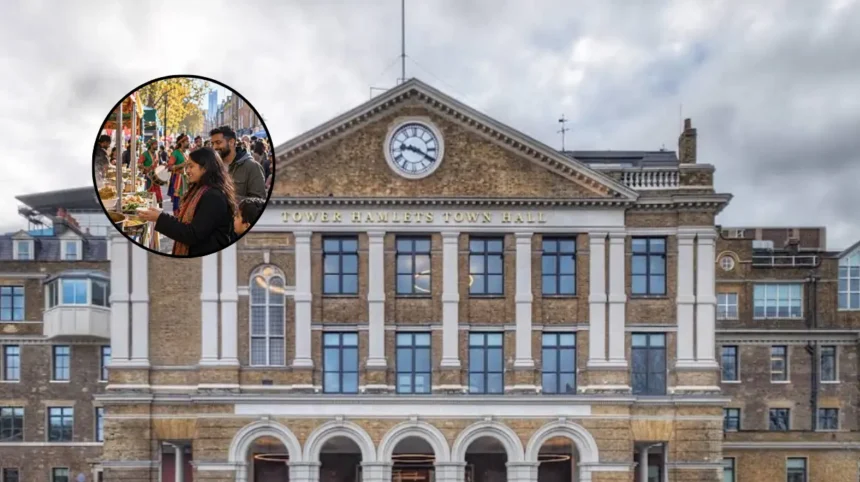
Tower Hamlets (East London Times) September 23, 2026 – More than 40,000 people attended the Brick Lane Curry Festival on Sunday, according to official statements issued by Tower Hamlets Council, marking the largest turnout since the historic celebration of Bangladeshi and South Asian culture was revived. The local authority confirmed that advance bookings for the free, one-day event more than doubled compared with figures recorded in 2025, whilst the number of operating market stalls tripled across the festival grounds. Although these figures have not been independently audited by an outside body, they indicate a significant volume of footfall for the independent restaurants, street traders, and artists involved in the expansive programme across Brick Lane and Banglatown.
- Key Points
- How Did the 2026 Brick Lane Curry Festival Achieve Its Record Return?
- What Role Did Local Restaurants and Traders Play in the Event?
- Who Organized the 2026 Festival and What Are the Future Plans?
- Background of the Brick Lane Curry Festival Relaunch
- Prediction: How This Development Will Affect Local Businesses, Residents, and Visitors
How Did the 2026 Brick Lane Curry Festival Achieve Its Record Return?
This year’s staging represents the festival’s second consecutive year following a nine-year absence from the East End calendar. Having officially returned in 2025, event organisers expanded the 2026 schedule to integrate a broader array of food stalls, live music, traditional performances, and interactive family activities. Independent pre-event listings confirmed that the festivities were scheduled for Sunday 20 September 2026, running continuously from midday until the evening, featuring free entry alongside designated restaurant promotions for attendees who registered prior to the date.
Tower Hamlets Council noted that the 2026 iteration was the biggest since its relaunch, attributing the expansion to heightened public interest and broader community participation. Whilst the reported attendance of over 40,000 remains an organiser estimate rather than a third-party verified count, the overall scale reflects Brick Lane’s enduring status as a major cultural destination and the traditional heartland of London’s Bangladeshi community.
The day’s activities commenced with a civic procession through the streets, featuring traditional dancers, drummers, Chinese lion dancers, and giant puppets. A dedicated festival stage presented a continuous line-up of live acts, including prominent British-Bangladeshi artists such as Khiyo, Nish, and Mumzy, performing alongside local music and dance ensembles. Interactive workshops, traditional games, and children’s activities were hosted at The Gaat to cater for visiting families.
What Role Did Local Restaurants and Traders Play in the Event?
Culinary offerings remained the central focus of the day’s proceedings. Each participating restaurant presented a signature dish, whilst visitors who registered in advance received a 20 per cent discount at participating dining venues across the area. According to Tower Hamlets Council, the event successfully brought together established brick-and-mortar curry houses alongside independent street-food vendors and market traders, offering a diverse range of food, beverages, fashion, and jewellery.
For commercial enterprises situated on and around Brick Lane, the event’s primary objective extended beyond immediate single-day revenue. The administrative framework was structured to introduce new visitors to the permanent high-street establishments that form the economic foundation of the area. The substantial rise in advance bookings suggests that attendees intentionally planned their visits, rather than simply passing through the neighborhood. However, local authorities have not released specific estimates regarding total consumer spending or the precise financial impact on individual firms.
Brick Lane’s curry houses form a vital part of the broader history of post-war migration, enterprise, and social life in East London. Organisers structured the festival to foreground this cultural heritage within a public civic programme, intentionally pairing commercial dining offers with artistic performances and community activities that showcase the populations behind the region’s culinary reputation.
Who Organized the 2026 Festival and What Are the Future Plans?
The 2026 festival was jointly organized by Tower Hamlets Council in collaboration with the Bangla Town Business Association and the Brick Lane Community Forum. Additional operational support was supplied by local traders, civic groups, performance artists, and neighbourhood volunteers. Council representatives described the initiative as part of a wider strategic framework designed to drive tourism into the borough, promote local placemaking, and highlight the area’s cultural assets.
At present, local authorities have not confirmed an official date for the next edition of the festival. Following the initial comeback in 2025 and the subsequent increase in visitor numbers reported this year, administrative partners possess a firmer baseline from which to plan future annual events. Future planning efforts are expected to focus on ensuring that long-term economic and cultural benefits remain directed towards the independent traders, family-run restaurants, and local residents that define Banglatown’s identity.
Background of the Brick Lane Curry Festival Relaunch
The Brick Lane Curry Festival initially emerged as a celebrated annual fixture during the late 1990s and early 2000s, designed to showcase East London’s vibrant South Asian culinary scene and support the historic concentration of Bangladeshi-owned restaurants along Brick Lane. Over the decades, the area gained international recognition as the “curry capital” of the UK, serving as a primary cultural hub for the British-Bangladeshi community who settled in Tower Hamlets during the mid-to-late 20th century.
Despite its historical popularity, the original festival faced operational disruptions and financial constraints, leading to a nine-year hiatus after its mid-2010s editions. During this period, Brick Lane’s traditional curry houses encountered compounding economic pressures, including rising commercial rents, shifting consumer tastes, supply chain costs, and broader economic challenges within the hospitality sector.
The decision by Tower Hamlets Council, the Bangla Town Business Association, and local community groups to revive the festival in 2025 was structured as both a cultural recovery effort and an economic stimulus for the high street. By expanding the event’s scope in 2026 to incorporate wider street markets, diverse performance arts, and structured digital booking systems, the organizers sought to modernize the festival format while preserving its core focus on local heritage and independent enterprise.
Prediction: How This Development Will Affect Local Businesses, Residents, and Visitors
The reported success and expanded footprint of the 2026 Brick Lane Curry Festival are likely to yield several distinct effects across different stakeholder groups in the East End:
- For Independent Restaurant Owners and High-Street Traders: The doubling of advance bookings and high overall turnout demonstrate sustained demand for Brick Lane’s traditional dining sector. If organizers successfully convert one-off festival attendees into repeat customers, local restaurants could see stabilized revenues through the autumn and winter months. However, the commercial benefit will depend on whether local authorities can maintain footfall beyond a single weekend event, particularly as businesses continue to navigate high operating overheads.
- For the Local Bangladeshi Community and Residents: The festival’s continued growth reinforces Banglatown’s status as an important cultural and historical focal point within London. The inclusion of traditional arts, British-Bangladeshi musicians, and family programming helps ensure that commercial development remains tied to the heritage of the local population. Conversely, managing the logistics of major events—such as crowd management, street cleaning, and noise control—will remain a priority for nearby residents during future iterations.
- For Visitors and the Broader Tourism Sector: The established return of the festival positions Tower Hamlets as an attractive destination for cultural tourism within London. The combination of discounted dining, open-air markets, and free performance art offers a accessible model for public events. As organizers evaluate plans for future editions, the festival is likely to become an established fixture on London’s autumn cultural calendar once again, drawing both domestic visitors and international tourists into the East End.