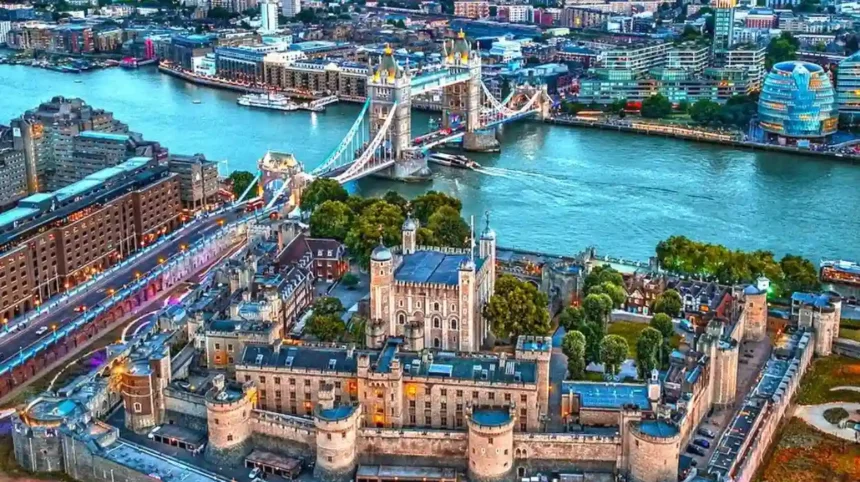
Tower Hamlets is one of London’s most varied boroughs for a compact day of sightseeing. It combines the historic Tower of London and Tower Bridge with riverside districts, former docklands, major markets, public parks, museums, cultural streets and modern Canary Wharf.
- How should visitors start a one-day Tower Hamlets itinerary?
- Can the Tower of London and Tower Bridge be visited together?
- Which markets can visitors combine with Tower Hamlets attractions?
- What can visitors see around Whitechapel, Spitalfields and Brick Lane?
- Can visitors combine the Museum of London Docklands with Canary Wharf?
- Which parks can visitors add to a Tower Hamlets day?
- How can visitors finish a Tower Hamlets day around Canary Wharf or the Thames?
- What is the most practical one-day Tower Hamlets itinerary?
- Why does Tower Hamlets work well for a one-day London visit?
The borough occupies a strategic part of east and central-east London. The River Thames forms its southern boundary, while neighbourhoods including Whitechapel, Spitalfields, Bethnal Green, Stepney, Wapping, Limehouse, Poplar and Canary Wharf provide distinct visitor experiences.
Tower Hamlets Council describes the borough as the heart of London’s East End and highlights its combination of ancient heritage, markets, museums, parks and modern Docklands. The council also identifies the Tower of London, Tower Bridge and Canary Wharf as major landmarks within this changing urban landscape.
A successful one-day itinerary works best when attractions are grouped geographically. The Tower and riverside fit naturally into a morning route. Spitalfields and Brick Lane suit a market-and-food section. Docklands provides a strong afternoon option, while Victoria Park or Canary Wharf offers a different way to finish the day.
The following itinerary focuses on attractions that visitors can combine without repeatedly crossing the borough.
How should visitors start a one-day Tower Hamlets itinerary?
Start around the Tower of London and Tower Bridge, then move east through Wapping or Whitechapel towards Spitalfields and Brick Lane. Finish around Docklands, Canary Wharf or Victoria Park according to opening times and interests.
The Tower of London provides the strongest historical starting point. The fortress stands beside the Thames and forms part of a UNESCO World Heritage Site. William the Conqueror began the White Tower in 1066, establishing a major symbol of Norman power and royal authority.
The Tower developed over several centuries. Royal buildings, defensive structures and institutional functions expanded the complex between the eleventh and sixteenth centuries. The site later became associated with imprisonment, executions, royal possessions and the Crown Jewels.
A visit inside the Tower requires a substantial portion of the morning. Visitors interested in the fortress, Crown Jewels and medieval history should allow several hours rather than treating the site as a quick photo stop.
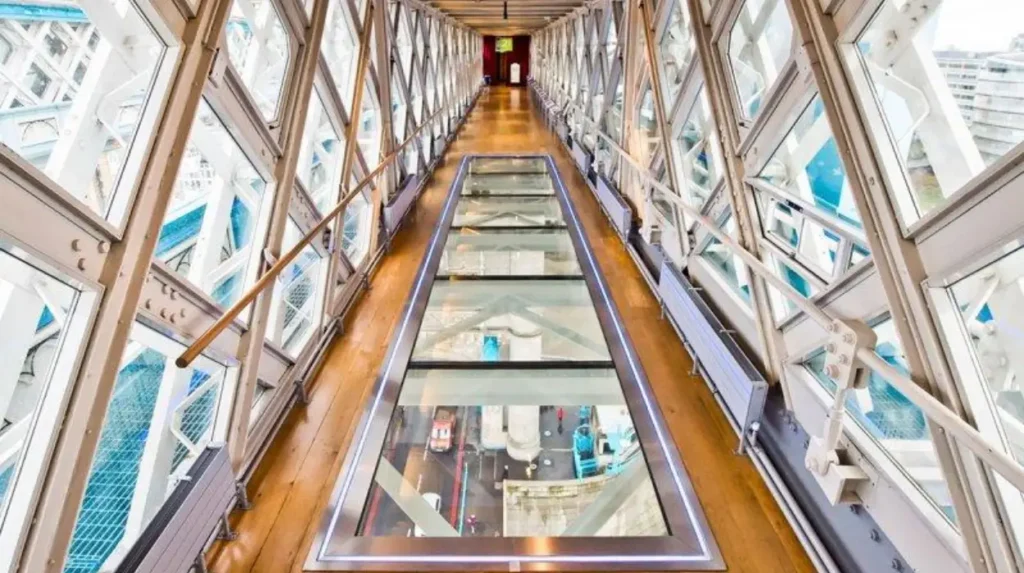
Tower Bridge is immediately east of the Tower of London. It opened in 1894 and remains a working bridge. Its visitor attraction includes the North and South Towers, High-Level Walkways, Glass Floors and Victorian Engine Rooms.
The High-Level Walkways provide views across the Thames. Visitors can see landmarks including the Tower of London, The Shard, St Paul’s Cathedral and Canary Wharf. The walkways stand about 43.5 metres above the Thames at high tide.
The two attractions therefore form a logical opening combination. Visitors can explore the medieval fortress first and then cross into Victorian engineering and riverside views at Tower Bridge.
The surrounding riverside also provides straightforward walking opportunities. St Katharine Docks lies immediately west of Tower Bridge, while the Thames Path connects several riverside locations.
Visitors who prefer architecture and public spaces can spend less time inside the paid attractions and more time walking between the Tower, Tower Bridge and the riverside.
Can the Tower of London and Tower Bridge be visited together?
Yes. The Tower of London and Tower Bridge form one of the easiest attraction combinations in Tower Hamlets because they stand beside the Thames. Visitors can experience medieval history, Victorian engineering, riverside views and historic waterfront architecture within one compact area.
The proximity of these landmarks makes them particularly suitable for a one-day itinerary.
The Tower of London represents the medieval and early-modern development of London. UNESCO describes it as the most complete surviving eleventh-century fortress palace in Europe. Its strategic Thames-side position connected royal authority with defence and control of the capital.
Tower Bridge represents a later phase of London’s growth. Its construction responded to increasing traffic and commercial activity around the Pool of London. The bridge was designed as a working crossing that allowed vessels to continue reaching the upper Pool.
The bridge’s bascules originally operated through hydraulic machinery. Modern systems use electricity and oil, while the historic Engine Rooms preserve the Victorian engineering associated with the bridge’s operation.
The visitor route inside Tower Bridge also explains the people behind its construction and operation. The attraction includes information about engineers, riveters, divers and other workers.
Visitors interested in industrial history can therefore use Tower Bridge as a transition between the medieval Tower and the later industrial development of London’s river.
The Tower Bridge attraction currently lists daily opening from 09:30 to 18:00, with last entry at 17:00. Visitors should check the official opening information before travelling because opening arrangements and ticket requirements can change.
The bridge also remains operational. Its lifting mechanism continues to allow vessels to pass through the bridge. The City Bridge Foundation states that the bridge is required to provide access for qualifying vessels using the Upper Pool of London.
This combination works particularly well for first-time visitors because it creates a clear historical sequence. The Tower explains medieval London. Tower Bridge explains Victorian London. The Thames connects both periods physically and geographically.
For visitors with limited time, seeing both from the outside still creates a useful riverside experience. Visitors with more time can enter both attractions and build a full morning around them.
As you explore the modern riverside, you are crossing land with a deep heritage. Read about the full [Insert Anchor Text for History Article Here] to understand its origins.
Which markets can visitors combine with Tower Hamlets attractions?
Brick Lane, Old Spitalfields Market and Columbia Road Flower Market provide distinct market experiences across Tower Hamlets. Brick Lane suits food, fashion and Sunday trading, while Spitalfields provides covered-market shopping and Columbia Road specialises in flowers and plants.
Markets form an important part of the borough’s visitor identity. Tower Hamlets Council lists ten street markets, including Brick Lane, Bethnal Green Road, Chrisp Street, Columbia Road, Petticoat Lane, Roman Road, Sclater Street, Watney Market and Whitechapel Market.
Brick Lane is particularly easy to combine with Spitalfields. The street sits within the historic East End and has long connections with different immigrant communities. Tower Hamlets Council records its connections with French Huguenots, Jewish communities and the Bangladeshi community.
Brick Lane Market traditionally operates on Sundays. The council currently lists Sunday trading from 10:00 to 15:00. Visitors can find food, fashion, art, household goods, jewellery and vintage-style products.
The street itself also contains historic buildings. The Truman Brewery complex reflects the area’s brewing history, with brewing activity recorded from around 1666. Joseph Truman purchased the brewery in 1679, and the complex expanded during the eighteenth century.
Old Spitalfields Market sits close to Brick Lane. Its history extends back to a market licensed by King Charles II in 1682. The surviving market buildings were constructed between 1883 and 1893.
This makes Spitalfields useful for visitors who want architecture, shopping and food in the same area.
Columbia Road Flower Market provides another option. The council lists Sunday opening from 08:00 to 14:00. The market focuses on flowers and plants and sits close to independent shops, cafés, pubs, galleries and other small businesses.
Because Columbia Road is close to Brick Lane, visitors can combine the two on a Sunday morning. This creates a market-focused itinerary without travelling across the borough.
Market schedules are important. A weekday visitor should not assume that the Sunday market experience is available every day. Visitors should check the council’s current market information before planning a market-specific itinerary.

What can visitors see around Whitechapel, Spitalfields and Brick Lane?
Whitechapel, Spitalfields and Brick Lane combine historic streets, religious buildings, markets, food businesses, galleries and surviving eighteenth- and nineteenth-century architecture. The area works well as a walking section between the Tower riverside and central East London.
The Whitechapel and Spitalfields area demonstrates how Tower Hamlets developed through migration, commerce, manufacturing and changing religious communities.
Brick Lane provides a particularly concentrated example. The street’s buildings record several periods of East End development. Tower Hamlets Council identifies historic weavers’ houses, nineteenth-century commercial buildings and later industrial structures around Brick Lane and Sclater Street.
Christ Church Spitalfields is another major landmark. Nicholas Hawksmoor designed the church, which was completed in 1729. Its Baroque architecture provides a strong contrast with the later commercial buildings around Brick Lane and Spitalfields.
The area’s religious history is also visible in buildings that changed functions over time. The Huguenot church on Brick Lane was completed in 1744 and later became a mosque, reflecting successive waves of settlement in the district.
This makes the area suitable for visitors interested in London’s social and architectural history rather than only major monuments.
The walking distance between attractions also helps create a flexible itinerary. Visitors can move from Old Spitalfields Market towards Brick Lane, continue towards Whitechapel, or return towards the City and Tower Hill.
Food is another practical part of this section. Brick Lane is associated with Bangladeshi restaurants, street food and international dining. Visitors can use lunch here before continuing towards the docklands.
The area also works for shorter visits. A visitor with only two or three hours can combine Spitalfields Market, Brick Lane, Christ Church Spitalfields and nearby streets without needing a separate transport journey for each attraction.
The architectural experience changes noticeably along the route. Historic streets around Spitalfields give way to larger commercial roads and newer buildings towards Whitechapel and Aldgate.
That transition reflects Tower Hamlets’ wider character. The borough combines surviving historic environments with substantial modern development.
Can visitors combine the Museum of London Docklands with Canary Wharf?
Yes. London Museum Docklands and Canary Wharf form a practical afternoon combination. The museum explains 400 years of London Docklands history, while Canary Wharf provides modern architecture, public spaces, shops, restaurants and views around former commercial dockland areas.
London Museum Docklands is located at West India Quay in Canary Wharf. The museum occupies No. 1 Warehouse and focuses on the history of London’s river, port and people. Its free galleries cover 400 years of Docklands history.
The museum provides important context for understanding the landscape around Canary Wharf.
The West India Docks opened in the early nineteenth century and became part of London’s expanding commercial port. Warehouses and docks supported the movement and storage of goods arriving through the Thames.
Modern Canary Wharf developed much later. The district became one of London’s major financial and commercial centres through large-scale redevelopment of the former docklands.
Tower Hamlets Council describes Canary Wharf as an internationally recognised Docklands development and identifies its skyline as a defining feature of the borough’s modern identity.
The contrast between the museum and Canary Wharf is therefore useful for understanding urban change.
Visitors can begin inside the museum with the history of shipping, trade and dock workers. They can then walk around West India Quay and the surrounding Canary Wharf public spaces.
The district contains restaurants, cafés and shops, making it suitable for an afternoon meal or coffee stop. The pedestrian environment also provides opportunities to view modern office towers from different angles.
For digital nomads, Canary Wharf provides a concentration of cafés, public spaces and commercial amenities. Work-friendly facilities and opening arrangements vary by venue, so visitors who need reliable workspace should check individual businesses before arrival.
For business travellers, the area offers an efficient combination of cultural activity and commercial surroundings. London Museum Docklands can provide historical context during a break from meetings, while the surrounding district provides dining and transport connections.
The museum is also useful in poor weather because much of the experience takes place indoors.
Its current visitor information lists opening from 10:00 to 17:00 daily.
Which parks can visitors add to a Tower Hamlets day?
Victoria Park and Mile End Park provide accessible green-space options for visitors who want to add walking, gardens, lakes and open areas to a Tower Hamlets itinerary. Victoria Park suits a dedicated park visit, while Mile End Park fits routes through central-east London.
Tower Hamlets contains more than 120 parks and green spaces, according to the borough council. These range from small pocket parks and garden squares to larger parks with recreational and historic features. Fourteen parks hold Green Flag Awards.
Victoria Park is the most substantial visitor-oriented green-space option.
Designed by James Pennethorne, Victoria Park opened in 1845 and was extended in 1872. It later passed through several public authorities before becoming the responsibility of Tower Hamlets. The park remains listed as a Grade II site on the Register of Parks and Gardens of Special Historic Interest.
The park contains historic lakes, the Burdett-Coutts Memorial, a bandstand and two stone alcoves originally associated with London Bridge.
Victoria Park also demonstrates how public green space changed over time. Parts of the park suffered bomb damage during the Second World War. A major restoration programme began in 2011, supported by Tower Hamlets Council and the Heritage Lottery Fund.
Mile End Park provides a different urban landscape. The council identifies its natural environment, Art and Ecology Pavilions, sports facilities and other recreational features.
The choice between these parks depends on the itinerary.
A visitor travelling from Brick Lane towards Canary Wharf can consider Mile End Park as a geographical stop. A visitor dedicating more time to eastern Tower Hamlets can travel towards Victoria Park.
Parks also provide a useful break between indoor attractions. A morning spent at museums and historic buildings can be followed by outdoor walking before an evening meal.
Visitors should also remember that parks are not substitutes for major attractions when time is very limited. They work best as flexible additions rather than fixed-ticket experiences.
How can visitors finish a Tower Hamlets day around Canary Wharf or the Thames?
Finish around Canary Wharf for modern architecture, riverside public spaces and dining, or return towards the Thames around Tower Bridge for evening views. Both options provide a practical conclusion after museums, markets and historic attractions.
Canary Wharf provides the clearest modern ending to a Tower Hamlets itinerary.
Its high-rise skyline represents the transformation of former dockland areas into a major business district. The area includes office towers, retail spaces, restaurants and public spaces.
The Thames provides another option. Returning towards Tower Bridge creates a strong visual connection with the day’s earlier attractions.
Tower Bridge itself offers elevated views across London from its High-Level Walkways. The official visitor route provides views towards Canary Wharf and other major landmarks.
This makes the bridge useful at both the beginning and end of an itinerary, although visitors should plan around its opening hours if they intend to enter the attraction.
A riverside finish also works for visitors who prefer an outdoor evening. The Thames Path and surrounding public spaces provide opportunities for walking and photography without requiring another major attraction ticket.
The choice also depends on the day of travel. Sunday visitors can build their itinerary around Columbia Road, Brick Lane and Spitalfields. Museum-focused visitors can centre the day on the Tower, Tower Bridge and London Museum Docklands.
Weekday visitors can prioritise museums, historic landmarks and Canary Wharf because Sunday-specific market activity is not available in the same form.
The key principle is geographical sequencing. Tower Hamlets contains many attractions, but they do not need to be visited in a random order.
A west-to-east itinerary reduces unnecessary travel. A practical sequence is Tower of London, Tower Bridge, Whitechapel or Spitalfields, Brick Lane, London Museum Docklands and Canary Wharf. Victoria Park works as an alternative green-space section rather than an obligatory extra stop.
Explore More Area Guide
Tower Hamlets Winter Experiences | East London Guide
Summer Activities in Tower Hamlets, East London
What is the most practical one-day Tower Hamlets itinerary?
A practical full-day route starts at the Tower of London, continues to Tower Bridge, moves through Spitalfields and Brick Lane, then reaches London Museum Docklands and Canary Wharf. Visitors should choose Victoria Park instead when green space is a priority.
A historical itinerary can begin around Tower Hill in the morning. The Tower of London requires the largest time commitment, so it should receive priority when it is a main reason for visiting Tower Hamlets.
Tower Bridge follows naturally. Visitors can enter the attraction or simply cross the bridge and continue along the Thames.
The route then moves north towards Aldgate and Spitalfields. Old Spitalfields Market provides a useful lunch and shopping stop. Brick Lane adds food, street activity, historic buildings and market culture.
On Sundays, visitors can incorporate Columbia Road Flower Market earlier in the day. Tower Hamlets Council confirms that Columbia Road operates from 08:00 to 14:00 on Sundays, while Brick Lane Market operates from 10:00 to 15:00.
That timetable makes Sunday particularly suitable for combining two markets, although doing so requires an early start.
After Spitalfields and Brick Lane, visitors can travel east towards London Museum Docklands. The museum provides a historical explanation of the docks before visitors explore the modern Canary Wharf district.
The museum currently operates daily from 10:00 to 17:00, providing a clear afternoon window for the itinerary.
A visitor who prefers parks can replace the Canary Wharf section with Victoria Park or Mile End Park. The decision should be based on the primary purpose of the trip rather than attempting to visit every attraction.
The itinerary also works for different audiences.
Tourists can concentrate on landmark attractions and historic streets. Residents can use the same structure to explore markets and public spaces outside their usual neighbourhood. Digital nomads can use Canary Wharf or nearby cafés as a flexible working base between sightseeing stops. Business travellers can select one or two attractions around existing appointments.
The main advantage of Tower Hamlets is the density of contrasting experiences. Medieval royal history, Victorian engineering, East End markets, dockland heritage, public parks and modern finance districts all exist within one borough.
That density makes Tower Hamlets particularly suitable for a one-day London itinerary.
Visitors should check official attraction websites and council information before travelling because opening hours, ticketing, market schedules and temporary closures change. The core geography remains stable, allowing the itinerary to be adjusted without changing its overall structure.
Suggested one-day sequence
Morning: Tower of London and Tower Bridge.
Late morning: Walk towards Whitechapel and Spitalfields.
Lunch: Old Spitalfields Market or Brick Lane.
Afternoon: Brick Lane and surrounding historic streets.
Late afternoon: London Museum Docklands.
Evening: Canary Wharf or the Thames around Tower Bridge.
Sunday alternative: Columbia Road Flower Market → Brick Lane → Spitalfields → Tower Bridge → London Museum Docklands or Canary Wharf.
This approach keeps the day focused on one borough while covering several distinct aspects of Tower Hamlets. It also allows visitors to remove individual stops without disrupting the entire route.
Why does Tower Hamlets work well for a one-day London visit?
Tower Hamlets works well for a one-day visit because major attractions, markets, parks, museums and modern districts sit within connected areas. Visitors can combine historic landmarks with food, shopping, green space and Docklands without creating a scattered itinerary.
The borough’s geography is central to its visitor appeal.
The western part contains the Tower of London, Tower Bridge, Whitechapel and Spitalfields. Brick Lane and surrounding streets provide a concentrated cultural and market district. Further east, the former docks lead towards Canary Wharf and modern Docklands.
Green spaces add another layer. Tower Hamlets Council records more than 120 parks and green spaces, including Victoria Park and Mile End Park.
The borough also has a particularly strong relationship with London’s history. Archaeological evidence includes human activity dating back thousands of years, while later history encompasses Roman activity, medieval London, industrialisation, migration, maritime trade and twentieth-century redevelopment.
The Tower of London provides a direct connection to the Norman period. Brick Lane and Spitalfields demonstrate later patterns of migration and commerce. The Docklands explain London’s maritime economy and the subsequent transformation of former industrial areas.
This makes a one-day Tower Hamlets itinerary more than a collection of attractions. Each section represents a different stage in the development of east London.
The borough’s modern identity also remains closely connected to its historic geography. The Thames continues to define the southern boundary, while former docks continue to shape Canary Wharf and the Isle of Dogs.
For travellers, this creates a practical structure. The morning can focus on major heritage attractions. The middle of the day can centre on food and markets. The afternoon can move towards museums, parks or Docklands. The evening can finish beside the river or within Canary Wharf.
A successful itinerary does not require visiting every attraction. It requires selecting connected places that match the available time.
Tower Hamlets provides enough variety for a full day while retaining clear geographical connections between its principal visitor areas. That combination makes it a useful destination for travellers who want to explore several sides of London without spending the day moving between distant parts of the capital.
Can you visit Tower Hamlets in one day?
Yes. Visitors can explore several major Tower Hamlets attractions in one day by grouping nearby destinations. A practical route includes the Tower of London, Tower Bridge, Spitalfields Market, Brick Lane, London Museum Docklands and Canary Wharf.