Key Points
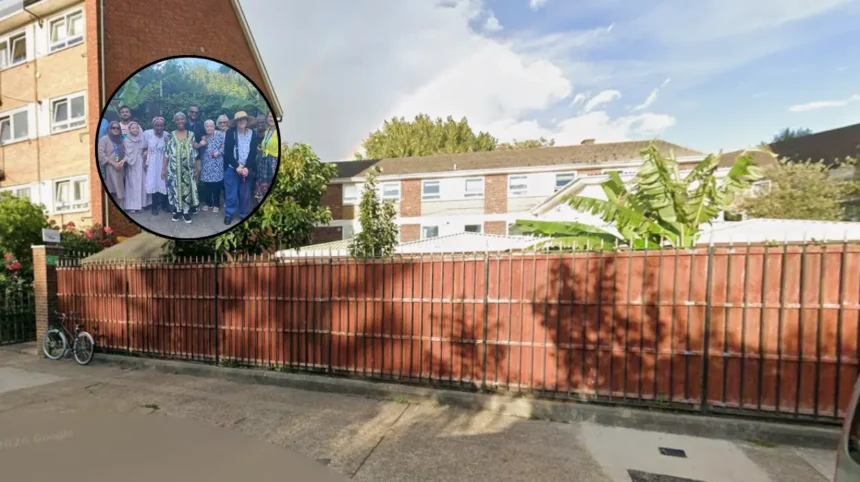
- A banana tree located at the Russia Lane Day Centre in Bethnal Green has successfully produced fruit for the first time.
- The unexpected fruiting follows record-breaking summer heat in London, with Tower Hamlets experiencing temperatures roughly 4°C above average alongside 44.5% less rainfall than normal.
- Care facility residents living with dementia have tended to the site for a decade, recently securing their second Tower Hamlets in Bloom award.
- According to the Royal Horticultural Society (RHS), banana plants grown outdoors in the UK rarely flower or bear fruit due to the cooler climate.
- Originally adopted from Museum Gardens in 2016, the plants are part of a therapeutic horticultural project that offers physical, emotional, and cognitive support to attendees.
- The group has expanded its cultivation efforts to include hops, with aspirations to harvest them for brewing beer.
Bethnal Green (East London Times) October 2, 2026 – In an unprecedented development for an East London community space, a banana plant cultivated at the Russia Lane Day Centre in Bethnal Green has flowered and borne fruit for the first time. The Russia Lane Day Centre, a specialist care facility supporting individuals living with dementia, has maintained its garden grounds for ten years through structured horticultural sessions involving its attendees. The unusual harvest emerged following an extended period of elevated seasonal temperatures across the capital.
- Key Points
- What Do Horticultural Experts Say About Banana Plants Growing in the UK Climate?
- How Has the Russia Lane Gardening Project Developed Over the Past Decade?
- What Are the Demonstrated Benefits of Horticultural Therapy for Dementia Patients?
- Background of the Particular Development
- Prediction: How This Development Can Affect Local Social Care and Urban Horticulture
Data indicates that the London Borough of Tower Hamlets recorded summer temperatures approximately 4°C above historical averages, alongside a 44.5% reduction in typical rainfall. Horticulturists note that such prolonged heat created the microclimate required for the non-native species to complete a fruiting cycle. Under standard weather patterns in Great Britain, outdoor specimens of this nature almost never reach the flowering stage.
What Do Horticultural Experts Say About Banana Plants Growing in the UK Climate?
Guidance from the Royal Horticultural Society confirms that outdoor banana cultivation in the United Kingdom seldom yields edible or fully developed fruit due to the temperate climate and short growing season. The organization notes that while the foliage can withstand milder weather, fruit production requires sustained high temperatures and specific humidity conditions that are rarely present in urban British environments.
Botanical profiles of the plant highlight a unique biological growing cycle. Each individual stem produces fruit only once during its lifespan before naturally dying back. However, new suckers or shoots routinely emerge from the rhizomatous root structure at the base of the parent plant. This regenerative property means that if localized weather conditions remain favourable in subsequent years, the centre’s garden could potentially see further yields from secondary growth.
How Has the Russia Lane Gardening Project Developed Over the Past Decade?
The banana plants were originally transferred to the site in 2016 after being adopted from nearby Museum Gardens, also situated in Bethnal Green. Over the trailing eight years, staff members and day centre visitors integrated the care of the botanical collection into their routine outdoor activities. The dedication of the group was recently recognized when the facility received its second Tower Hamlets in Bloom award, an accolade celebrating community gardening, biodiversity, and environmental improvement across the borough.
Lisa Cade, a staff member at the Russia Lane Day Centre, expressed that the appearance of the fruit was entirely unexpected by both employees and participants, describing the initiative as an amazing project that has brought significant interest to the facility.
Beyond tropical flora, the gardening group has diversified its agricultural efforts. Attendees have recently begun cultivating hops within the plot, aiming to nurture the crop through to a full harvest with the ultimate ambition of brewing their own beer on site.
What Are the Demonstrated Benefits of Horticultural Therapy for Dementia Patients?
Medical and care professionals specialize in dementia management emphasize that structured engagement with nature provides substantial physical, emotional, and cognitive benefits for individuals experiencing cognitive decline. Therapeutic horticulture helps maintain fine motor skills, encourages social interaction, reduces anxiety, and stimulates sensory retention through direct contact with soil, plants, and outdoor spaces.
Participants at the Russia Lane Day Centre have voiced strong appreciation for access to the grounds. Karen Williams, who attends the day centre, highlighted the sensory appeal of the space, noting that she lacks a personal garden at home and values the opportunity to spend time outdoors surrounded by the colours and aromas of the flora. Similarly, Sandy Hannigan, another centre attendee, praised the tranquil atmosphere of the grounds, describing the environment as peaceful and welcoming.
Background of the Particular Development
The Russia Lane Day Centre is a key local authority asset within Tower Hamlets, dedicated to delivering day care, respite, and structured activity programs for older adults diagnosed with memory impairments and dementia. Therapeutic gardening has increasingly been integrated into adult social care frameworks across the UK over the past two decades, supported by healthcare research indicating that active involvement in outdoor environments improves quality of life and reduces behavioural stress in care settings.
The environmental context of this development is tied to shifting climate patterns observed across Greater London. Over recent years, urban heat island effects combined with broader climatic changes have resulted in warmer summer microclimates in central and eastern London boroughs. Facilities such as Museum Gardens and public parks in Tower Hamlets have adapted their horticultural selection to include hardier, Mediterranean, and exotic plant species capable of surviving hotter summers, which subsequently provided the stock adopted by Russia Lane in 2016.
Prediction: How This Development Can Affect Local Social Care and Urban Horticulture
This development is expected to influence local social care providers, urban horticulturalists, and community organizations across London in several ways:
- Expansion of Therapeutic Gardening Programs: Care facilities operating within urban areas may increasingly adopt exotic or non-traditional crop cultivation as part of their therapeutic frameworks. The visual novelty of successfully growing tropical fruit provides strong sensory stimulation and a clear sense of accomplishment for care recipient participants, potentially leading adult social care commissioners to allocate further resources toward specialized garden designs.
- Adaptation of Urban Planting Strategies: Local councils and community gardens in Greater London are likely to re-evaluate species selection for public spaces. As summer heatwaves become more frequent, urban planners and horticulturists may increasingly incorporate species previously considered unsuitable for the UK climate, adjusting maintenance protocols to accommodate warmer, drier conditions.
- Heightened Focus on Microclimate Agriculture: Educational institutions and local environmental groups in Tower Hamlets may utilize the Russia Lane benchmark to study microclimates within dense urban environments. This could lead to collaborative projects between social care centres and environmental charities aiming to boost local biodiversity and food-growing initiatives in non-standard urban plots.