Key Points
- Network-Wide Disruption: A major signalling fault between Limehouse and West Ham High Level caused delays of up to 20 minutes, alterations, and cancellations across the c2c rail network.
- Extended Delay Window: Initially anticipated to resolve by 10:00 AM, train operator c2c extended the estimated restoration time until at least 1:00 PM.
- Alternative Travel Routes: Ticket acceptance was implemented across Greater Anglia and London Underground services at no additional cost to affected passengers.
- Passenger Recourse: Passengers facing delays exceeding 15 minutes were urged to submit claims under the c2c Delay Repay compensation scheme.
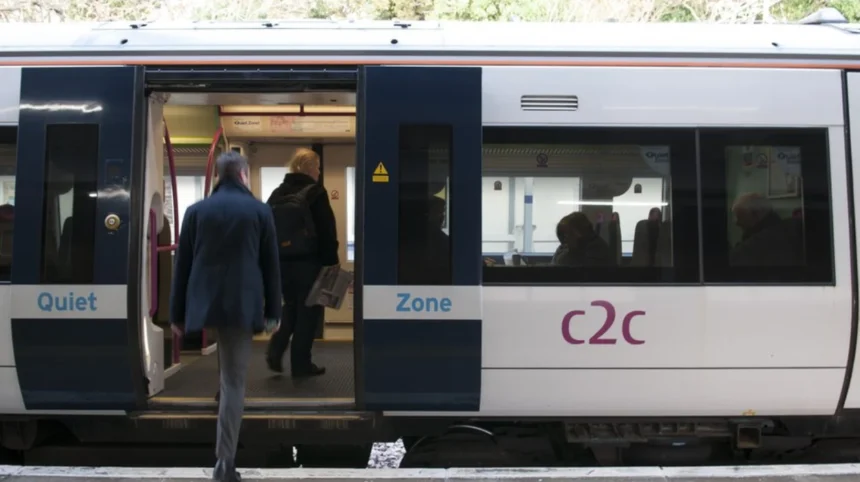
East London (East London Times) October 8, 2026 – Commuters across East London and Essex face severe transport disruption following a major signalling fault on the c2c rail line between Limehouse and West Ham High Level. The technical failure, which first disrupted services at approximately 8:00 AM, has forced delays of up to 20 minutes, route alterations, and widespread cancellations across the entire network. Although initial operational estimates indicated that normal services would resume by 10:00 AM, c2c confirmed that the ongoing disruption is expected to continue until at least 1:00 PM whilst engineering teams assess and repair the infrastructure failure.
How Has the c2c Signalling Fault Impacted East London Rail Services?
The failure occurred at a vital bottleneck section of the line that connects central London terminals with regional routes in south-east Essex. A official spokesperson for c2c outlined the ongoing situation:
“We are aware of a signal fault between Limehouse and West Ham. At the moment, some services may be delayed, altered, or cancelled while we assess the impact of the incident.”
The spokesperson further advised all commuters to check travel conditions prior to setting off and to allow additional journey time:
“Please check before you travel and allow extra time for your journey. We’re working to keep customers moving and will provide details of any alternative travel arrangements as soon as they are confirmed. We’re sorry for the disruption to your journey and thank you for travelling with c2c.”
To mitigate the impact on stranded passengers, emergency ticket acceptance arrangements were established with adjacent rail and underground operators. Tickets are being accepted at no extra charge on Greater Anglia rail services operating between London Liverpool Street and Southend Victoria. Additionally, London Underground is accepting c2c tickets along the route connecting London Fenchurch Street and Upminster, enabling passengers to bypass the affected track section between Limehouse and West Ham High Level.
How Have Affected Passengers Reacted to the Morning Cancellations?
The service breakdown coincided with peak morning rush hour, leading to heavy crowding across platforms and key interchange hubs. Frustrated passengers turned to social media platforms throughout the morning to express their grievances regarding slow-moving trains, overcrowded carriages, and delayed journeys into central London.
The operator has reminded all affected travellers that compensation is available under its standard customer service charter. Passengers who suffer a journey delay of 15 minutes or more are eligible to claim financial compensation via the c2c Delay Repay scheme, provided they retain their travel tickets or booking references for submission.
Background to East London Rail Infrastructure Challenges
The c2c network serves as a primary arterial rail corridor connecting the City of London at Fenchurch Street with major residential populations across East London and south-east Essex, including Barking, Rainham, Basildon, and Southend. Operating on tracks managed in coordination with Network Rail, the route heavily relies on reliable signalling systems between Limehouse and West Ham to maintain high-frequency commuter schedules.
The section between Limehouse and West Ham High Level represents one of the most densely traversed segments of the line. Because c2c operates a streamlined fleet schedule, localized technical faults at this central corridor quickly ripple across the entire line, impacting both London-bound morning commuter trains and outward-bound Essex feeder services. Signalling failures typically occur due to power supply interruptions, track circuit faults, or mechanical issues within trackside switching equipment.
Prediction: How Will This Disruption Affect Commuters and Local Transport Operators?
The continuation of this service failure into the early afternoon is likely to create operational backlogs that affect both passengers and transit systems throughout the region.
Immediate Operational and Passenger Impacts
- Afternoon Commute Rollover: Trains and rail crew out of position during the morning peak may cause lingering delays and reduced carriage capacity into the early evening rush hour.
- Increased Density on Tube Networks: Commuters diverting to London Underground lines (such as the District and Hammersmith & City lines) will place heightened physical strain on West Ham, Barking, and Tower Hill interchanges.
- Financial and Administrative Claims: c2c can expect a high volume of compensation requests through its Delay Repay system, increasing short-term administrative processing burdens.
Long-Term Network Implications
For local commuters, repeated infrastructure faults during peak hours erode confidence in scheduled rail services, prompting greater reliance on alternative road or tube routes. For regional transit authorities, recurring signalling vulnerabilities highlight the urgent need for accelerated investment in modernised, resilient trackside technology along key East London corridors.