Key Points
- Friendly Drama: West Ham United played out a dramatic pre-season draw against Queens Park Rangers, highlighted by controversial officiating decisions in the absence of Video Assistant Referees (VAR).
- Penalty Controversy: QPR’s opening goal stemmed from a questionable penalty decision awarded by the match referee after Tomas Soucek’s recovery tackle was incorrectly judged as a foul.
- Fan Reaction: The absence of video reviews led to vocal reactions from the crowd, re-engaging supporters at the Stadium and evoking traditional, passionate stadium atmospheres.
- Core Debate: The match highlighted the trade-off between absolute decision accuracy provided by technology and the raw, uninterrupted flow and organic crowd engagement of traditional refereeing.
West Ham United (East London Times) October 10, 2026 – Is football genuinely a better spectacle without the endless interventions of a Video Assistant Referee? The full spectrum of raw emotion and controversy inherent in non-VAR football was on full display during West Ham United’s dramatic draw with Queens Park Rangers, offering supporters a vivid reminder of what the modern game has gained—and lost—since technology took center stage.
In an encounter that felt like a deliberate throwback to an earlier era, officiating errors became the central talking point of the evening. The absence of video technology allowed human error to shape the match’s pivotal moments, prompting immediate, visceral responses from both sets of supporters and sparking fresh conversation about the influence of VAR on matchday atmospheres.
How Did Officiating Decisions Shape the Match Outcome?
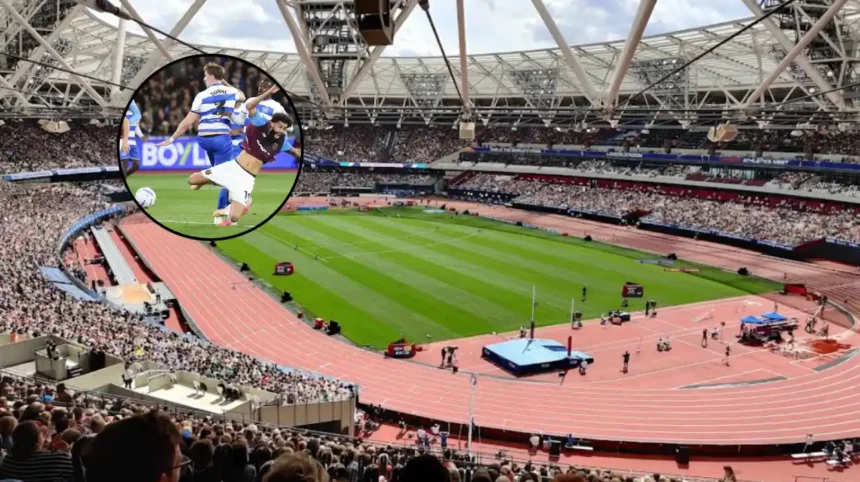
The absence of video assistance was felt most acutely during QPR’s opening goal sequence. Following a swift attacking move by the visitors, West Ham midfielder Tomas Soucek executed what appeared to be a precise, well-timed recovery tackle inside the penalty area.
However, without the safety net of a slow-motion replay or a pitchside review monitor, the match referee ruled that Soucek had committed an offense, promptly pointing to the penalty spot. Replays later confirmed that Soucek had clearly won the ball, meaning the penalty award would almost certainly have been overturned had VAR technology been active during the fixture.
QPR capitalized on the decision, converting the spot-kick to take the lead. Shortly thereafter, additional operational misjudgments by the officiating crew kept tension high on both the pitch and in the stands. Rather than deadening the stadium environment, the human errors generated an intense, unified reaction from the crowd, with supporters unleashing traditional football chants toward the match officials.
What Does Non-VAR Football Mean for Modern Stadium Atmosphere?
For West Ham United supporters, the passionate response inside the stadium highlighted an ongoing cultural debate surrounding modern football stadia. The energetic vocal reaction against the match officials brought an added sense of passion and unity to the stands—an element that some critics argue has been diluted by prolonged technological checks in top-flight matches.
While the absence of VAR exposed obvious refereeing errors, it also eliminated the extended pauses, delayed goal celebrations, and uncertainty that frequently accompany video reviews in modern competitions. The continuous play and immediate emotional outlets appeared to re-energize the matchday crowd, creating an environment reminiscent of traditional football fixtures prior to the introduction of video technology.
Background of the Particular Development
The debate over the implementation and efficacy of Video Assistant Referees (VAR) has been one of the most prominent discussions in English football since its formal introduction to the Premier League in the 2019–20 season. Designed to eliminate “clear and obvious errors” in goal sequences, penalty decisions, direct red card incidents, and cases of mistaken identity, the system was intended to increase fairness and reduce costly officiating mistakes.
Despite its technical success in improving overall decision accuracy across top-tier matches, VAR has faced persistent criticism from matchgoing fans, managers, and players. Concerns primarily focus on the length of time required to conduct reviews, the disruption of match momentum, and the reduction of spontaneous celebration inside stadiums when goals are scored. In recent seasons, several clubs and fan groups have advocated for simplified review procedures or a return to traditional, on-field refereeing to preserve the traditional experience of live football.
Prediction: How This Development Could Affect Matchgoing Football Supporters
The ongoing debate illustrated by fixtures like the West Ham versus QPR match is likely to have direct implications for matchgoing football supporters across the United Kingdom.
If football governing bodies continue to refine VAR protocols or consider semi-automated review systems, stadium matchgoers may experience faster review times and clearer in-stadium communications regarding refereeing decisions. Conversely, if resistance from supporters and clubs leads to a reduction in technological intervention for certain pre-season or domestic cup fixtures, fans can expect a return to traditional, fast-paced match dynamics where refereeing errors remain an accepted, albeit controversial, part of the live sporting experience. Ultimately, the direction of these developments will directly influence how fans interact with live matches, shaping stadium atmosphere, chant culture, and emotional engagement for years to come.