Key Points
- Home Office Investigation Underway: Immigration enforcement officers are examining more than 100 asylum applications suspected of featuring fraudulent claims of homosexual orientation.
- Alleged East London Fraud Network: Law enforcement officials raided properties connected to Apanjon, a Bangladeshi LGBT support organization based in Whitechapel, east London.
- Financial Extortion for Fabricated Documents: Investigators suspect network operators charged heterosexual migrants fees ranging between £1,000 and £4,500 to produce forged documentation, staged photographic evidence, and fake letters of support.
- Arrests Executed: Two men suspected of involvement in the alleged fraudulent asylum operation have been taken into custody following the raids.
- Sharp Rise in Sexuality-Based Asylum Grants: Official data shows 2,133 asylum seekers claiming protection on sexual orientation grounds were granted status in 2023, up from 762 in 2022 and 677 in 2021.
- Community Figures Confirm Solicitations: Advocates from LGBT organisations confirm receiving financial offers from straight asylum seekers requesting fabricated verification letters.
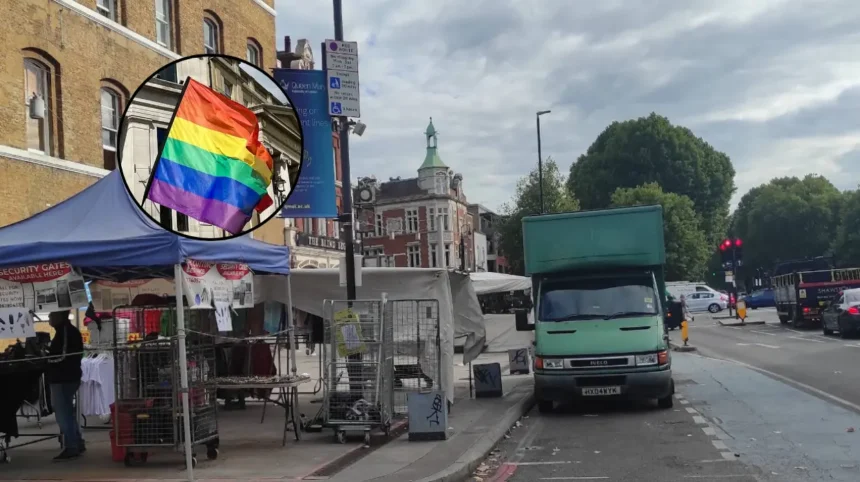
Whitechapel (East London Times) October 10, 2026 – Immigration enforcement officials from the Home Office have launched a comprehensive investigation into an alleged systematic asylum fraud network operating out of east London. The operation centers on Apanjon, a Bangladeshi LGBT support organisation based in Whitechapel, where investigators suspect individuals were facilitating fraudulent asylum applications by coaching heterosexual migrants to pretend to be gay. Law enforcement personnel raided several addresses tied to the group following reports that staff or associates were charging straight applicants between £1,000 and £4,500 to assemble falsified evidence packages. Following the enforcement actions, two men suspected of central roles in the scheme were arrested.
During the searches, investigators uncovered evidence suggesting that applicants submitted fabricated documentation, staged photographs, and illegitimate written statements of support to persuade Home Office adjudicators that they faced severe persecution or violence in their countries of origin due to their sexual orientation. As reported by investigative reporters covering Home Office operations, the network allegedly provided tailored dossiers designed to satisfy standard credibility checks during official asylum interviews.
How Widespread Is the Practice of Submitting Falsified Sexuality Claims?
Community advocates within the British LGBT network report that solicitations for false verification documentation have become an increasingly prominent issue across the UK asylum landscape. Ejel Khan, founder of the Muslim LGBT Network, stated that
“It’s a massive problem. A lot of people are doing it.”
He further explained the pressure placed upon support groups, noting that
“People have offered me money in the past to give them letters of recommendation, even though they have admitted to me that they weren’t gay, so I refused.”
Official statistics reflect a significant escalation in the number of successful asylum applications grounded in sexual orientation claims in recent years. Data published by the government shows that 2,133 asylum seekers whose cases involved sexual orientation were granted international protection in 2023. This represents a substantial increase compared to 2022, when 762 individuals were granted status on similar grounds, and 2021, when the figure stood at 677. Government analysts attribute part of this sharp numerical rise to the clearance of a major backlog of asylum applications that had accumulated during the Covid-19 pandemic.
What Role Are Legal Representatives and Support Groups Alleged to Play?
Alongside administrative backlogs, critics of current asylum protocols allege that certain legal representatives and refugee support groups have actively assisted applicants in exploiting procedural frameworks governing sexuality-based claims. While critics contend that loopholes within the system allow non-genuine claimants to bypass screening mechanisms, legal experts and officials emphasise that these allegations do not establish systemic wrongdoing by refugee support organisations generally.
Home Office officials are currently conducting detailed audits of the more than 100 flagged applications linked to the Whitechapel raids. Case officers are reviewing previously accepted paperwork, interview transcripts, and supporting documentation submitted by Apanjon to identify potential patterns of institutional misrepresentation.
Background of the Particular Development
The framework for assessing asylum claims based on sexual orientation in the United Kingdom was fundamentally reshaped by a landmark ruling delivered by the Supreme Court in 2010. Prior to that verdict, official policy often expected gay asylum seekers to return to their home countries and conceal their sexuality to avoid persecution, violence, or imprisonment—a principle commonly referred to as the “discretion test.” The Supreme Court unanimously rejected this approach, ruling that requiring individuals to hide their sexual identity violated fundamental human rights protections.
In the wake of the 2010 decision, Theresa May, serving as Home Secretary, formally established new binding guidance for Home Office caseworkers evaluating asylum claims based on sexual orientation. This guidance mandated that adjudicators assess whether an applicant genuinely identified as LGBT and whether living openly in their country of origin would expose them to a real risk of persecution. While the policy change succeeded in establishing vital protections for genuinely persecuted LGBT individuals seeking refuge in the UK, policy analysts have consistently noted that the evidentiary standards required to establish personal identity create unique operational challenges, leaving the system vulnerable to fabricated claims by bad actors.
Prediction: How This Development Can Affect Asylum Applicants and Legal Frameworks
This enforcement action and the associated investigation into alleged systematic fraud are likely to trigger far-reaching consequences for future asylum seekers, legal representatives, and Home Office operational procedures.
For genuine LGBT asylum seekers, the exposed abuse of the system is predicted to lead to significantly higher levels of scrutiny during official casework reviews. Adjudicators may adopt an increasingly skeptical stance when assessing subjective evidentiary submissions, such as community support letters and personal testimony. Consequently, legitimate applicants from high-risk countries may face prolonged processing delays, heightened evidentiary burdens, and more intrusive questioning during casework interviews as officials seek to verify the authenticity of every claim.
For the Home Office and legal practitioners, this development is expected to prompt an overhaul of verification guidelines governing sexuality-based asylum applications. The government may introduce mandatory accreditation standards for third-party support organisations submitting letters of recommendation. Furthermore, legal representatives handling such cases will likely face increased regulatory oversight from the Solicitors Regulation Authority to prevent unethical practices. In the broader political sphere, the exposure of fraudulent operations of this scale will amplify calls for stricter legislative reforms to close procedural loopholes in the UK asylum architecture.