Key Points
- Petition Launch: Independent record store and cultural event venue BBE (Barely Breaking Even) has initiated an online petition via 38 Degrees to secure public support ahead of an upcoming licence review.
- Licence Review Grounds: Hackney Council issued a notice of application to review the venue’s licence based on the statutory grounds of the prevention of public nuisance and the prevention of crime and disorder.
- Source of Conflict: The venue operators state that post-pandemic residential developments opposite their long-standing location have triggered a sharp increase in noise complaints.
- Mitigation Efforts: BBE management confirmed they have collaborated with local authority officers to install physical mitigation measures, including noise limiters and acoustic curtains.
- Cultural Significance: Founded as a record label in 1996 by Peter Adarkwah, BBE has operated out of Arch 376 in London Fields since 2016, serving as a hub for independent Black music genres including soul, jazz, funk, and hip-hop.
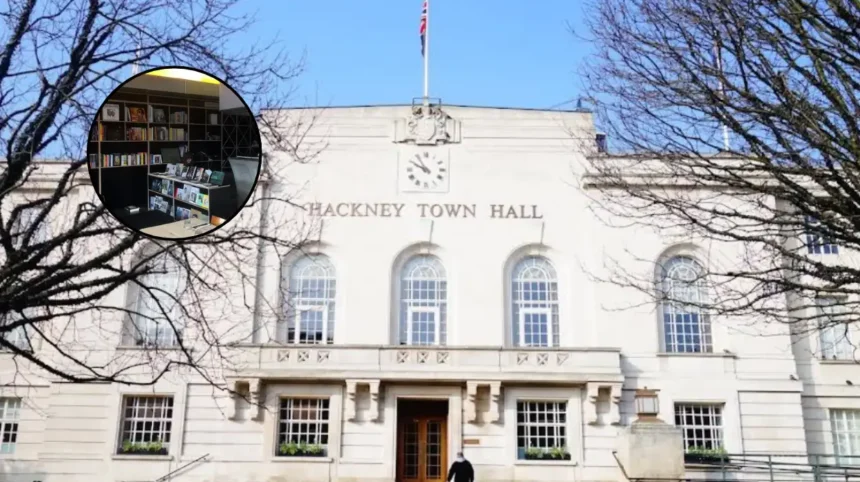
Hackney (East London Times) October 19, 2026 – East London record shop and community event venue BBE has initiated an online petition appealing for public assistance following a formal notification of a licence review by Hackney Council. The venue, situated at Arch 376 on Helmsley Place in London Fields, operates as the physical headquarters for the independent Black music record label of the same name. According to statements released by the venue’s leadership, the business is facing regulatory scrutiny triggered by noise complaints originating from newly constructed residential properties directly opposite the site. The review has been initiated under the statutory objectives of preventing public nuisance and preventing crime and disorder, prompting the owners to gather signatures via the petition platform 38 Degrees to preserve their existing operational terms.
- Key Points
- What Triggered the Escalation of Noise Complaints Against Arch 376?
- How Has BBE Worked With Hackney Council to Resolve Noise Issues?
- What Is the Operational and Cultural History of BBE?
- Background of the Licence Review and Development in London Fields
- Prediction: How This Development Can Affect the Local Community and Independent Music Venues
What Triggered the Escalation of Noise Complaints Against Arch 376?
The premises has maintained its operations at the railway arch site since 2016, residing within what was historically a commercial and industrial strip. However, management noted that the post-pandemic completion and occupancy of a nearby residential block introduced new neighbours into close proximity with existing night-time economy businesses. Operators noted that this demographic shift on the street led directly to a rising frequency of complaints directed at Arch 376 and neighbouring commercial premises. In an official public appeal, BBE management described the recent uptick as an influx of “orchestrated noise complaints,” asserting that the friction stems from the introduction of residential housing into an established industrial zone rather than changes in the venue’s night-time operations.
How Has BBE Worked With Hackney Council to Resolve Noise Issues?
Prior to the formal review application, the venue’s operators attempted to address resident concerns directly by collaborating with municipal officers to install sound mitigation infrastructure. In a statement issued by BBE’s owners, management detailed the physical adaptations made to the railway arch, stating,
“We feel we have tried to hear some of the valid complaints and as such, we have worked with Hackney Council to implement noise limiters and acoustic curtains as an example, but there doesn’t appear to be any compromise from what appears to be a specific set of residential neighbours continuing to complain.”
Despite the fitting of sound control technology and acoustic dampening drapery, the complaints persisted, ultimately leading local authority licensing officers to proceed with the formal review process.
What Is the Operational and Cultural History of BBE?
The physical retail store and event space represents an extension of the Barely Breaking Even (BBE) record label, which was established in 1996 by music producer and curator Peter Adarkwah. Initially founded as an underground club night, the label expanded over nearly three decades into a widely recognized global distributor of hip-hop, soul, funk, disco, jazz, and rare groove recordings. The physical establishment in London Fields opened in 2016 to serve as a multi-use facility, integrating a record store, broadcast studio, and live event space aimed at showcasing independent Black music culture and supporting local artists within the Borough of Hackney.
Background of the Licence Review and Development in London Fields
The licensing dispute involving BBE reflects broader structural changes within the London Borough of Hackney, particularly around the gentrification and redevelopment of former industrial spaces along railway corridors. Helmsley Place and the surrounding archways near London Fields station were traditionally occupied by light industry, automotive repair shops, and commercial storage units. Over the past decade, urban planning policy and private redevelopment have introduced mixed-use residential blocks into these spaces.
This structural shift frequently creates operational friction between established music venues, night-time venues, and incoming residents. Under the Licensing Act 2003, local authorities are mandated to evaluate premises licences against four primary licensing objectives:
- The prevention of crime and disorder
- Public safety
- The prevention of public nuisance
- The protection of children from harm
When residential developments are built in proximity to existing commercial premises without adequate structural soundproofing, the burden of noise compliance often falls upon the pre-existing businesses. While the UK government introduced the “Agent of Change” principle into national planning policy to require developers to fund soundproofing for new residential buildings near existing music spaces, enforcement and retrospective Application varies across municipal boundaries, leaving long-standing cultural venues vulnerable to licence reviews driven by neighbour objections.
Prediction: How This Development Can Affect the Local Community and Independent Music Venues
Should Hackney Council’s licensing committee vote to modify, curtail, or revoke BBE’s operational licence, the decision will directly impact independent music curators, local residents, artists, and the broader night-time economy within East London.
For the immediate venue operators and independent artists, restrictions on operating hours or sound levels could severely undermine the financial viability of Arch 376. Independent record stores rely heavily on evening events, listening parties, and community gatherings to supplement physical vinyl sales. A loss of evening operational flexibility may force the business to downsize its physical presence or vacate the premises entirely, reducing physical space dedicated to independent Black music genres in Hackney.
For the local residential community and commercial ecosystem, the outcome will set a regulatory precedent for Helmsley Place and similar industrial arches across East London. A strict regulatory ruling against BBE could accelerate the transition of the London Fields archways from vibrant cultural and night-time hubs into strictly daytime or low-impact commercial operations. Conversely, if the council and operators negotiate a binding compromise regarding noise attenuation, it could offer a template for how municipal authorities manage sound compliance and co-habitation between long-standing cultural institutions and new residential developments.