Key Points
- Tower Hamlets Council has announced plans to acquire four office buildings located on Marsh Wall in Canary Wharf.
- The acquired commercial properties will be converted into approximately 180 temporary family-sized housing units.
- The proposed housing mix will comprise 167 two-bedroom units and 13 three-bedroom units for local families in need of accommodation.
- Executive Mayor Lutfur Rahman stated the project aims to reduce reliance on expensive, nightly-paid private accommodation and allow families to remain close to local support networks, schools, and communities.
- Official figures show that over 3,100 households in the East London borough currently reside in temporary accommodation, including around 2,700 families.
- The local authority described the acquisition as a key step in its broader strategic commitment to address housing insecurity and expand municipal housing capacity.
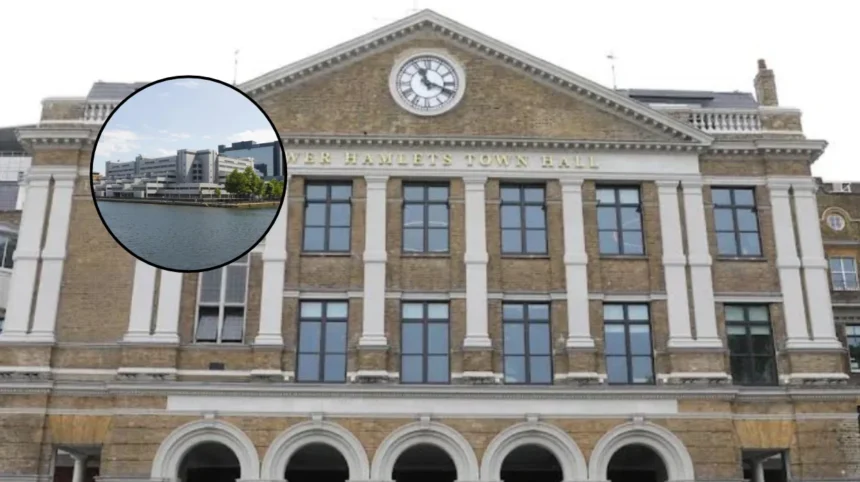
Tower Hamlets Council (East London Times) October 23, 2026 – Tower Hamlets Council has officially announced plans to purchase four commercial office buildings on Marsh Wall in Canary Wharf to convert them into temporary housing for local families facing homelessness.
- Key Points
- What Are the Details of the Tower Hamlets Office Conversion Scheme?
- What Has Executive Mayor Lutfur Rahman Stated Regarding the Scheme?
- Why Is Temporary Housing Demand Escalating in Tower Hamlets?
- Background of the Marsh Wall Office-to-Residential Acquisition
- Prediction: How This Development Could Affect Local Residents and Public Finances
As reported by community reporter Robyn Bennett of the East London Advertiser, the major acquisition project will deliver approximately 180 temporary family-sized dwellings. The scheme includes 167 two-bedroom units and 13 three-bedroom units designed to house local residents currently without permanent homes.
What Are the Details of the Tower Hamlets Office Conversion Scheme?
The initiative targets commercial infrastructure in the Canary Wharf district, specifically four office premises on Marsh Wall, re-purposing commercial floor space into residential units. As detailed by Robyn Bennett of the East London Advertiser, the project is structured to address the demand for family-sized temporary shelter within the East London borough. Out of the 180 planned properties, 167 will feature two-bedroom layouts, whilst 13 will offer three-bedroom configurations.
According to statements released by Tower Hamlets Council, the local authority intends to bring these properties under municipal operation to build up its internal stock of temporary accommodation. The council outlined that transferring these buildings into civic usage serves to directly boost municipal housing capacity in response to the growing housing crisis across the municipality.
What Has Executive Mayor Lutfur Rahman Stated Regarding the Scheme?
Outlining the vision behind the decision, Lutfur Rahman, Executive Mayor of Tower Hamlets, emphasised the social and practical reasons for securing local municipal housing.
As reported by Robyn Bennett of the East London Advertiser, Executive Mayor Lutfur Rahman stated:
“Every family deserves a safe and secure place to live close to their communities, schools and support networks. By bringing these buildings into council use, we have an opportunity to create around 180 family-sized homes and provide better accommodation for local people who need it most.”
Executive Mayor Lutfur Rahman further highlighted the financial and logistical goals of the municipal investment, adding:
“This investment will help us reduce our reliance on costly nightly paid accommodation and more importantly will help more families remain in Tower Hamlets and close to their support networks.”
According to official council publications, Executive Mayor Lutfur Rahman also noted the broader impact of community stability, stating:
“You can’t put a price on the wider social, educational and health benefits of keeping people in their communities.”
Why Is Temporary Housing Demand Escalating in Tower Hamlets?
The decision to acquire office premises comes amidst acute pressures on housing resources across the borough. Current council metrics indicate that more than 3,100 households in Tower Hamlets are living in temporary accommodation. Of those, approximately 2,700 are families requiring larger residential spaces.
As highlighted in coverage by Robyn Bennett of the East London Advertiser, local authorities in urban centres face rising costs associated with placing homeless households in emergency, nightly-paid private accommodation or out-of-borough placements. When municipal accommodation stock is unavailable, councils are often forced to secure emergency placements outside their geographic boundaries or pay premium commercial rates to private hotel operators and landlords.
By converting local commercial assets into municipal housing, Tower Hamlets Council aims to curb emergency expenditure while keeping vulnerable families within their established support networks, local school catchments, and familiar surroundings.
Background of the Marsh Wall Office-to-Residential Acquisition
The re-purposing of office buildings on Marsh Wall reflects a wider operational shift in urban local governance across Greater London. Commercial office hubs, particularly surrounding major financial nodes like Canary Wharf, have seen changing occupancy trends, creating opportunities for local authorities to repurpose underutilised real estate into civic housing assets.
Historically, borough councils in Inner London have faced severe land constraints and high development costs, limiting the construction of purpose-built municipal housing. Over recent years, reliance on emergency placements—such as bed and breakfasts or commercial hotelling—has placed significant pressure on local authority budgets across the capital.
Tower Hamlets Council has consistently cited housing insecurity and child poverty as key priorities within its borough strategy. The acquisition on Marsh Wall forms part of a broader policy framework aimed at increasing municipal housing supply, reducing public expenditure on private temporary accommodation, and establishing long-term housing solutions for local residents.
Prediction: How This Development Could Affect Local Residents and Public Finances
This development is expected to have notable effects on local families, council budgets, and the surrounding business district in Canary Wharf.
For families facing homelessness in Tower Hamlets, the scheme offers greater stability. By providing 180 two- and three-bedroom temporary homes within the borough, local children can remain enrolled in their existing schools, while parents retain access to local healthcare services, employment opportunities, and family networks. Staying within Tower Hamlets eliminates the logistical disruptions and social dislocation often caused by out-of-borough placements.
From a financial perspective, the acquisition is anticipated to alleviate pressure on the council’s emergency budget. Transitioning away from costly nightly-paid private accommodation toward council-owned assets allows the local authority to manage operational expenditure more effectively, creating a more sustainable financial model for emergency housing services.
Finally, for the local community and commercial market around Marsh Wall, converting vacant or underused commercial office space into residential housing represents a strategic integration of civic accommodation into the Canary Wharf area, aiding urban revitalization while directly tackling local housing shortages.