Key Points
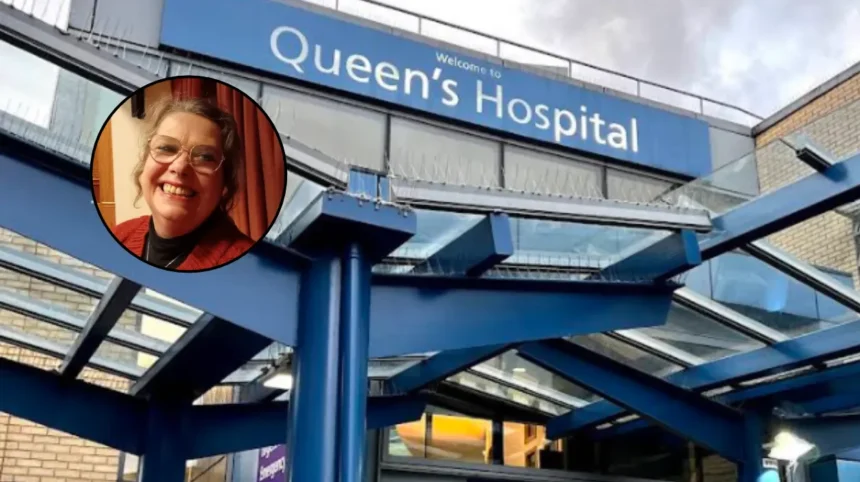
- Incident Details: Barking Riverside ward councillor Marion Hull suffered a broken wrist and hip during a litter-picking activity, leading to an emergency admission to Queen’s Hospital in Romford.
- Corridor Care: Cllr Hull reported being left in a crowded corridor without pain relief as initial medication wore off, fearing passers-by would collide with her trolley.
- Staffing Deficits: Despite six nurses promising to return with pain relief, none returned due to severe pressure and overcrowding within the department.
- Inappropriate Waiting Conditions: The councillor was later moved to a four-person room where she was placed in a non-patient window space due to severe bed shortages, waiting until 11:00 PM without toilet access after entering earlier in the day.
- Praise for Ward Staff: Cllr Hull commended the frontline clinical staff as “amazing”, attributing the failure entirely to systemic understaffing and rapid regional demographic growth.
- NHS Trust Response: Andrew Deaner, Chief Medical Officer at Barking, Havering and Redbridge University Hospitals NHS Trust, issued an apology and highlighted social care discharge bottlenecks, bed shortages, and funding deficits as core causes.
- Government Funding: The incident was disclosed days after the government allocated £42 million to rebuild the hospital’s accident and emergency (A&E) department.
Romford (East London Times) October 23, 2026 – A local elected official was left waiting in “excruciating” pain without adequate analgesia in a busy hospital corridor following a severe fall. Labour councillor Marion Hull, who represents the Barking Riverside ward on Barking and Dagenham Council, shared details of her ordeal at Queen’s Hospital in Romford. Her statement was read aloud during a meeting of the local authority’s health scrutiny committee by Senior Labour councillor Maureen Worby, who holds the portfolio for health.
As reported by local democracy reporter Sebastian Mann, Cllr Hull sustained a broken wrist and a fractured hip whilst participating in a community litter-picking event. Upon initial admission to the Accident and Emergency (A&E) department at Queen’s Hospital, she was placed in a cubicle trolley and administered initial pain medication. However, as she was subsequently transferred for diagnostic hip X-rays, the analgesia wore off, leaving her stationed in an adjacent corridor to await her diagnostic results.
While waiting in the corridor, Cllr Hull described high levels of foot traffic surrounding her position. She stated that “patients and relatives were walking along the corridor” and expressed distress regarding her vulnerability, noting:
“By this time the pain was excruciating and I was terrified that someone would knock into my trolley.”
Throughout the duration of her corridor stay, Cllr Hull stated that six separate nurses assured her they would return with further pain relief, but none were able to return to administer the medication.
How Did Hospital Capacity Failures Impact Patient Care?
Following her stay in the corridor, Cllr Hull was moved into a treatment room to await surgical intervention. The room had been designed to accommodate four patients; however, due to severe space constraints, she was placed in an area adjacent to the window that was not designated for patient care. She noted that by 11:00 PM that evening, she had not been offered or permitted access to toilet facilities since 10:30 AM.
Despite the severe deficiencies in her environment and care timeline, Cllr Hull defended the frontline workforce operating within the facility. She praised the ward staff as “amazing,” stating:
“They all work hard and do their best for each other and every patient they’re looking after.”
She highlighted structural issues rather than individual clinical fault, identifying chronic understaffing and rapid population expansion across East London as the primary drivers of the crisis.
Addressing the demographic pressures, Cllr Hull remarked:
“The more development increases in terms of building in the area the more often corridor [care] and overcrowding in the hospitals increase.”
How Did NHS Leaders Explain the Corridor Care Crisis?
Responding to the allegations during the scrutiny committee meeting, Andrew Deaner, Chief Medical Officer at Barking, Havering and Redbridge University Hospitals NHS Trust, offered an official apology for the care experience endured by the councillor. Dr Deaner outlined the operational challenges confronting the trust, stating that leadership is actively working to “reduce corridor care” by expanding appropriate treatment options outside the emergency department and improving overall patient flow through the facility.
Dr Deaner explained that a primary obstacle to clearing emergency corridors is the delay in discharging rehabilitated individuals. A lack of available social care options for patients leaving the hospital leads to delayed discharges, which directly reduces the availability of acute beds on inpatient wards. Consequently, emergency patients in A&E cannot be transferred into proper ward beds, resulting in severe bottlenecks and enforced corridor placements.
Furthermore, Dr Deaner pointed to structural financial difficulties, suggesting that funding allocations from NHS England have failed to keep pace with rapid population growth across Barking, Havering, and Redbridge. He noted:
“We’re under huge pressure financially. It’s quite hard particularly in this part of London to get the amount of money that we need to run the hospital. The amount of work we’re doing is increasing and increasing. The population within our area is growing inexorably and I’m not sure that always gets recognised, and the amount of work we’re having to do is increasing.”
Dr Deaner added that national health authorities and central government were placing continuous fiscal demands on local trusts, stating that the trust was being “pushed and pushed” by NHS England and the government to implement cost reductions. He highlighted the impact on workforce numbers, stating:
“The most expenditure within hospitals is on staff. If you want to save money, you have to reduce headcount to some extent.”
Background of the Development
The revelations regarding Cllr Hull’s treatment surfaced just days after central government announced a £42 million funding allocation designated for Queen’s Hospital in Romford to rebuild and modernise its A&E department. Queen’s Hospital, managed by Barking, Havering and Redbridge University Hospitals NHS Trust (BHRUT), serves one of the fastest-growing residential populations in East London, driven by multi-phase housing developments such as those in Barking Riverside.
Corridor care—the practice of treating emergency patients on trolleys in hallway corridors due to an absence of available ward beds or A&E cubicles—has become a persistent operational issue across acute NHS trusts in England. The problem is linked to downstream bed blockages, where medically fit patients cannot be safely discharged due to shortages in community care, social housing adaptations, and local care home placements. In response, national directives from NHS England have mandated strict cost-containment measures and headcount reductions, forcing trusts to balance stringent budget targets against rising clinical demand and expanding local catchments.
Prediction: How Will This Development Affect Local Residents and NHS Patients?
This development highlights ongoing risks for local residents and NHS service users across East London, particularly those reliant on Queen’s Hospital for emergency medical treatment.
- Continued Operational Risks for Emergency Patients: In the immediate to medium term, patients presenting to A&E are likely to face ongoing risks of prolonged wait times, delayed pain management, and corridor placements during peak demand periods. Until broader social care bottlenecks are resolved, physical space shortages will continue to constrain patient transfers.
- Impact of Capital Expenditure vs Revenue Constraints: While the newly awarded £42 million investment will eventually upgrade physical A&E infrastructure, capital building projects require extended timelines to complete. In the interim, financial pressure to reduce staff headcount could exacerbate workload burdens on clinical teams, potentially impacting direct nurse-to-patient ratios and response times.
- Demographic Pressure on Public Services: As housing expansion continues across Barking and surrounding boroughs, demand for emergency services will likely outpace capacity unless long-term funding formulas are adjusted to match local population growth. Local oversight bodies and scrutiny committees will face mounting pressure to lobby central government for sustained revenue funding alongside physical infrastructure upgrades.