The Isle of Dogs is one of East London’s most distinctive visitor destinations, combining historic docklands, modern waterfront architecture, riverside parks, independent leisure spaces and impressive views across the River Thames. Located within the London Borough of Tower Hamlets, this Thames peninsula offers visitors a different perspective on London beyond its traditional central attractions.
- What Is the Isle of Dogs and Where Is It Located?
- How Did the Isle of Dogs Develop into a Major London Destination?
- Which Attractions Should Visitors Explore in Canary Wharf?
- What Makes Island Gardens One of the Best Waterfront Attractions?
- How Can Visitors Experience the Greenwich Foot Tunnel?
- Why Is Mudchute Park and Farm Worth Visiting?
- What Outdoor Activities Are Available at Millwall Park?
- Where Can Visitors Enjoy Waterfront Walks on the Isle of Dogs?
- How Can Visitors Explore the Isle of Dogs by River?
- What Architectural Features Make the Isle of Dogs Interesting?
- Which Historic and Cultural Attractions Are Near the Isle of Dogs?
- How Can Visitors Travel Around the Isle of Dogs?
- What Can Families Do on the Isle of Dogs?
- Where Can Digital Nomads and Business Travellers Spend Their Free Time?
- What Is the Best Way to Plan a Day Trip to the Isle of Dogs?
- When Is the Best Time to Visit the Isle of Dogs?
- How Does the Isle of Dogs Support London’s Wider Urban Regeneration?
- Why Should the Isle of Dogs Be Included in an East London Itinerary?
The area is particularly recognised for Canary Wharf, a major international financial district surrounded by landscaped public spaces, contemporary buildings, shopping facilities and waterfront promenades. Further south, Island Gardens, Mudchute Park and Farm, Millwall Park and the Greenwich Foot Tunnel provide opportunities to explore green spaces, local heritage and riverside scenery.
Visitors can experience the Isle of Dogs through walking routes, river transport, outdoor recreation, architectural sightseeing and cultural attractions. Its combination of historic industrial landscapes and modern urban development makes it suitable for day trips, family outings, photography, business travellers and longer London stays.
The Isle of Dogs also benefits from strong transport connections. The Docklands Light Railway (DLR), Jubilee line, Elizabeth line connections through Canary Wharf and Thames river services make the district accessible from different parts of London.
What Is the Isle of Dogs and Where Is It Located?
The Isle of Dogs is a Thames peninsula in East London, within the London Borough of Tower Hamlets. It is surrounded by a meander of the River Thames and includes Canary Wharf, Millwall, Island Gardens and historic dockland neighbourhoods.
The geographical character of the Isle of Dogs distinguishes it from many other London neighbourhoods. The River Thames curves around the peninsula, creating extensive waterfront boundaries and several locations with views towards Greenwich, Rotherhithe and the wider Docklands.
The northern section contains Canary Wharf, one of London’s principal financial and commercial centres. The southern section includes residential streets, historic dockland sites, public parks and riverside attractions.
The peninsula is not a naturally formed island. Its historic geography changed through the construction of docks and connecting waterways. The West India Docks Canal helped separate the area from the surrounding land, giving it a more distinctly island-like character.
The Isle of Dogs offers several visitor experiences within a relatively compact geographical area:
- Waterfront attractions: Island Gardens, Canary Riverside and the Thames-side promenades.
- Green spaces: Mudchute Park and Farm, Millwall Park and Island Gardens.
- Commercial attractions: Canary Wharf shopping areas, public art and landscaped squares.
- Historic locations: Former dock infrastructure, warehouses and the Greenwich Foot Tunnel.
- Transport experiences: DLR journeys, river buses and pedestrian routes beneath the Thames.
Its compact layout makes walking a practical way to explore different attractions during a single visit.
How Did the Isle of Dogs Develop into a Major London Destination?
The Isle of Dogs developed from marshland into an important industrial dockland district before becoming a modern commercial and residential destination. Its transformation reflects London’s maritime expansion, international trade, dock closures and large-scale urban regeneration.
The area’s historical identity is closely connected to the River Thames. Before major industrial development, much of the peninsula consisted of marshland used for grazing and agriculture.
The name Isle of Dogs was recorded in the early sixteenth century. The area was previously known as Stepney Marsh. The precise origin of the unusual name remains disputed, and popular explanations involving hunting dogs or other animals lack convincing historical evidence. Thames & Docklands
A major turning point came with the development of the West India Docks in the early nineteenth century. These docks opened in 1802 and provided dedicated facilities for handling ships and international cargo. Their construction established the peninsula as an important part of London’s maritime economy.
The docks supported employment, warehouses, ship movements and associated industries. Residential communities expanded around the commercial infrastructure, creating a distinctive working dockland environment.
However, changes in shipping technology and the increasing use of larger container ports affected London’s traditional dock system. The West India Docks eventually closed in 1980.
The subsequent redevelopment transformed the northern peninsula into Canary Wharf, which became a major financial and business district. Former industrial land was replaced by office towers, shopping facilities, public spaces and residential developments.
As you explore the modern waterfront, you are crossing land with a deep industrial and maritime heritage. Read about the full [History of the Isle of Dogs and London’s Historic Docklands] to understand how this former marshland developed into one of East London’s most recognisable urban districts.
This historical transformation remains visible in the contrast between preserved dock structures, converted warehouses and contemporary skyscrapers.
Which Attractions Should Visitors Explore in Canary Wharf?
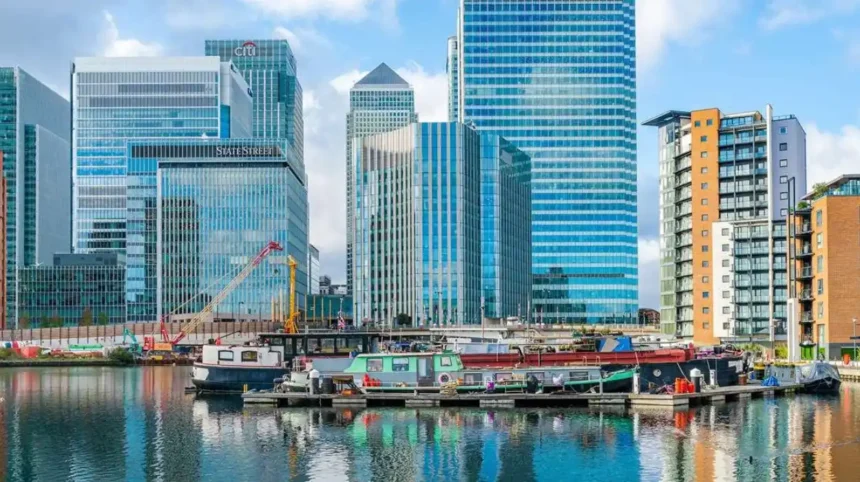
Canary Wharf is the Isle of Dogs’ principal commercial and leisure destination. It combines modern architecture, shopping centres, public art, landscaped squares, waterfront walkways and restaurants, providing visitors with several activities within a walkable urban district.
Canary Wharf is internationally recognised for its concentration of financial institutions and contemporary office buildings. Its skyline forms an important part of London’s modern architectural identity.
Visitors do not need to work in the financial district to explore its public areas. The development includes pedestrian spaces, shopping destinations and landscaped environments that support everyday leisure activities.
Canada Square
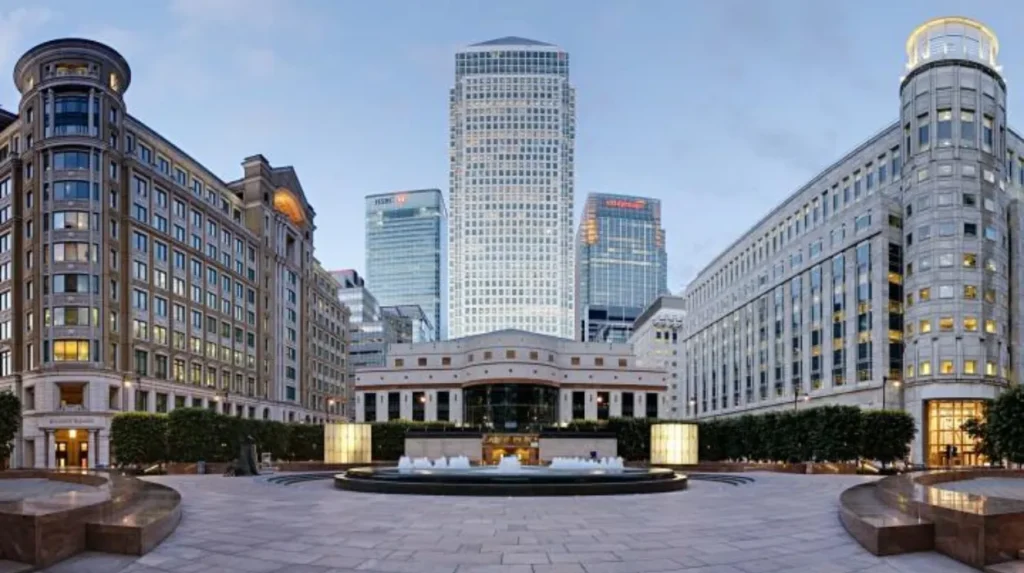
Canada Square is one of the most recognisable public spaces in Canary Wharf. It sits beneath the surrounding office towers and provides an open setting for meeting friends, taking photographs and exploring the district.
The square regularly hosts public activities and seasonal installations. Its surrounding buildings provide a clear impression of the area’s modern commercial architecture.
Cabot Square
Cabot Square offers another prominent public space surrounded by office buildings, landscaping and water features. Its seating areas and pedestrian routes make it suitable for a short break during a walking tour.
Jubilee Place
Jubilee Place is an underground shopping destination connected to Canary Wharf’s transport infrastructure. It contains retail outlets and food businesses, making it useful for visitors seeking shopping and refreshments.
Crossrail Place
Crossrail Place combines transport infrastructure, retail facilities and public architecture. Its landscaped roof garden provides a distinctive green environment above the commercial district.
Canary Wharf public art
Public art forms an important part of the area’s identity. Sculptures and installations appear throughout its squares, pedestrian spaces and waterfront settings. Visitors interested in urban photography can combine these artworks with the surrounding architecture.
Canary Wharf is particularly convenient for business travellers with limited free time. Its concentration of shops, restaurants, public spaces and transport facilities allows visitors to explore without travelling across London.
What Makes Island Gardens One of the Best Waterfront Attractions?
Island Gardens is a riverside public park at the southern tip of the Isle of Dogs, offering panoramic views of Greenwich, historic waterfront architecture, landscaped lawns and direct access to the Greenwich Foot Tunnel beneath the River Thames.
Island Gardens is one of the most recognisable outdoor attractions in the area. Its position directly opposite Greenwich creates a distinctive viewing point across the river.
The park covers approximately 1.12 hectares, equivalent to nearly three acres. It contains open lawns, mature trees, seating areas and riverside spaces suitable for relaxing and photography. Tower Hamlets Council manages the park, which holds a Green Flag Award recognising the quality of its public space.
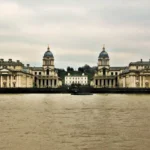
The view across the Thames is particularly significant. Visitors can see the Old Royal Naval College, the Queen’s House and the wider Greenwich waterfront.
This panorama is associated with the eighteenth-century Venetian painter Canaletto, whose painting A View of Greenwich from the River depicts the historic waterfront from a similar perspective.
Riverside photography
Island Gardens provides a useful location for landscape photography. The river creates a foreground, while Greenwich’s historic buildings form the background. The open setting also provides opportunities for architectural photography and panoramic images.
Picnics and relaxation
The park has benches, tables and open lawns. Visitors use these facilities for picnics, short breaks and informal outdoor activities.
Access to Greenwich
One of the park’s most important attractions is its connection to Greenwich through the pedestrian tunnel. Visitors can combine two historic riverside destinations without taking a road journey around the Thames.
Island Gardens is particularly suitable for travellers who want outdoor scenery, historic architecture and a quieter alternative to Canary Wharf’s busy commercial environment.
How Can Visitors Experience the Greenwich Foot Tunnel?
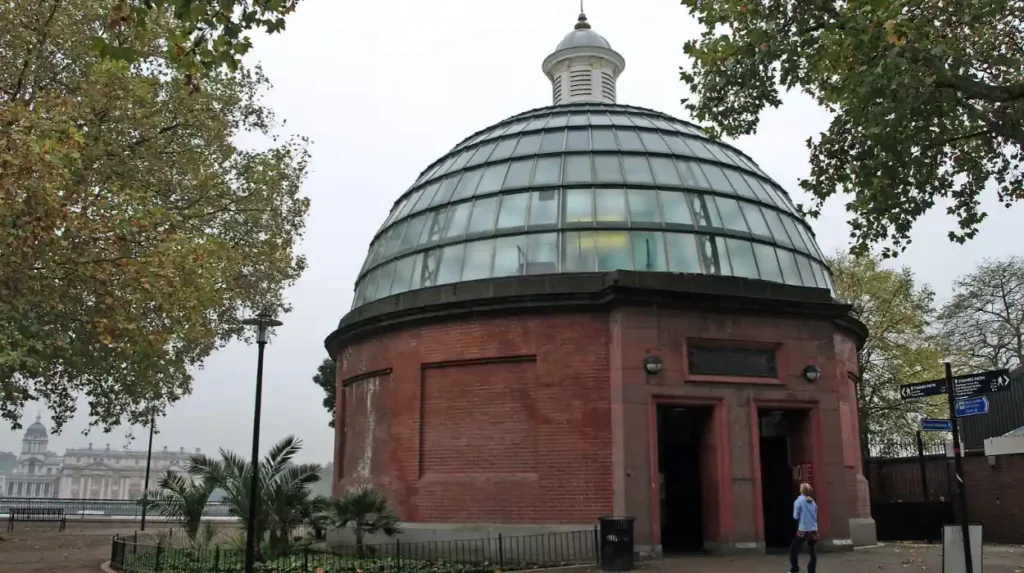
The Greenwich Foot Tunnel is a historic pedestrian passage beneath the River Thames connecting Island Gardens on the Isle of Dogs with Greenwich on the southern bank. Opened in 1902, it provides a free walking route between the two waterfront destinations.
The Greenwich Foot Tunnel is an important transport and heritage attraction. It was constructed to provide a convenient crossing for people travelling between the two sides of the river.
The tunnel runs approximately 370 metres beneath the Thames. Its entrances feature distinctive circular domed structures, while the interior includes tiled walls and a pedestrian passage.
The tunnel is particularly useful for visitors exploring both the Isle of Dogs and Greenwich. The northern entrance is close to Island Gardens, while the southern entrance is near the Cutty Sark.
What can visitors see along the route?
The journey connects two areas with different architectural and historical identities.
On the Isle of Dogs side, visitors encounter riverside parks, former dockland neighbourhoods and modern residential developments. On the Greenwich side, the route provides access to the Cutty Sark, Greenwich Market, the Old Royal Naval College and the historic town centre.
Accessibility and opening arrangements
The tunnel is free to use and normally operates 24 hours a day. Both entrances have lifts and spiral staircases. Cyclists must dismount and walk their bicycles through the tunnel. Visitors should check current lift availability before travelling if they require step-free access.
The foot tunnel makes a particularly useful addition to a walking itinerary because it combines a practical river crossing with an experience of London’s historic transport infrastructure.
Why Is Mudchute Park and Farm Worth Visiting?
Mudchute Park and Farm is a large countryside-style green space in the centre of the Isle of Dogs. Its 32-acre site combines open grassland, animal enclosures, walking paths, community facilities and views across London’s Docklands.
Mudchute offers a different visitor experience from Canary Wharf’s commercial buildings and Island Gardens’ formal riverside landscape. It provides access to open green space and farm animals within an urban London neighbourhood.
The park and farm cover approximately 32 acres and are home to more than 100 animals. Visitors can see animals such as sheep, pigs, ponies, rabbits, geese and llamas. The farm also supports the conservation of British rare breeds. Mudchute Park and Farm+1
Farm visits and animal experiences
The animal enclosures are a central attraction. Families can explore the farmyard and observe livestock in designated areas.
The farm also provides educational opportunities for children and organised groups. These experiences introduce visitors to animal care, farming practices and the importance of protecting traditional livestock breeds.
Walking and outdoor recreation
Mudchute’s open fields and pathways provide space for walking, informal exercise and nature observation. The surrounding landscape offers a striking contrast with the nearby Canary Wharf skyline.
Community activities
The site supports educational visits, community activities and events throughout the year. Its facilities give local residents and visitors access to outdoor recreation without leaving the peninsula.
Visitor information
Mudchute Park and Farm is located at Pier Street, Isle of Dogs, London E14 3HP. The farm’s published visitor information lists daily opening hours of 9am to 4pm, with animals returning indoors from 3pm. The wider park is open from dawn until dusk. Entry is free, although donations support its operation. Visitors should check the official website before travelling because opening arrangements and activities can change. Mudchute Park and Farm+1
Crossharbour DLR station is a convenient access point. The farm recommends allowing at least two hours to explore the site properly.
Visitors should follow farm hygiene instructions and avoid eating in fields used by grazing animals. Suitable footwear is also recommended because some paths are shared with other users.
What Outdoor Activities Are Available at Millwall Park?
Millwall Park is a public green space on the Isle of Dogs offering sports facilities, children’s play areas, walking paths, landscaped sections and community recreation. Its location connects the wider Mudchute and Island Gardens green spaces.
Millwall Park is an important recreational destination for families, residents and visitors seeking outdoor activities.
The park includes football pitches, cricket facilities, a bowls green, rugby provision, children’s play areas and an outdoor gym. These facilities support both organised sports and informal recreation.
The children’s play facilities include equipment designed for different age groups. Tower Hamlets Council reports that more than half of the equipment in the newer playground is fully inclusive, improving access for children with additional needs. Tower Hamlets
Sports and physical activities
Visitors can use the park for walking, exercise and organised sporting activities. Football and cricket facilities support local clubs, schools and community groups.
Nature and open spaces
The park contains trees, meadows, planted areas and seating. These features provide space for outdoor relaxation and opportunities to observe urban wildlife.
Industrial heritage
Millwall Park also retains visible connections to its dockland past. A disused railway viaduct and former ropewalk reflect the area’s industrial history.
The surrounding views provide a contrast between historic infrastructure and the modern Canary Wharf skyline.
Millwall Park is located on Manchester Road, London E14. The nearest DLR stations include Mudchute and Island Gardens. Its position makes it practical to include in a wider walking route through the southern Isle of Dogs.
Where Can Visitors Enjoy Waterfront Walks on the Isle of Dogs?
The Isle of Dogs offers several riverside and dockside walking environments, including Canary Riverside, Westferry Circus, Millwall Dock and Island Gardens. These routes combine Thames views, historic dock infrastructure, modern architecture and landscaped public spaces.
Waterfront walking is one of the most accessible ways to understand the geography and character of the Isle of Dogs. The peninsula has an extensive relationship with the River Thames and former commercial docks.
Canary Riverside
Canary Riverside provides access to the Thames-side environment near the northern part of the peninsula. Its waterfront setting gives visitors views of passing river traffic and buildings on the opposite bank.
Westferry Circus
Westferry Circus is a landscaped public space near the northern waterfront. Its gardens, walkways and architectural surroundings create a pleasant location for a short walk.
Millwall Dock
Millwall Dock provides a different type of waterfront environment. Unlike the open Thames, the dock has a more enclosed character, reflecting its original role in commercial shipping.
South Quay
South Quay is another important waterside location. It combines residential and commercial development with dockside views and pedestrian routes.
Masthouse Terrace and the southern waterfront
The southern part of the peninsula provides access to additional riverside locations, including Masthouse Terrace Pier. Visitors can enjoy views of the Thames while observing the changing character of the surrounding neighbourhood.
Tower Hamlets Council identifies several of these locations in its official Isle of Dogs walking routes, including Canary Riverside, Westferry Circus, Limekiln Dock, the former Millwall Dock lock and Island Gardens. Tower Hamlets
For a longer walk, visitors can combine several waterfront sections rather than concentrating exclusively on Canary Wharf.
How Can Visitors Explore the Isle of Dogs by River?
River transport provides an alternative way to experience the Isle of Dogs, connecting its waterfront with Greenwich, central London and other Thames-side destinations. Uber Boat by Thames Clippers operates services from Canary Wharf and Masthouse Terrace piers.
The River Thames is more than a geographical boundary around the peninsula. It also functions as a transport corridor linking several important London destinations.
Uber Boat by Thames Clippers operates scheduled river services with stops including Canary Wharf, Masthouse Terrace, Greenwich and North Greenwich. thamesclippers.com
Canary Wharf Pier
Canary Wharf Pier provides access to river transport from the northern peninsula. It is particularly convenient for visitors staying near the financial district.
Masthouse Terrace Pier
Masthouse Terrace Pier serves the southern Isle of Dogs. Its location makes it useful for visitors exploring Island Gardens, Mudchute and nearby residential areas.
River sightseeing
A river journey provides views of London’s waterfront architecture, bridges, historic buildings and modern developments. Travellers can observe the changing landscape between the traditional docklands and central London.
Planning a river journey
Visitors should check the operator’s current timetable, pier information and fares before departure. Services operate according to scheduled routes, and journey times vary by destination and stopping pattern.
Oyster and contactless payment options are available on eligible services, subject to the operator’s current ticketing conditions. Advance planning is useful during weekends, public holidays and major London events.
River transport is particularly valuable for visitors who want to combine sightseeing with practical travel rather than relying exclusively on road and rail connections.
What Architectural Features Make the Isle of Dogs Interesting?
The Isle of Dogs combines nineteenth-century dockland buildings, converted industrial structures, modern residential developments and contemporary commercial skyscrapers. This architectural contrast reflects the area’s transition from a maritime trading centre into a major London business and residential district.
Architecture is an important part of the Isle of Dogs visitor experience. The peninsula provides opportunities to observe different periods of London’s urban development within a relatively small area.
One Canada Square
One Canada Square is one of London’s best-known skyscrapers and a defining feature of the Canary Wharf skyline. Its distinctive pyramid-shaped roof makes it a recognisable landmark.
The building represents the commercial redevelopment of the former docklands. Its surroundings include additional office towers, landscaped public areas and transport facilities.
West India Quay
West India Quay contains historic dockside warehouses associated with London’s maritime trading history. These buildings provide a visible connection to the commercial activities that once dominated the peninsula.
The warehouses contrast with the contemporary buildings around Canary Wharf and demonstrate how former industrial areas have been adapted for modern urban uses.
Crossrail Place
Crossrail Place is an important example of contemporary architecture in Canary Wharf. It combines transport facilities, retail spaces and a landscaped roof garden.
Its roof garden provides an enclosed environment containing planting from different geographical regions. The elevated setting creates a distinctive green attraction within the commercial district.
Residential waterfront architecture
The Isle of Dogs also contains residential developments around Millwall Dock, South Quay and the Thames waterfront. These buildings demonstrate the growth of high-density housing and the increasing importance of waterside living.
For architecture enthusiasts, walking between West India Quay, Canada Square and the southern peninsula provides an overview of the area’s industrial and contemporary built environment.
Which Historic and Cultural Attractions Are Near the Isle of Dogs?
The Isle of Dogs provides access to several historic and cultural destinations, including the Museum of London Docklands, West India Quay warehouses, Greenwich’s maritime attractions and preserved dock infrastructure. These places explain London’s industrial, commercial and maritime development.
The peninsula’s historical importance extends beyond its former docks. Its location connects visitors with wider East London maritime heritage.
Museum of London Docklands
The Museum of London Docklands is one of the most relevant cultural attractions for visitors interested in the area’s history.
Located in a historic warehouse at West India Quay, the museum explores London’s relationship with the River Thames, international trade, migration and dockland communities.
Its exhibitions help visitors understand how shipping, commerce and industrial employment shaped the surrounding neighbourhood.
West India Quay warehouses
The surviving warehouses provide architectural evidence of the dockland period. Their historic structures contrast with the modern office towers nearby.
Greenwich maritime heritage
Across the river, Greenwich offers access to major maritime attractions. The Old Royal Naval College, Cutty Sark and National Maritime Museum provide opportunities to explore British naval and trading history.
The Greenwich Foot Tunnel connects these destinations with Island Gardens, making the cultural relationship between the two sides of the Thames particularly accessible.
Visitors interested in history should consider combining the Museum of London Docklands with a walk to Island Gardens and a crossing into Greenwich.
How Can Visitors Travel Around the Isle of Dogs?
The Isle of Dogs is served by the Docklands Light Railway, Jubilee line, buses, river services, cycling infrastructure and pedestrian routes. These connections make Canary Wharf and the surrounding waterfront attractions accessible from central London and other East London districts.
The area’s transport network is one of its main advantages for visitors. Different stations serve different parts of the peninsula, so choosing the correct arrival point reduces unnecessary walking.
Docklands Light Railway
The DLR is particularly useful for exploring the Isle of Dogs. Important stations include:
- Canary Wharf, serving the northern commercial district.
- Heron Quays, providing access to South Quay and surrounding offices.
- South Quay, serving residential and commercial waterfront developments.
- Crossharbour, providing convenient access to Mudchute.
- Mudchute, serving the central and southern peninsula.
- Island Gardens, providing access to the riverside park and Greenwich Foot Tunnel.
London Underground
Canary Wharf Underground station is served by the Jubilee line. It connects the area with destinations including London Bridge, Waterloo, Westminster and Stratford.
Elizabeth line
Canary Wharf Elizabeth line station provides fast connections to central London, Heathrow Airport and destinations in East London and Essex. Visitors should check the appropriate route and interchange arrangements for their destination.
Bus services
Local buses connect the Isle of Dogs with neighbouring East London areas. Routes serving the southern peninsula include the D7, D3 and 135, although individual stopping patterns should be checked before travel.
Walking and cycling
Walking is practical for exploring the central and southern peninsula. Santander Cycles docking points are available near important transport locations, including Mudchute and Island Gardens. Visitors should check cycle availability and docking arrangements before setting off.
For a first visit, the DLR is a useful option because it provides access to several attractions without requiring a long journey between neighbourhoods.
What Can Families Do on the Isle of Dogs?
Families visiting the Isle of Dogs can combine animal encounters, outdoor recreation, riverside walks, playgrounds and accessible sightseeing. Mudchute Park and Farm, Millwall Park and Island Gardens provide particularly useful destinations for visitors travelling with children.
The peninsula offers several family-friendly environments that do not depend on expensive entertainment venues.
Mudchute Park and Farm is a major attraction for families. Children can observe farm animals and learn about livestock, animal welfare and traditional breeds.
Millwall Park offers playground facilities, open areas and sports opportunities. Its inclusive play equipment provides options for children with different access requirements.
Island Gardens provides space for family picnics and outdoor relaxation. Its position beside the Thames also allows children to observe river traffic and enjoy views of Greenwich.
The Greenwich Foot Tunnel adds an educational dimension to a family visit. Walking beneath the Thames introduces children to an important part of London’s transport history.
Families should consider the distance between attractions when planning a day out. Mudchute, Millwall Park and Island Gardens are connected through local walking routes, but visitors with younger children should allow additional time for breaks.
Weather also affects the experience. Waterproof clothing, comfortable footwear and suitable outdoor supplies help make visits more practical during colder or wetter months.
Where Can Digital Nomads and Business Travellers Spend Their Free Time?
Canary Wharf provides the Isle of Dogs’ strongest concentration of work-friendly facilities, including cafés, restaurants, shopping areas, public spaces and transport connections. Business travellers and remote workers can combine professional commitments with waterfront walks and leisure activities.
The district is particularly convenient for people attending meetings or working temporarily in East London.
Canary Wharf contains numerous cafés and food businesses where visitors can purchase refreshments between appointments. Commercial developments also provide restaurants and indoor shopping areas.
For people seeking outdoor breaks, Canada Square, Cabot Square and the Crossrail Place roof garden provide accessible public environments.
The waterfront areas around Canary Wharf and South Quay are useful for walking between meetings. Their pedestrian routes provide opportunities to spend time outside without travelling far from office buildings.
Visitors requiring a dedicated workspace should distinguish between cafés and bookable coworking facilities. Not every café provides reliable Wi-Fi, power sockets or suitable conditions for extended working. Checking access policies and availability in advance is recommended.
Business travellers staying overnight in the district also benefit from the DLR, Jubilee line and Elizabeth line connections.
For a short leisure break, a practical itinerary includes lunch around Canary Wharf, a walk along the waterfront and a visit to Crossrail Place before returning to work or accommodation.
What Is the Best Way to Plan a Day Trip to the Isle of Dogs?
A day trip to the Isle of Dogs is best organised around three areas: Canary Wharf, the central green spaces and the southern waterfront. This approach combines modern attractions, outdoor recreation, historic docklands and river views.
Visitors can organise their day according to their interests and available time.
Morning: Explore Canary Wharf
Start at Canary Wharf station and explore Canada Square, Cabot Square and the surrounding architecture.
Visit Crossrail Place and its roof garden. Continue towards West India Quay to see historic warehouses and explore the Museum of London Docklands.
Allow approximately two to three hours for this section, depending on shopping and museum visits.
Midday: Discover Mudchute and Millwall Park
Travel south towards Mudchute Park and Farm. Spend time exploring the farm, observing animals and walking through the surrounding green space.
Allow at least two hours for the farm visit, following its visitor guidance.
Continue towards Millwall Park for outdoor recreation and views of the surrounding urban landscape.
Afternoon: Visit Island Gardens
Finish the main peninsula itinerary at Island Gardens. Enjoy the riverside scenery, take photographs of Greenwich and explore the landscaped park.
The Greenwich Foot Tunnel provides an opportunity to continue across the Thames.
Optional evening: Experience the waterfront
Visitors can return towards Canary Wharf for restaurants and evening activities. The illuminated commercial buildings and waterfront settings provide additional opportunities for photography.
A complete day itinerary allows visitors to experience the main attractions without rushing between different parts of the peninsula.
When Is the Best Time to Visit the Isle of Dogs?
The Isle of Dogs is a year-round visitor destination, but spring and summer provide longer daylight hours and better opportunities for outdoor activities. Autumn and winter offer different waterfront scenery and quieter walking conditions.
The best visiting period depends on the activities planned.
Spring
Spring is suitable for exploring parks, gardens and waterfront promenades. Increasing daylight and seasonal planting improve outdoor sightseeing conditions.
Summer
Summer offers longer days for walking, photography, picnics and river journeys. Island Gardens and Mudchute are particularly useful during this period.
Visitors should expect busier public spaces during weekends and school holidays.
Autumn
Autumn provides changing foliage in public parks and landscaped areas. It is also suitable for architectural photography because visitors can combine outdoor exploration with indoor attractions.
Winter
Winter visits are particularly suited to Canary Wharf’s shopping areas, restaurants, museum experiences and indoor leisure facilities.
Daylight hours are shorter, so visitors planning extended walks should check sunset times and organise their routes accordingly.
Regardless of season, visitors should check transport services, attraction opening hours and weather conditions before travelling.
Explore More Area Guide
A Guide to Island Gardens and Riverside Views in Tower Hamlets
Muddy Stilettos Names Top London Living Spot: Walthamstow 2026
How Does the Isle of Dogs Support London’s Wider Urban Regeneration?
The Isle of Dogs demonstrates how former industrial docklands can become mixed commercial, residential and leisure districts. Its regeneration has introduced modern workplaces, housing, public spaces, transport infrastructure and visitor attractions while retaining important elements of its maritime identity.
The transformation of the Isle of Dogs is part of a wider change across London’s Docklands.
The closure of traditional commercial docks created opportunities for large-scale redevelopment. Canary Wharf became a major centre for financial services and international business, while surrounding neighbourhoods experienced significant residential and infrastructure development.
This transformation changed the area’s economic role. Employment increasingly shifted from dock-related industries towards finance, professional services, retail, hospitality and other service sectors.
Public spaces also became more important to the district’s identity. Places such as Island Gardens, Millwall Park and the landscaped areas around Canary Wharf provide recreational facilities alongside commercial development.
Transport investment has strengthened the peninsula’s connections with the rest of London. The DLR, Jubilee line and Elizabeth line support commuting, tourism and business travel.
However, the area’s development also raises questions about housing affordability, access to public spaces, local identity and the preservation of industrial heritage.
The Isle of Dogs therefore offers visitors more than contemporary architecture. It provides an opportunity to understand how economic change, infrastructure and urban planning reshape a historic London neighbourhood.
Why Should the Isle of Dogs Be Included in an East London Itinerary?
The Isle of Dogs deserves a place in an East London itinerary because it combines waterfront scenery, historic docklands, modern architecture, accessible parks, family attractions and river transport. Its attractions offer varied experiences within one connected peninsula.
The area’s geographical position makes it particularly attractive for visitors exploring London’s eastern districts.
Canary Wharf introduces visitors to modern London through its skyscrapers, shopping destinations and public spaces. Island Gardens offers a contrasting riverside environment with historic views across the Thames.
Mudchute Park and Farm provides countryside-style recreation within the city, while Millwall Park offers sports facilities and open green space.
The Greenwich Foot Tunnel connects the peninsula with another important historic destination, making it easy to extend a visit beyond Tower Hamlets.
The area’s transport infrastructure also supports flexible itineraries. Visitors can arrive by DLR, Underground, Elizabeth line, bus or river service and explore different attractions on foot.
For tourists, the Isle of Dogs provides an alternative to London’s traditional sightseeing districts. For residents, it offers accessible outdoor spaces and leisure facilities. For business travellers, it provides convenient opportunities to explore East London between professional commitments.
Its combination of industrial heritage, modern development and waterfront experiences establishes the Isle of Dogs as an important destination within London’s wider tourism and leisure landscape.
What is the Isle of Dogs famous for?
The Isle of Dogs is famous for Canary Wharf, its modern skyscrapers, historic docklands, Thames waterfront, Island Gardens and Mudchute Park and Farm. It is also recognised for its maritime heritage and urban regeneration.