Tower Hamlets is one of East London’s most important areas for understanding the relationship between railway engineering, industrial expansion and urban development. Its historic railway architecture includes Victorian brick viaducts, former goods depots, iron railway bridges, surviving station structures and transport corridors that continue to influence the borough’s modern landscape.
- Where can visitors discover historic railway architecture in Tower Hamlets?
- Why is the London and Blackwall Railway important to Tower Hamlets?
- What makes Braithwaite Viaduct an important railway landmark?
- Where can visitors see the historic London and Blackwall Railway viaduct?
- What is special about the Limehouse Curve railway bridge?
- Where can visitors explore former railway goods depots in Tower Hamlets?
- What railway architecture can visitors discover around Limehouse Basin?
- The connection between railway and canal architecture
- Architectural features to examine
- Why the area matters today
- How did the Docklands Light Railway preserve Tower Hamlets’ railway heritage?
- Which Tower Hamlets neighbourhoods offer the best railway heritage experiences?
- Shoreditch and Brick Lane
- Limehouse and Commercial Road
- Poplar and West India Docks
- Whitechapel and Bethnal Green
- How can visitors plan a railway heritage walk through Tower Hamlets?
- What architectural details should visitors look for in historic railway structures?
- Brick arches and masonry construction
- Iron and steel railway bridges
- Railway arches and commercial activity
- Why is railway heritage important to the future of Tower Hamlets?
- Conservation of historic railway infrastructure
- Railway heritage and cultural tourism
- The importance of preserving industrial history
- What should visitors know before exploring railway heritage in Tower Hamlets?
The borough’s railway heritage developed alongside the expansion of London’s docks during the nineteenth century. New railway connections transported dockworkers, passengers and commercial goods between the City of London, the East End and the industrial waterfront. Engineers constructed elevated railway lines, substantial brick arches and metal bridges to overcome the area’s canals, roads and densely developed neighbourhoods.
Today, visitors can discover important remains of this transport history around Limehouse, Whitechapel, Bethnal Green, Shoreditch, Poplar and the Isle of Dogs. Some structures remain in active transport use, while others survive as listed heritage buildings or former industrial railway sites.
The Braithwaite Viaduct, London and Blackwall Railway viaduct and Limehouse Curve are particularly important examples. Together, they demonstrate how nineteenth-century railway engineering shaped Tower Hamlets and established infrastructure that continues to influence East London.
Where can visitors discover historic railway architecture in Tower Hamlets?
Historic railway architecture is concentrated around Limehouse, Shoreditch, Whitechapel and Poplar. Important surviving examples include Braithwaite Viaduct, the London and Blackwall Railway viaduct, Limehouse Curve and former railway goods depot structures. These locations demonstrate Victorian engineering and East London’s industrial development.
The most productive way to explore these structures is to understand their original purpose before visiting. A railway viaduct, for example, is an elevated structure that carries railway tracks above streets, waterways or other obstacles. A goods depot is a railway facility designed for receiving, storing and distributing commercial freight.
Tower Hamlets contains examples of both structures because its nineteenth-century economy depended heavily on maritime trade and railway transportation.
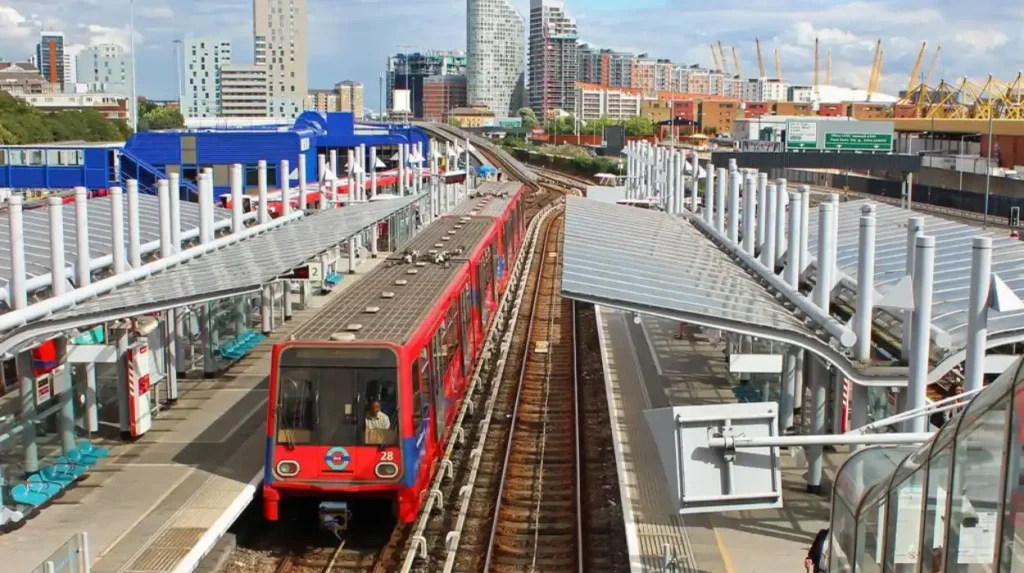
Visitors should distinguish between original Victorian structures and modern railway buildings. The Docklands Light Railway (DLR), which opened in 1987, uses parts of the historic Docklands railway landscape, but its stations and infrastructure also include substantial modern construction.
Historic England’s National Heritage List provides information about protected structures, their construction dates and architectural characteristics. The Tower Hamlets Local Heritage Hub also documents the borough’s historic buildings and development.
Why is the London and Blackwall Railway important to Tower Hamlets?
The London and Blackwall Railway transformed transport across East London when it opened in 1840. It connected the City with Blackwall and the developing docklands, supporting passenger movement and commercial activity. Its surviving viaducts remain important examples of early railway engineering.
The railway’s origins and development
The London and Blackwall Railway was established to improve transport between central London and the eastern docks. Its original route connected Minories with Blackwall, serving communities and commercial districts associated with maritime trade.
The railway opened in 1840 and extended westwards towards Fenchurch Street in 1841. Further extensions strengthened connections with Bow and the Isle of Dogs during the nineteenth century.
Its development followed the expansion of London’s commercial docks. The West India Docks, East India Docks and other waterfront facilities required efficient connections with London’s markets, warehouses and commercial districts.
The railway initially used an unusual cable-haulage system. Stationary engines pulled trains using ropes, rather than relying entirely on conventional locomotive operation. The system experienced difficulties with hemp ropes, leading to the introduction of wire cables in 1841.
Locomotive operation replaced cable haulage in February 1849. This change represented an important stage in the development of railway technology in London.
Its influence on the modern transport network
The railway’s infrastructure influenced subsequent transport development across the borough. Sections of the former railway corridor became part of the network later used by the Docklands Light Railway.
The DLR opened in 1987 as part of a wider regeneration programme for London’s former docklands. Its development connected important commercial and residential areas, including the Isle of Dogs and Poplar.
The relationship between the two networks demonstrates how historic railway alignments continue to influence modern urban infrastructure.
Visitors interested in transport history can examine the surviving railway arches, elevated structures and industrial surroundings to understand the physical legacy of the original railway.
What makes Braithwaite Viaduct an important railway landmark?
Braithwaite Viaduct is a Grade II-listed Victorian railway structure in Tower Hamlets. Built between 1839 and 1842, it originally carried trains towards Shoreditch Station. Its surviving brick arches demonstrate early railway engineering and nineteenth-century industrial construction techniques.
Construction and architectural design
Braithwaite Viaduct is among the most significant surviving examples of early railway architecture in the borough.
Historic England identifies its original construction period as 1839–1842. The structure was designed according to a plan by John Braithwaite, the Eastern Counties Railway Company’s architect.
The viaduct originally extended for approximately two kilometres. It carried two railway tracks towards Shoreditch Station, which subsequently became known as Bishopsgate Station.
The original structure formed an important connection between the railway network and the developing eastern districts of London.
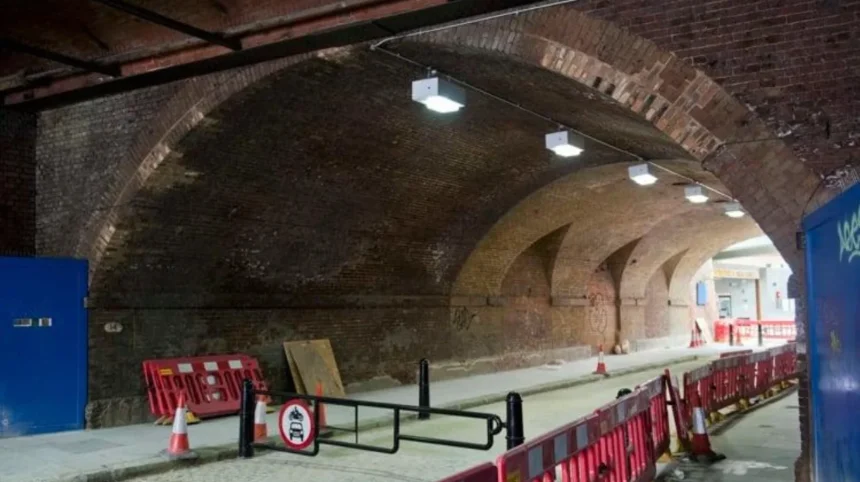
Today, approximately 260 metres of the original viaduct survive. The remaining section contains 20 arches supported by substantial brick piers.
Its construction uses stock brick, stone impost bands and rendered plinths. The structure also features Gothic-style cross-vaulting, an unusual architectural treatment for railway infrastructure of this period.
These features distinguish Braithwaite Viaduct from ordinary industrial brickwork. Its architectural details demonstrate the engineering and design standards applied to important Victorian railway projects. Historic England
Where can visitors find it?
The surviving viaduct is associated with the Wheler Street and Brick Lane area of Shoreditch, within Tower Hamlets.
Brick Lane is already recognised for its historic streets, markets, food businesses and cultural attractions. The nearby viaduct provides an additional opportunity to explore the area’s industrial and transport history.
Visitors should examine the structure from publicly accessible streets and respect any private boundaries surrounding the railway remains.
Historic England also identifies Braithwaite Viaduct on its Heritage at Risk Register. Its condition and conservation status make it an important example of the challenges involved in protecting historic transport infrastructure.
Where can visitors see the historic London and Blackwall Railway viaduct?
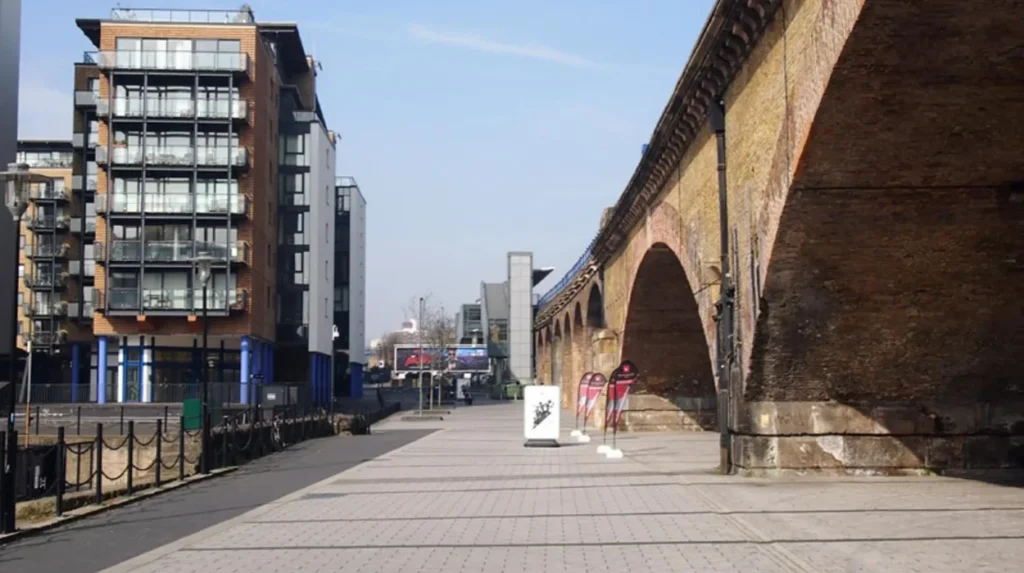
The surviving London and Blackwall Railway viaduct is particularly visible around Limehouse and Commercial Road. Its nineteenth-century brick arches and engineering features illustrate how elevated railway construction connected London’s commercial districts with the historic docks.
Victorian brick arches and railway engineering
The London and Blackwall Railway viaduct is one of the most recognisable forms of railway infrastructure in Tower Hamlets.
Historic England lists an important section of the structure under entry number 1241666. The Grade II-listed structure dates from 1839 and formed part of the railway opened in 1840.
Engineers George Stephenson and G. P. Bidder are associated with its design.
The viaduct uses stock-brick construction and an arrangement of arches designed to carry railway tracks above the surrounding streets and waterways.
Its architectural features include a projecting string course beneath the parapet, decorative details and substantial masonry bridge sections.
The structure also demonstrates the practical challenges faced by Victorian railway engineers. Railway companies needed continuous transport routes through an urban environment containing roads, canals, docks and existing buildings. Elevated brick construction provided an effective engineering solution.
The viaduct’s survival makes it an important physical record of London’s early railway development. Historic England+1
The relationship with Limehouse’s waterways
The railway viaduct is particularly interesting because it crosses an area shaped by historic waterways.
Limehouse developed as a riverside commercial settlement. Its maritime economy included wharves, warehouses, canals and dock facilities.
The Regent’s Canal Dock, now associated with Limehouse Basin, formed an important connection between London’s canal network and the River Thames.
Railway engineers had to design bridges that allowed railway traffic to pass above these waterways without interrupting their commercial use.
The surviving structures include the three-arched bridge associated with the Regent’s Canal Dock sequence and a single-arched bridge over the Limehouse Cut.
These engineering features demonstrate the relationship between railway construction and London’s earlier system of waterborne transportation.
For visitors, the combination of historic railway masonry and canal-side infrastructure makes Limehouse one of the most informative places to explore East London’s industrial heritage.
What is special about the Limehouse Curve railway bridge?
The Limehouse Curve is an important nineteenth-century railway connection that linked the London and Blackwall Railway with the Bow railway route. Its 1880 wrought-iron lattice-girder bridge crosses Commercial Road and represents a significant engineering feature of Tower Hamlets.
The history of the Limehouse Curve
The Limehouse Curve developed as railway companies expanded connections between central London and the eastern districts.
The original London and Blackwall Railway provided an important east-west route. Additional connections were needed to integrate this line with the wider railway network around Bow.
The Limehouse Curve was constructed in 1880 to strengthen this connection.
Its engineering included a wrought-iron lattice-girder bridge across Commercial Road. A lattice-girder bridge uses interconnected metal members arranged in a repeating structural pattern to provide strength and distribute loads.
This design was particularly useful for railway infrastructure because bridges needed to support substantial moving loads while spanning busy roads.
The surviving structure is documented in Tower Hamlets Council’s conservation area appraisal for Lowell Street.
The appraisal identifies the bridge as an extension of the London and Blackwall Railway and records its importance within the area’s historic urban landscape.
Exploring the Lowell Street area
Lowell Street is an interesting destination for visitors examining the architectural relationship between Victorian railway infrastructure and surrounding residential streets.
The surrounding conservation area includes historic terraced buildings and railway-related structures.
Commercial Road also provides context for understanding how the railway changed movement through Limehouse. The road was developed during the early nineteenth century as a direct route connecting the City with the East and West India Docks.
The railway subsequently introduced another major transport corridor through the same developing district.
This overlapping infrastructure reveals how roads, canals and railways shaped the physical development of Tower Hamlets.
Visitors interested in the broader architectural background should explore the borough’s [historic development of Limehouse and its docklands heritage](Insert Anchor Text for History Article Here), which explains how maritime trade, industrial expansion and transport investment transformed the neighbourhood.
Where can visitors explore former railway goods depots in Tower Hamlets?
Former railway goods depots reveal how Victorian railways supported London’s industrial economy. Tower Hamlets retains evidence of freight infrastructure around Shoreditch and the Regent’s Canal. Historic arches, loading structures and railway corridors explain how goods moved between trains, warehouses and waterways.
The former Devonshire Street Goods Depot
The former Devonshire Street Goods Depot provides another important connection between railway architecture and East London’s commercial history.
The railway structure was developed during the mid-nineteenth century to provide additional railway sidings and facilities for coal distribution.
Archaeological investigations documented 25 arches belonging to the former Devonshire Street Goods Depot Viaduct. These arches were constructed during the mid-1850s.
The original design supported the movement of coal from railway wagons to ground-level storage and distribution facilities.
Coal was an essential industrial fuel during the Victorian period. It supplied factories, domestic heating systems, commercial premises and other industrial operations throughout London.
The depot’s location near Regent’s Canal allowed coal arriving by railway to be transferred into barges for further distribution.
The Devonshire Street coal depot was completed in 1865. Its architecture therefore demonstrates how railway and canal transportation operated together within London’s industrial economy.
Why were railway arches important?
Railway arches served several practical purposes during the nineteenth century.
They supported elevated railway tracks while creating usable spaces underneath. Railway companies and commercial businesses used these spaces for storage, workshops and industrial operations.
The Devonshire Street example demonstrates how railway construction created additional infrastructure for freight handling.
Arches also provided a durable structural solution in areas where railways needed to cross existing streets and industrial sites.
Their continued survival provides evidence of the relationship between Victorian engineering and the development of London’s commercial neighbourhoods.
Today, visitors can investigate the former depot’s location around Westfield Way. However, the surviving archaeological record and historic railway remains should not be confused with a fully preserved public museum. Access to individual structures depends on current site ownership and public access arrangements.
What railway architecture can visitors discover around Limehouse Basin?
Limehouse Basin combines Victorian railway infrastructure with historic canal engineering and former dockland buildings. Visitors can examine railway viaducts, bridges and transport corridors while exploring the waterfront landscape that supported East London’s nineteenth-century maritime and industrial economy.
The connection between railway and canal architecture
Limehouse Basin is an important location for understanding the relationship between different forms of Victorian transportation.
The basin connects the Regent’s Canal with the River Thames through a historic dockland setting.
Its development formed part of London’s expanding canal system during the nineteenth century. The surrounding industrial landscape subsequently attracted railway infrastructure as commercial transportation requirements increased.
The railway viaduct running through the area demonstrates how engineers integrated elevated railways into an existing network of waterways and industrial buildings.
Historic England identifies a surviving railway viaduct north of the Regent’s Canal Dock, extending between Branch Road Bridge and the Limehouse Cut towards Three Colt Street.
This Grade II-listed structure includes substantial brick arches and distinctive masonry bridgework.
Architectural features to examine
Visitors exploring Limehouse should pay attention to the relationship between railway structures and their surroundings.
The most important architectural features include:
- Brick railway arches: These structures supported elevated railway tracks and created additional space underneath.
- Masonry bridge abutments: These provided structural support where railway lines crossed waterways and roads.
- Decorative parapet details: Projecting masonry courses and stone features demonstrate the architectural treatment of functional engineering.
- Iron bridge components: Metal structural elements allowed railway lines to cross wider openings.
- Canal-side industrial buildings: Former warehouses and commercial buildings explain the area’s historic relationship with freight transportation.
These features provide a useful framework for understanding the architectural history of Limehouse.
Why the area matters today
Limehouse Basin now forms part of a regenerated waterfront environment. Residential developments, pedestrian routes and leisure facilities occupy land previously associated with docks and industrial transportation.
The historic railway structures remain important because they preserve evidence of the area’s original transport function.
Visitors can explore the public waterfront and surrounding streets to understand the relationship between historic industrial infrastructure and modern urban regeneration.
The area also offers convenient connections through Limehouse railway and DLR stations.
How did the Docklands Light Railway preserve Tower Hamlets’ railway heritage?
The Docklands Light Railway opened in 1987 and reused elements of the former docklands transport landscape. Its development connected modern transport with historic railway corridors, particularly around Limehouse, Poplar and the Isle of Dogs.
The development of the DLR
The closure and decline of London’s traditional docks transformed the economic landscape of East London during the twentieth century.
Containerisation changed shipping operations, reducing the need for many older dock facilities. The closure of the major enclosed docks contributed to industrial decline and economic difficulties across the Docklands.
The London Docklands Development Corporation was established in 1981 to support regeneration.
The Docklands Light Railway became an important part of this transformation. It opened in 1987, providing a modern transport connection between Tower Gateway, Stratford and the Isle of Dogs.
The initial railway network incorporated former railway corridors and infrastructure associated with the historic docklands.
This approach reduced the need to construct every section of the railway from scratch and connected new developments with established transport routes.
Modern architecture alongside historic engineering
The DLR is not itself a Victorian railway system. Its original stations and infrastructure belong primarily to the late twentieth century.
However, its routes pass through an urban environment shaped by nineteenth-century railway construction.
This creates an interesting architectural contrast between historic masonry viaducts and modern elevated railway structures.
Visitors travelling through Limehouse and Poplar can observe how railway infrastructure has changed over time.
Modern DLR stations generally prioritise accessibility, passenger movement and efficient connections with surrounding developments.
Older railway structures, by comparison, reflect the construction materials and engineering methods available during the Victorian period.
Understanding this difference helps visitors identify authentic historic railway architecture rather than assuming every elevated railway structure is Victorian.
Which Tower Hamlets neighbourhoods offer the best railway heritage experiences?
Limehouse, Shoreditch, Poplar and Whitechapel provide useful starting points for exploring railway heritage in Tower Hamlets. Each neighbourhood offers a different perspective on transport development, from Victorian viaduct construction to historic station locations and modern Docklands regeneration.
Shoreditch and Brick Lane
Shoreditch provides access to Braithwaite Viaduct, one of the borough’s most important surviving railway structures.
The surrounding Brick Lane district developed as a commercial and industrial neighbourhood. Its streets contain evidence of different periods of London’s urban history.
Visitors can combine a railway heritage walk with exploration of historic markets, former industrial buildings and traditional streets.
The viaduct is particularly significant because its surviving arches preserve part of the original infrastructure associated with the Eastern Counties Railway.
Limehouse and Commercial Road
Limehouse offers the strongest concentration of railway and canal-related heritage.
Its historic structures include sections of the London and Blackwall Railway viaduct and the Limehouse Curve bridge.
Commercial Road provides an important geographical reference for understanding the development of the area’s transport infrastructure.
The nearby Limehouse Basin adds another dimension to the visit through its historic dock and canal connections.
Poplar and West India Docks
Poplar is important for understanding the relationship between railway infrastructure and the historic docklands.
The district developed alongside the East India Docks and West India Docks, which played major roles in London’s maritime economy.
The arrival of railway transportation strengthened connections between these commercial facilities and the wider city.
Today, the DLR provides convenient access to the regenerated docklands landscape.
Visitors should distinguish between historic railway alignments and modern DLR station buildings. Both contribute to the area’s transport history, but they represent different architectural periods.
Whitechapel and Bethnal Green
Whitechapel and Bethnal Green provide additional context for understanding the expansion of London’s urban railway network.
Whitechapel has a long railway history, with its railway station opening in 1876 as part of the East London Railway.
Its modern station environment reflects extensive later redevelopment and the integration of Underground, London Overground and Elizabeth line services.
Bethnal Green also demonstrates the development of twentieth-century underground railway architecture.
These locations are useful for visitors studying the evolution of public transport, although they do not offer the same concentration of surviving Victorian railway masonry as Limehouse and Shoreditch.
How can visitors plan a railway heritage walk through Tower Hamlets?
A railway heritage walk can connect Shoreditch, Limehouse and the historic docklands through publicly accessible streets and transport routes. Visitors should prioritise listed viaducts, historic bridge locations and canal-side infrastructure while allowing time for nearby cultural attractions.
Suggested railway heritage itinerary
A visit can be organised around three geographical sections.
First stop: Shoreditch and Braithwaite Viaduct
Begin around Brick Lane and Wheler Street. Examine the surviving Braithwaite Viaduct and its Victorian brick construction.
Allow approximately 30–45 minutes to explore the surrounding streets and understand the relationship between the railway and the former Bishopsgate goods transport area.
Second stop: Limehouse and Commercial Road
Continue towards Limehouse to explore the historic London and Blackwall Railway viaduct.
Look for the surviving masonry arches and bridge structures associated with the Regent’s Canal Dock and Limehouse Cut.
Allow approximately 45–60 minutes for the railway architecture and surrounding historic streets.
Third stop: Limehouse Basin and Docklands
Finish around Limehouse Basin and continue towards the wider Docklands area.
This section provides opportunities to compare historic canal and railway infrastructure with the modern DLR network.
Allow approximately 45–60 minutes, depending on the number of waterfront locations visited.
These timings are suggested sightseeing allowances rather than official access or guided-tour durations. Visitors should check walking routes, construction activity and public access before travelling.
Practical transport information
Tower Hamlets has several convenient public transport connections.
Limehouse station provides access to National Rail and the DLR. Shoreditch High Street station serves the London Overground network, while Whitechapel connects several major transport services.
The Elizabeth line also serves Whitechapel, providing connections across London.
Visitors can use Transport for London’s journey planner to identify suitable routes and check service updates.
What architectural details should visitors look for in historic railway structures?
Historic railway architecture combines engineering features with practical construction requirements. Visitors should examine brick arches, iron girders, bridge abutments, masonry supports and track alignments to understand how Victorian engineers designed railway infrastructure for London’s busy streets and waterways.
Brick arches and masonry construction
Brick arches are among the most recognisable features of Victorian railway architecture.
Their curved construction distributes loads towards supporting piers and abutments. This design allowed engineers to build elevated railway routes across densely developed urban districts.
The arches also created usable spaces underneath railway tracks.
Braithwaite Viaduct and the London and Blackwall Railway viaduct demonstrate this construction approach.
Visitors should examine the relationship between the arch openings, supporting piers and decorative masonry details.
Iron and steel railway bridges
Metal bridges became increasingly important as railway networks expanded.
Wrought iron was used in nineteenth-century engineering because it provided structural strength and allowed engineers to construct relatively long spans.
The Limehouse Curve bridge provides a documented example of wrought-iron lattice-girder construction.
Its design illustrates how railway engineers addressed the challenge of crossing busy roads without interrupting surface transportation.
Railway arches and commercial activity
Railway arches also influenced the economic development of surrounding neighbourhoods.
The spaces beneath elevated railway tracks accommodated storage facilities, workshops and industrial businesses.
This arrangement allowed railway companies to combine transportation infrastructure with additional commercial uses.
The former Devonshire Street Goods Depot demonstrates how railway structures supported coal distribution and the transfer of industrial materials.
These architectural details help visitors understand why railway infrastructure became an important part of London’s industrial landscape.
Explore More Area Guide
Where to Discover Historic Railway Architecture in Tower Hamlets
PLI Launches Insurance Law Hub for Attorneys in New York
Why is railway heritage important to the future of Tower Hamlets?
Railway heritage remains important because it preserves evidence of East London’s industrial development, engineering innovation and urban transformation. Protecting historic viaducts and railway structures supports architectural conservation, cultural tourism and a stronger understanding of the borough’s changing transport network.
Conservation of historic railway infrastructure
Historic railway structures require continued maintenance and appropriate conservation.
Weather exposure, pollution, vegetation growth and changes in surrounding land use affect historic masonry and metalwork.
Listed-building protection helps identify structures of special architectural or historic interest.
Braithwaite Viaduct and sections of the London and Blackwall Railway viaduct benefit from Grade II listing.
Grade II is a designation used in England for buildings and structures of special architectural or historic interest.
Listing does not automatically mean that every part of a site is open to visitors. It establishes a framework for considering the effects of proposed changes to protected heritage assets.
Historic England provides official information about listed structures, their architectural descriptions and conservation status.
Railway heritage and cultural tourism
Historic railway infrastructure contributes to East London’s wider cultural tourism offer.
Visitors interested in architecture, industrial history and engineering can combine railway heritage exploration with established attractions across Tower Hamlets.
Limehouse Basin provides access to historic waterways and waterfront regeneration.
Brick Lane offers markets, cultural attractions and historic commercial streets.
The West India Quays area provides opportunities to explore the relationship between former docks and modern commercial development.
These destinations demonstrate how transport history connects with architecture, commerce and local identity.
The importance of preserving industrial history
Railway architecture is an important part of the borough’s industrial heritage.
Its structures document the growth of commercial transportation and the relationship between London’s docks and the wider economy.
Conserving these remains also protects physical evidence of nineteenth-century engineering.
Future development around historic railway corridors should recognise their architectural significance and relationship with the surrounding built environment.
The continued use of historic transport routes demonstrates that infrastructure from earlier periods remains relevant to modern urban planning.
What should visitors know before exploring railway heritage in Tower Hamlets?
Visitors should plan their exploration around publicly accessible streets, listed structures and established transport connections. Checking transport services, construction work and access restrictions helps ensure a practical visit to Tower Hamlets’ historic railway architecture.
Several practical considerations improve the experience.
- Check transport services: Use Transport for London to check DLR, Underground, Overground and National Rail services.
- Respect private property: Historic railway arches and former depot structures are not necessarily open to the public.
- Check conservation information: Historic England provides official listing descriptions and architectural details.
- Wear comfortable footwear: Exploring historic streets, canal paths and railway corridors involves walking on different surfaces.
- Allow sufficient time: Shoreditch, Limehouse and Poplar each have separate heritage attractions.
- Check accessibility: Confirm step-free access and accessible walking routes before travelling.
Photography is generally possible from publicly accessible areas, subject to local restrictions and private-property boundaries.
Tower Hamlets offers an important collection of historic railway structures that explain the development of London’s transport and industrial networks.
Braithwaite Viaduct demonstrates the architectural ambitions of early railway engineers. The London and Blackwall Railway viaduct preserves evidence of the transport connections that supported the historic docks. The Limehouse Curve illustrates the development of nineteenth-century railway engineering, while the former Devonshire Street Goods Depot demonstrates how railways supported commercial freight distribution.
Limehouse, Shoreditch and Poplar provide particularly useful locations for exploring these historic connections.
For tourists, railway enthusiasts, architecture researchers and local residents, these surviving structures offer a valuable opportunity to understand how Victorian engineering transformed East London.
Preserving this infrastructure also ensures that Tower Hamlets retains an important physical connection with its industrial past while continuing to develop as a modern London borough.
Where can I find historic railway architecture in Tower Hamlets?
Tower Hamlets has several historic railway structures around Limehouse, Shoreditch, Brick Lane and Poplar. Braithwaite Viaduct, the London and Blackwall Railway viaduct and Limehouse Curve are important examples of Victorian railway engineering.