East London’s Docklands waterfront combines historic trading docks, modern skyscrapers, riverside promenades, landscaped gardens and cultural attractions along the River Thames. From Canary Wharf and West India Quay to the Royal Docks and Trinity Buoy Wharf, the area offers visitors a distinctive combination of maritime heritage and contemporary urban architecture.
- What Makes the Docklands Waterfront in East London Worth Visiting?
- Where Can Visitors Experience the Historic Waterfront at West India Quay?
- Where Can Visitors Enjoy Modern Waterfront Architecture in Canary Wharf?
- Which Public Gardens and Waterfront Parks Should Visitors Explore?
- Where Can Visitors Experience the Royal Docks Waterfront?
- How Can Visitors Enjoy Panoramic Docklands Views from the London Cable Car?
- Where Can Visitors Discover Docklands’ Independent Arts and Maritime Heritage?
- Which Docklands Waterfront Routes Are Best for Walking and Photography?
- West India Quay to Canary Wharf
- Canary Wharf to Wood Wharf
- Royal Victoria Dock Waterfront
- Photography Opportunities
- Where Can Visitors Find Waterfront Restaurants and Places to Relax?
- How Can Visitors Reach the Main Docklands Waterfront Attractions?
- What Is the Best Time of Year to Explore the Docklands Waterfront?
- How Has Waterfront Regeneration Changed the Docklands Area?
- How Can Visitors Plan a Complete Docklands Waterfront Day Out?
- Why Should Docklands Be Included in an East London Travel Itinerary?
The Docklands waterfront is one of the most interesting places to explore in East London. Its transformation from an industrial shipping centre into a modern residential, commercial and leisure destination has created a varied landscape for tourists, photographers, families and architecture enthusiasts.
Visitors can explore historic warehouses, walk beside former shipping basins, discover contemporary public art, enjoy waterside restaurants and experience panoramic views across the Thames. Several destinations also provide free public spaces, making Docklands suitable for visitors planning a budget-friendly London itinerary.
Understanding the geography of the area helps visitors plan their exploration. Canary Wharf sits on the Isle of Dogs, while the Royal Docks occupy a further eastern section of the waterfront in the London Borough of Newham. Other important destinations include Poplar, West India Quay, Silvertown and Leamouth.
What Makes the Docklands Waterfront in East London Worth Visiting?
The Docklands waterfront is worth visiting because it combines London’s maritime history with modern architecture, landscaped public spaces, cultural attractions and riverside leisure. Visitors experience historic warehouses, former shipping docks, contemporary skyscrapers and accessible walking routes within one connected East London destination.
London Docklands developed around the commercial importance of the River Thames. Its enclosed docks provided secure locations for merchant ships to unload imported goods, including sugar, coffee, spices and other commodities.
The Port of London became one of the world’s most important trading centres during the eighteenth and nineteenth centuries. The West India Docks, East India Docks and Royal Docks supported this commercial activity and shaped the surrounding communities.
The decline of traditional shipping and changes in international cargo transportation led to the closure of several major docks during the twentieth century. The closure of the West India Docks in 1980 marked an important stage in this industrial transition.
Subsequent regeneration transformed substantial parts of Docklands into commercial buildings, residential developments, cultural venues and public waterfront spaces.
Canary Wharf became a major financial district, while the Royal Docks developed a combination of residential neighbourhoods, exhibition facilities and leisure destinations.
This transformation created several distinct waterfront experiences:
- Historic waterfronts: West India Quay, where former warehouses preserve the area’s industrial character.
- Modern architectural districts: Canary Wharf, with its skyscrapers, landscaped plazas and dockside developments.
- Cultural destinations: Trinity Buoy Wharf, with its independent creative spaces and historic lighthouse.
- Riverside parks: Thames Barrier Park, offering landscaped gardens and views of the Thames Barrier.
- Recreational waterfronts: Royal Victoria Dock, with watersports, promenades and aerial transport connections.
These destinations make Docklands suitable for visitors interested in history, architecture, photography, outdoor recreation and urban regeneration.
Where Can Visitors Experience the Historic Waterfront at West India Quay?
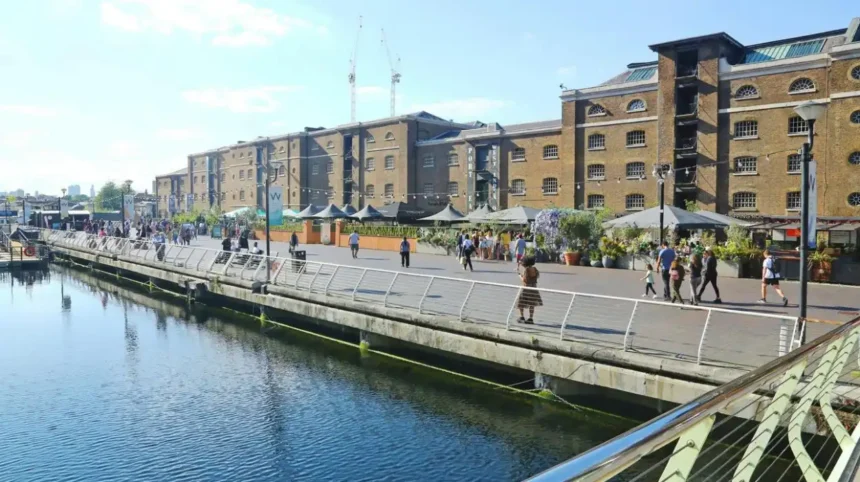
West India Quay is one of the best places to experience Docklands heritage because its historic warehouse buildings stand beside the former West India Docks. Visitors can explore preserved industrial architecture, discover London’s maritime history and enjoy restaurants along the waterfront.
West India Quay is located beside Canary Wharf on the northern side of the Isle of Dogs. Its historic buildings provide a direct connection between London’s former commercial port and its modern financial district.
The area developed around the West India Docks, which opened in 1802. These enclosed docks were constructed to handle goods arriving from the Caribbean and other international trading destinations.
The surviving warehouse buildings provide important architectural evidence of this commercial history. Their brick façades, large windows and traditional industrial proportions contrast with the modern towers surrounding them.
London Museum Docklands
The main cultural attraction at West India Quay is London Museum Docklands.
The museum occupies a historic warehouse at No. 1 Warehouse, Hertsmere Road. Its collections explore London’s relationship with the River Thames, maritime commerce, migration, slavery and the communities that developed around the docks.
The exhibitions explain how the port influenced London’s economic development and how international trade shaped everyday life in the capital.
The museum also examines the difficult history of the transatlantic slave trade and the role of British commercial institutions in this system.
Its permanent galleries offer visitors historical context that helps explain the development of modern Docklands. Entry to the permanent galleries is free, making it an accessible attraction for tourists and families.
Waterfront Dining and Architecture
The pedestrian areas around West India Quay provide opportunities to appreciate the relationship between historic architecture and contemporary development.
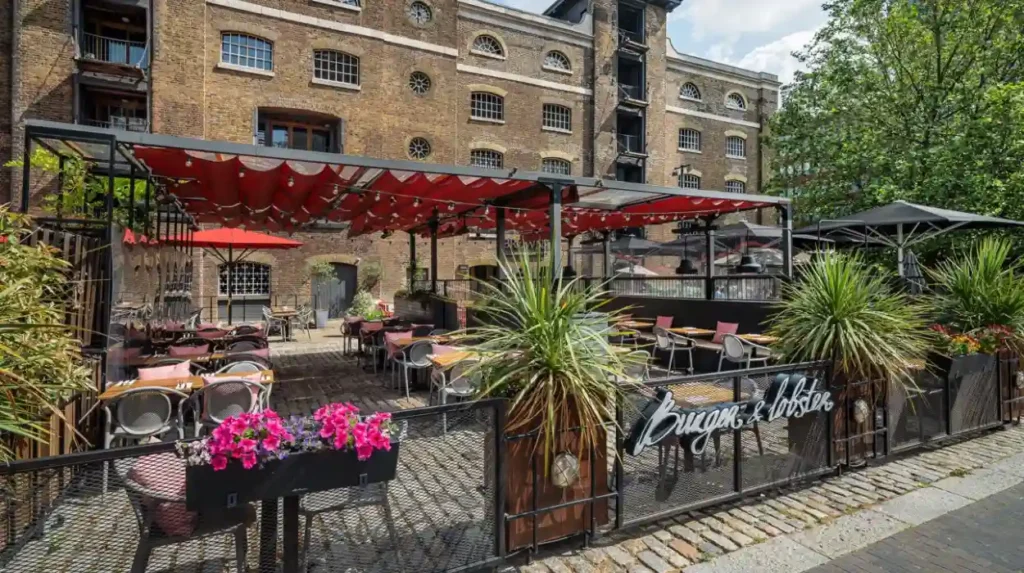
Restaurants and cafés occupy parts of the waterfront, creating places to stop during a walking itinerary. The dockside setting also provides views of Canary Wharf’s buildings and the water between the surrounding structures.
Visitors interested in architectural photography should examine the contrast between the old warehouse façades and the modern commercial skyline.
As you explore the modern waterfront, you are crossing land with a deep industrial heritage. Read about the full [History of London’s Docklands and Its Maritime Development] to understand how the historic port developed into today’s regenerated district.
Where Can Visitors Enjoy Modern Waterfront Architecture in Canary Wharf?
Canary Wharf offers one of East London’s strongest combinations of modern waterfront architecture, public art, landscaped squares and pedestrian dockside routes. Visitors can explore its skyscrapers, public gardens, shopping destinations and waterside developments while enjoying views across the historic docks.
Canary Wharf is located on the Isle of Dogs in the London Borough of Tower Hamlets. It developed into a major commercial district through the regeneration of the former West India Docks.
Its skyline is dominated by high-rise office buildings, including One Canada Square, a landmark skyscraper completed in 1991. Designed by architect César Pelli, the building became an internationally recognised symbol of London’s financial development.
The surrounding waterfront creates a distinctive architectural environment. Modern office towers stand beside enclosed docks, pedestrian bridges, landscaped plazas and residential developments.
One Canada Square and the Financial District
One Canada Square is one of the most recognisable buildings in Canary Wharf.
Its pyramid-shaped roof and reflective exterior distinguish it from the surrounding buildings. The tower provides an important visual reference when exploring the district.
Visitors can photograph the building from different waterfront positions, particularly around Canada Square and the surrounding dockside promenades.
The surrounding financial district contains major corporate offices, restaurants, retail spaces and public areas. Its architecture demonstrates how commercial regeneration reshaped the former industrial landscape.
Wood Wharf and Harbour Quay
Wood Wharf is a newer mixed-use neighbourhood east of the main Canary Wharf commercial estate.
Its development combines residential buildings, offices, restaurants, pedestrian routes and waterfront public spaces. The architectural design uses contemporary materials, extensive glazing and carefully planned public areas.
Harbour Quay is particularly useful for visitors seeking a quieter waterfront experience.
The landscaped space follows the dockside and provides seating, planting and views of the surrounding buildings. It creates a convenient place to pause during an architectural walk.
Eden Dock
Eden Dock provides another example of contemporary waterfront planning.
The space incorporates planting and nature-focused design within Canary Wharf’s dense commercial environment. Its location allows visitors to experience a more landscaped section of the district without travelling away from the main financial centre.
These developments demonstrate how modern Docklands incorporates public access, environmental design and commercial architecture into one urban environment.
Which Public Gardens and Waterfront Parks Should Visitors Explore?
East London’s Docklands waterfront contains several public gardens and landscaped parks that provide green space beside historic docks and the River Thames. Crossrail Place Roof Garden, Jubilee Park and Thames Barrier Park offer different experiences for walking, photography and relaxation.
Public gardens form an important part of Docklands’ modern development. They provide outdoor recreational space within an area characterised by commercial buildings, residential towers and transport infrastructure.
Visitors can combine these gardens with nearby waterfront attractions rather than treating them as separate destinations.
Crossrail Place Roof Garden
Crossrail Place Roof Garden is one of Canary Wharf’s most distinctive public gardens.
Located above the Elizabeth line station, the garden features tropical and subtropical planting, walking paths and seating beneath an impressive timber-and-glass roof structure.
Its design creates a sheltered environment within the commercial district. Visitors can explore the planted sections, photograph the architectural roof and take a break from the surrounding shopping and office areas.
The garden is free to enter and provides an accessible green space for tourists and local workers.
Its position also makes it convenient for visitors arriving by Elizabeth line, Jubilee line or Docklands Light Railway (DLR).
Jubilee Park
Jubilee Park is a landscaped public space within Canary Wharf.
The park contains planted areas, open pedestrian routes and seating. Its location between major commercial buildings makes it a convenient stopping point during a walking tour.
Visitors can use the park to take photographs, relax and explore the surrounding architecture.
It is particularly suitable for travellers who want to combine outdoor sightseeing with shopping and dining.
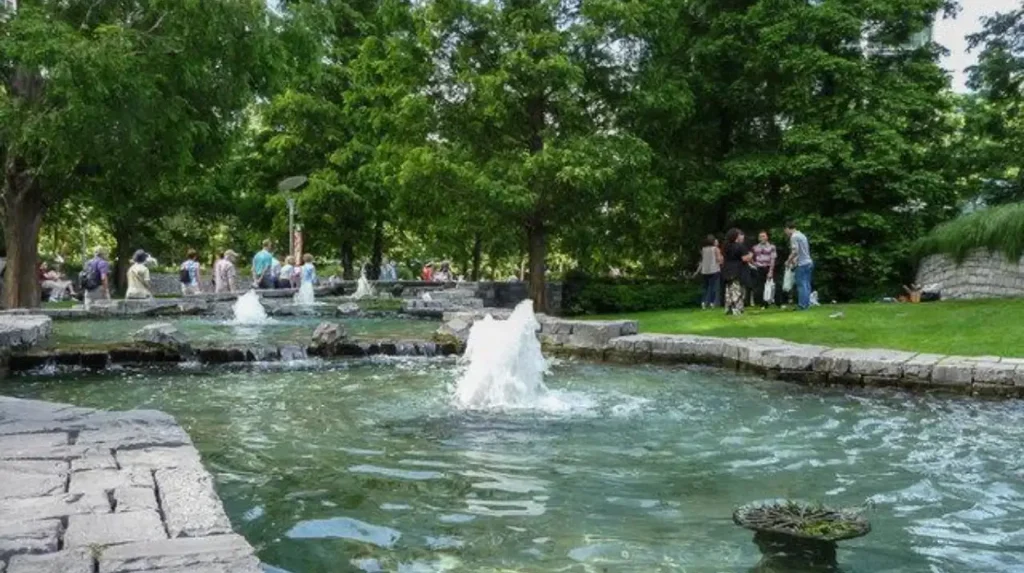
Thames Barrier Park
Thames Barrier Park is located in Silvertown in the Royal Docks area.
The park is known for its distinctive landscape design and views towards the Thames Barrier. Its layout incorporates landscaped planting, pathways and open recreational areas.
The Thames Barrier itself is an important flood-defence structure designed to protect London from tidal flooding.
The park provides an opportunity to understand the relationship between London’s waterfront development and flood-risk management.
Visitors interested in landscape architecture can examine how the park’s design incorporates the surrounding industrial and riverside environment.
It is also a suitable destination for walking, photography and family visits.
Where Can Visitors Experience the Royal Docks Waterfront?
The Royal Docks provide a large-scale waterfront experience in East London, combining historic dock basins, modern residential developments, watersports, exhibition venues and riverside promenades. Royal Victoria Dock is particularly suitable for visitors seeking open views and outdoor activities.
The Royal Docks form an important part of East London’s maritime landscape. Located in the London Borough of Newham, the area includes Royal Victoria Dock, Royal Albert Dock and King George V Dock.
These enclosed docks were developed to accommodate large commercial ships and support London’s expanding port operations.
Their size and engineering made them important components of the Port of London. The docks also supported warehouses, factories and employment across the surrounding communities.
Following the decline of traditional commercial shipping, regeneration introduced new residential, commercial, educational and recreational uses.
Royal Victoria Dock
Royal Victoria Dock is a particularly attractive location for waterfront exploration.
The dock offers broad water views, long pedestrian routes and a setting surrounded by contemporary developments.
Visitors can walk along the waterfront and observe the scale of the historic dock basin. Its open layout provides a different experience from the narrower dockside spaces around Canary Wharf.
The surrounding area includes ExCeL London, hotels, restaurants and residential developments.
ExCeL London Waterfront
ExCeL London is an international exhibition and convention centre beside Royal Victoria Dock.
It hosts trade exhibitions, conferences, entertainment events and professional gatherings.
The waterfront setting makes it an important destination for business travellers and event visitors. People attending exhibitions can explore the surrounding dockside paths, restaurants and hotels during breaks or after scheduled activities.
Its location also connects the Royal Docks with the wider Docklands transport network.
Watersports and Outdoor Recreation
The Royal Docks support a range of water-based activities.
These include:
- Wakeboarding: Cable-assisted water sports available through specialist operators.
- Stand-up paddleboarding: A recreational activity involving a board and paddle.
- Open-water swimming: Organised swimming sessions subject to designated access and safety arrangements.
- Waterside walking: Pedestrian routes offering views across the dock basins.
Facilities and activities depend on seasonal programmes, weather and operator schedules. Visitors should check individual providers before planning a water-based activity.
The Royal Docks are especially suitable for people who want to experience a more open and recreational side of East London’s waterfront.
How Can Visitors Enjoy Panoramic Docklands Views from the London Cable Car?
The London Cable Car connects the Royal Docks with Greenwich Peninsula through an aerial route across the River Thames. It provides elevated views of Canary Wharf, the O2, the river and surrounding developments, making it a distinctive way to experience London’s waterfront geography.
The London Cable Car provides a direct connection between Royal Victoria Dock and Greenwich Peninsula.
The service was originally introduced as the Emirates Air Line in 2012 and is now known as the London Cable Car.
Its two terminals are located near Royal Victoria Dock and the O2 on Greenwich Peninsula.
The journey takes approximately 10 minutes in each direction, depending on operating conditions.
Views Across the Thames
The elevated route provides a different perspective on East London’s geography.
Passengers can observe Canary Wharf’s skyscrapers, the Thames, Royal Victoria Dock and the wider urban landscape.
The height of the cable car makes it particularly useful for photography. It also helps visitors understand the relationship between the Royal Docks, Greenwich Peninsula and the surrounding riverfront.
Connecting the Royal Docks with Greenwich
The cable car allows visitors to combine two waterfront destinations within one itinerary.
At the northern terminal, travellers can explore Royal Victoria Dock and ExCeL London. At the southern terminal, they can access Greenwich Peninsula and the O2.
This connection also provides a useful alternative to travelling around the river by road or rail.
Visitors should check Transport for London’s official service information for current fares, opening times, accessibility arrangements and operating conditions before travelling.
Where Can Visitors Discover Docklands’ Independent Arts and Maritime Heritage?
Trinity Buoy Wharf is one of East London’s most distinctive creative waterfront destinations. Located at Leamouth beside the River Thames, it combines historic maritime infrastructure, artist studios, cultural spaces and the notable 19th-century lighthouse.
Trinity Buoy Wharf is located at the confluence of the River Thames and the River Lea.
Its history is connected to maritime navigation and the maintenance of navigational equipment used on the river.
The site was associated with Trinity House, the organisation responsible for maritime safety and navigational aids around England, Wales and other areas of British waters.
The historic environment remains visible through its lighthouse, industrial buildings and waterfront location.
The Trinity Buoy Wharf Lighthouse
The lighthouse is one of the site’s most recognisable structures.
It was used historically for testing and developing navigational lighting technology.
The lighthouse also has an important association with Michael Faraday, the nineteenth-century scientist whose experimental work contributed to the development of electrical technology.
Today, the building forms part of the site’s heritage and cultural identity.
Container City
Container City is a distinctive example of creative architecture within Docklands.
The development uses converted shipping containers to provide studio and workspace accommodation.
Its design reflects the industrial character of the surrounding waterfront while demonstrating how former port infrastructure can support contemporary creative industries.
Artists, designers and independent organisations contribute to the site’s cultural atmosphere.
Public Art and Creative Activities
Trinity Buoy Wharf is associated with exhibitions, cultural events, creative projects and independent artistic activity.
Visitors should check the site’s event programme before travelling because access to particular studios, exhibitions and indoor venues depends on scheduled activities.
The destination is particularly relevant for people interested in industrial architecture, creative regeneration and alternative cultural spaces beyond central London’s major museums.
Which Docklands Waterfront Routes Are Best for Walking and Photography?
The best Docklands walking routes connect West India Quay, Canary Wharf, Wood Wharf and the Royal Docks with accessible pedestrian spaces beside former shipping basins and the Thames. These routes combine historic buildings, modern skylines, landscaped gardens and waterfront photography opportunities.
Walking is one of the most effective ways to explore Docklands because many of its attractions are connected by pedestrian routes.
Visitors can move between architectural landmarks, gardens and historic waterfronts without relying on road transport for every journey.
West India Quay to Canary Wharf
This route combines industrial heritage with modern architecture.
Begin at West India Quay and explore the historic warehouse frontage. Continue towards the Canary Wharf commercial district to see its skyscrapers, shopping areas and landscaped public spaces.
Crossrail Place Roof Garden provides a useful stopping point before continuing towards Wood Wharf.
This route is suitable for visitors interested in photography, urban design and Docklands history.
Canary Wharf to Wood Wharf
The walk between the central Canary Wharf estate and Wood Wharf provides opportunities to examine contemporary waterfront development.
Visitors can explore dockside spaces, landscaped public areas and modern residential architecture.
Harbour Quay and Eden Dock offer additional places to stop and enjoy the water.
Royal Victoria Dock Waterfront
The Royal Victoria Dock promenade provides a more open walking experience.
Its long dockside views contrast with the enclosed spaces around West India Quay.
Visitors can combine the walk with ExCeL London, the London Cable Car terminal and nearby waterside facilities.
Photography Opportunities
Docklands offers several distinct photography subjects:
- Modern architecture: One Canada Square and the surrounding Canary Wharf skyline.
- Historic industrial buildings: The warehouses at West India Quay.
- Landscaped environments: Crossrail Place Roof Garden and Thames Barrier Park.
- Waterfront reflections: The docks around Wood Wharf and Canary Wharf.
- Panoramic river views: The London Cable Car and Royal Victoria Dock.
Early mornings and evenings provide different lighting conditions. Sunset is particularly useful for photographing the reflections of modern buildings across the water.
Where Can Visitors Find Waterfront Restaurants and Places to Relax?
Canary Wharf and West India Quay provide some of Docklands’ most accessible waterside dining options. Visitors can find restaurants, cafés, bars and outdoor seating around historic docks, modern commercial developments and landscaped waterfront spaces.
Docklands has developed into a significant dining destination alongside its commercial and residential regeneration.
The restaurant environment ranges from casual cafés and international food outlets to established restaurants and contemporary bars.
West India Quay Restaurants
West India Quay is suitable for visitors who want to combine dining with historic waterfront surroundings.
The restaurants around the former dock provide opportunities to enjoy meals beside the water.
Its proximity to London Museum Docklands makes the area particularly convenient for visitors planning a cultural day out.
Canary Wharf Dining
Canary Wharf has a broad restaurant and café offering.
Dining destinations are spread across several areas, including Canada Square, Crossrail Place, Jubilee Place and Wood Wharf.
Visitors can choose between quick meals, coffee breaks and longer dining experiences.
Wood Wharf Waterfront
Wood Wharf provides a more residential waterfront environment.
Its restaurants and hospitality venues complement the modern dockside architecture and landscaped pedestrian areas.
This part of Canary Wharf is useful for visitors seeking a quieter alternative to the busiest sections of the financial district.
Evening Waterfront Experiences
Docklands changes visually after sunset as office buildings, bridges and surrounding developments illuminate the waterfront.
Evening visitors can enjoy restaurant terraces, waterfront promenades and views across the illuminated docks.
Restaurant opening hours and outdoor seating availability vary by venue and season. Checking individual businesses before visiting helps avoid unnecessary travel.
How Can Visitors Reach the Main Docklands Waterfront Attractions?
Docklands is well connected to the rest of London through the Docklands Light Railway, Jubilee line, Elizabeth line, local buses and river services. Visitors can reach Canary Wharf, West India Quay and Royal Victoria Dock using public transport.
The transport network makes it relatively straightforward to explore different parts of the waterfront.
The Docklands Light Railway is particularly useful because several stations are located close to former docks, commercial developments and riverside attractions.
Docklands Light Railway
The DLR connects important Docklands destinations with central and eastern London.
Useful stations include:
- West India Quay: London Museum Docklands and the historic warehouses.
- Canary Wharf DLR: Canary Wharf’s commercial district and waterfront.
- Heron Quays: Wood Wharf and the surrounding financial district.
- Royal Victoria: Royal Victoria Dock and ExCeL London.
- West Silvertown: Thames Barrier Park and the eastern waterfront.
- East India: Trinity Buoy Wharf and surrounding Poplar destinations.
Jubilee and Elizabeth Lines
Canary Wharf has connections through the Jubilee line and Elizabeth line.
The Jubilee line provides connections towards London Bridge, Westminster and Stratford. The Elizabeth line connects Canary Wharf with central London, Heathrow Airport and destinations across the wider London rail network.
These services are useful for international tourists arriving from Heathrow and domestic travellers visiting the financial district.
River Transport
The River Thames also provides a transport option through Uber Boat by Thames Clippers.
Canary Wharf Pier connects the Docklands waterfront with other river destinations.
Travelling by river provides an alternative perspective on London’s architecture and waterfront development. It also allows visitors to connect Docklands with central London and Greenwich.
London Museum Docklands identifies Canary Wharf Pier as approximately an eight-minute walk from its entrance.
Visitors should check Transport for London and the river operator’s current journey information before travelling.
What Is the Best Time of Year to Explore the Docklands Waterfront?
Spring and summer provide favourable conditions for exploring Docklands because gardens, outdoor restaurants and waterfront promenades are easier to enjoy. Autumn and winter offer architectural photography opportunities, quieter walking conditions and indoor cultural attractions.
Docklands remains a year-round destination because its attractions include both indoor and outdoor experiences.
Spring
Spring is suitable for visiting Crossrail Place Roof Garden, Jubilee Park and Thames Barrier Park.
The longer daylight hours also make it easier to combine several waterfront attractions within one walking itinerary.
Summer
Summer provides opportunities for outdoor dining, watersports, riverside photography and extended waterfront walks.
Royal Victoria Dock is particularly suitable for visitors interested in outdoor recreation.
The longer evenings also provide more time to explore Canary Wharf’s illuminated architecture.
Autumn
Autumn offers changing colours in landscaped areas and a different atmosphere around the docks.
Visitors interested in photography can capture reflections, architectural details and seasonal planting.
Indoor attractions such as London Museum Docklands also provide alternatives during wet weather.
Winter
Winter visits are suitable for architecture enthusiasts and people interested in museums, shopping and restaurants.
Crossrail Place Roof Garden offers a sheltered garden environment, while Canary Wharf’s connected indoor retail spaces provide additional options.
Visitors should check daylight hours, weather forecasts and seasonal operating arrangements before planning outdoor activities.
How Has Waterfront Regeneration Changed the Docklands Area?
Docklands regeneration transformed former industrial shipping infrastructure into a mixed-use urban district containing financial offices, residential buildings, cultural attractions, public gardens and leisure facilities. This development reshaped East London’s economy, built environment and relationship with the River Thames.
The transformation of Docklands represents one of London’s most significant examples of urban regeneration.
During the nineteenth and early twentieth centuries, the docks supported international commerce and provided employment for large numbers of local residents.
However, changes in shipping technology, containerisation and port operations reduced the commercial importance of London’s enclosed docks.
The closure of traditional dock facilities created substantial areas of underused industrial land.
Regeneration initiatives subsequently encouraged commercial investment, infrastructure improvements and new residential development.
Development of Canary Wharf
Canary Wharf became the most recognisable symbol of this transformation.
Its commercial buildings established a major financial district outside the traditional City of London.
The development introduced modern office accommodation, retail facilities, transport connections and public spaces.
The area now combines business activity with residential and leisure uses.
Transformation of the Royal Docks
The Royal Docks also experienced significant redevelopment.
New housing, exhibition facilities, hospitality venues and leisure activities expanded the area’s role beyond its historic shipping function.
ExCeL London became an important international exhibition and conference destination.
The surrounding waterfront now supports a combination of commercial activity and public recreation.
Importance of Public Waterfront Spaces
Modern regeneration increasingly incorporates pedestrian access, green infrastructure and landscaped public spaces.
Examples include Crossrail Place Roof Garden, Eden Dock, Harbour Quay and Thames Barrier Park.
These spaces improve the experience of living, working and visiting Docklands.
They also demonstrate how former industrial waterfronts can support environmental design and public recreation alongside commercial development.
Regeneration remains important to the area’s future because new residential and commercial projects continue to change how East London interacts with its historic waterways.
Explore More Area Guide
Rightmove Names Havering Among Unhappiest Places to Live in Havering 2026
Thames Path Tower Hamlets: Wapping to Canary Wharf
How Can Visitors Plan a Complete Docklands Waterfront Day Out?
Visitors can explore Docklands through a combination of historic museums, modern architectural districts, landscaped gardens and riverside walks. A well-planned itinerary connects West India Quay, Canary Wharf and the Royal Docks according to available time.
The following itineraries help visitors organise their exploration.
Half-Day Docklands Itinerary
A half-day visit works best around West India Quay and Canary Wharf.
Start at London Museum Docklands to understand the area’s maritime history. Continue along the historic warehouse frontage before walking towards Canary Wharf.
Explore One Canada Square, Crossrail Place Roof Garden and the surrounding public spaces.
Finish with a meal or coffee around West India Quay or Wood Wharf.
Full-Day Docklands Itinerary
A full-day itinerary allows visitors to experience more of East London’s waterfront.
Visitors with additional time can include Trinity Buoy Wharf or Thames Barrier Park.
The Royal Docks and Canary Wharf are geographically separate sections of Docklands. Allow additional travel time when moving between them.
Why Should Docklands Be Included in an East London Travel Itinerary?
Docklands deserves a place in an East London travel itinerary because it offers historic attractions, modern architecture, cultural destinations and accessible waterfront recreation. Its combination of free public spaces, museums and transport connections makes it suitable for different visitor interests.
The Docklands waterfront presents a different perspective on London compared with traditional tourist destinations such as Westminster, Covent Garden and the South Bank.
Its industrial heritage explains the historical importance of the River Thames, while Canary Wharf demonstrates the economic and architectural changes that reshaped East London.
West India Quay offers historical attractions, Crossrail Place provides landscaped urban space, and the Royal Docks introduce visitors to a larger recreational waterfront.
Trinity Buoy Wharf adds a creative and maritime dimension to the experience.
The area’s transport connections also make it practical for visitors staying elsewhere in London. Tourists can explore individual attractions or combine several destinations into a longer itinerary.
Docklands is therefore an important destination for understanding how London’s historic port environment developed into a modern urban waterfront.
What are the best places to visit along the Docklands waterfront?
The best places include Canary Wharf, West India Quay, Royal Victoria Dock, Trinity Buoy Wharf, Crossrail Place Roof Garden and Thames Barrier Park. Each destination offers a different combination of waterfront views, architecture, history and recreation.