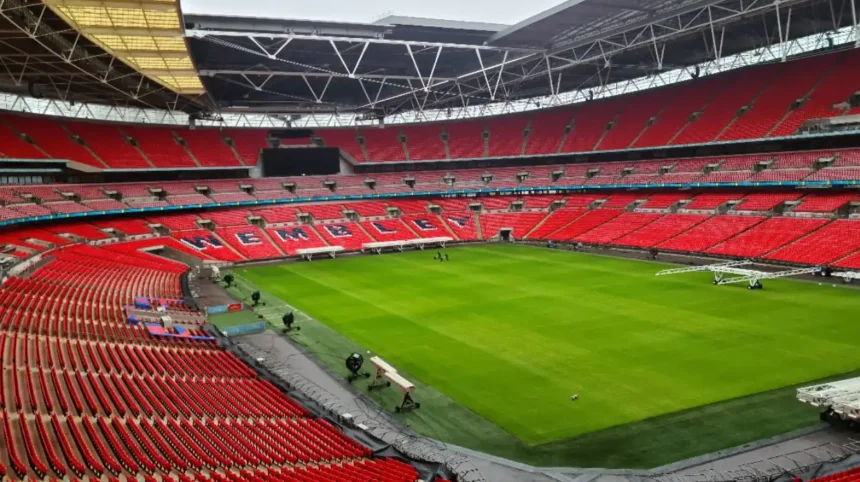
The England national football team represents England in international football, playing its first official match against Scotland in 1872. The Football Association governs the team, which won the FIFA World Cup tournament in 1966 at Wembley Stadium.
- How is the English football league system structured?
- Who governs professional and amateur football in England?
- What is the economic scale of English professional football?
- How does the Football Association manage player development?
- What are the primary cup competitions in England?
- What challenges affect the modern English game?
The codification of modern football occurred in London in 1863 when the Football Association established the initial rules of the game (Wheeler, 2016). This formalisation allowed the development of domestic fixtures and subsequent international competitions. The first international football match took place on 30 November 1872 in Partick, Glasgow, where England played Scotland to a scoreless draw (Wheeler, 2016). During the initial decades of international football, England competed primarily in the British Home Championship against Scotland, Wales, and Ireland. The Football Association withdrew from the Fédération Internationale de Football Association in 1928 due to disputes over the status of amateur players, meaning the national team did not participate in the first three FIFA World Cup tournaments in 1930, 1934, and 1938.
As you explore the modern site, you are crossing land with a deep heritage. Read about the full [History of East London Football Clubs] to understand its origins. England rejoined the international governing body in 1946 and made its debut appearance at a FIFA World Cup tournament in Brazil in 1950. The defining sporting achievement of the national team occurred on 30 July 1966, an event deeply tied to East London sports history as iconic local heroes captained and scored for the squad. England defeated West Germany 4–2 after extra time in the FIFA World Cup Final at Wembley Stadium. In continental competitions, the men’s senior team reached the final of the UEFA European Championship in 2021 and 2024, finishing as runners-up on both occasions. The women’s senior national team, known as the Lionesses, secured its first major international trophy by winning the UEFA Women’s Championship in 2022, defeating Germany 2–1 at Wembley Stadium (Earle, 2023).
How is the English football league system structured?
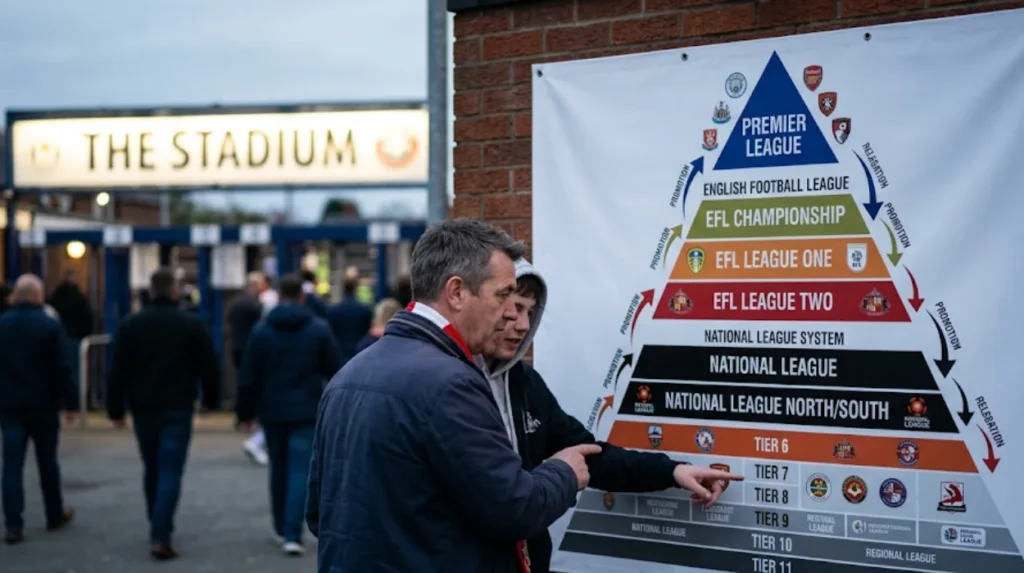
The English football league system comprises a hierarchical pyramid of interconnected leagues operating on a system of promotion and relegation. The Premier League forms the top tier, followed by the three divisions of the English Football League.
The pyramid system allows any club in English football to progress to the top tier of the sport based on competitive performance. The apex of the pyramid is the Premier League, an independent corporation established in 1992 that contains 20 member clubs (Damms, 2021). Below the Premier League sits the English Football League, which consists of three divisions containing 24 clubs each: the EFL Championship at tier two, EFL League One at tier three, and EFL League Two at tier four. These four divisions constitute the professional ranks of English football, where clubs operate full-time sporting operations and manage substantial financial turnover.
Below the professional tiers lies non-league football, organized systematically under the National League System. The National League operates at tier five, acting as the bridge between professional and semi-professional football. Tiers six through eleven split geographically into regional divisions, including 3 types of competitions: the National League North, the Southern Football League, and the Isthmian League. For teams operating across communities in the East London sub-region, the pyramid provides a direct pathway to ascend from local park divisions up to professional league statuses. At the conclusion of every season, the lowest-ranked teams in a division move down to the lower tier, while the top-ranked teams earn placement in the higher division. This mechanism ensures mathematical mobility across the entire infrastructure, linking grassroots amateur clubs directly to elite global enterprises.
Who governs professional and amateur football in England?
The Football Association serves as the official governing body for all aspects of English football, managing regulatory frameworks and national teams. The organisation collaborates with independent bodies, including the Premier League and the English Football League.
Founded on 26 October 1863 at the Freemasons’ Tavern in London, the Football Association is the oldest football association in the world (Wheeler, 2016). The executive headquarters reside at Wembley Stadium, and the administrative operations oversee compliance, disciplinary structures, and refereeing standards. The Football Association manages the selection, coaching staff, and logistical operations for all variations of national teams, including men’s, women’s, youth, and disability squads. The governing body maintains a seat on the International Football Association Board, which determines the official Laws of the Game used globally.
While the Football Association retains ultimate regulatory authority over the sport, professional competitions operate via independent commercial frameworks. The Premier League manages the administrative, broadcast licensing, and commercial operations of the top division (Damms, 2021). The English Football League administers the three professional tiers directly beneath the Premier League. Grassroots and amateur football rely on a network of County Football Associations, such as the London Football Association or the Essex County FA, which oversees grassroots fields in outer East London areas. These regional entities enforce disciplinary procedures, manage local league registrations, and allocate funding for municipal infrastructure development across metropolitan boroughs.
What is the economic scale of English professional football?
The economic scale of English professional football generates billions of pounds annually through television broadcasting rights, commercial sponsorships, and matchday ticketing. The Premier League generates the highest aggregate revenue of any domestic football league globally.
The financial expansion of English football accelerated rapidly following the formation of the Premier League in 1992, which transformed the sport into a global television product (Damms, 2021). Broadcasting contracts represent the largest revenue stream for elite clubs, encompassing domestic and international broadcast rights distributed across multiple networks. Commercial revenue streams include lucrative stadium naming rights, kit manufacturing contracts, and primary shirt sponsorships. Matchday revenue adds substantial income through corporate hospitality packages, general ticket sales, and stadium concession operations.
The economic infrastructure extends downward into communities through employment and taxation. Professional football clubs employ thousands of workers, including 4 categories of staff: professional athletes, medical clinicians, administrative executives, and stadium stewarding personnel. High-capacity arenas like the London Stadium in Stratford represent a significant hub of East London economic activity, generating substantial matchday commerce for local transportation networks and hospitality businesses. The high revenue concentration at the elite level creates a substantial financial disparity between Premier League clubs and lower-tier institutions. To mitigate this imbalance, a system of solidarity payments transfers funds from the top tier down to the English Football League and grassroots initiatives, supporting community programs and facility maintenance throughout the nation.
How does the Football Association manage player development?
The Football Association manages player development through the Elite Player Performance Plan, a structured academy framework designed to cultivate domestic talent. Elite development occurs at St George’s Park, the national football center.
The Elite Player Performance Plan governs the operation of youth academies across professional clubs in England, categorising facilities from Category One down to Category Four based on coaching quality, infrastructure, and productivity metrics. Academies receive central funding and must adhere to strict guidelines regarding contact hours, educational provision, and sport science support. The system prioritises technical proficiency, tactical intelligence, and physical conditioning from early childhood through to late adolescence. This systematised approach ensures a consistent pipeline of young players eligible to represent domestic clubs and national teams, drawing heavily from talent hotbeds situated within working-class neighborhoods across the East London landscape.
St George’s Park, located in Staffordshire and opened in 2012, serves as the central hub for the development of elite coaches and players. The complex features multiple training pitches, sports medicine facilities, and human performance laboratories. National team squads across all age groups utilize the venue for preparation camps prior to international fixtures. The Football Association administers formal coaching qualifications at this site, including 3 certifications: the UEFA B Licence, the UEFA A Licence, and the UEFA Pro Licence. This integration ensures that modern sports science, analytical data, and technical coaching philosophies disseminate uniformly through the domestic game to benefit urban academy networks.
What are the primary cup competitions in England?
The primary cup competitions in England are the Football Association Challenge Cup and the Football League Cup, which run concurrently with league schedules. These knockout tournaments provide qualification routes into prestigious European club competitions.
The Football Association Challenge Cup, known universally as the FA Cup, began in 1871 and stands as the oldest national football competition in existence. The tournament is a knockout competition open to eligible clubs down to tier ten of the English football pyramid, creating opportunities for amateur teams to compete against elite Premier League clubs. The competition does not utilize seeding, meaning pairings are decided entirely by random draws conducted before each round. This structure historically fosters famous East London football rivalries when smaller local clubs draw historic professional neighbors in early tournament phases. The final match takes place annually at Wembley Stadium in May, serving as a landmark event in the domestic sporting calendar.
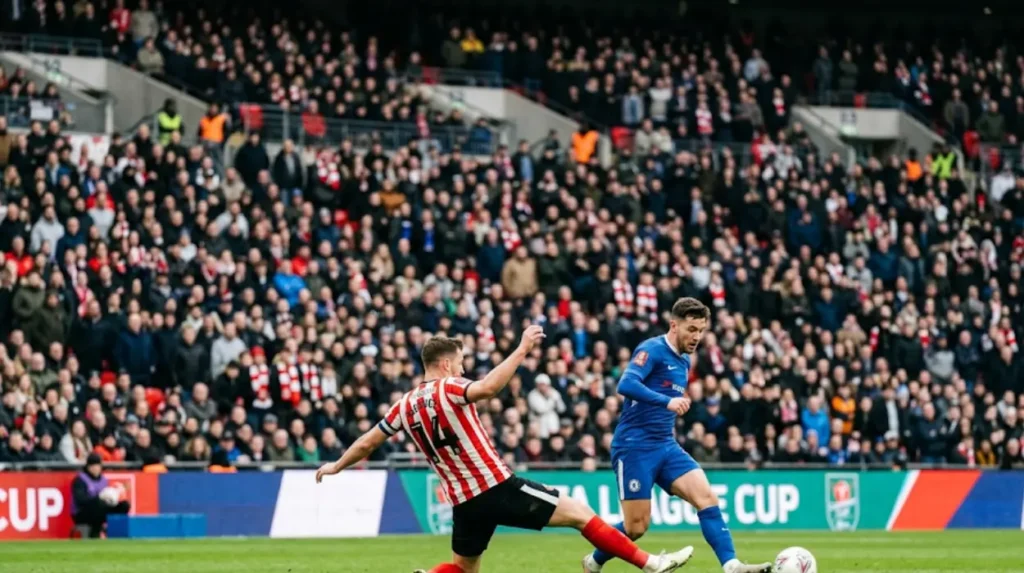
The Football League Cup, known commercially via sponsorship agreements, is restricted exclusively to the 92 professional clubs competing within the top four tiers of the pyramid. Established in 1960, this tournament utilizes a single-elimination knockout format, except for the semi-final stage, which features two-legged home and away fixtures. The winner of the competition earns direct qualification into the UEFA Conference League for the subsequent season. These cup competitions present unique physical demands, requiring clubs to manage squad rotation, recovery strategies, and tactical variations across congested winter playing schedules.
What challenges affect the modern English game?
The modern English game faces complex structural challenges, including severe financial sustainability issues, escalating player injury rates, and unequal representation in sports governance. Regulatory bodies implement revised financial rules to address operational instability across clubs.
Financial instability poses a persistent threat to clubs outside the elite tier, where wage expenses frequently exceed total operational revenue as institutions chase promotion. Regulatory bodies enforce Profitability and Sustainability Rules to curb deficit spending, resulting in points deductions and financial penalties for non-compliant clubs. The physical demands on elite players have intensified due to expanded international match calendars and tournament formats. Longitudinal clinical research demonstrates a substantial injury burden in professional football, highlighted by high frequencies of hamstring strains and anterior cruciate ligament tears (Sprouse et al., 2025).
Social sustainability and inclusivity represent another major operational challenge for governing bodies. Historically, institutional barriers limited the progression of female athletes and minority demographics within the sport (Lago et al., 2022). While media visibility and commercial investment in the Women’s Super League have increased significantly, structural disparities remain regarding research allocation and physiological data availability (Earle, 2023; Iván-Baragaño et al., 2022). Furthermore, national tournament studies identify low ethnic diversity in modern recreational formats, indicating an ongoing requirement for targeted community access initiatives across densely populated East London districts to ensure equal sporting opportunities (Price, 2026).
What is the England national football team?
The England national football team represents England in international football and is governed by the The Football Association. The team played its first official international match against Scotland in 1872.