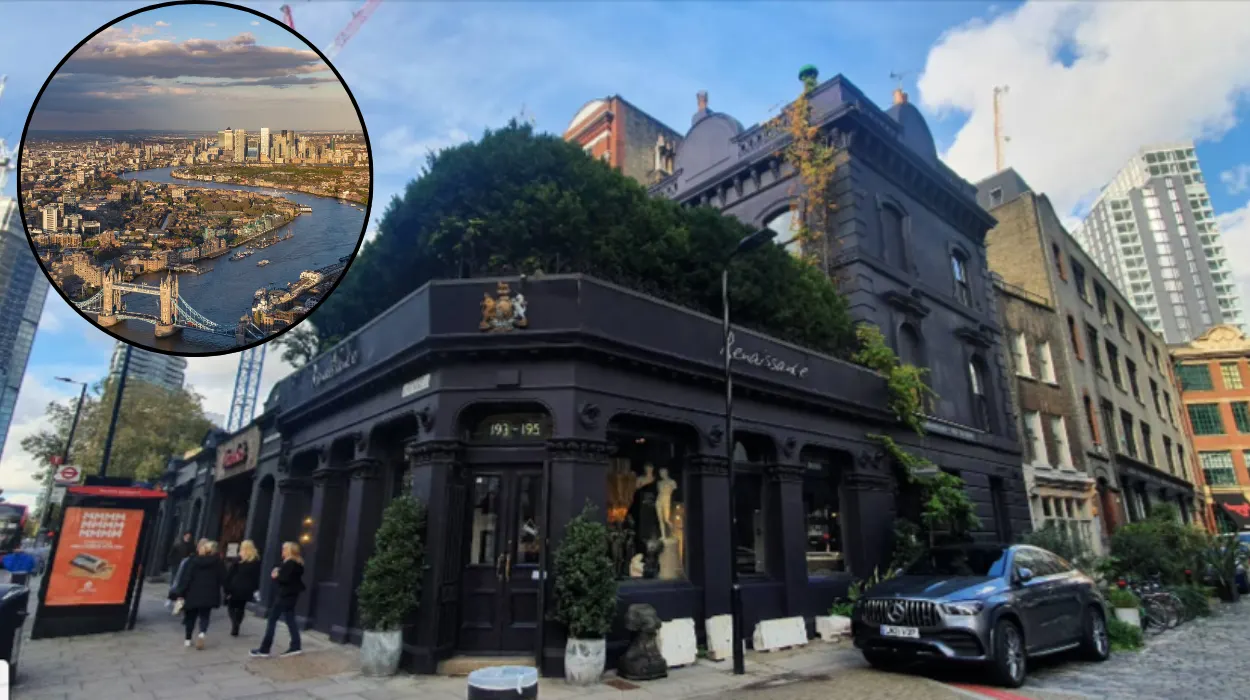
Hoxton captivates as a vibrant East London neighborhood blending rich history, cutting-edge street art, and modern creativity. Once a rural retreat near the City of London, it has evolved into a trendy hub for artists, entrepreneurs, and locals seeking authentic urban energy.
- Ancient Roots and Medieval Beginnings
- Tudor Retreats and Notorious Events
- Industrial Rise and Victorian Slums
- Wartime Legacy and Post-War Shift
- Gentrification and Modern Revival
- Street Art and Cultural Hotspot
- Notable Landmarks and Green Spaces
- Vibrant Nightlife and Dining
- Famous Residents and Legacy
- Living in Hoxton Today
Ancient Roots and Medieval Beginnings
Hoxton’s name traces back to the Domesday Book of 1086 as Hochestone, likely from Old English for a person’s enclosure or village. Roman activity occurred nearby along Ermine Street, but medieval Hoxton remained rural within Shoreditch parish, divided into small landholdings.
By 1415, city dwellers accessed Hoxton via the new Moorgate postern for leisurely walks on causeways toward marshy fields, prompting local residents to harass intruders protecting their land. A century later, the City ordered hedges and ditches destroyed to open paths, marking early tensions between urban expansion and rural life.
Hoxton gained its own parish church, St John the Baptist, in 1826, though civil authority stayed with Shoreditch.
Tudor Retreats and Notorious Events
Tudor-era Hoxton hosted moated manor houses for courtiers and ambassadors escaping city bustle, including Catholics using the Portuguese Ambassador’s chapel for secret masses. Sir Thomas Tresham sheltered priests here, leading to his imprisonment by Elizabeth I.
Public gardens drew crowds from crowded streets; Ben Pimlico’s nut-brown ale popularized the Pimlico name, now linked to a Westminster district but originating near Hoxton Street. Archery fields saw drama, like Ben Jonson’s 1598 fatal duel with Gabriel Spencer in Hoxton Fields.
In 1605, Hoxton featured in the Gunpowder Plot when William Parker, Lord Monteagle, received a warning letter at his Hoxton Street home, alerting authorities to Guy Fawkes’ scheme—a plaque now marks the site.
Industrial Rise and Victorian Slums
Seventeenth-century estates fragmented into almshouses, schools, and asylums; Aske’s Almshouses on Pitfield Street (1689, Robert Hooke design) housed poor haberdashers, while Hoxton House became a notorious madhouse for elites and paupers.
Hoxton Square and Charles Square emerged as desirable spots for nonconformists evading City rules. Victorian railways spurred suburbs, infill, and factories, displacing wealth for slums and furniture trade dominance.
Charles Booth’s 1902 survey described Hoxton as working-class poverty with “costers and Curtain criminals,” warehouses encroaching on homes. Music halls like Britannia Theatre and Hoxton Hall thrived, the latter surviving as a community arts venue.
Wartime Legacy and Post-War Shift
World War II bombs destroyed landmarks like Britannia Theatre and Pollock’s Toy Museum, but Hoxton Hall endured as a Quaker meeting house before reverting to arts use. Gainsborough Studios in Poole Street produced Hitchcock films like The Lady Vanishes until 1951 demolition.
Post-war manufacturing exodus left lofts for young artists in the 1980s; raves and galleries filled empty spaces by 1990s, birthing Hoxton’s creative scene.
Gentrification and Modern Revival
Since the 1990s, art-driven gentrification transformed Hoxton, attracting design firms and dot-coms without mass displacement but reshaping for affluent groups. Property prices soared with developers eyeing its trendy image and transport links like the extended East London Line (2010).
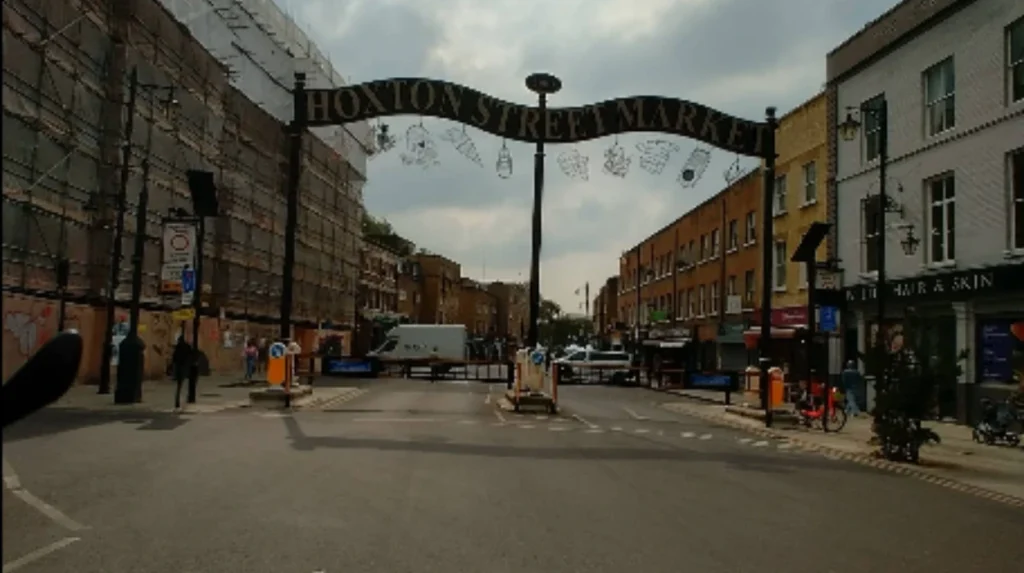
Southern Hoxton buzzes around Hoxton Square with bars, clubs, and galleries; the “Hoxton Fin” hairstyle symbolized its ironic fashion peak, satirized in media like Nathan Barley. Northern areas retain council estates, higher unemployment (except drugs, robbery), and Hoxton Street Market’s household goods and Saturday fashion/art stalls.
The Shoreditch Trust preserves community spaces amid regeneration.
Street Art and Cultural Hotspot
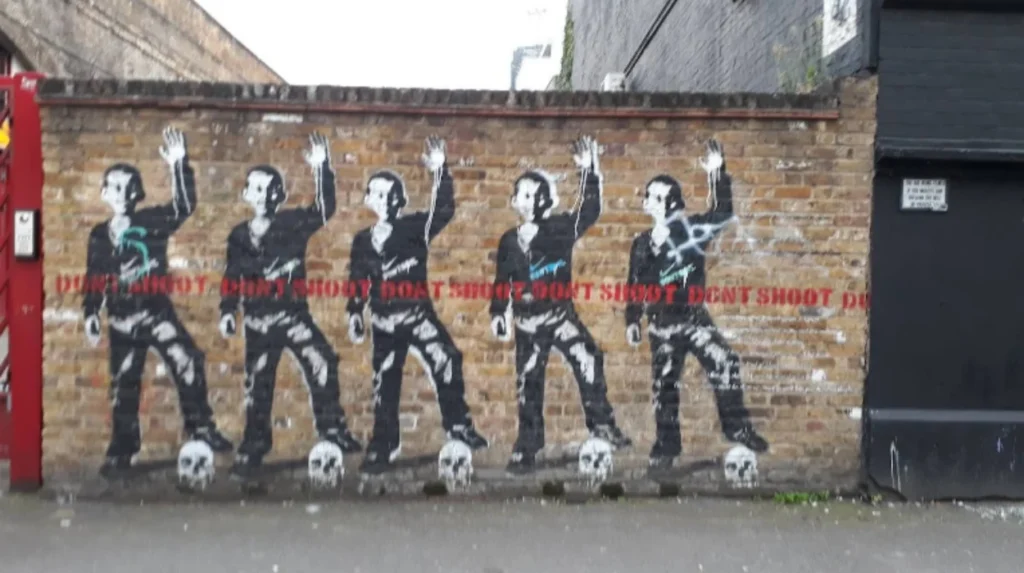
Hoxton anchors East London’s street art scene; Rivington Street’s courtyard hosts Banksy early works alongside C215, Thierry Noir, protected by perspex at Cargo nightclub. Hoxton Square’s former industrial buildings frame galleries and St John’s Church.
Hoxton Market, founded 1687, revived in 2013 with street food, clothing, and pie-and-mash shops. The National Centre for Circus Arts occupies a 1895 electric light station vestry near Hoxton Market.
Museum of the Home (formerly Geffrye) on Kingsland Road displays domestic history in ex-almshouses.
Notable Landmarks and Green Spaces
Hoxton Square, a Green Flag park, offers respite amid creativity. Stag’s Head pub (1936, Truman’s Brewery) exemplifies Art Deco charm.
Hoxton Station serves London Overground; Old Street Underground (Northern line) lies southwest. The Hoxton Trust’s community garden provides volunteer-maintained private green space.
Vibrant Nightlife and Dining
Hoxton’s nightlife pulses with spots like Gigi’s in Hoxton Square, offering Latin American plates, cocktails, live music, and DJs from 3pm to 3am weekends. Eclectic bars and clubs draw crowds for after-work drinks to late-night vibes.
Jamie Oliver’s original Fifteen restaurant opened here in 2002, boosting culinary fame.
Famous Residents and Legacy
Hoxton birthed stars like Marie Lloyd (music hall icon, 1870), the Kray twins (1933), Mary Wollstonecraft, James Parkinson, and Charles Bradlaugh. Modern ties include Jason Donovan and Spiritualized’s Jason Pierce.
Living in Hoxton Today
Hoxton blends affordability challenges with unbeatable East London energy—perfect for creatives eyeing studios, families near markets, or explorers of urban evolution. Proximity to City Road, Regent’s Canal, and Kingsland Road ensures connectivity.
Property mixes council housing, new builds, and lofts; southern trendiness contrasts northern community focus. For East Londoners, Hoxton embodies resilience—from medieval farms to global art capital—inviting endless discovery.