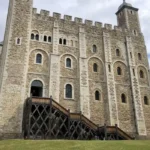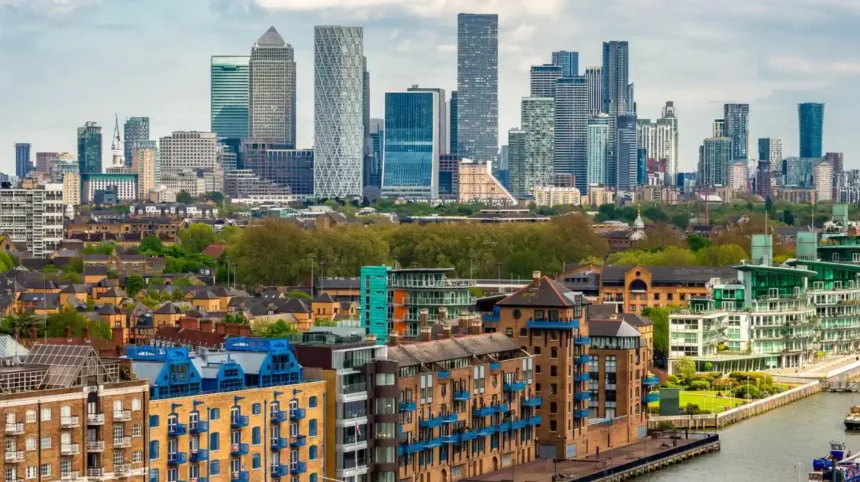
Tower Hamlets is one of East London’s most varied visitor destinations. The borough combines historic neighbourhoods, working markets, canals, parks, former docks, cultural institutions, independent businesses and major regeneration districts. Its identity extends well beyond headline attractions such as the Tower of London and Tower Bridge.
- What makes Tower Hamlets different from traditional London sightseeing?
- Which neighbourhoods should visitors explore in Tower Hamlets?
- How can visitors experience Tower Hamlets through its markets?
- Which historical places explain Tower Hamlets best?
- What can visitors discover around the docks and waterways?
- Which museums and cultural attractions are worth visiting?
- Where can visitors find green spaces away from central London?
- What makes Victoria Park important for visitors?
- Where can visitors experience independent shopping and local food?
- How can digital nomads and business travellers use Tower Hamlets?
- What outdoor activities can visitors experience in Tower Hamlets?
- How should visitors plan a Tower Hamlets neighbourhood itinerary?
- How is Tower Hamlets changing while retaining its heritage?
- Why should visitors explore Tower Hamlets beyond its famous landmarks?
For travellers seeking a more distinctive East London experience, Tower Hamlets provides a useful connection between heritage and contemporary urban life. Whitechapel, Spitalfields, Bethnal Green, Bow, Poplar, Stepney, Limehouse, Shadwell and the Isle of Dogs each present different aspects of the borough.
The area also has a strong relationship with London’s commercial, industrial and migration history. Its markets reflect generations of trade, while its docks explain the development of London’s international port. Today, Canary Wharf introduces a modern financial district beside historic waterways and converted docklands.
Tower Hamlets Council identifies a wide range of local attractions, markets, cultural sites and historic places across the borough.
What makes Tower Hamlets different from traditional London sightseeing?
Tower Hamlets combines heritage, markets, neighbourhood culture, green spaces, waterways and contemporary districts within one East London borough. Visitors can experience local life alongside major landmarks, making the area particularly suitable for travellers seeking activities beyond conventional sightseeing.
Traditional London sightseeing often centres on major monuments and museums. Tower Hamlets adds a different layer through everyday neighbourhood environments.
The borough contains internationally recognised destinations, but its visitor character also comes from streets, markets and community spaces. Brick Lane, Whitechapel Road, Roman Road and Columbia Road demonstrate this particularly clearly.
Tower Hamlets Council describes the borough as the heart of London’s East End and highlights its long historical development, cultural diversity and relationship with the River Thames.
The geography also creates strong contrasts. The western part of the borough connects with the City of London and the Tower of London. Further east, visitors encounter residential neighbourhoods, traditional shopping streets and large green spaces. Southwards, the landscape changes into docklands and the high-rise environment of Canary Wharf.
This mixture gives visitors opportunities to explore the borough through several themes rather than following a single sightseeing route.
Which neighbourhoods should visitors explore in Tower Hamlets?
Visitors can explore Whitechapel, Spitalfields, Brick Lane, Bethnal Green, Bow, Stepney, Limehouse, Poplar and the Isle of Dogs for distinct combinations of markets, architecture, food, heritage, parks, waterways and independent businesses across Tower Hamlets.
Whitechapel provides one of the strongest introductions to the East End. Whitechapel Road contains a long-established street market and connects with historic religious, medical and cultural institutions.
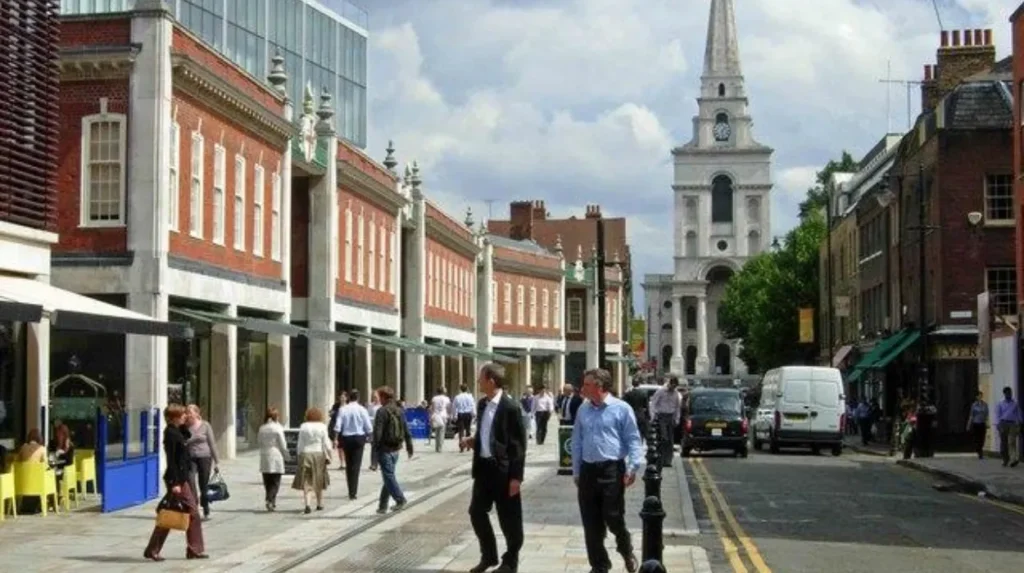
Spitalfields sits close to the City of London and combines historic streets with independent shops, restaurants, galleries and market activity. Brick Lane extends this experience through food, fashion, art and street-level commerce.
Bethnal Green provides access to Victoria Park, local markets and cultural attractions. Roman Road creates another neighbourhood experience through its long-established market and independent businesses.
Bow links residential streets with canals, parks and transport connections. Stepney contains historic buildings and quieter streets away from the busiest visitor routes.
Limehouse provides a direct connection between East London’s historic waterways and the Thames. The Isle of Dogs then introduces a completely different urban environment through Canary Wharf, docks, riverside routes and modern architecture.
Visitors who explore several of these neighbourhoods gain a more accurate understanding of Tower Hamlets than visitors who remain around its most famous landmarks.
How can visitors experience Tower Hamlets through its markets?
Markets provide one of the most direct ways to experience Tower Hamlets beyond traditional sightseeing. Brick Lane, Columbia Road, Whitechapel, Roman Road, Chrisp Street, Watney Market and Bethnal Green each offer different products, food, trading traditions and neighbourhood environments.
Tower Hamlets Council currently identifies ten street markets across the borough, including Brick Lane, Bethnal Green Road, Chrisp Street, Columbia Road, Petticoat Lane, Roman Road, Roman Road Square, Sclater Street, Watney Market and Whitechapel Market.
Brick Lane Market operates on Sundays and combines fashion, food, art, jewellery, vintage goods and other products. The street also has a strong Bangladeshi cultural identity and a history involving French Huguenot and Jewish communities.
Columbia Road Flower Market provides a different experience. Sunday trading focuses on flowers and plants, while the surrounding street contains independent shops, galleries, cafés, pubs and antique businesses.
Whitechapel Market operates along Whitechapel Road and offers fresh produce, spices, clothing, cultural goods and jewellery. Its location makes it particularly useful for combining market exploration with a wider East London walking route.
Roman Road Market operates on Tuesdays, Thursdays and Saturdays. It offers clothing, household goods, toys, cosmetics, jewellery, bread, pastries and prepared food.
Chrisp Street Market in Poplar provides another local perspective. The market dates from the Victorian period and remains an important community shopping destination.
These markets demonstrate that shopping in Tower Hamlets is not simply a retail activity. Markets function as cultural spaces, food destinations and connections between visitors and established neighbourhoods.
Which historical places explain Tower Hamlets best?
Tower Hamlets developed through Roman settlement, medieval communities, migration, maritime trade, industrialisation, dock construction and modern regeneration. Its historic places therefore explain how East London changed from peripheral settlements into a major urban and commercial district.
The borough has evidence of human activity stretching back thousands of years. Tower Hamlets Council records archaeological discoveries including Stone Age and Bronze Age tools.
Roman activity forms another important layer. The area’s position beside the Thames and close to the historic City of London made it significant for movement, settlement and trade.
The medieval and early modern period introduced further development around villages, estates, religious foundations and transport routes. The area subsequently became closely associated with London’s expanding population.
The East End’s migration history is especially important. Different communities established businesses, religious institutions, homes and cultural organisations across neighbourhoods including Spitalfields and Whitechapel.
The maritime economy transformed the southern part of the borough. The construction and expansion of docks created employment and connected East London with international trade.
As you explore modern Tower Hamlets, you are crossing land with a deep heritage. Read about the full to understand its origins.
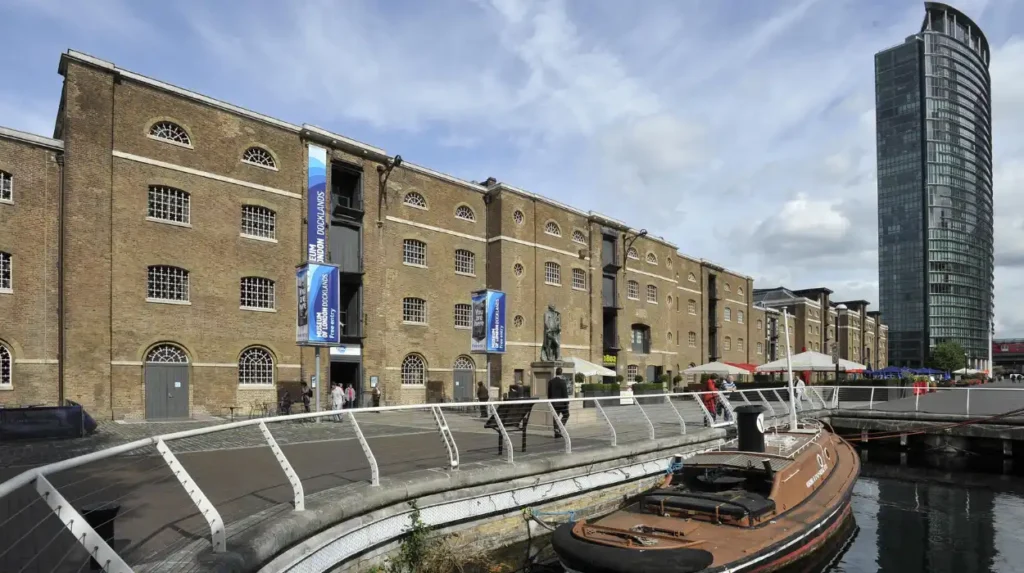
The Museum of London Docklands provides a particularly useful interpretation of this history. Its collections and galleries explain London’s relationship with the River Thames, docks, trade and communities.
What can visitors discover around the docks and waterways?
Tower Hamlets’ docks and waterways reveal the borough’s maritime development through former commercial docks, canals, riverside paths, converted warehouses and modern financial districts. The Docklands landscape connects industrial history with contemporary architecture around Limehouse, Poplar and Canary Wharf.
The River Thames forms the southern boundary of Tower Hamlets and has shaped the borough’s economy and geography for centuries.
The historic docklands are particularly important. Commercial docks supported London’s international trading economy before containerisation and changing port logistics shifted major cargo operations further downstream.
Today, many former dock areas have been redeveloped. Canary Wharf is the most recognisable example. Its skyline represents the transformation of former dockland into a major financial centre.
The contrast between old and new is visible around West India Docks. Historic dock structures sit alongside office towers, public spaces, restaurants and transport infrastructure.
Limehouse also provides an important waterway connection. The Regent’s Canal and Limehouse Basin connect inland waterways with the Thames and create routes for walking and cycling.
Visitors interested in urban regeneration can therefore use Tower Hamlets as a practical case study. The borough demonstrates how industrial land can transition into residential, commercial, cultural and recreational environments.
Which museums and cultural attractions are worth visiting?
Tower Hamlets has museums and cultural institutions covering maritime history, childhood, migration, art, local heritage and contemporary culture. These venues provide structured context for understanding the borough’s social development and complement neighbourhood exploration and outdoor activities.
The Museum of London Docklands is one of the most important cultural institutions in the borough. Its permanent galleries explore London’s port and river history, including the development of the docks and the communities connected with them. Entry to its permanent galleries is free.
The museum also contains Mudlarks, a family-oriented gallery and learning space. Its location beside West India Docks makes it particularly useful for combining indoor interpretation with a docklands walking route.
Bethnal Green is another significant cultural area. The V&A Museum of Childhood, now part of the Victoria and Albert Museum’s wider cultural network, has historically been associated with the neighbourhood and its museum landscape.
Local cultural exploration also extends beyond formal museums. Galleries, independent creative spaces, community venues and arts programmes operate throughout the East End.
Tower Hamlets Council promotes a cultural trail designed to help visitors explore the borough’s heritage and culture.
For visitors, the benefit of this cultural network is geographical. A museum visit can become the starting point for exploring the surrounding neighbourhood rather than a standalone indoor activity.
Where can visitors find green spaces away from central London?
Tower Hamlets contains more than 120 parks and green spaces, ranging from major historic parks to small gardens and community open spaces. Victoria Park, Mile End Park, Tower Hamlets Cemetery Park and Mudchute provide particularly varied outdoor experiences.
Tower Hamlets Council records more than 120 parks and green spaces across the borough. Fourteen currently hold Green Flag Awards, recognising quality standards in public green spaces.
Victoria Park is the borough’s oldest and largest park and receives around nine million visits each year. It contains lakes, historic monuments, a bandstand, cafés and extensive open lawns.
Victoria Park also has national recognition. The council identifies it as a Green Flag People’s Choice Top 10 park.
Mile End Park offers a different landscape. It is a linear park containing ecological areas, sports facilities, the Arts Pavilion and spaces for recreation.
Tower Hamlets Cemetery Park provides a nature and heritage experience. Its landscape combines historic burial grounds with wildlife habitats and walking routes.
Mudchute Park and Farm is another distinctive destination. It provides open space and a rural-style environment within the urban setting of the Isle of Dogs.
The council identifies Tower Hamlets Cemetery Park and Mudchute Park and Farm as local nature reserves.
These green spaces are particularly valuable for visitors who want to balance busy markets and dense urban streets with outdoor recreation.
What makes Victoria Park important for visitors?
Victoria Park is a major recreational and heritage destination in Tower Hamlets. Its historic landscape, lakes, monuments, open lawns, cafés, events and transport connections make it suitable for walking, relaxation, cultural exploration and outdoor activities.
Victoria Park opened in the nineteenth century as part of London’s response to the need for accessible public recreation. Its historical landscape remains visible through features such as the lakes, bandstand and monuments.
The park contains two original London Bridge stone alcoves, which Tower Hamlets Council identifies among its historic features.
The park also functions as a major events location. Festivals, music events and community activities take place there during the year.
Its scale makes it particularly useful for visitors combining multiple activities. A traveller can walk through the park, visit nearby neighbourhoods and continue towards Roman Road or Bethnal Green.
Victoria Park therefore represents an important part of the visitor economy without functioning as a conventional tourist attraction. Its importance comes from the combination of history, recreation, landscape and everyday local use.
Where can visitors experience independent shopping and local food?
Independent shopping and food are central to Tower Hamlets’ visitor experience. Brick Lane, Spitalfields, Columbia Road, Roman Road, Whitechapel and neighbourhood high streets provide restaurants, cafés, specialist shops, vintage businesses, galleries and market traders.
Tower Hamlets has a particularly strong independent retail culture. Brick Lane is associated with vintage clothing, street food, cafés, restaurants, art and specialist shops.
Columbia Road adds a different commercial identity. Its Sunday flower market operates alongside independent businesses and creative venues. The council records around 60 independent shops, galleries and antique sellers around the market area.
Whitechapel and surrounding streets provide strong South Asian food and retail connections. Visitors can encounter specialist groceries, restaurants, bakeries, jewellery businesses and cultural clothing shops.
Roman Road provides a neighbourhood-scale shopping environment. Its market and surrounding independent businesses make it suitable for travellers interested in everyday East London commerce.
Food is particularly important because Tower Hamlets’ population has developed through successive waves of migration. Restaurants and food businesses reflect this history through South Asian, Middle Eastern, European and other culinary traditions.
Visitors should therefore treat food as part of the borough’s cultural geography rather than simply as a dining activity.
How can digital nomads and business travellers use Tower Hamlets?
Tower Hamlets provides practical downtime options for digital nomads and business travellers through cafés, libraries, public spaces, transport connections, markets, parks and cultural venues. Canary Wharf and surrounding districts provide especially strong links between business activity and leisure.
Canary Wharf is one of London’s major financial districts and sits within Tower Hamlets’ former docklands. The area’s office concentration creates a strong business-travel environment.
Visitors staying for business can use downtime to explore nearby public spaces, restaurants, dockside routes and cultural attractions.
The borough’s Idea Stores also provide useful community facilities. Tower Hamlets describes Idea Stores as places offering activities, free Wi-Fi, public computers, social spaces and quiet areas for reading or study.
Parks provide another practical option for visitors working remotely between meetings. Victoria Park and Mile End Park offer substantial open spaces away from dense commercial environments.
Transport is also important. Whitechapel, Bethnal Green, Canary Wharf, Mile End and other areas connect with different parts of London’s public transport network.
This combination allows business travellers to build leisure activities around existing appointments rather than dedicating an entire day to conventional sightseeing.
What outdoor activities can visitors experience in Tower Hamlets?
Outdoor activities in Tower Hamlets include walking, cycling, running, park recreation, canal exploration, riverside routes and community events. Victoria Park, Mile End Park, the Thames waterfront and local waterways provide varied environments for active visitors.
Walking is one of the easiest ways to understand Tower Hamlets because many of its cultural and historic areas sit relatively close together.
A route between Whitechapel, Spitalfields and Brick Lane provides a concentrated urban experience. A route through Bethnal Green towards Victoria Park introduces a different environment.
Water-based landscapes create another option. Limehouse Basin connects canals with the Thames and provides a distinctive setting for walking and cycling.
Mile End Park includes facilities for sports and recreation. The council also promotes outdoor activities, cycling and organised events across its parks.
Mile End Parkrun provides a free weekly 5-kilometre community running event on Saturdays, with advance registration required.
Visitors should follow local park rules, especially regarding food, wildlife, barbecues and organised activities. Tower Hamlets states that barbecues are not permitted in its parks and open spaces.
How should visitors plan a Tower Hamlets neighbourhood itinerary?
A practical Tower Hamlets itinerary should group nearby experiences rather than attempting to cover the entire borough in one day. Market districts, historic areas, parks, museums and docklands can each form separate walking-focused sections.
A market-focused day works well around Sunday trading. Visitors can combine Columbia Road Flower Market with Brick Lane, subject to current opening arrangements. Tower Hamlets Council lists Columbia Road’s Sunday hours as 8am to 2pm and Brick Lane’s as 10am to 3pm.
A heritage-focused itinerary can centre on Whitechapel, Spitalfields and the City fringe. This route provides access to historic streets, markets, religious buildings, cultural institutions and London’s former East End communities.
A green-space itinerary can combine Victoria Park and Mile End Park. This approach suits travellers seeking walking, recreation and outdoor photography.
A docklands itinerary can focus on the Museum of London Docklands, West India Docks, Canary Wharf and Limehouse. This route explains the transition from commercial port infrastructure to the modern financial district.
Visitors should check individual attraction opening times before travelling because museum, market and event schedules change.
Explore More Area Guide
Best Experiences in Tower Hamlets: Attractions, Markets & Culture
Tower Hamlets Travel Inspiration: London Itinerary 2026
How is Tower Hamlets changing while retaining its heritage?
Tower Hamlets continues to experience regeneration across former industrial, dockland and commercial areas while retaining historic markets, parks, streets and cultural institutions. The result is a visitor landscape where heritage conservation and modern development operate within the same borough.
Regeneration is particularly visible around Canary Wharf, the Isle of Dogs, Whitechapel and former docklands.
The challenge for the borough is maintaining historic character while accommodating housing, employment, transport infrastructure and commercial development.
Heritage protection plays an important role. Tower Hamlets contains five nationally registered parks and gardens, including Victoria Park, Boundary Gardens, Island Gardens, Museum Gardens and Novo Cemetery.
The borough also contains designated London squares and numerous historic open spaces. The council records 16 designated London squares and identifies more than 50 publicly accessible historic open spaces in its historical green-space inventory.
This framework matters to visitors because heritage is not confined to museums. It appears in street layouts, market locations, parks, cemeteries, dock structures and surviving buildings.
Tower Hamlets therefore remains relevant as an example of how a major London borough can combine historic identity with continued urban development.
Why should visitors explore Tower Hamlets beyond its famous landmarks?
Exploring Tower Hamlets beyond famous landmarks reveals the markets, neighbourhoods, parks, waterways, museums and independent businesses that define East London’s everyday character. These experiences provide stronger geographical and historical context for understanding the borough as a whole.
The Tower of London and Tower Bridge remain important visitor attractions, but they represent only part of Tower Hamlets.
The borough’s deeper visitor experience exists across its neighbourhoods. Markets reveal commercial traditions. Museums explain maritime and social history. Parks demonstrate the importance of public recreation. Canals and docks explain industrial development. Independent businesses reflect the area’s changing communities.
This combination also makes Tower Hamlets suitable for repeat visitors to London. Travellers who have already visited central attractions can explore a different side of the capital without leaving the wider London transport network.
For leisure travellers, the strongest approach is to select one theme and explore it geographically. Markets work particularly well on trading days. Heritage works well around Whitechapel and Spitalfields. Green-space visits suit Victoria Park and Mile End. Docklands exploration works around West India Docks and the Museum of London Docklands.
Tower Hamlets is therefore not simply a collection of attractions. It is a layered East London destination where history, commerce, culture, nature and regeneration remain visible within the same urban landscape.
What is Tower Hamlets known for?
Tower Hamlets is known for its East End heritage, historic markets, multicultural communities, former docks, canals, parks and major attractions. The borough includes Brick Lane, Whitechapel, Spitalfields, Victoria Park, Canary Wharf and the Museum of London Docklands.