Hackney is one of London’s most varied districts, with independent markets, green spaces, galleries, canals, live music venues, and a strong food scene. This guide covers the best things to do in Hackney for tourists, residents, digital nomads, and business travellers who want a practical, evergreen overview of the area.
- What makes Hackney worth visiting?
- Which Hackney attractions should you visit first?
- Where are the best food markets in Hackney?
- Which hidden gems offer a quieter experience?
- Where can you eat well in Hackney?
- What should digital nomads know about working in Hackney?
- How should you plan one day in Hackney?
- Why does Hackney matter for modern London?
- What is the best Hackney itinerary for visitors?
What makes Hackney worth visiting?
Hackney combines strong local identity, cultural venues, parks, food markets, and easy transport links, which makes it one of East London’s most rewarding areas for a short stay or a longer visit. It suits sightseeing, eating, working remotely, and exploring on foot.
Hackney sits in Inner East London and includes places such as Hackney Central, Dalston, Shoreditch borders, London Fields, Broadway Market, Hackney Wick, and Stoke Newington. The borough is known for its mix of Victorian streets, post-industrial spaces, canals, and modern creative businesses. That mix gives visitors a wide range of experiences in a compact area.
The area works well for different types of travellers. Tourists get attractions, markets, and nightlife. Residents get accessible day-out options close to home. Digital nomads find cafés, coworking spaces, and quiet parks. Business travellers use Hackney for relaxed dinners and evening plans after work in central London.
Hackney also appeals because much of it is walkable. Many destinations cluster around transport hubs and high streets, so visitors can combine food, shopping, and culture in one route. That makes it efficient for a weekend visit and flexible for shorter stops.
Which Hackney attractions should you visit first?
Start with London Fields, Hackney Empire, Museum of the Home, and Hackney Wick. These places show Hackney’s range, from public parkland and theatre to social history and creative industrial reuse. They form a reliable first itinerary for first-time visitors.
London Fields is one of Hackney’s most recognisable open spaces. It attracts walkers, runners, families, and visitors who want a break from built-up streets. The park sits close to Broadway Market and serves as a useful anchor point for a wider day in the area. Nearby facilities and food options make it easy to spend several hours there.
Hackney Empire is a historic theatre and performance venue in Hackney Central. It remains one of the borough’s best-known cultural institutions and stages comedy, music, pantomime, and touring productions. It is a strong choice for visitors who want an evening event rather than an outdoor activity.
Museum of the Home in Hoxton, formerly the Geffrye Museum, focuses on domestic life in England through the centuries. The museum uses period rooms and historical interpretation to show how homes changed over time. This makes it especially useful for visitors interested in social history and urban development.
Hackney Wick represents the borough’s creative, post-industrial side. The area includes studios, canalside routes, and venues housed in former industrial buildings. It is popular with walkers, photographers, and visitors who prefer a less formal sightseeing route. As you explore the modern site, you are crossing land with a deep heritage. Read about the full Hackney’s industrial and canal history to understand its origins.
Where are the best food markets in Hackney?
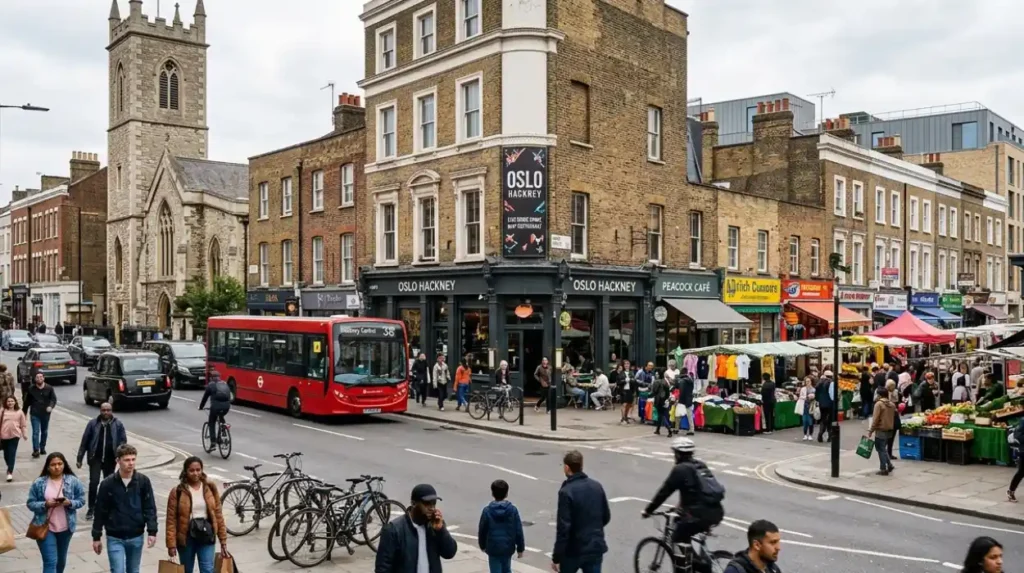
Broadway Market, Netil Market, Chatsworth Road Market, and Ridley Road Market are the main food and shopping markets to know. They cover street food, fresh produce, independent goods, and everyday local trading, so visitors get both leisure and authentic neighbourhood life.
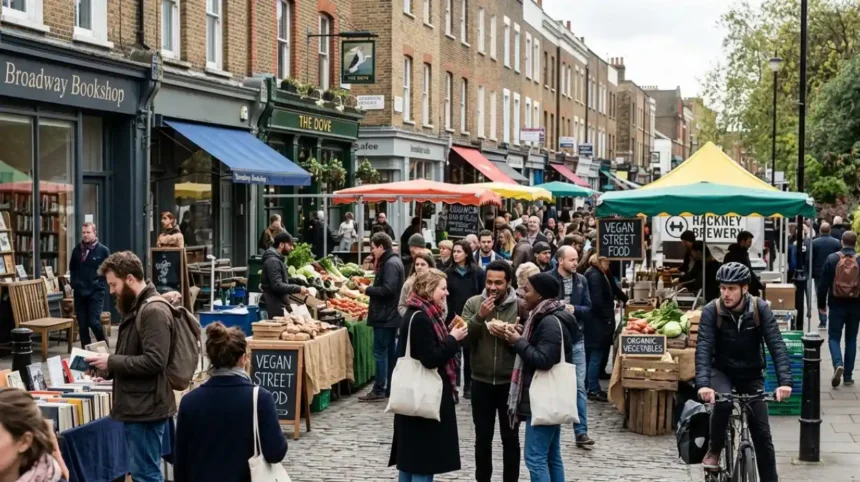
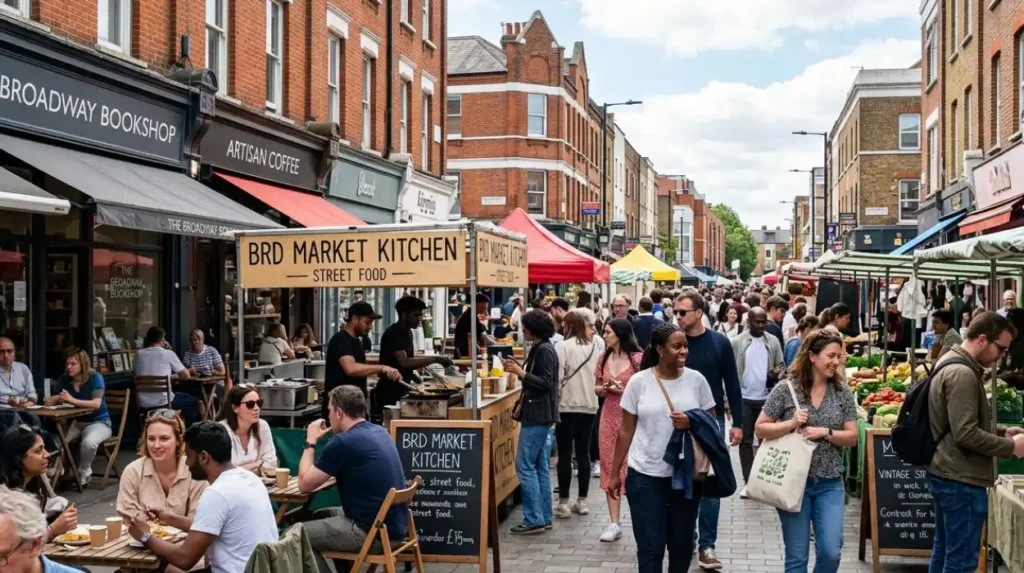
Broadway Market is one of Hackney’s best-known weekend markets. It runs in London Fields and is widely associated with food stalls, coffee, fresh produce, books, flowers, and independent retail. Saturdays are the busiest days, and the market works best when combined with a walk through London Fields or nearby streets. It remains a major draw for both locals and visitors.
Netil Market in London Fields offers a more compact, creative setting. It includes food traders, drinks, and small independent businesses. The market suits visitors who want a shorter stop than Broadway Market but still want a lively atmosphere. It also fits well into a wider East London day trip.
Chatsworth Road Market gives a more local and community-led experience. It is useful for visitors who want a market that feels less tourist-focused. The road itself includes cafés, small shops, and residential character, which makes the visit feel grounded in everyday Hackney life.
Ridley Road Market in Dalston is one of the borough’s most important everyday markets. It is known for its long trading history and for serving a diverse local population. Visitors come for produce, street food, and practical shopping, but it is also a strong place to observe Hackney’s multicultural character.
Which hidden gems offer a quieter experience?
St John-at-Hackney churchyard, Clissold Park, the De Beauvoir area, and the Regent’s Canal routes provide quieter alternatives to the busiest visitor spots. These places suit visitors who want calmer walks, local architecture, and less crowded urban scenery.
St John-at-Hackney is a historic church site with a large churchyard and a strong sense of local continuity. It is useful for travellers interested in heritage without visiting a formal museum. The surrounding area gives a quiet contrast to busier nearby streets.
Clissold Park lies on the edge of Hackney in Stoke Newington and remains one of the area’s most attractive green spaces. It includes open lawns, water features, and walking paths. The park works well for families, solo visitors, and anyone who wants a slower pace.
The De Beauvoir area is known for its distinctive residential streets and calmer atmosphere. It gives visitors a chance to see a quieter side of Hackney with elegant housing, smaller cafés, and low-key local character. It is especially suitable for walking rather than destination-based sightseeing.
Regent’s Canal links several Hackney neighbourhoods and provides one of the best walking routes in the area. Canal walks connect open space, creative districts, and residential edges in a single route. They are useful for visitors who want to move between attractions without relying on a vehicle.
Where can you eat well in Hackney?
Hackney offers strong food options across markets, cafés, bakeries, pubs, and international restaurants. Broadway Market, Dalston, London Fields, and Stoke Newington provide the most reliable concentrations of choice for breakfast, lunch, dinner, and casual dining.
Food in Hackney reflects the borough’s diversity and its independent business culture. Visitors can expect everything from sourdough bakeries and specialty coffee to Caribbean, Turkish, Ethiopian, Middle Eastern, and contemporary British cooking. The choice is broad enough to suit short visits and extended stays.
Broadway Market is one of the best places for daytime eating. Stalls and nearby venues make it easy to build a breakfast or lunch stop into a sightseeing route. London Fields also has a dense cluster of cafés and casual restaurants that suit flexible dining.
Dalston is one of the best areas for evening meals. It has a busy mix of late-opening restaurants, bars, and informal dining rooms. The area suits travellers who want a meal before live music, nightlife, or a train back into central London.
Stoke Newington offers a more neighbourhood-led food scene. It has a strong café culture and many independently run places that suit brunch, lunch, and low-key dinners. It also works well for visitors who want food without the pace of central London.
What should digital nomads know about working in Hackney?
Hackney suits remote work because it has cafés, libraries, parks, and transport links close together. Visitors can work in the morning, eat locally at lunch, and move to cultural or social activities in the afternoon without leaving the borough.
Digital nomads need predictable Wi-Fi, seating, and a calm atmosphere. Hackney supplies all three in different forms. Cafés around London Fields, Stoke Newington, and Dalston often serve remote workers during the day, while public libraries provide quieter conditions for focused work.
The borough’s parks add another advantage. Working travellers can split the day between indoor and outdoor time, which improves flexibility on short stays. This matters for visitors who want to avoid staying in a hotel room all day.
Transport also helps. Hackney connects to the Overground and several bus corridors, so workers can move between neighbourhoods quickly. That reduces wasted time and makes it easier to schedule meetings, meals, and sightseeing in the same day.
For business travellers, this layout is useful after office hours in central London. Hackney offers dining, drinks, and evening culture without the formality of the West End. That makes it a practical base for downtime as well as work.
How should you plan one day in Hackney?
A strong one-day plan starts with a market, adds a park or museum, then finishes with dinner or a performance. That structure gives visitors a balanced mix of food, culture, walking, and local atmosphere without feeling rushed.
A daytime route can begin at Broadway Market and London Fields. This gives visitors breakfast, shopping, and a park stop in one area. It also keeps travel simple and leaves time for a second stop elsewhere in the borough.
A museum or cultural stop fits well in the middle of the day. Museum of the Home works for social history, while Hackney Empire works better if the visit includes an evening show. Either option adds depth to a sightseeing day.
Afternoons suit canal walks, quieter neighbourhoods, or coffee stops. Regent’s Canal and the De Beauvoir area offer a slower pace after a busy market visit. This helps the day feel complete without requiring a long journey elsewhere.
Evenings work best in Dalston, London Fields, or Stoke Newington. Those areas offer restaurants, pubs, and live entertainment. Visitors staying overnight can finish with dinner and return easily by public transport.
Why does Hackney matter for modern London?
Hackney matters because it shows how London combines heritage, migration, creativity, housing change, and local business life in one area. It remains relevant for tourism, culture, and urban identity, not just for residents.
Hackney’s importance comes from its layered character. Historic buildings stand beside regenerated warehouses, while traditional markets operate near modern cafés and creative venues. That mix reflects wider London change in a concentrated form.
The borough also remains a strong example of local distinctiveness. Each neighbourhood has its own feel, from the busy retail energy of Dalston to the village-like atmosphere of parts of Stoke Newington. Visitors see a single borough, but they experience several different urban settings.
For search users, Hackney is a broad and useful topic because it includes sightseeing, eating, work-friendly spaces, and local discovery. That means a well-structured guide remains relevant across seasons and travel needs. It also supports multiple search intents in one article, which strengthens evergreen value.
What is the best Hackney itinerary for visitors?
The best itinerary combines one major attraction, one market, one green space, and one evening venue. That formula covers the borough’s core strengths and works for tourists, residents, and short-stay travellers with limited time.
A practical first route starts at Broadway Market, continues through London Fields, and ends with dinner nearby. This captures food, open space, and local street life in one compact day. It is the simplest option for first-time visitors.
A culture-led route starts with Museum of the Home, continues through Hoxton and Hackney Wick, and finishes with a show or meal in Dalston. This suits visitors who care more about heritage and creative districts than shopping.
A quieter route uses Clissold Park, St John-at-Hackney, and a canal walk. This is the best choice for visitors who want lower density and more relaxed movement. It also suits repeat visitors who have already seen the main markets.
Hackney rewards flexible planning because its attractions sit in clusters. That reduces transit time and gives visitors more room to pause, eat, and explore. For an evergreen travel guide, that is one of the borough’s biggest strengths.