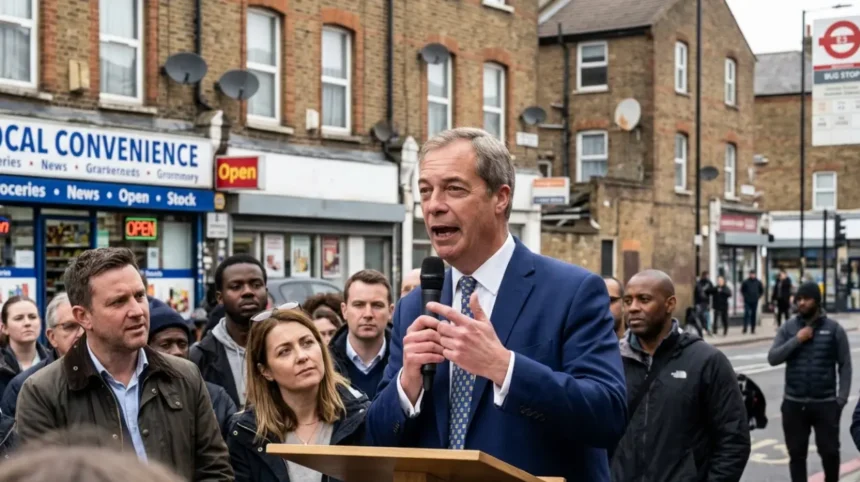
Reform UK, led by Nigel Farage, outlines policies focused on immigration control, tax cuts, economic reform, and national sovereignty. These policies target voter concerns in areas like East London, where local issues intersect with national priorities such as housing pressures from migration and business tax burdens. The platform emphasizes practical solutions over ideological extremes.
- What is the Reform Party?
- What are the core Reform Party policies?
- What is Reform Party’s immigration policy?
- What does the Reform Party say about taxes?
- How would these tax cuts work in practice?
- What is Reform Party’s stance on net zero and energy?
- What are Reform Party’s NHS and defence policies?
- How does Reform Party address education and culture?
- What is the historical context of Reform Party policies?
- What impacts would Reform Party policies have on East London?
What is the Reform Party?
Reform UK operates as a right-wing political party in the United Kingdom, founded in 2018 as the Brexit Party and rebranded in 2021. It prioritizes strict immigration controls, tax reductions, and scrapping net zero targets, gaining 14.3% of the vote in the 2024 general election with 4 MPs elected.
Reform UK emerged from the Brexit Party, established by Nigel Farage on November 30, 2018, to advocate for the UK’s withdrawal from the European Union. The party rebranded to Reform UK in January 2021 to broaden its appeal beyond Brexit. Nigel Farage serves as leader since June 2024, with Richard Tice as chairman.
The party’s structure includes a national executive committee and regional branches. It fields candidates in general elections and local contests. Membership stood at over 200,000 by mid-2024, making it the UK’s fourth-largest party by membership.
Reform UK’s policies address economic stagnation, high taxes, and cultural shifts. These resonate in East London boroughs like Newham and Tower Hamlets, where net migration added 1.2 million to the UK population from 2021 to 2024, straining housing stock.
What are the core Reform Party policies?
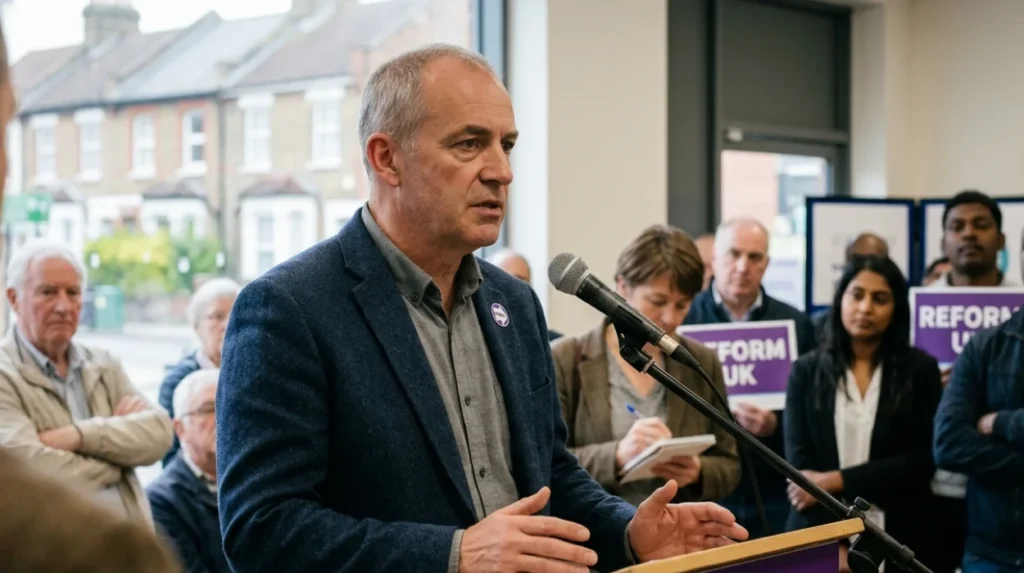
Reform UK’s core policies include freezing non-essential immigration, raising the income tax threshold to £20,000, scrapping net zero targets, building 1.5 million homes outside green belts, and withdrawing from the European Convention on Human Rights to enable offshore migrant processing.
These policies form the “Contract with the People,” launched June 17, 2024. Immigration policy demands a full freeze on non-essential entry, including halting overseas recruitment for NHS, care, and teaching roles. This responds to net migration of 685,000 in 2023.
Tax policy proposes a 40% mortgage interest relief for two years, 2p cuts in income tax and National Insurance, and a 20% VAT on net zero spending. Economic measures aim to boost growth to 2.5% annually by cutting £50 billion in wasteful spending.
Energy policy rejects net zero by 2050, favoring North Sea oil and gas drilling to lower bills by 30% within five years. Housing commits to 1.5 million new homes via brownfield development.
Implications include reduced public spending on migration-related services, freeing funds for tax relief. In East London, this could ease NHS waiting lists, which hit 7.6 million nationally in 2024.
What is Reform Party’s immigration policy?
Reform UK pledges a total freeze on non-essential immigration, denial of asylum to small boat arrivals, offshore processing, fast-track removals, and a 20% National Insurance surcharge on employers hiring foreign workers.
The policy defines non-essential immigration as all entries except British citizens and settled residents. Small boat crossings totaled 36,000 in 2023, costing £8 million daily in hotel accommodation.
Mechanisms include leaving the European Convention on Human Rights (ECHR), ratified in 1951, to block legal challenges to deportations. Offshore centers would process claims, mirroring Australia’s model that reduced arrivals by 90% since 2013.
Examples include detaining migrants in centers located in Green Party strongholds, announced May 2026. Employers face a higher 20% NI rate for overseas staff, up from 13.8%, versus 0% for Britons under separate proposals.
Impacts project savings of £10 billion annually, redirected to housing and policing. In East London, where 45% of Newham residents were born abroad per 2021 census, this policy addresses community tensions from rapid demographic change.
What does the Reform Party say about taxes?
Reform UK plans to raise the basic income tax threshold from £12,570 to £20,000, cut income tax and NI by 2p, offer 40% mortgage relief for first-time buyers, and impose 20% VAT on net zero measures while eliminating IR35 rules.
The 40% relief applies for two years to buyers under 45, costing £5 billion yearly. Income tax changes exempt 7 million low earners, saving £1,500 each at current rates.
IR35, introduced in 2000, deems contractors as employees for tax; Reform scraps it to aid 1.5 million self-employed. Net zero VAT targets heat pumps and insulation, estimated at £25 billion spend by 2030.
Processes involve HMRC adjustments and Treasury reallocations from £50 billion cuts, including BBC World Service (£350 million) and quangos. Examples: a £35,000 earner saves £781 yearly; self-employed save £2,000.
Implications forecast 0.7% GDP growth boost. East London small businesses, 85% of Tower Hamlets firms per 2023 data, gain from lower NI burdens.
How would these tax cuts work in practice?
Tax threshold rise phases via Finance Acts. Mortgage relief claims via self-assessment, capped at average first home (£250,000 in 2024). NI cuts apply from April 2025 budget.
What is Reform Party’s stance on net zero and energy?
Reform UK commits to scrapping net zero by 2050 legislation, granting 100 new North Sea drilling licenses yearly, lifting onshore wind bans, and fast-tracking small modular nuclear reactors for energy independence.
Net zero, enshrined in 2019 Climate Change Act, requires 100% clean electricity by 2035. Reform repeals it, citing £30 billion annual costs by 2050.
North Sea output peaked at 4.1 million barrels daily in 1999; Reform targets revival via 100 licenses, adding 100,000 barrels daily. Onshore wind, banned in large areas since 2013, expands with local consent.
Nuclear plans deploy 8 small modular reactors by 2035, each 300MW, via Rolls-Royce design approved 2023. Bills drop 30% via cheaper gas, per party estimates.
Examples: Grangemouth refinery saved via policy U-turn. Implications cut reliance on imports (40% of gas in 2023), stabilizing prices after 2022 Ukraine crisis spikes.
In East London, Silvertown energy costs (£2,800 average household 2024) fall, aiding manufacturing revival.
What are Reform Party’s NHS and defence policies?
Reform UK proposes NHS vouchers for private GP waits over three days, 40 new hospitals via public lists, 40,000 extra police bobbies, 30,000 prison places, tripled defence spending to 3% GDP, and defence budget ringfencing.
NHS policy defines GP voucher as £25 fixed sum for private access. Hospital builds use PFI models, dormant since 2018. Police add 40,000 via £1.5 billion yearly, reversing 20,000 cut since 2010.
Defence rises from 2.3% GDP (£52 billion 2024) to 3% (£70 billion), funding 20,000 army recruits. Prisons expand via barge use and new sites.
Mechanisms: legislation amends Health and Social Care Act 2012; MoD budget via Autumn Statement. Examples: Rwanda scheme adapted for processing.
Implications shorten waits (7.5 million 2024) and deter crime (knife offences up 7% 2023). East London gains 1,000 extra officers for boroughs like Hackney.
How does Reform Party address education and culture?
Reform UK vows to keep woke ideologies out of classrooms, scrap student loan interest, defund BBC, abolish TV licence (£169 fee), and reform House of Lords to elected chamber.
Woke ideologies cover critical race theory and gender identity teaching, banned via curriculum guidance. Loan interest removal halves repayment time for graduates.
BBC defunding cuts £3.8 billion licence revenue; Lords reform mandates elections every 10 years, reducing 800 peers. TV licence enforcement cost £100 million in 2023.
Processes: Education Act amendments; Media Bill changes. Examples: 16-19 tuition fund doubled to £2,600 per student.
Implications restore parental trust (65% parents concerned per 2023 YouGov poll). East London schools, 60% minority ethnic in Tower Hamlets, prioritize basics over ideology.
What is the historical context of Reform Party policies?
Reform UK policies echo 1990s Ross Perot’s US Reform Party on fiscal balance and anti-corruption, adapted to UK post-Brexit challenges like 2022 inflation (11.1%) and 2024 migration peaks.
UK Reform draws from Perot’s 1992 run (19% vote), advocating balanced budgets. Brexit Party roots trace to 2016 referendum (52% Leave).
Historical data: Migration rose from 226,000 net 2019 to 685,000 2023. Policies counter 14-year Tory rule failures.
Examples: Term limits mirror US proposals; ECHR exit parallels 1973 entry reversal efforts. Implications position Reform as third force, polling 20% May 2026.
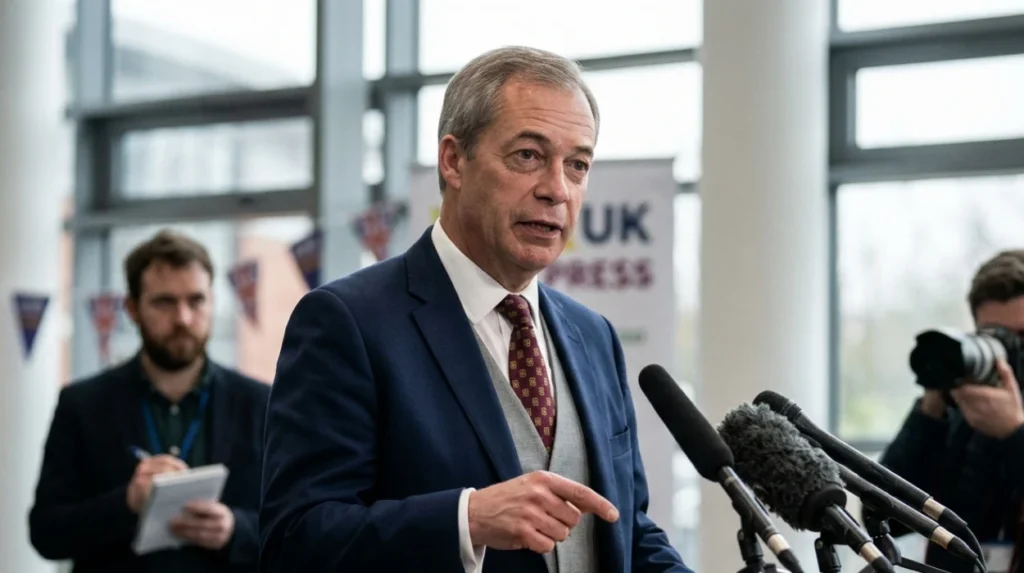
What impacts would Reform Party policies have on East London?
Reform policies project 5,000 new homes yearly in East London via brownfields, 500 extra police, £200 million tax relief for 100,000 workers, and migration freeze easing 20% housing waitlists.
Brownfield sites in Newham (500 hectares viable) enable builds. Police target 1,000 knives seized monthly (2024 baseline 800).
Tax savings: £1,500 average for £30,000 earners in Barking and Dagenham. Migration cap reduces 15% population growth pressure (2021-2031 forecast).
Mechanisms: Levelling Up funds redirect. Examples: West Ham area benefits from energy price cuts (fans spend £500 yearly). Implications revive high streets (20% shop vacancies 2025).
What is Reform UK?
Reform UK is a British political party led by Nigel Farage that focuses on immigration control, tax cuts, national sovereignty, and opposition to net zero policies.