Tower Hamlets is one of East London’s most distinctive boroughs for exploring public squares, landscaped plazas, contemporary architecture and pedestrian-friendly urban spaces. Located between the City of London and the River Lea, the borough combines historic neighbourhoods with modern developments, particularly around Canary Wharf, the Isle of Dogs, Poplar and the Docklands waterfront.
- What Makes Tower Hamlets’ Public Squares and Urban Landscapes Distinctive?
- Where Can Visitors Discover the Best Public Squares in Tower Hamlets?
- How Does Crossrail Place Roof Garden Combine Modern Architecture and Nature?
- Which Landscaped Parks and Gardens Complement Tower Hamlets’ Modern Squares?
- How Does Modern Architecture Shape the Public Realm in Canary Wharf?
- Where Can Visitors Explore Waterfront Public Spaces in Tower Hamlets?
- How Does Public Art Contribute to Tower Hamlets’ Urban Landscapes?
- What Makes Tower Hamlets’ Historic Garden Squares Different from Modern Plazas?
- How Can Visitors Explore Tower Hamlets’ Public Squares on Foot?
- How Accessible Are Tower Hamlets’ Public Squares for Tourists and Business Travellers?
- Why Are Public Squares Important to Tower Hamlets’ Sustainable Urban Development?
- Urban Greening and Biodiversity
- Public Health and Physical Activity
- Social Interaction and Community Activities
- What Is the Future of Modern Public Spaces in Tower Hamlets?
Its urban landscape reflects several stages of London’s development. Former industrial docks have become commercial and residential districts. Railway infrastructure has been integrated into new developments. Public squares, rooftop gardens, waterfront promenades and landscaped courtyards provide spaces for recreation, social interaction and cultural activities.
For tourists and leisure travellers, these environments offer opportunities to explore modern London beyond traditional museums and historic attractions. Residents benefit from accessible outdoor spaces, while digital nomads and business travellers find convenient places for breaks, walking and informal meetings.
Canary Wharf is particularly important to this experience. Its collection of landscaped squares, public gardens, architectural landmarks and waterfront routes demonstrates how contemporary urban planning incorporates open space into a densely developed financial district.
Understanding Tower Hamlets’ public squares also requires recognising their relationship with the borough’s industrial and maritime past. The former West India Docks, historic commercial streets and dockside communities influenced the development of today’s urban environment. As you explore the modern landscape, you are crossing land with a deep heritage. Discover the [Insert Anchor Text for Tower Hamlets’ Historical Background Article Here] to understand the origins of these changing neighbourhoods.
What Makes Tower Hamlets’ Public Squares and Urban Landscapes Distinctive?
Tower Hamlets combines historic garden squares, modern commercial plazas, waterfront promenades and landscaped public gardens. These spaces connect residential neighbourhoods with business districts, transport infrastructure and cultural attractions while providing accessible environments for walking, recreation and community activities.
The borough’s public realm includes several different types of urban spaces. Traditional garden squares provide enclosed green environments within residential neighbourhoods. Contemporary plazas create pedestrian meeting points between commercial buildings. Waterfront landscapes connect visitors with the River Thames and former docklands.
Canary Wharf represents the most recognisable example of modern urban planning in Tower Hamlets. Its high-rise buildings, pedestrian routes, landscaped gardens and public art installations create an interconnected environment.
Unlike conventional streets dominated by vehicles, many Canary Wharf spaces prioritise pedestrian movement. Visitors can move between office buildings, shopping centres, restaurants and outdoor areas through connected walkways.
The borough also retains smaller public spaces in areas such as Bethnal Green, Stepney and Shadwell. These gardens provide a different experience from the polished commercial landscape of Canary Wharf.
The distinction between these environments makes Tower Hamlets particularly interesting for visitors studying London’s urban development.
Where Can Visitors Discover the Best Public Squares in Tower Hamlets?
Canary Wharf contains several of Tower Hamlets’ most recognisable public squares, including Canada Square Park, Cabot Square, Montgomery Square and Westferry Circus. Each combines landscaping, pedestrian access, public art or programmed activities within a modern commercial environment.
The following locations demonstrate how public squares contribute to the borough’s contemporary identity.
Canada Square Park
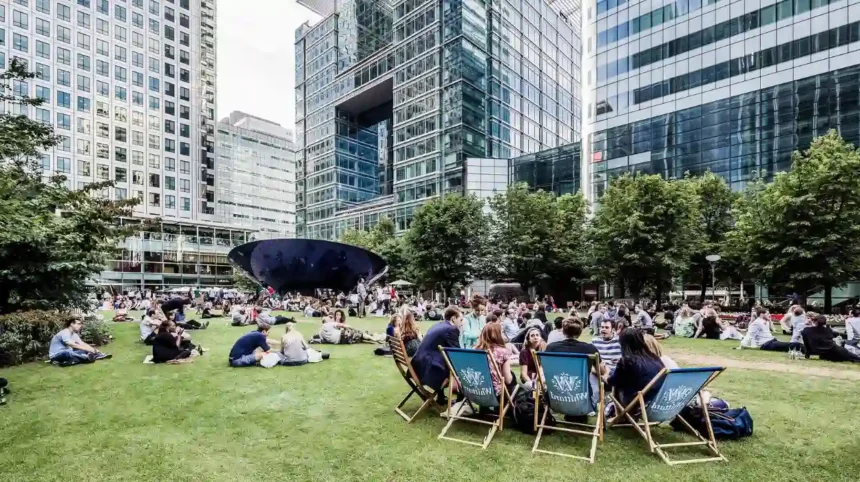
Canada Square Park is one of Canary Wharf’s central outdoor spaces. It sits among prominent office buildings and commercial developments.
The park provides landscaped surroundings within a densely developed financial district. Its open lawn and surrounding pedestrian areas create space for visitors to relax, meet friends and attend outdoor activities.
The surrounding buildings include offices, shops, restaurants and cafés. This arrangement allows visitors to combine outdoor exploration with shopping and dining.
Canada Square Park also hosts cultural events, including outdoor film screenings and live performances. Its programme gives the square a role beyond everyday pedestrian circulation.
Cabot Square
Cabot Square provides another example of landscaped urban design.
The square features a central fountain, surrounding buildings and public artworks. Its architectural setting creates an enclosed pedestrian environment within the commercial district.
Cabot Square also provides access to nearby shopping and business facilities. Visitors encounter the space while moving between different parts of Canary Wharf.
The square is particularly relevant to people interested in contemporary public art and the relationship between sculpture and commercial architecture.
Montgomery Square
Montgomery Square provides a more activity-focused environment.
The space accommodates outdoor markets, sporting activities and seasonal events. Its design supports informal recreation and public gatherings.
Activities such as outdoor games, food markets and organised events introduce movement into the commercial district.
For visitors, Montgomery Square demonstrates how a modern plaza can function as an event space rather than simply a landscaped pedestrian route.
Westferry Circus
Westferry Circus combines landscaped gardens with a distinctive transport and architectural setting.
The space occupies the western edge of Canary Wharf. Its formal planting, pathways and sculptures create a green environment close to the River Thames.
The surrounding development incorporates road infrastructure and pedestrian access. This arrangement demonstrates how landscape design can integrate public spaces with complex urban transport systems.
Westferry Circus also provides access to riverside walking routes and nearby waterfront viewpoints.
How Does Crossrail Place Roof Garden Combine Modern Architecture and Nature?
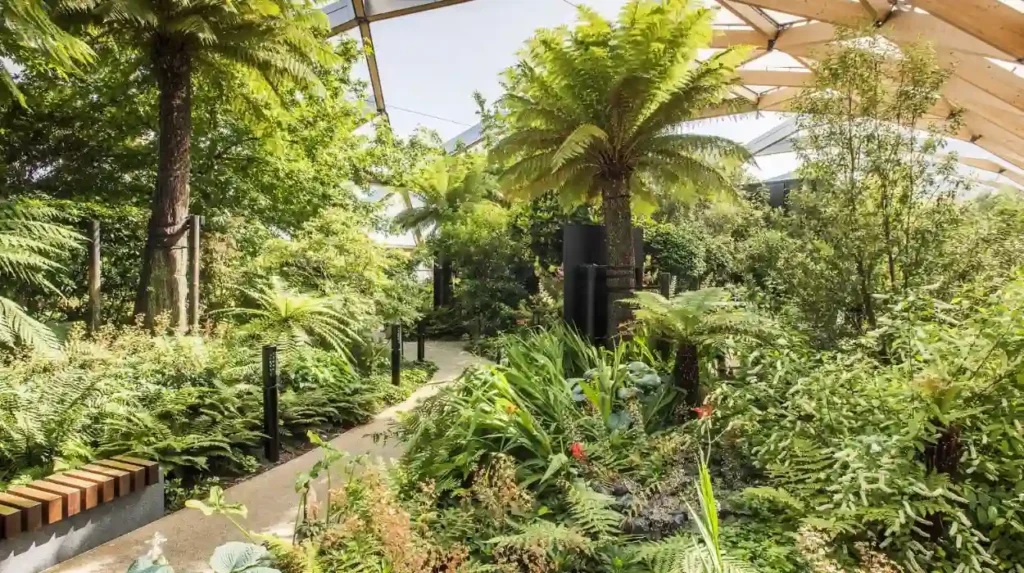
Crossrail Place Roof Garden combines contemporary architecture, botanical landscaping and pedestrian pathways above Canary Wharf’s Elizabeth line station. Its timber lattice roof shelters international plant species, while seating and an amphitheatre create a publicly accessible recreational environment.
Crossrail Place Roof Garden is among the borough’s most distinctive examples of integrated landscape architecture.
The garden sits above the Crossrail Place development, which forms part of the Elizabeth line infrastructure. Foster + Partners designed the building, while landscape architects Gillespies led the garden’s landscape design.
Its timber lattice roof creates a sheltered environment for planting and pedestrian movement. The architectural structure also gives the garden a recognisable identity within Canary Wharf.
How Is the Garden Organised?
The planting reflects the geographical position of the Prime Meridian, which passes through the garden.
Plants from the Eastern and Western Hemispheres are arranged on different sides of the meridian. Examples include bamboo, ferns, magnolia and other exotic species.
This arrangement introduces geographical interpretation into the landscape design. Visitors experience botanical diversity while exploring the architectural structure.
Curving pathways connect planting areas, seating spaces and the central performance environment.
What Activities Can Visitors Enjoy?
Crossrail Place Roof Garden offers several visitor activities.
People can walk through the landscaped pathways, sit among the planting and explore the building’s timber roof structure.
The garden also contains an amphitheatre that hosts performances and community activities. Its programming connects landscape architecture with cultural participation.
Entry is free, making it a practical stop for tourists, residents and office workers.
The garden is also accessible from Canary Wharf’s major transport connections, including the Elizabeth line, Jubilee line and Docklands Light Railway.
According to local visitor information, it is approximately a two-minute walk from Canary Wharf station.
Which Landscaped Parks and Gardens Complement Tower Hamlets’ Modern Squares?
Tower Hamlets offers landscaped parks and gardens that complement its modern plazas. Jubilee Park, Island Gardens, Victoria Park and Crossrail Place Roof Garden provide different combinations of greenery, recreational facilities, historic landscapes and pedestrian connections.
The borough’s green spaces provide important environmental and recreational functions.
Jubilee Park
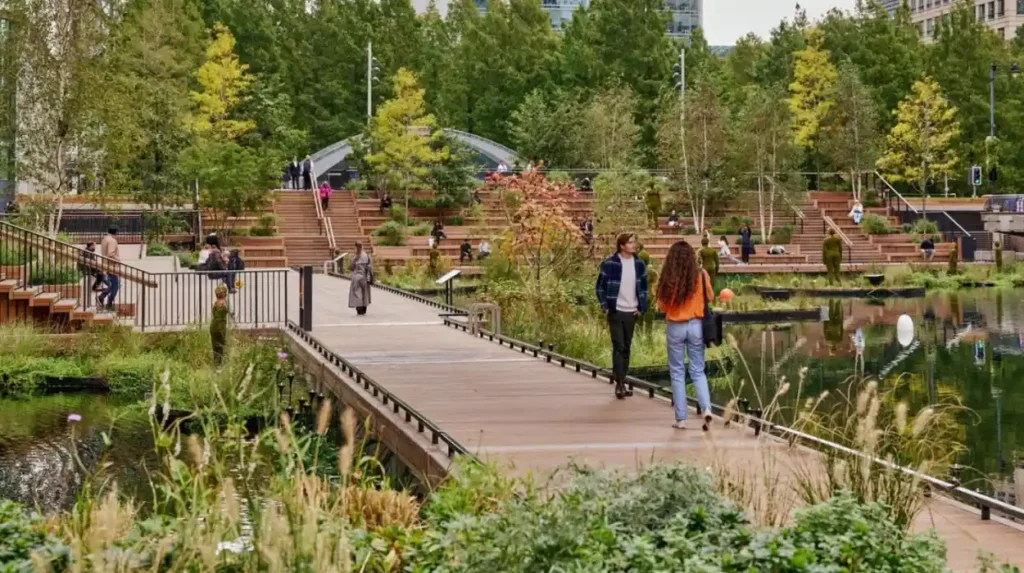
Jubilee Park is a landscaped urban park above Canary Wharf’s Jubilee Place shopping centre and Underground station.
Its design incorporates trees, grass, pathways and water features. The park creates a green environment surrounded by commercial buildings.
Its location makes it particularly convenient for commuters and business travellers. Visitors can access the garden while exploring Canary Wharf’s shopping and office districts.
The combination of planting and water features provides visual contrast with the surrounding high-rise architecture.
Island Gardens
Island Gardens offers a different landscape experience.
Situated on the southern tip of the Isle of Dogs, this Grade II registered garden provides views across the River Thames towards Greenwich.
The riverside location makes it suitable for walking, photography and observing London’s historic waterfront.
Visitors can also explore the relationship between the modern Canary Wharf skyline and Greenwich’s historic buildings from this location.
Victoria Park
Victoria Park is one of East London’s major public parks.
It provides extensive recreational space, mature trees, landscaped gardens, water features and walking routes.
Unlike Canary Wharf’s compact commercial plazas, Victoria Park offers a larger natural environment.
Its historic landscape also contributes to the borough’s architectural and cultural identity. The park is listed at Grade II* on the Register of Historic Parks and Gardens.
Eden Dock
Eden Dock introduces nature-focused waterfront design into the modern commercial district.
Developed in partnership with the Eden Project, the space incorporates aquatic planting, marine habitats and public-facing waterfront areas.
Its design demonstrates how contemporary urban landscapes integrate biodiversity with public recreation.
Visitors can explore the waterside environment and observe the relationship between urban development and ecological improvement.
The wider Canary Wharf landscape also includes Harbour Quay, which provides waterside seating, walking routes and outdoor recreational facilities.
How Does Modern Architecture Shape the Public Realm in Canary Wharf?
Modern architecture shapes Canary Wharf’s public realm through high-rise buildings, pedestrian routes, landscaped courtyards, waterfront developments and integrated transport infrastructure. These elements create connected urban spaces that support commercial activity, recreation and everyday pedestrian movement.
Canary Wharf is one of London’s most prominent examples of large-scale commercial redevelopment.
Its architecture includes glass office towers, contemporary residential buildings, shopping complexes and transport facilities.
One Canada Square is among the district’s best-known architectural landmarks. Its distinctive pyramidal roof makes it a recognisable feature of the East London skyline.
The surrounding public realm creates pedestrian connections between buildings. Landscaped squares, covered walkways and waterfront paths provide routes through the commercial district.
What Role Do Buildings Play in Public Space Design?
Buildings influence the quality of public spaces through their height, ground-floor activities, entrances and relationship with surrounding pathways.
Active ground floors containing shops, cafés and restaurants encourage pedestrian activity. Transparent building frontages also help connect indoor commercial environments with outdoor public spaces.
Tower Hamlets’ urban design guidance highlights the importance of connectivity, accessibility, human-scale design and appropriate enclosure.
These principles help create public spaces that are easier to navigate and more comfortable to use.
Why Is Pedestrian Connectivity Important?
Pedestrian connectivity describes how easily people move between buildings, streets, transport facilities and public spaces.
Canary Wharf’s interconnected pathways demonstrate this approach.
Visitors can walk between Canada Square Park, Cabot Square, Jubilee Park and Crossrail Place without relying on a vehicle.
This arrangement supports walking as a practical form of everyday transport.
It also encourages visitors to explore different sections of the district rather than concentrating on a single attraction.
Where Can Visitors Explore Waterfront Public Spaces in Tower Hamlets?
Tower Hamlets’ waterfront public spaces connect contemporary developments with the River Thames and former docklands. Westferry Circus, Island Gardens, Eden Dock and Harbour Quay offer riverside pathways, landscaped seating areas and views of modern London architecture.
Waterfront environments form an important part of Tower Hamlets’ urban identity.
The borough’s geography includes the River Thames, the Limehouse Basin and former commercial docks. These waterways influenced its historic industrial development and continue to shape contemporary public space.
Westferry Circus and the Thames
Westferry Circus provides access to a landscaped environment close to the Thames.
The nearby riverside promenade offers views of the river, passing vessels and the surrounding architectural landscape.
It is a useful starting point for visitors interested in combining public gardens with a riverside walk.
Harbour Quay
Harbour Quay is situated within Canary Wharf’s Wood Wharf neighbourhood.
Its waterfront landscape includes pedestrian routes, seating areas and outdoor recreational facilities.
The development demonstrates how former dockland environments have been adapted for contemporary residential and commercial use.
Visitors can observe modern residential architecture alongside the retained water features of the Docklands landscape.
Island Gardens and Greenwich Views
Island Gardens provides one of the borough’s most recognisable riverside viewpoints.
The location faces Greenwich across the Thames and offers views of the Old Royal Naval College and the surrounding historic landscape.
The Greenwich Foot Tunnel entrance is also located within Island Gardens. This pedestrian tunnel connects the Isle of Dogs with Greenwich.
The viewpoint provides an opportunity to compare two different architectural environments: the modern financial district of Canary Wharf and the historic riverside buildings of Greenwich.
How Does Public Art Contribute to Tower Hamlets’ Urban Landscapes?
Public art contributes to Tower Hamlets’ urban landscapes through outdoor sculptures, architectural installations, temporary exhibitions and cultural events. Canary Wharf provides prominent examples, including sculptures in Cabot Square, Columbus Courtyard and landscaped public areas.
Public art is an important component of contemporary placemaking.
Placemaking refers to the design and management of public environments to encourage social interaction, cultural participation and a recognisable local identity.
In Tower Hamlets, public art appears in several different settings.
Outdoor Sculptures
Cabot Square and Columbus Courtyard contain artworks that contribute to the visual character of Canary Wharf.
The sculptures provide points of interest along pedestrian routes.
They also create opportunities for visitors to engage with art without entering a gallery or purchasing an admission ticket.
Temporary Art Installations
Canary Wharf hosts seasonal art programmes and public installations.
Winter Lights is a prominent example. The festival introduces illuminated artworks across public spaces and buildings.
These installations transform familiar pedestrian routes into temporary cultural environments.
Visitors experience the architecture and public realm in different lighting conditions.
Why Is Public Art Important?
Public art creates visual interest and supports cultural engagement.
It also gives public squares distinctive identities. A sculpture, fountain or illuminated installation helps visitors recognise and navigate an urban environment.
The integration of art into commercial developments also makes cultural experiences more accessible to people who do not regularly visit museums and galleries.
What Makes Tower Hamlets’ Historic Garden Squares Different from Modern Plazas?
Historic garden squares in Tower Hamlets generally feature enclosed green spaces, mature planting and traditional residential surroundings. Modern plazas prioritise pedestrian circulation, commercial activity, contemporary architecture and programmed public events.
Tower Hamlets contains historic squares that provide an important contrast with Canary Wharf’s contemporary developments.
These spaces reflect earlier approaches to residential planning and public landscaping.
Arbour Square
Arbour Square Gardens is a historic garden square in Stepney.
The square dates from the early nineteenth century and retains its traditional residential setting.
Its enclosed layout provides a quieter environment than the large commercial plazas around Canary Wharf.
Albert Gardens
Albert Gardens is another example of a historic neighbourhood garden.
Located near Commercial Road, it provides a compact green environment within a densely developed residential area.
Its setting demonstrates the importance of small public gardens in neighbourhood planning.
Stepney Green Gardens
Stepney Green Gardens provides another example of historic urban landscaping.
The gardens were created in 1872 and preserve part of the former Mile End Green landscape.
Their narrow layout and surrounding historic buildings contrast with the large-scale open spaces found in Canary Wharf.
These historic squares also have conservation value. Tower Hamlets recognises 16 designated London squares within the borough.
The council identifies five nationally registered parks and gardens:
- Victoria Park, Grade II*.
- Boundary Gardens, Grade II.
- Island Gardens, Grade II.
- Museum Gardens, Grade II.
- The Novo Cemetery, Grade II.
These designations recognise the importance of protecting historic landscapes and their settings.
How Can Visitors Explore Tower Hamlets’ Public Squares on Foot?
Visitors can explore Tower Hamlets’ public squares through connected pedestrian routes linking Canary Wharf’s landscaped plazas, rooftop gardens and waterfront environments. Walking between these locations provides access to contemporary architecture, public art, green spaces and riverside viewpoints.
A walking exploration offers a practical way to understand the relationship between the borough’s buildings and public spaces.
Canary Wharf provides a particularly convenient starting point because several attractions are located within walking distance.
A Suggested Canary Wharf Walking Route
Start at Canada Square Park and explore the surrounding commercial architecture.
Continue towards Cabot Square to see its fountain and public artworks.
Walk towards Jubilee Park to experience a landscaped green space above the shopping centre.
Next, visit Crossrail Place Roof Garden to explore its botanical planting and timber architecture.
Continue towards Eden Dock for a waterfront landscape experience.
Finish at Harbour Quay or Westferry Circus, depending on the direction of your walk.
This route combines several different types of public space without requiring additional transport between the main Canary Wharf locations.
What Should Visitors Consider?
Comfortable walking shoes are useful because the route includes several pedestrian pathways and outdoor environments.
Visitors should check current access arrangements and event schedules before travelling.
Some outdoor spaces remain accessible throughout the day, while rooftop gardens and managed venues operate according to published opening hours.
Visitors should also respect private residential entrances and follow local signage in managed developments.
How Accessible Are Tower Hamlets’ Public Squares for Tourists and Business Travellers?
Tower Hamlets’ public squares benefit from connections to the London Underground, Docklands Light Railway and Elizabeth line. Canary Wharf is particularly accessible, with pedestrian routes linking transport stations to landscaped plazas, shopping facilities and waterfront destinations.
Transport accessibility makes the borough’s modern landscapes convenient for different types of visitors.
Underground Connections
Canary Wharf Underground station serves the Jubilee line.
The station provides connections to central London and other major destinations.
Elizabeth Line
Canary Wharf Elizabeth line station provides connections to important London transport hubs, including Liverpool Street, Farringdon and Paddington.
It also supports journeys towards destinations outside central London.
Docklands Light Railway
The Docklands Light Railway connects Canary Wharf with surrounding East London neighbourhoods.
Stations including Heron Quays, West India Quay and Poplar provide access to different sections of the Docklands.
Who Benefits from These Connections?
Tourists can combine outdoor exploration with visits to museums, shopping destinations and cultural attractions.
Digital nomads benefit from the availability of nearby cafés, restaurants and commercial facilities.
Business travellers can use public squares for short breaks between meetings.
Residents benefit from pedestrian connections that link residential areas with workplaces and recreational environments.
Visitors requiring step-free access should check individual station facilities and the accessibility information for specific destinations before travelling.
Explore More Area Guide
Where to Explore Independent Galleries in Tower Hamlets
Tower Hamlets Photography Guide: Streets and Waterfront Architecture
Why Are Public Squares Important to Tower Hamlets’ Sustainable Urban Development?
Public squares support sustainable urban development by providing recreational space, encouraging walking, improving access to greenery and creating opportunities for social interaction. Their environmental value also includes biodiversity, sustainable drainage and better integration of nature into dense urban neighbourhoods.
Tower Hamlets faces particular challenges because it is a densely developed inner London borough.
Commercial development, housing growth and transport infrastructure create competing demands for available land.
Public spaces help balance these demands by providing outdoor environments within built-up neighbourhoods.
Urban Greening and Biodiversity
Landscaped squares introduce vegetation into areas dominated by buildings and paved surfaces.
Trees, shrubs and planted areas support urban biodiversity. They also provide shade and improve the visual quality of pedestrian environments.
Water-sensitive landscape design contributes to sustainable drainage by managing rainfall and reducing pressure on conventional drainage infrastructure.
Public Health and Physical Activity
Accessible green spaces support walking, informal exercise and outdoor recreation.
These activities contribute to healthier urban lifestyles.
Tower Hamlets’ Open Space Strategy 2017–2027 recognises the importance of improving the quality, accessibility and sustainability of the borough’s parks and open spaces.
The strategy also addresses future demand for publicly accessible spaces as the borough’s population grows.
Social Interaction and Community Activities
Public squares provide locations for informal meetings, community events and cultural programmes.
Markets, outdoor performances and seasonal festivals introduce additional activities into commercial and residential areas.
These functions help public spaces serve different groups rather than operating solely as routes between buildings.
What Is the Future of Modern Public Spaces in Tower Hamlets?
The future of Tower Hamlets’ public spaces depends on sustainable urban design, accessible pedestrian networks, biodiversity improvements and high-quality landscaping. Continued development around Canary Wharf and the wider Docklands increases the importance of protecting usable public space.
The borough’s changing urban environment requires long-term planning.
New residential developments introduce additional demand for parks, squares and recreational facilities.
Commercial districts also need outdoor spaces that support workers, visitors and local communities.
Tower Hamlets’ planning guidance emphasises high-quality design, inclusive access, connectivity and the relationship between new development and the surrounding public realm.
These principles influence how future buildings and outdoor spaces are designed.
Better Pedestrian Connections
Future public realm improvements need to create convenient walking routes between residential neighbourhoods, transport stations and commercial areas.
Connected spaces make it easier for visitors to explore the borough without depending on private vehicles.
More Nature in Dense Developments
Future landscapes need to incorporate planting, biodiversity and climate resilience.
Green roofs, rain gardens and waterfront habitats provide examples of how nature can become part of contemporary urban infrastructure.
Inclusive Public Environments
Public spaces need to accommodate people with different mobility requirements and recreational needs.
Accessible pathways, appropriate seating, clear signage and safe pedestrian connections support inclusive use.
Maintaining Historic Landscapes
Modern development also needs to protect the borough’s historic garden squares and registered landscapes.
These spaces preserve important evidence of London’s earlier urban planning traditions.
Balancing historic conservation with contemporary construction remains an important consideration for Tower Hamlets’ long-term development.
Exploring Tower Hamlets’ public squares and modern urban landscapes reveals how East London combines contemporary architecture, historic garden spaces, waterfront environments and accessible pedestrian areas.
Canary Wharf provides the strongest concentration of modern public spaces, including Canada Square Park, Cabot Square, Jubilee Park, Montgomery Square and Crossrail Place Roof Garden. These destinations demonstrate how landscaping, public art and pedestrian infrastructure contribute to a modern commercial district.
Elsewhere, Island Gardens, Victoria Park, Arbour Square and Stepney Green Gardens offer different perspectives on the borough’s historic and natural environments.
Together, these locations show the importance of public space in creating a balanced urban environment. They support tourism, recreation, community interaction and sustainable development.
For visitors exploring East London, Tower Hamlets offers an opportunity to experience both the architectural character of modern London and the historic landscapes that shaped its development.
What are the best public squares to visit in Tower Hamlets?
Some of the best public squares include Canada Square Park, Cabot Square, Montgomery Square and Westferry Circus in Canary Wharf. These locations feature landscaped areas, fountains, public art and pedestrian-friendly surroundings.