Tower Hamlets is one of the most historically significant and geographically varied parts of East London. The borough stretches from the western edge around the Tower of London through Whitechapel, Spitalfields, Bethnal Green, Stepney and Limehouse to the Isle of Dogs and Canary Wharf.
- What makes Tower Hamlets an important sightseeing destination?
- Which historic landmark should visitors see first?
- What can visitors see around St Katharine Docks?
- Where can visitors experience Tower Hamlets’ market culture?
- Which museums explain Tower Hamlets’ maritime history?
- Where should visitors go for contemporary art and East End culture?
- Which parks and green spaces are worth visiting?
- Where can visitors explore canals and waterfront landscapes?
- What should visitors see in Canary Wharf and the Isle of Dogs?
- Which lesser-known cultural attraction deserves a visit?
- How should visitors plan a Tower Hamlets sightseeing itinerary?
- Tower and riverside zone
- Whitechapel and Spitalfields zone
- Docklands zone
- Limehouse and green-space zone
- When is the best time to explore Tower Hamlets?
- How can visitors travel between Tower Hamlets attractions?
- Why does Tower Hamlets remain important for future sightseeing?
- What are the essential Tower Hamlets sights for first-time visitors?
Its attractions combine royal history, maritime heritage, contemporary culture, markets, parks, canals, architecture and riverside landscapes. The borough takes its name from the historical hamlets associated with the Tower of London. Archaeological evidence also records human activity in the area for thousands of years.
For first-time visitors, Tower Hamlets works particularly well as a walking and public-transport sightseeing destination. Historic landmarks sit close to markets and cultural venues, while waterways and parks provide quieter alternatives to the busiest tourist areas.
The most important sights include the Tower of London, St Katharine Docks, Whitechapel Gallery, Brick Lane, Columbia Road, London Museum Docklands, Limehouse Basin, Victoria Park and Canary Wharf.
What makes Tower Hamlets an important sightseeing destination?
Tower Hamlets is a major East London sightseeing destination because it combines royal heritage, docklands history, multicultural neighbourhoods, markets, museums, parks, waterways and modern architecture within one London borough.
The borough occupies a strategic position beside the River Thames and central London’s eastern edge. Its southern boundary follows a major curve of the Thames, creating a long riverside landscape that connects historic districts with the regenerated Docklands.
Tower Hamlets also contains the western gateway to the East End. Whitechapel, Spitalfields and Brick Lane provide strong connections with London’s migrant, commercial and cultural history. Canary Wharf presents a contrasting landscape of offices, towers, docks and public spaces.
The borough’s historical importance is particularly visible around the Tower of London and the former dock system. West India Docks, St Katharine Docks and the London Docks transformed the area’s economy during the nineteenth century. The Regent’s Canal and Limehouse Cut also connected the Thames with Britain’s inland waterways.
This combination gives visitors several distinct sightseeing experiences without leaving Tower Hamlets.
Which historic landmark should visitors see first?
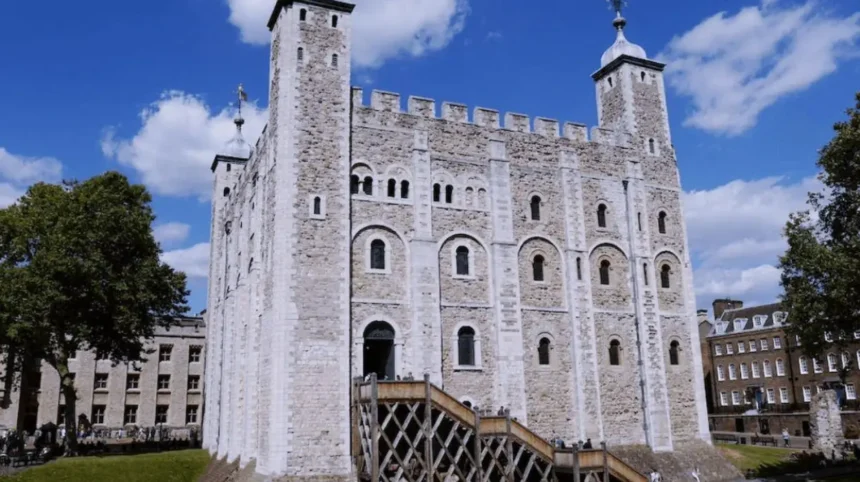
The Tower of London is the borough’s essential historic landmark, combining an 11th-century fortress, royal palace, prison history, defensive architecture and the Crown Jewels within a World Heritage Site beside the River Thames.
The Tower of London stands on the western side of Tower Hamlets and is one of London’s most recognisable historic sites. Historic England identifies it as a nationally protected heritage asset, while Tower Hamlets Council identifies it as a World Heritage Site.
William the Conqueror began the White Tower in 1078. The complex expanded substantially during the thirteenth and fourteenth centuries. Edward I developed the outer defensive walls between 1275 and 1285, with further work continuing into the early fourteenth century.
The Tower served different purposes across its history. It functioned as a fortress, royal residence, prison and site of executions. Anne Boleyn, the second wife of Henry VIII, was executed there in 1536. Elizabeth I was also imprisoned at the Tower before becoming queen.
Visitors encounter the White Tower, medieval defensive structures, historic royal associations and the Yeoman Warders. The site also houses the Crown Jewels, one of Britain’s most significant royal collections.
The Tower provides a strong starting point for a sightseeing route because St Katharine Docks, Tower Bridge and the Thames are immediately nearby.
As you explore the modern site, you are crossing land with a deep heritage. Read about the full to understand its origins.
What can visitors see around St Katharine Docks?
St Katharine Docks provides a compact riverside sightseeing area with historic dock architecture, marina views, restaurants, pedestrian spaces and direct connections to the Tower of London and the River Thames.
St Katharine Docks sits immediately east of the Tower of London. The site occupies the former location of the Hospital of St Katharine by the Tower, which dates from the medieval period. The enclosed docks opened on 25 October 1828 following a major engineering project associated with Thomas Telford.
Telford designed the docks as two linked basins with an entrance lock from the Thames. The arrangement prioritised efficient quayside access for cargo handling. Warehouses surrounded the water, reflecting London’s role as an international trading port.
The Second World War caused severe damage. German bombing in 1940 destroyed warehouses around the eastern basin. Later redevelopment transformed the former industrial site into a mixed-use waterfront destination.
Today, visitors can walk around the marina, view historic dock structures and connect the area with the Tower of London and Tower Bridge. The waterfront also provides restaurants, cafés and seating areas.
St Katharine Docks works particularly well as a short stop between major attractions. It provides a quieter environment after visiting the Tower before continuing towards Wapping, Whitechapel or the City.
Where can visitors experience Tower Hamlets’ market culture?
Brick Lane, Columbia Road, Old Spitalfields and other local markets provide some of Tower Hamlets’ strongest visitor experiences, combining food, fashion, flowers, antiques, crafts and long-established East End trading traditions.
Tower Hamlets Council states that the borough has ten street markets. Examples include Brick Lane, Bethnal Green Road, Chrisp Street, Columbia Road, Petticoat Lane, Roman Road, Sclater Street, Watney Market and Whitechapel Market.
Brick Lane Market
Brick Lane is one of the best-known sightseeing areas in the East End. Its market operates on Sundays and includes fashion, food, art, vintage goods and other independent trading activity. Tower Hamlets Council records the market’s establishment in 1888.
The street also has strong connections with London’s Bangladeshi community. Earlier migrant communities included French Huguenots and Jewish residents. This layered history remains visible through food businesses, shops, architecture and cultural institutions.
Columbia Road Flower Market
Columbia Road Flower Market operates on Sundays and focuses on flowers, plants and gardening products. The surrounding street includes independent shops, cafés, galleries and antique sellers. Tower Hamlets Council lists Sunday opening from 8am to 2pm.
The market is particularly suitable for visitors interested in photography, independent retail and local neighbourhood culture.
Old Spitalfields Market
Old Spitalfields Market sits close to Liverpool Street and Brick Lane. It combines independent traders, food, fashion and heritage within a historic market environment.
A visitor can combine Spitalfields with Brick Lane and Whitechapel in a single walking itinerary.

Which museums explain Tower Hamlets’ maritime history?
London Museum Docklands is the key museum for understanding Tower Hamlets’ relationship with the River Thames, London’s port, Docklands commerce, migration, slavery and the transformation of the docks into modern Canary Wharf.
London Museum Docklands occupies a Grade I listed former warehouse at West India Quay. The museum opened in 2003 and occupies a building associated with the historic West India Docks.
The museum provides free admission and explores around 400 years of Docklands history. Its galleries examine London’s river, port and communities from the seventeenth century to the present.
The location itself is part of the exhibition experience. West India Docks were created to improve the handling and security of imported goods arriving through the Thames. Warehouses stored commodities including sugar, rum and tea.
The museum also addresses the history of slavery in London, the wartime experience of Docklands and the redevelopment that produced modern Canary Wharf.
For visitors, the museum provides essential context before exploring the surrounding docks. A walk from the museum towards Canary Wharf demonstrates how an industrial port landscape became a major financial district.
Its transport connections are also strong. West India Quay DLR station is approximately three minutes away, while Canary Wharf stations are around seven minutes away on foot.
Where should visitors go for contemporary art and East End culture?
Whitechapel Gallery is Tower Hamlets’ principal contemporary art institution, combining more than a century of East End cultural activity with international exhibitions, educational programmes, archives, talks and new artistic commissions.
Whitechapel Gallery was founded in 1901 by social reformers Samuel and Henrietta Barnett. Their objective was to provide high-quality art for East London communities. The gallery became an important cultural institution within Whitechapel and the wider East End.
Its first exhibition took place in 1901. The programme included modern pictures, Pre-Raphaelite works and older English masters. The exhibition attracted 260,000 visitors according to the gallery’s historical records.
The gallery developed an international reputation through exhibitions involving major artists. Its historical programme includes Pablo Picasso, Jackson Pollock, Mark Rothko, David Hockney, Gilbert & George and Frida Kahlo.
The building also has architectural significance. It was designed by Charles Harrison Townsend and is Grade II* listed. A major expansion in 2009 incorporated the former Whitechapel Public Library and created additional exhibition, education and archive spaces.
For sightseeing purposes, Whitechapel Gallery works well with Brick Lane, Spitalfields Market and nearby historic streets. The combination gives visitors access to visual art, food, shopping and East End heritage within a relatively compact area.
Which parks and green spaces are worth visiting?
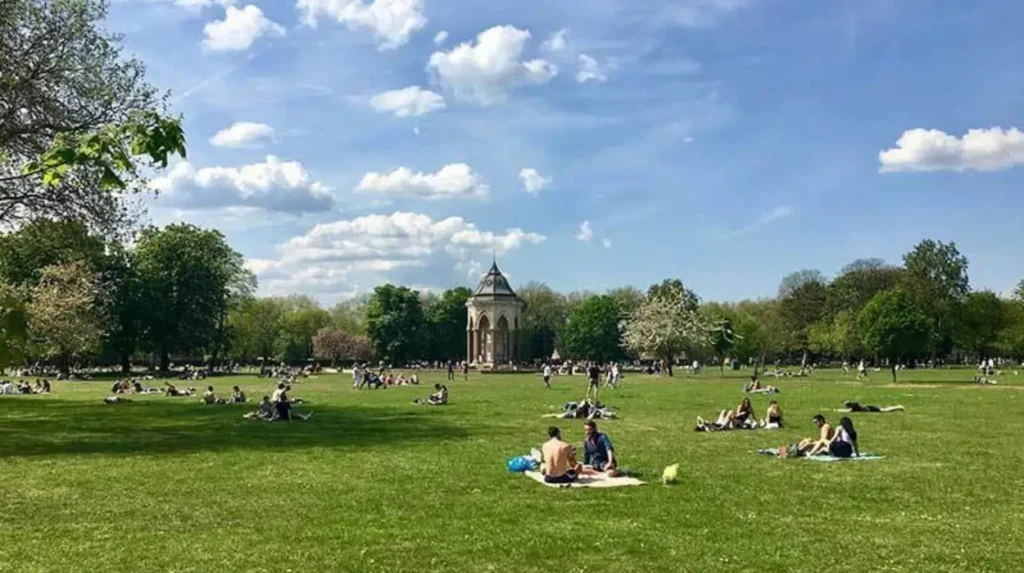
Victoria Park is Tower Hamlets’ largest park and London’s oldest public park, offering 86 hectares of landscaped green space, lakes, historic features, sports facilities, walking routes and connections towards the Regent’s Canal and wider East London.
Victoria Park opened in 1845 following growing concern about overcrowding, pollution and poor health in the nineteenth-century East End. A petition signed by 30,000 local residents was presented to Queen Victoria in 1840 requesting a public green space.
The park covers 86 hectares and receives more than 9 million visitors annually, according to Tower Hamlets Council. It is the largest park in the borough.
James Pennethorne prepared the original design. The park included landscaped areas, trees, ornamental features and a boating lake. A pagoda associated with the Chinese Exhibition at Hyde Park Corner was installed in 1847. The park was extended in 1872.
Victoria Park is now a major recreational destination. Visitors use its paths, open lawns, lakes, gardens, playgrounds and sports facilities.
The park also connects with a wider green corridor extending towards Mile End Park and Limehouse. This makes it useful for visitors who want sightseeing away from dense commercial streets.
For families, photographers, walkers and visitors spending several hours in East London, Victoria Park provides a major change of environment from the historic centre and Docklands.
Where can visitors explore canals and waterfront landscapes?
Limehouse Basin and Limehouse Cut provide some of the best waterside sightseeing in Tower Hamlets, connecting the River Thames with historic canals, marinas, towpaths, industrial heritage, wildlife corridors and walking routes.
Limehouse Cut is London’s oldest canal. It was authorised by the River Lea Act 1766 and created a direct connection between the River Lee and the Thames at Limehouse. The canal reduced the need for vessels to follow a longer tidal route around the Thames.
The Limehouse Cut extends for approximately two miles. Today, its towpath provides a waterside walking environment through regenerated parts of East London.
Limehouse Basin developed as an important connection between inland waterways and the Thames. The original basin, known as Regent’s Canal Dock, opened in 1820. It served as a transfer point where cargo moved between larger vessels and canal boats.
Commercial use declined during the twentieth century. The basin closed to commercial traffic in 1969 and later underwent redevelopment. It now contains a marina, pedestrian areas, housing and commercial premises.
The Canal & River Trust also identifies a one-mile circular walk around Limehouse Basin. The route takes approximately 30 to 40 minutes and includes views of the basin, canal infrastructure, marina and surrounding streets.
Limehouse Basin is particularly suitable for visitors who want to combine industrial history with walking. It also provides a natural transition between the Docklands, Limehouse and the wider East London canal network.
What should visitors see in Canary Wharf and the Isle of Dogs?
Canary Wharf provides Tower Hamlets’ clearest example of modern Docklands regeneration, combining skyscrapers, former docks, public squares, retail areas, restaurants, transport connections, waterfront paths and contemporary architecture.
Canary Wharf occupies the Isle of Dogs, a major peninsula surrounded by the River Thames. Its skyline developed from the redevelopment of former docklands into one of Europe’s best-known financial districts.
The area’s history is rooted in maritime trade. West India Docks opened in 1802 and became an important centre for international commerce. Their warehouses and quays handled goods entering London through the Thames.
Modern Canary Wharf contrasts sharply with the historic dock structures. High-rise offices surround retained waterways and public spaces. This makes the district useful for visitors interested in architecture, urban regeneration and modern London.
The area also has strong transport connections. Canary Wharf is served by the Jubilee line, Docklands Light Railway and Elizabeth line, while Canary Wharf Pier provides access to the Thames river transport network. London Museum Docklands is also within walking distance.
Visitors should explore the dock edges as well as the central commercial spaces. The waterfront provides views of modern towers reflected in the water, while surviving dock structures demonstrate the area’s industrial origins.
The combination of historic waterways and contemporary architecture makes Canary Wharf one of the most distinctive sightseeing environments in Tower Hamlets.
Which lesser-known cultural attraction deserves a visit?
Wilton’s Music Hall in Whitechapel is a significant historic venue and one of the world’s oldest surviving music halls, combining nineteenth-century entertainment history, preserved architecture, guided heritage tours and contemporary theatre and music.
Wilton’s Music Hall is located near Whitechapel and Shadwell. Its history begins with buildings dating from the 1690s, while the Victorian music hall was constructed by John Wilton in 1859.
The venue originally developed from houses, shops and a pub. Its transformation into a music hall created an entertainment venue for East London’s working population.
The hall hosted popular entertainment during the Victorian period. A serious fire in 1877 left the auditorium heavily damaged, but the building was rebuilt in 1878 with much of its 1859 design retained. Wilton’s closed as a licensed music hall in 1881.
The building later served as a Methodist mission before becoming neglected. Post-war redevelopment plans threatened its survival. A preservation campaign led by theatre historian John Earl and supporters including John Betjeman helped save the building during the 1960s.
Wilton’s was Grade II* listed in 1971. Major conservation projects followed, including substantial restoration work from the 1980s onwards and capital projects during the 2010s.
Today, the venue presents theatre, music and heritage activities. Its history tours provide visitors with additional information about the building and its transformation from music hall to mission and restored cultural venue.
How should visitors plan a Tower Hamlets sightseeing itinerary?
A practical Tower Hamlets itinerary groups nearby attractions into walking zones, reducing unnecessary travel while allowing visitors to combine historic landmarks, markets, museums, waterways, cultural venues, parks and modern Docklands architecture.
The borough is too large to experience efficiently as one uninterrupted walking route. Dividing sightseeing into geographic areas produces a more practical itinerary.
Tower and riverside zone
Begin around the Tower of London. Continue towards St Katharine Docks and the Thames. This area works best for visitors prioritising medieval history, royal heritage and riverside architecture.
Tower Bridge provides another major landmark immediately beside this zone. Its location also creates strong views towards the Thames and the Tower.
Whitechapel and Spitalfields zone
A second route can centre on Whitechapel, Brick Lane, Spitalfields and Wilton’s Music Hall.
This area is particularly suitable for visitors interested in markets, food, contemporary art, migrant history, architecture and independent businesses. Whitechapel Gallery provides a cultural anchor, while Brick Lane and Spitalfields add commercial and culinary experiences.
Docklands zone
The Docklands route can begin at London Museum Docklands and continue through West India Quay and Canary Wharf.
This route focuses on maritime history and urban regeneration. Visitors can compare preserved warehouses with modern towers and waterfront public spaces.
Limehouse and green-space zone
Limehouse Basin provides another itinerary centred on canals and waterfront heritage. Visitors can continue along the Limehouse Cut or connect towards Mile End and Victoria Park.
This route suits visitors seeking walking, open space and industrial heritage rather than dense urban sightseeing.
When is the best time to explore Tower Hamlets?
The best sightseeing period depends on the attraction rather than one fixed season, because Tower Hamlets combines outdoor parks and markets with museums, galleries, historic buildings, shopping areas and covered cultural venues.
Market visits require particular attention to operating days. Brick Lane Market and Columbia Road Flower Market are especially associated with Sundays, while other borough markets operate on different schedules. Visitors should verify current opening information before travelling.
Museums and galleries provide stronger options during poor weather. London Museum Docklands is free to enter and currently operates seven days a week, with listed opening hours of 10am to 5pm.
Outdoor sightseeing works well around Victoria Park, Limehouse Basin, the Thames and Canary Wharf. Longer daylight hours make walking between neighbourhoods easier.
Early starts are useful for busy market days. Columbia Road Flower Market begins earlier than many other attractions, while Brick Lane becomes particularly active later in the morning.
Evening sightseeing also has a place in the itinerary. Canary Wharf’s illuminated skyline and riverside environment create a different experience from daytime visits, while cultural venues such as Wilton’s Music Hall provide scheduled evening entertainment.
How can visitors travel between Tower Hamlets attractions?
Tower Hamlets has strong public-transport coverage through Underground, Overground, DLR, Elizabeth line, bus and river services, making public transport the most practical way to connect its major sightseeing districts.
The borough contains several important transport corridors. The Tower of London area is served by nearby Underground stations including Tower Hill. Whitechapel is served by Underground, London Overground and Elizabeth line services. Canary Wharf has Jubilee, DLR and Elizabeth line connections.
London Museum Docklands is particularly well connected. West India Quay DLR station is approximately three minutes away, while Canary Wharf is approximately seven minutes away on foot. The museum is also accessible from Canary Wharf Pier.
Brick Lane has access from Aldgate East, Liverpool Street and Shoreditch High Street. Tower Hamlets Council identifies these stations as useful connections for the market.
Walking remains valuable for short connections. The Tower of London to St Katharine Docks is a short riverside connection, while Whitechapel, Brick Lane and Spitalfields can be explored within the same broader neighbourhood.
For longer journeys, the DLR is particularly useful for connecting the historic East End with Limehouse and Canary Wharf.
Visitors should check Transport for London journey information on the day of travel because engineering works and temporary service changes affect individual routes.
Explore More Area Guide
Discover Tower Hamlets: Essential Places to See | London 2026
Best Tourist Experiences in Tower Hamlets, East London
Why does Tower Hamlets remain important for future sightseeing?
Tower Hamlets remains important because its historic docks, cultural institutions, markets, parks and waterfront districts continue to coexist with major regeneration, preserving the borough’s role as a distinctive gateway between central London, the East End and Docklands.
The borough’s sightseeing value comes from this combination of historic and modern environments. The Tower of London represents medieval and royal London. Whitechapel and Brick Lane demonstrate centuries of migration, commerce and cultural change. The docks document London’s global trading economy.
Canary Wharf represents another stage in that development. Former industrial waterfront has become a major financial and commercial district while retaining waterways and historic dock structures.
Heritage protection remains important throughout the borough. Tower Hamlets identifies the Tower of London as a World Heritage Site and also recognises archaeological potential across significant parts of the borough.
Victoria Park demonstrates another form of long-term public investment. Created in response to nineteenth-century health and overcrowding concerns, it remains a major green space with more than 9 million annual visitors.
The future relevance of Tower Hamlets sightseeing therefore depends on maintaining connections between heritage, culture, public space and regeneration. Visitors can experience these themes directly by moving between its historic landmarks, markets, museums, canals, parks and modern waterfront.
What are the essential Tower Hamlets sights for first-time visitors?
First-time visitors should prioritise the Tower of London, St Katharine Docks, Brick Lane, Whitechapel Gallery, London Museum Docklands, Limehouse Basin, Victoria Park and Canary Wharf to experience the borough’s main historic, cultural and modern identities.
The Tower of London should be the priority for royal and medieval history.
St Katharine Docks provides historic waterfront scenery beside the Tower.
Brick Lane offers markets, food, street culture and connections with East London’s migrant communities.
Whitechapel Gallery provides contemporary art within a nationally significant cultural institution founded in 1901.
London Museum Docklands explains the economic and social history of London’s river and port.
Limehouse Basin provides canal, marina and industrial heritage experiences.
Victoria Park delivers extensive green space, historic landscapes and recreational facilities.
Canary Wharf demonstrates the transformation of former docks into a major modern financial district.
Together, these destinations provide a geographically balanced Tower Hamlets sightseeing experience. They also demonstrate why the borough is one of East London’s most varied visitor destinations.
A well-planned visit does not require seeing every attraction. Grouping nearby sites creates a more efficient route and allows visitors to understand how royal London, the East End, the docks and modern Docklands connect within the same borough.
What are the best places to visit in Tower Hamlets?
The best places to visit in Tower Hamlets include the Tower of London, St Katharine Docks, Brick Lane, Whitechapel Gallery, London Museum Docklands, Limehouse Basin, Victoria Park and Canary Wharf. These attractions cover history, culture, markets, green spaces and modern architecture.