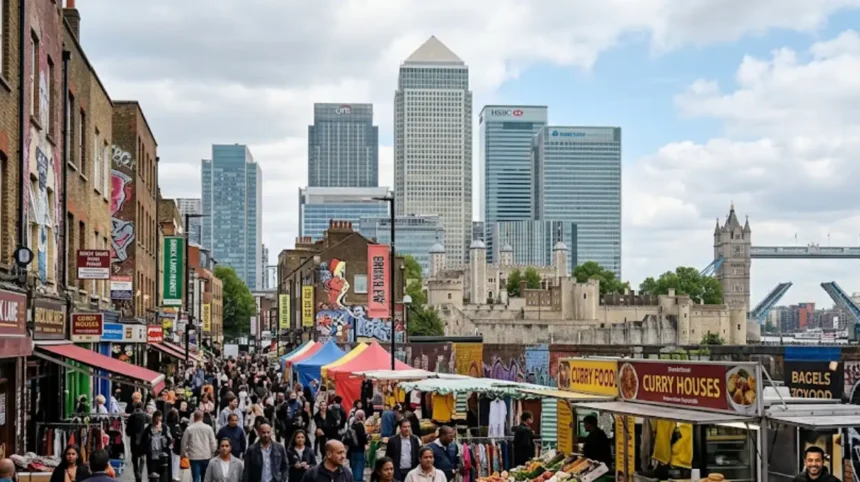
Tower Hamlets is famous for the Tower of London, Tower Bridge, Canary Wharf’s skyscrapers, Brick Lane’s street food and markets, and its deep heritage as London’s historic docklands and immigrant gateway.
- What is Tower Hamlets and where is it located?
- What are the most famous landmarks in Tower Hamlets?
- Why is Tower Hamlets historically significant?
- What cultural attractions and museums can you visit in Tower Hamlets?
- What are the best markets and food experiences in Tower Hamlets?
- What modern attractions and business districts define Tower Hamlets today?
- What parks, green spaces, and family activities are available in Tower Hamlets?
- How do tourists and locals experience Tower Hamlets differently?
- What transport links serve Tower Hamlets and how do visitors get around?
- What should visitors know before visiting Tower Hamlets?
What is Tower Hamlets and where is it located?
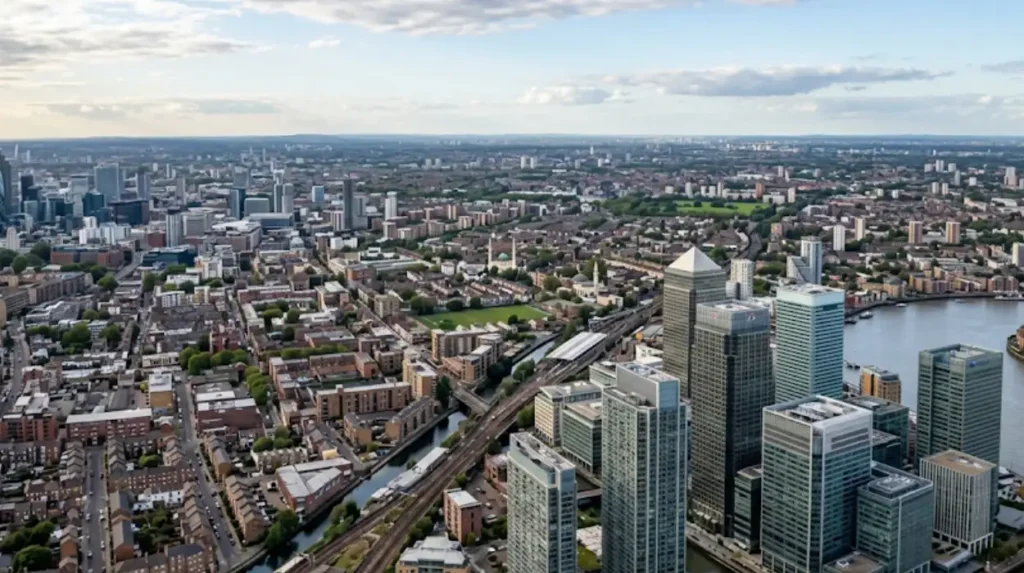
Tower Hamlets is an inner London borough on the east bank of the River Thames, bordering the City of London, Hackney, and Newham, and forming the core of the traditional East End.
Tower Hamlets takes its name from the historical association between the Tower of London and the surrounding hamlets that supported it. The borough’s southern boundary follows the distinctive “U” bend of the River Thames. It includes areas such as Whitechapel, Spitalfields, Bethnal Green, Stepney, Limehouse, Poplar, Isle of Dogs, and the modern financial district of Canary Wharf.
The area has evidence of human activity dating back thousands of years, with Stone and Bronze Age implements discovered locally. In more recent centuries, it became central to London’s port industry, maritime trade, and successive waves of immigration. As you explore the modern site, you are crossing land with a deep heritage. Read about the full [history of Tower Hamlets from Roman times to the present] to understand its origins.
What are the most famous landmarks in Tower Hamlets?
The borough’s most famous landmarks are the Tower of London, Tower Bridge, Canary Wharf skyline, Spitalfields Market, Brick Lane, and the Museum of London Docklands.
The Tower of London is a UNESCO World Heritage Site and one of the most visited historic attractions in the UK. Founded in the 11th century by William the Conqueror, it has served as a royal palace, prison, armoury, and home to the Crown Jewels. Visitors can explore the White Tower, medieval walls, and the ceremonial Horse Armoury.
Tower Bridge, completed in 1894, is an iconic Victorian bascule and suspension bridge spanning the Thames near the Tower. Its high-level walkways offer panoramic views, and its engine rooms house original steam engines that once powered the bridge lifts.
Canary Wharf, centred on the Isle of Dogs, is a major international business district with a skyline of high-rise towers, including One Canada Square with its distinctive pyramid top. Often called “Manhattan-on-Thames”, it symbolises the area’s transformation from derelict docks to a global financial hub.
Spitalfields Market, one of London’s oldest markets, operates seven days a week and blends historic architecture with independent fashion, food, and art stalls. Brick Lane, running alongside it, is renowned for its curry houses, vintage shops, street art, and Sunday market.
The Museum of London Docklands, housed in a Grade I listed Georgian warehouse at West India Quay, presents 400 years of Thames-side history, trade, and community life. Entry is free, and it serves as a key cultural anchor for understanding the docklands’ past and present.
Why is Tower Hamlets historically significant?
Tower Hamlets is historically significant as the heart of London’s East End, its principal docklands, and a long-standing point of arrival for immigrants and global trade.
The borough’s identity is tied to the Tower of London and the hamlets that supported its military and administrative functions. Over centuries, it evolved into a dense working-class district centred on shipbuilding, warehousing, and port industries. The London Docks, West India Docks, and Millwall Docks handled goods from across the British Empire, including sugar, timber, and spices.
This maritime role shaped the social fabric. Tower Hamlets absorbed successive waves of migrants: French Huguenots in the 17th century, Jewish communities in the 19th and early 20th centuries, and, from the mid-20th century, large numbers of Bangladeshi settlers, particularly around Brick Lane and Spitalfields. Each group left a lasting mark on architecture, religion, and food culture.
The area also featured prominently in social reform and literary accounts of urban poverty. American writer Jack London documented conditions in the early 20th century in The People of the Abyss, describing systemic deprivation before later regeneration. Post-war slum clearance, the closure of the docks in the 1960s–1980s, and the creation of the London Docklands Development Corporation drove profound physical and economic change.
Key heritage sites such as the Tower of London, Tower Bridge, and the Museum of London Docklands preserve and interpret this layered history for visitors and residents alike.
What cultural attractions and museums can you visit in Tower Hamlets?
Visitors can explore the Tower of London, Museum of London Docklands, Whitechapel Gallery, Young V&A, and numerous historic churches, mosques, and community galleries across the borough.
The Tower of London remains the cornerstone heritage attraction, offering curated exhibitions on royal history, executions, and the Crown Jewels. Its setting alongside Tower Bridge creates a dense cultural corridor on the riverside.
The Museum of London Docklands provides free, in-depth exhibits on trade, slavery, migration, and everyday life in the port. Its galleries cover the height of the dock era, wartime bombing, and post-industrial regeneration.
Whitechapel Gallery, founded in 1901, was established specifically to bring high-quality art to East London. It hosts nine exhibition spaces, an auditorium, and a specialist bookshop, presenting major contemporary and historical art shows. Opening hours run Tuesday to Sunday, with late opening on Thursdays.
The Young V&A (formerly the V&A Museum of Childhood) in Bethnal Green focuses on design, play, and creativity for children and families. It offers interactive exhibits, workshops, and a dedicated research collection on childhood culture.
Religious and community buildings add further cultural depth. The East London Mosque, one of the largest in the UK, serves a substantial Muslim population and hosts educational and community events. Historic churches such as St Anne’s, Limehouse, and St George-in-the-East reflect earlier maritime and immigrant communities.
What are the best markets and food experiences in Tower Hamlets?
Tower Hamlets is best known for Brick Lane’s curry houses and Sunday market, Spitalfields Market’s independent stalls, Columbia Road flower market, and Roman Road Market’s local produce.
Brick Lane forms the cultural and culinary heart of the borough’s Bangladeshi community. Its narrow streets are lined with curry restaurants, vintage clothing shops, and street art. The Sunday market attracts locals and tourists with stalls selling everything from street food to handmade crafts.
Spitalfields Market, adjacent to Brick Lane, operates all week and features a mix of permanent boutiques and temporary stalls. It is known for independent fashion designers, artisanal food vendors, and occasional themed markets focusing on art, design, and collectables.
Columbia Road Flower Market, open on Sundays, is a long-established specialist market for flowers, plants, and garden accessories. It draws buyers from across London and offers a distinct, horticultural atmosphere compared to the borough’s other markets.
Roman Road Market in Bow provides a more traditional East End street-market experience, with stalls selling fresh fruit and vegetables, household goods, and clothing at value prices. Backyard Market and other smaller venues add further variety for fashion, records, and street food.
Together, these markets create a dense, year-round trading environment unmatched by other London boroughs, reflecting Tower Hamlets’ role as a historic gateway for goods, people, and cuisines.
What modern attractions and business districts define Tower Hamlets today?
Canary Wharf’s skyscrapers, riverside parks, public art, and year-round events define Tower Hamlets as a modern business and leisure destination alongside its historic core.
Canary Wharf is the centrepiece of the borough’s modern identity. It houses headquarters for major banks, professional services firms, and media companies. Its towers, shopping malls, and restaurants attract business travellers and domestic visitors alike.
Beyond offices, Canary Wharf hosts outdoor cinema screenings, big-screen sporting events, seasonal light festivals for Christmas and Diwali, and rotating public art installations. Its waterfront promenades and roof gardens provide leisure space for workers and tourists.
The broader docklands area includes new residential developments, cultural venues, and converted warehouses now used as studios, gyms, and event spaces. The Thames Path connects these areas with walking and cycling routes from the City to Greenwich, encouraging exploration beyond the main tourist sites.
For digital nomads and remote workers, numerous co-working spaces and cafés in Spitalfields, Whitechapel, and around Canary Wharf offer reliable Wi‑Fi, meeting rooms, and a professional environment. These hubs sit within walking distance of major transport links, including the Elizabeth line, DLR, and London Overground.
This blend of global finance, creative industries, and accessible public space makes Tower Hamlets a key destination for business travellers seeking productive downtime and visitors interested in contemporary London.
What parks, green spaces, and family activities are available in Tower Hamlets?
Victoria Park, Mudchute Park and Farm, Stepney City Farm, and numerous smaller gardens provide green space, animal encounters, and family-friendly activities across Tower Hamlets.
Victoria Park, known locally as “Vicky Park”, is one of London’s largest and most popular urban parks. It features lakes, sports pitches, playgrounds, and a programme of festivals and concerts. Its tree-lined paths and open lawns make it a favoured spot for picnics, running, and community events.
Mudchute Park and Farm on the Isle of Dogs combines parkland with a working city farm. Families can see livestock, including sheep, goats, and pigs, and take part in seasonal activities and educational workshops. The site also offers cafes and play areas.
Stepney City Farm, near Stepney Green, provides a similar urban-farm experience with animals, gardens, and community projects. It operates Tuesday to Sunday and on bank holiday Mondays, offering a compact but engaging rural experience within the city.
Smaller green spaces such as Altab Ali Park, St George’s Gardens, and the grounds around historic churches offer quieter pockets for rest and reflection. Many museums and galleries, including the Young V&A and Museum of London Docklands, run family workshops and interactive exhibits suitable for children.
These spaces balance the borough’s dense urban fabric and provide accessible recreation for residents and visitors of all ages.
How do tourists and locals experience Tower Hamlets differently?
Tourists focus on the Tower of London, Tower Bridge, Brick Lane, and major markets, while locals use Victoria Park, neighbourhood markets, city farms, and community venues for daily life.
First-time visitors typically concentrate on the riverside heritage corridor: the Tower of London, Tower Bridge, and the Museum of London Docklands. They then move to Brick Lane and Spitalfields for food, shopping, and street art, often as part of a wider East London day trip.
Residents and repeat visitors make more use of Victoria Park for sports and festivals, local markets such as Roman Road for everyday shopping, and community venues like the Whitechapel Gallery or neighbourhood libraries. City farms and smaller parks form part of weekly routines for families and dog walkers.
Digital nomads and business travellers often base themselves around Canary Wharf and Spitalfields, using co-working spaces during the day and dining or attending evening events in the same areas. Domestic business travellers may combine meetings with short visits to the Tower, riverside walks, or a meal on Brick Lane after work.
This layered usage means Tower Hamlets functions simultaneously as a global tourist destination, a working business district, and a lived-in residential borough with strong community networks.
What transport links serve Tower Hamlets and how do visitors get around?
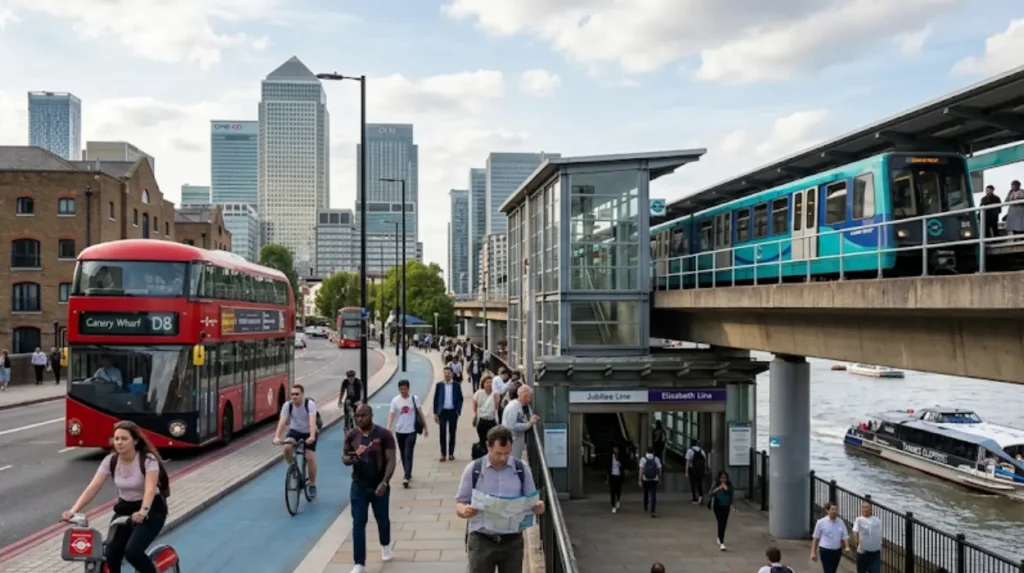
Tower Hamlets is served by the Underground, Elizabeth line, DLR, London Overground, buses, and river services, making it easy to reach and navigate on foot, by bike, or public transport.
The Jubilee, Central, District, Hammersmith & City, and Metropolitan lines all serve stations in the borough, including Whitechapel, Stepney Green, Mile End, and Canary Wharf. The Elizabeth line provides fast connections to central London, Heathrow, and east London hubs.
The Docklands Light Railway (DLR) links Canary Wharf, Limehouse, Poplar, and the Isle of Dogs with the City, Stratford, and Greenwich. London Overground connects areas such as Dalston Junction, Shoreditch High Street, and Hackney Wick with the wider network.
Buses cover dense routes across the borough, while the Thames Clippers river bus service connects Tower Pier, Canary Wharf, and Greenwich with scenic journeys along the Thames. Cycling infrastructure, including Cycle Superhighways and Quietways, supports safe bike travel between key sites.
Most major attractions are within comfortable walking distance of one another, particularly along the Thames Path and between Spitalfields, Brick Lane, and the Whitechapel area.
What should visitors know before visiting Tower Hamlets?
Visitors should know that Tower Hamlets combines crowded tourist sites with busy residential areas, diverse communities, and a mix of free and paid attractions, requiring basic planning for time, budget, and cultural respect.
The Tower of London and Tower Bridge charge admission, though Tower Hamlets residents can access some sites at heavily reduced rates. Museums such as the Museum of London Docklands and many galleries are free, making them ideal for budget-conscious travellers.
Markets like Brick Lane and Spitalfields can be extremely busy at weekends. Visitors should expect crowds, plan extra time, and be mindful when photographing people, religious buildings, or market stalls.
The borough is culturally diverse, with significant Bangladeshi, Jewish, and other communities. Respectful behaviour around mosques, churches, and community spaces is expected, particularly during prayer times and religious festivals.
Public transport is efficient but can be crowded during peak hours. Planning journeys outside rush hour, using contactless payment, and checking for planned engineering works helps avoid delays.
With these considerations in mind, visitors can comfortably experience Tower Hamlets’ blend of world-famous landmarks, vibrant street life, and everyday East London culture.
What is Tower Hamlets famous for?
Tower Hamlets is famous for the Tower of London, Tower Bridge, Canary Wharf, Brick Lane, Spitalfields Market, and its rich East End history. The borough is known for its historic docklands, diverse communities, vibrant street food, and one of London’s most recognisable skylines.