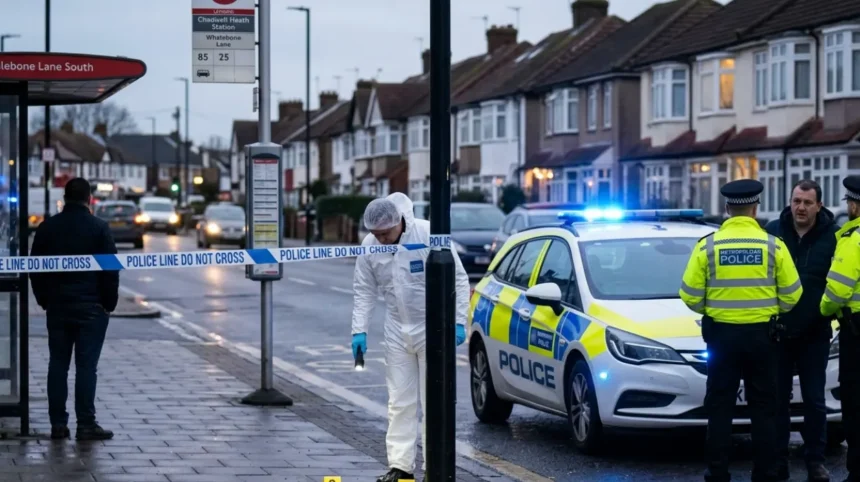
Metropolitan Police have issued a series of statements describing a non‑fatal air‑rifle shooting in Whalebone Lane South, Chadwell Heath (Dagenham), in which a woman in her 50s was injured and two men were arrested on suspicion of possession of a firearm with intent to endanger life. The force has repeatedly described the incident as isolated, confirmed that the victim’s injuries are not life‑threatening, and urged local residents to come forward with any information, including CCTV footage or dash‑cam video taken on the evening of 2 January 2026.
- What happened in the Chadwell Heath shooting?
- What statements has the Metropolitan Police released?
- Who has been arrested and what are they accused of?
- What does the police say about the victim?
- How does the Chadwell Heath shooting fit into broader crime trends?
- What are the legal implications of an air‑rifle shooting?
- What safeguards and community responses have been put in place?
- What does the police say residents should do if they have information?
- How does this incident affect perceptions of safety in Chadwell Heath?
- What future implications might this case have for policing in east London?
What happened in the Chadwell Heath shooting?
Metropolitan Police describe a woman in her 50s being shot with an air rifle on Whalebone Lane South, Chadwell Heath, on the evening of Friday, 2 January 2026, after officers were called to a report of a firearm discharge at 19:14.
Police say they found the woman at the scene with an injury “consistent with an air rifle” and arranged for emergency services to take her to hospital, where doctors assessed her injuries as neither life‑threatening nor life‑changing. The incident occurred in a residential area of Dagenham, close to Romford, and prompted a rapid deployment of Met officers and local‑area detectives to secure the scene and begin a criminal investigation.
The Metropolitan Police have treated the case as a firearm‑related offence even though the weapon used is an air rifle, which falls under the broader definition of “firearm” in English law when it is capable of expelling a projectile. Officers have not released detailed images of the air rifle or the exact type, but they have stated that forensic and ballistics teams were called to Whalebone Lane South to examine the location and any potential evidence. Community‑safety teams have since worked alongside local leaders to reassure residents that the force is treating the incident seriously.
What statements has the Metropolitan Police released?
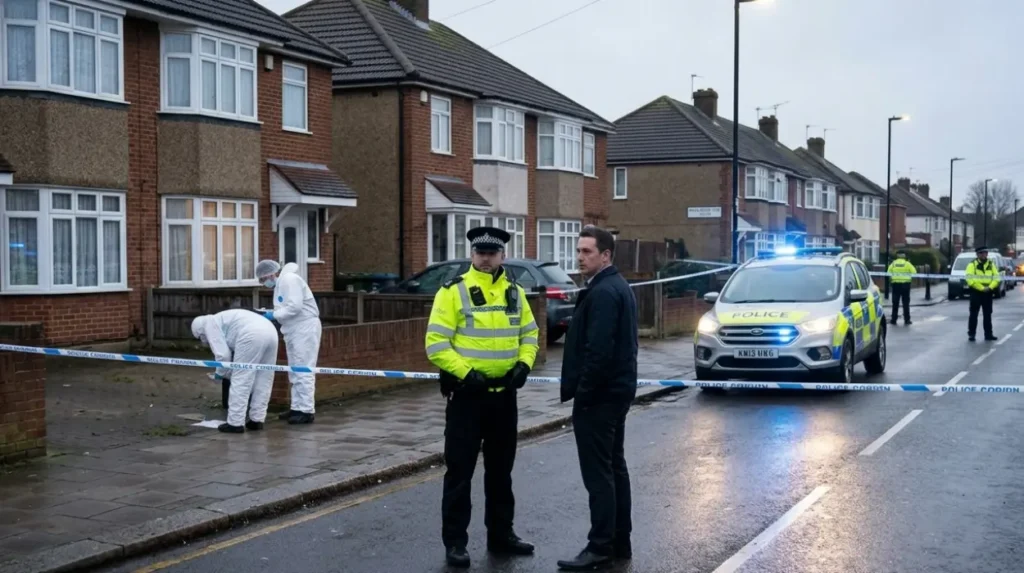
A Met spokesperson confirmed that police were called to a firearm discharge on Whalebone Lane South, Chadwell Heath, at 19:14 on 2 January 2026, and that a woman in her 50s was found with an air‑rifle injury and taken to hospital.
The force’s statement explicitly notes that the injuries were “non‑life‑changing or life‑threatening,” which distinguishes this case from shootings involving live firearms or more serious wounding. The statement also emphasises that the incident happened in a public street, increasing the risk of public exposure and making witness material—such as CCTV from nearby shops, homes, or transport—especially important to the inquiry.
In follow‑up comments, the Metropolitan Police reiterated that detectives are treating the incident as a criminal offence and are actively appealing for information from anyone who was in the area between roughly 19:00 and 20:00 on 2 January 2026. Officers have asked residents and businesses to check security cameras, mobile‑phone footage, and dash‑cam recorders, as even short clips could help identify suspects or vehicles involved. The Met have also reminded the public not to share unverified footage on social media, to avoid compromising the investigation or spreading misinformation.
Who has been arrested and what are they accused of?
Two men, aged 29 and 18, were arrested nearby on suspicion of possession of a firearm with intent to endanger life, in connection with the air‑rifle shooting of a woman in her 50s in Chadwell Heath.
Police have stated that the arrests were made in the immediate vicinity of Whalebone Lane South on the evening of the incident or shortly afterwards, indicating that officers were operating from initial intelligence, local‑area deployment, and possible witness sightings. The charge being considered is possession of a firearm with intent to endanger life, which is a serious offence under the Firearms Act 1968 and can carry lengthy prison sentences if a court convicts.
The Metropolitan Police have not publicly confirmed whether the air rifle was recovered at the time of arrest or later, but they have indicated that the investigation is ongoing and that officers are still examining evidence, including forensic material, CCTV, and witness accounts. The suspects remain under police bail or in custody, depending on the latest review of the case, and have not been named in official statements to protect the integrity of the investigation and the presumption of innocence.
What does the police say about the victim?
Police describe the victim as a woman in her 50s who was rushed to hospital after an air‑rifle injury on Whalebone Lane South, Chadwell Heath, and whose injuries have been assessed as non‑life‑threatening.
The Met have not released the woman’s full name or address, respecting her privacy and any requests from her family, but they have confirmed her age range and that she was taken directly from the scene to an east‑London hospital for emergency assessment and treatment. Medical staff have since reported that the wound did not require long‑term or life‑changing intervention, which has helped reduce the immediate public‑health concern around the incident.
Police have also indicated that family‑liaison officers are providing support to the victim and her relatives, a standard procedure in serious‑crime cases to explain the progress of the investigation, court timelines, and any media coverage. These officers typically act as a single point of contact between the family and the investigation team, ensuring that the victim’s side of the story is documented and that relatives understand what evidence is being gathered and how it may be used in any future prosecution.
How does the Chadwell Heath shooting fit into broader crime trends?
This incident is part of a wider pattern of firearm‑related offences in east London, where local forces and the Metropolitan Police have recorded a mix of live‑fire shootings and air‑weapon attacks, including in boroughs such as Barking and Dagenham and Newham.
Statistics published by the Met and local councils show that while the number of deaths from live firearms has fluctuated in recent years, non‑fatal air‑rifle or air‑gun incidents have increased in some outer‑east‑London neighbourhoods, including areas around Chadwell Heath and Romford. These weapons are easier to obtain and carry than licensed firearms, which is why they frequently appear in domestic disputes, intimidation, and opportunistic attacks.
The Chadwell Heath shooting also reflects a broader concern about “low‑level” but potentially dangerous use of air‑weapons in residential streets, where children may be playing or people are walking pets. Community‑safety partnerships in Barking and Dagenham have responded by stepping up joint patrols, door‑knocking campaigns, and school‑based safety talks about the risks of air‑rifle misuse. Police say that tackling this kind of offence is now a priority because even a single pellet can cause serious eye or internal injuries, even if the weapon is not classified as a high‑powered firearm.
What are the legal implications of an air‑rifle shooting?
An air‑rifle shooting in a public street can be prosecuted as a firearm offence under the Firearms Act 1968, with penalties including long‑term imprisonment if someone is found guilty of using or possessing the weapon with intent to endanger life.
In England and Wales, an air‑rifle or air‑gun is treated as a “firearm” if it is capable of expelling a missile and is used in a way that endangers another person. Key offences include possession of a firearm with intent to endanger life, possession of a firearm with intent to commit another indictable offence, and reckless discharge of a firearm that causes injury. Each of these can carry sentences of up to ten years or more in Crown Court, depending on aggravating factors such as location, victim vulnerability, and prior convictions.
In the Chadwell Heath case, the police focus on “possession of a firearm with intent to endanger life” signals that investigators believe the air rifle was used against a specific person rather than discharged in a random or purely reckless manner. The prosecution would need to prove that the accused knowingly possessed the weapon and intended that it be used in a way that created a risk of harm, or that the act was so reckless that it effectively amounted to intent. If the court convicts, the judge would consider sentencing‑guideline bands, the victim’s age and health, and any previous offences to determine the length of any prison term.
What safeguards and community responses have been put in place?
In response to the shooting, the Metropolitan Police have increased patrols in Whalebone Lane South and surrounding streets, while local councils and community groups in Dagenham have stepped up safety messaging and neighbourhood‑watch networking.
Foot and vehicle patrols have been reinforced in the immediate area on evenings and weekends, with officers engaged in “stop‑and‑account” interactions and visible presence checks to deter further offences and reassure residents. Police have also conducted house‑to‑house visits in nearby blocks and terraced housing to ask residents whether they saw anything unusual on the evening of 2 January 2026 or have security‑camera systems that might depict the incident.
At the same time, Barking and Dagenham Council, working with local ward councillors and faith leaders, has promoted updates through community newsletters, social‑media channels, and noticeboards in local centres. These messages remind residents how to report suspicious behaviour, where to submit CCTV or dash‑cam footage securely, and how to access victim‑support services if they feel anxious or traumatised after the incident. Community‑safety officers have also held brief drop‑in sessions at local estates to answer questions about the police investigation and the wider work on tackling air‑weapon crime.
What does the police say residents should do if they have information?
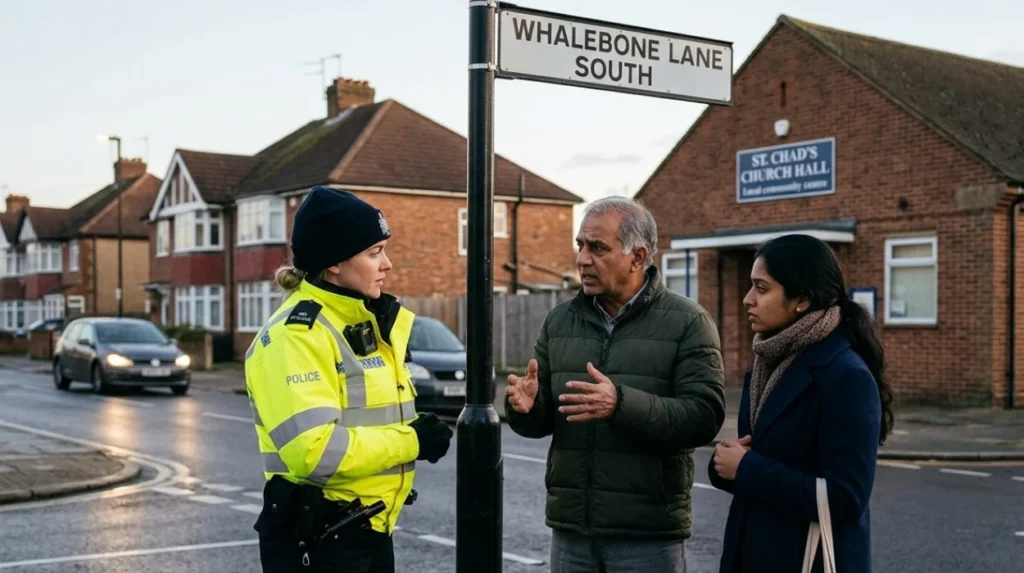
Metropolitan Police ask anyone who was on Whalebone Lane South, Chadwell Heath, or nearby streets between 19:00 and 20:00 on 2 January 2026, and who saw, heard, or recorded anything suspicious, to contact them via 101, the non‑emergency number, or online.
Officers stress that even small details—such as a description of a person, a vehicle, a noise, or a shouted phrase—can be crucial to the investigation. They also encourage residents to check their mobile phones, home‑security apps, and dash‑cams, and to upload any relevant footage through the official Met online portal rather than sharing it publicly on social media. This helps preserve the integrity of the evidence and avoids potential contamination of witness accounts.
The force has also reminded people that they can report information anonymously via independent organisations such as Crimestoppers, which can relay information to investigators without revealing the caller’s identity. By using such routes, witnesses who fear retaliation or community tensions can still help the police without compromising their safety. Police have said that they will reassess the need for additional rewards or public appeals if the case stalls, but that any decision will be made in line with the Met’s internal policy on rewards for information.
How does this incident affect perceptions of safety in Chadwell Heath?
The Chadwell Heath shooting has heightened local concerns about street safety, even though the Met still describe the event as an isolated incident and point to broader crime‑reduction programmes in Barking and Dagenham.
Residents have reported feeling more cautious when walking at night, especially on quieter side roads like Whalebone Lane South, and some parents have said they are more likely to accompany children or restrict unsupervised outdoor time after dark. Local‑press coverage and social‑media posts have amplified these worries, even though the police have repeatedly underlined that the victim’s injuries were not life‑threatening and that the suspect or suspects appear to have been known or linked to the area.
At the same time, council data and police bulletins show that overall recorded crime in Chadwell Heath and the wider Dagenham area has either stabilised or declined slightly in the past few years, particularly for burglary and theft. The perception of safety is therefore partly influenced by high‑impact events such as shootings, even when they are relatively rare. Police and community groups are working together to counter this by promoting crime‑prevention tips, encouraging residents to join neighbourhood‑watch schemes, and hosting regular “meet‑the‑police” events in local halls and community centres. These efforts aim to turn fear‑driven behaviour into informed, proactive safety habits.
What future implications might this case have for policing in east London?
If the Chadwell Heath air‑rifle case leads to a successful prosecution, it may encourage more residents to report low‑level firearm incidents and could prompt the Met to tighten enforcement around air‑weapons and youth‑oriented crime‑prevention schemes.
The Metropolitan Police have already signalled that even non‑fatal air‑rifle attacks will be treated as serious, rather than as “less serious” offences, which could alter how officers respond to similar reports across east London. A conviction could also set a precedent for judges to apply robust sentences when air‑weapons are used in public spaces, reinforcing the legal message that such conduct will not be treated lightly simply because the weapon is not a live‑fire gun.
In the longer term, this incident may feed into wider strategies for tackling violent crime in east‑London boroughs, including stepped‑up intelligence‑led patrols, targeted interventions in high‑risk neighbourhoods, and partnerships with schools and youth projects to prevent young people from acquiring or misusing air‑weapons. Community‑safety data and police‑performance metrics will likely be used to track whether repeat incidents decline in the Chadwell Heath area, which could influence future budgeting and resource allocation for local policing and prevention programmes.
What happened in the Chadwell Heath shooting?
A woman in her 50s was shot with an air rifle on Whalebone Lane South, Chadwell Heath, on 2 January 2026 at around 7:14 pm. Metropolitan Police and London Ambulance Service responded quickly, and the victim was taken to hospital with non-life-threatening injuries.