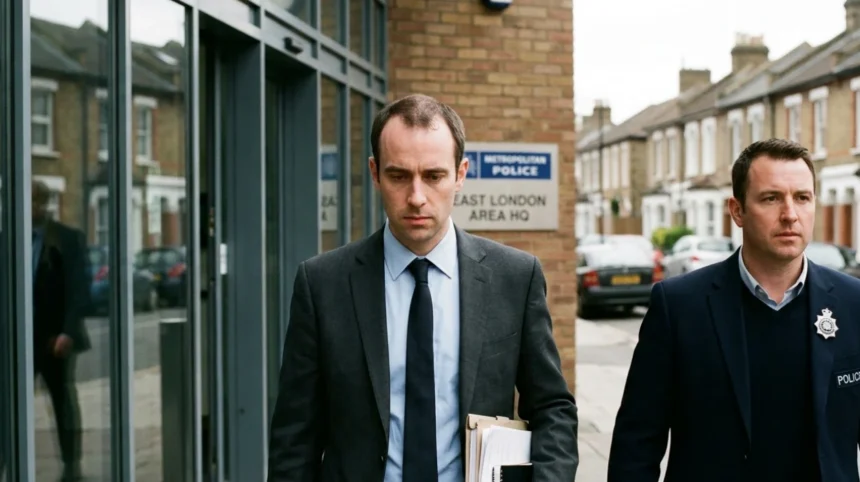
PC Daniel Traynor, a Metropolitan Police officer based in East London, was dismissed in early 2026 after a gross misconduct hearing found his actions fell far below the standards expected of a police officer. The case revolved around an assault on a neighbour during a parking dispute outside his east‑London home, followed by a criminal conviction and then a separate police disciplinary process. The investigation findings are now an important reference point for how misconduct cases involving on‑duty and off‑duty conduct are handled in the capital, particularly in boroughs such as Newham, Barking and Dagenham, and Redbridge.
- What led to PC Daniel Traynor being sacked?
- What did the criminal investigation reveal?
- What were the key findings of the police misconduct investigation?
- How does a police gross misconduct hearing work in this case?
- What standards of professional behaviour did PC Traynor breach?
- How serious is being sacked for assault by a neighbour?
- How does this case affect public trust in East London policing?
- What does this mean for other Metropolitan Police officers?
- What are the long‑term implications for police discipline policy?
- How does this case compare to other recent Met police sackings?
- What does this mean for residents of East London?
- What should local readers take away from this case?
This article explains what the investigation concluded, how the case unfolded, and what it means for public trust, police discipline, and accountability in East London.
What led to PC Daniel Traynor being sacked?
PC Daniel Traynor, a 38‑year‑old Metropolitan Police constable, was dismissed following a gross misconduct hearing after he was convicted of a single charge of assault by beating in a dispute with a neighbour. The incident occurred in East London in November 2024, when Traynor returned to his home and found a vehicle blocking access to his property. Witnesses told the disciplinary panel that a verbal exchange escalated into a physical confrontation, with Traynor punching the neighbour and the neighbour punching back. The altercation ended with both men falling to the ground and emergency services being called.
The Metropolitan Police’s internal misconduct investigation concluded that Traynor’s conduct was “wholly unbecoming of a police officer,” given that he was employed to uphold the law and maintain public order. The investigation treated the case as a serious breach of the Standards of Professional Behaviour, specifically in relation to authority, respect and courtesy, and discreditable conduct. Because the evidence satisfied the standard of proof used in police misconduct hearings (the “criminal standard” of beyond reasonable doubt), the panel recommended dismissal without notice.
What did the criminal investigation reveal?
Criminal investigators established that the dispute began over a parking issue outside Traynor’s east‑London residence. The neighbour, Joshua Smith, had parked a vehicle so that it obstructed Traynor’s driveway, and Traynor complained about it. During the row, Traynor struck Smith, who then punched back, triggering a brief physical fight that ended with both men falling to the ground. Police were called to the scene, and officers recorded injuries to both men, including bruising and minor cuts.
The Crown Prosecution Service charged Traynor with one count of assault by beating under section 39 of the Criminal Justice Act 1988. At the magistrates’ court hearing, the prosecution presented witness statements, CCTV material (where available), and medical records, arguing that Traynor had used unlawful force when he could have de‑escalated the situation or sought non‑violent resolution. The court accepted that the assault was not premeditated but concluded that Traynor had struck Smith without lawful justification, leading to a single conviction for assault by beating.
The criminal conviction automatically triggered a second, parallel process within the Metropolitan Police, where misconduct investigators were required to examine whether Traynor’s behaviour also breached the force’s professional standards.
What were the key findings of the police misconduct investigation?
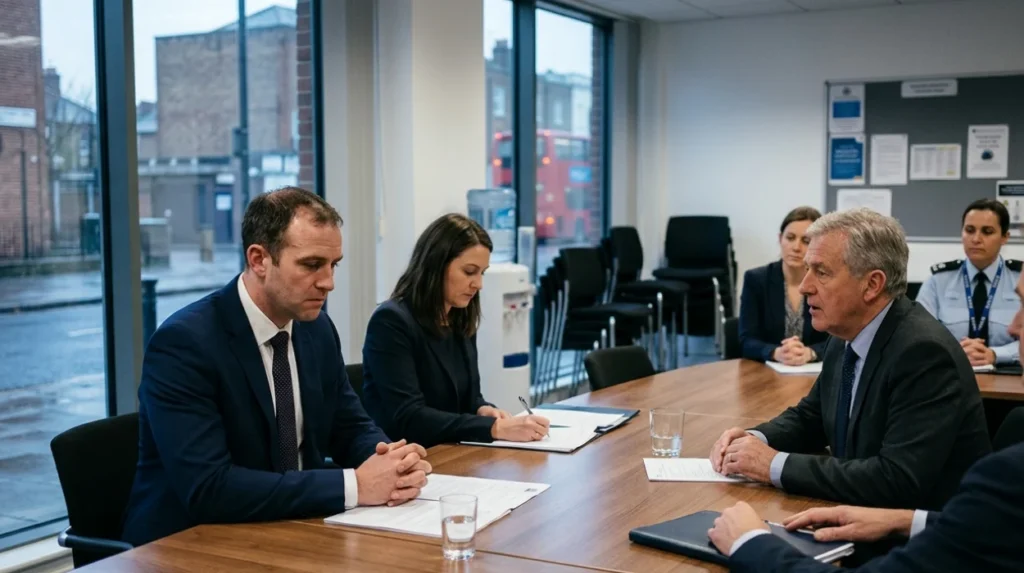
The Metropolitan Police’s gross misconduct hearing, chaired by Commander Andy Brittain, examined the same incident but from the perspective of professional standards rather than general criminal law. Investigators reviewed the criminal case file, internal body‑worn‑video footage where available, station‑recorded interviews, and written statements from the parties involved. The investigation also examined Traynor’s previous conduct record and any prior complaints or allegations against him.
The key findings of the misconduct investigation were:
- Traynor used unlawful force against a member of the public during a private dispute, which constitutes a serious breach of the Standards of Professional Behaviour.
- His conduct was deemed “wholly unbecoming of a police officer” because it undermined public confidence and exposed the profession to ridicule.
- The panel decided that dismissal was the only appropriate sanction, given the seriousness of the offence, the fact that he was a serving officer, and the risk of future harm to community trust if he were allowed to remain in post.
The misconduct panel did not dispute that Smith had also used force in the altercation, but it concluded that Traynor’s status as a police officer placed a higher duty on him to avoid violence and to act in a manner consistent with the law. The panel’s reasoning was that even off‑duty conduct can be treated as misconduct if it brings the police service into disrepute or involves a breach of the criminal law.
How does a police gross misconduct hearing work in this case?
In England and Wales, a gross misconduct hearing is a formal disciplinary process held by a police force when an officer is alleged to have committed a serious breach of the Standards of Professional Behaviour. The process is governed by the Police (Conduct) Regulations 2020 and overseen by the Independent Office for Police Conduct (IOPC) when appropriate. The hearing is usually conducted by a panel of senior officers or a legally qualified chair, and the outcomes are published if the case is heard in public.
In Traynor’s case, the Metropolitan Police’s Directorate of Professional Standards led the investigation and then referred the file to a misconduct panel. The panel was required to:
- Determine whether the alleged misconduct was proven to the criminal standard of proof.
- Decide, if proven, what the appropriate sanction should be, ranging from “no action” to dismissal.
The panel heard evidence from misconduct investigators, reviewed the criminal‑court record, and assessed whether Traynor’s behaviour
- fell short of the expected standards of authority, respect and courtesy;
- amounted to discreditable conduct;
- posed a risk to public trust and confidence in the Metropolitan Police.
The panel concluded that the allegations of gross misconduct were proven and that dismissal was the proportionate outcome. Traynor was also told he would be placed on the police barred list, which prevents him from being re‑hired as an officer in any police force in England and Wales.
What standards of professional behaviour did PC Traynor breach?
The Standards of Professional Behaviour are a set of nine principles that all police officers and staff in England and Wales must follow. In Traynor’s case, the misconduct panel focused on at least three core standards:
- Authority, respect and courtesy: Officers must act with fairness, respect, and courtesy at all times. Using physical force in a private dispute, especially when the situation could have been managed without violence, is treated as a serious breach.
- Discreditable conduct: This covers any behaviour that undermines public confidence in the police, including criminal offences committed by officers. The panel found that assaulting a neighbour in a street dispute damaged the reputation of the Metropolitan Police.
- Use of force: Officers are permitted to use force only when it is lawful, necessary, and proportionate. The investigation found no lawful justification for Traynor’s use of force in this context, even though both men exchanged blows.
The panel’s reasoning aligns with broader IOPC guidance on misconduct, which stresses that officers must uphold the law even when they are off‑duty and in private situations. The same principles apply to on‑duty use‑of‑force cases, such as those involving custody sergeants or responding officers, but Traynor’s case shows that non‑operational, personal incidents can also trigger disciplinary action.
How serious is being sacked for assault by a neighbour?
Being dismissed from a police service for assaulting a neighbour is treated as a serious disciplinary outcome because it strikes at public confidence in the police. Assault by beating is a criminal offence under section 39 of the Criminal Justice Act 1988 and carries a maximum penalty of six months’ imprisonment or a fine. In Traynor’s case, the court gave him a sentence, the exact length of which is a matter of public record, but the decisive factor for the police was the breach of professional standards rather than the criminal sentence alone.
For a constable, the practical consequences of dismissal include:
- A permanent entry on the police barred list, preventing future employment as an officer.
- A damage to personal reputation and prospects in other security‑related or public‑facing roles.
- A tightening of Met policies and internal guidance on how officers should manage personal disputes, especially in densely populated areas such as East London.
The case also falls within a broader pattern of misconduct hearings in the Metropolitan Police since 2022, where dozens of officers have faced public hearings for offences ranging from assault and discrimination to fraud and misuse of police systems. The sheer number of hearings underscores how seriously the Met and the IOPC take breaches of professional behaviour, even when the underlying incident appears relatively minor.
How does this case affect public trust in East London policing?
Public trust in policing in East London is closely tied to perceptions of integrity, accountability, and fairness. The Metropolitan Police serves boroughs such as Newham, Tower Hamlets, Barking and Dagenham, Havering, and Redbridge, where community relations with the police have been sensitive in recent years. A case in which a serving officer is sacked for assaulting a neighbour therefore has symbolic weight beyond the individual.
The investigation’s findings signal that the Metropolitan Police is prepared to remove officers who breach professional standards, which can help reassure communities that misconduct is not ignored. At the same time, local residents may ask why the officer remained in post until the criminal conviction was secured, and whether earlier internal concerns were picked up. The fact that the misconduct hearing was held in public, in line with a policy that around 89% of misconduct hearings since 2022 have been public, supports transparency and can help rebuild trust over time.
Comparatively, other recent misconduct cases in the Met—such as officers sacked for discriminatory remarks or excessive use of force in custody—show that the force is applying similar standards across different types of offending. Traynor’s case is part of that wider trend, reinforcing the message that officers must be held to the same legal and behavioural standards as members of the public.
What does this mean for other Metropolitan Police officers?
For other Metropolitan Police officers, Traynor’s dismissal serves as a concrete example of how off‑duty conduct can lead to gross misconduct proceedings. The misconduct panel’s reasoning emphasises several key messages:
- Officers must avoid using unlawful force in private disputes, even when provoked.
- They must conduct themselves in a way that does not bring the police into disrepute, regardless of whether they are on or off duty.
- Disciplinary panels will treat assault on a member of the public as a serious breach, especially if it involves a criminal conviction.
The Metropolitan Police also uses high‑profile misconduct cases to update internal guidance and training. For example, updated modules on conflict de‑escalation, personal conduct, and the use of force have been introduced across East London boroughs in recent years. These modules draw on real cases, including those involving officers dismissed for assault, discrimination, or misuse of police databases.
The case also underscores how the IOPC and the Met are increasingly pushing for “pre‑emptive” scrutiny, where concerns raised by colleagues or members of the public are investigated before they escalate into more serious incidents. This approach is intended to reduce the risk of future misconduct and to protect both the public and the officers involved.
What are the long‑term implications for police discipline policy?
The Traynor case contributes to an evolving set of expectations about how police discipline should work in capital‑city forces. One implication is that the bar for retention is higher when an officer has a criminal conviction, particularly for offences involving violence or abuse of power. The IOPC has repeatedly stated that assaults, discriminatory behaviour, and misuse of force are prioritised for investigation, and Traynor’s dismissal fits that pattern.
Another long‑term implication is the emphasis on public hearings and transparency. The fact that misconduct hearings are now routinely held in public, with detailed outcomes published, increases the pressure on panels to apply consistent standards and to provide clear reasoning for their decisions. This transparency can help reassure communities that misconduct is not hidden behind closed doors, especially in diverse, high‑density areas such as East London.
Finally, the case highlights the need for early intervention. If colleagues or neighbours had raised concerns about Traynor’s behaviour before the assault, misconduct investigators might have intervened earlier through lesser measures such as mentoring or re‑training. The growing body of IOPC case studies on misconduct in custody, on‑street use of force, and off‑duty behaviour suggests that early identification and support can prevent escalation in some cases, though not in all.
How does this case compare to other recent Met police sackings?
Traynor’s dismissal is one of several high‑profile cases in which Metropolitan Police officers have been sacked in recent years. Other notable examples include:
- A custody sergeant dismissed in March 2026 for using discriminatory language and unnecessary force against a suspect in Barking custody suite, also based on an IOPC investigation.
- A constable sacked for making racist remarks about Muslims while on duty, including claims that they were “taking over” London, which was found to breach equality and diversity standards.
These cases share common features: all involve a criminal‑standard proof of misconduct, a public hearing, and a dismissal with barred‑list placement. They differ in context—workplace racism, custody abuse, and private‑dispute assault—but they are treated with similar seriousness because each breaches multiple standards of professional behaviour and damages public confidence.
In each of these cases, the Metropolitan Police and the IOPC have stressed that the sanction is not just about the individual officer but about sending a message to the wider force and the public. The pattern of sackings since 2022 suggests a tightening of standards, especially in areas where use of force, discrimination, and abuse of power are concerned.
What does this mean for residents of East London?
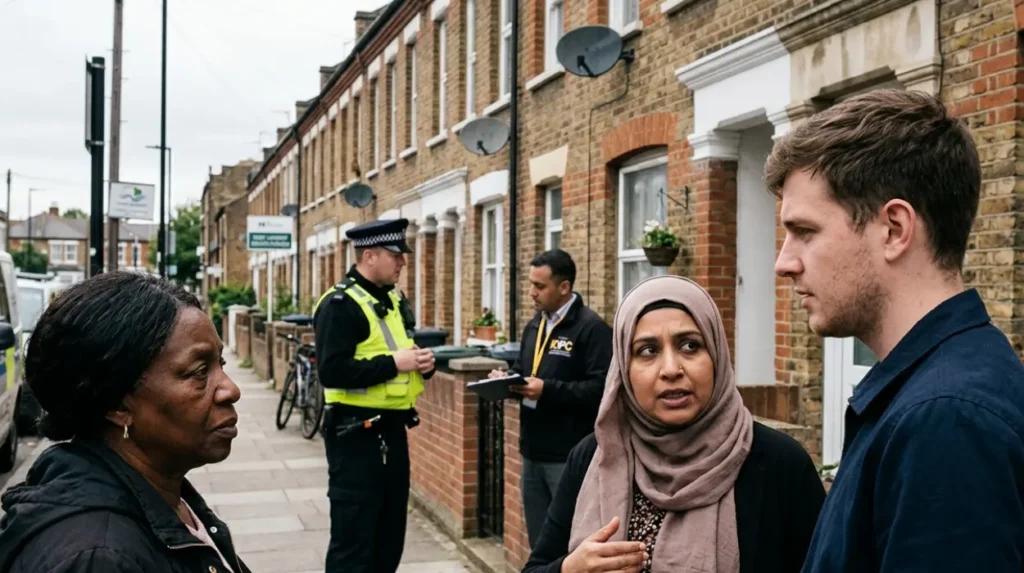
For residents of East London, the Traynor case is a reminder that police officers are subject to both criminal law and internal disciplinary procedures. The investigation’s findings and the subsequent dismissal show that the Metropolitan Police is capable of removing officers who do not meet professional standards, even when the incident occurs in a residential street rather than during an operational callout.
Residents may also view the case as a sign that complaints and concerns can trigger formal investigations. The misconduct process in this case followed the same route as custodial abuse or discrimination cases: a complaint or incident, an investigation, a hearing, and a published outcome. This sequence reassures communities that there are established mechanisms for holding officers to account.
At the same time, some residents may remain sceptical unless they see consistent enforcement across boroughs and over time. The growing number of misconduct hearings and publicised sackings suggests that the Met and IOPC are seeking to demonstrate that accountability is not selective. For East London boroughs with complex demographics and histories of tension with the police, that consistency is crucial if the force is to be seen as a reliable and fair institution.
What should local readers take away from this case?
Local readers should understand that PC Daniel Traynor was sacked because his conduct during a parking‑related assault on a neighbour was found to be a serious breach of police professional standards, proven to the criminal standard in a gross misconduct hearing. The investigation found that he used unlawful force, that his behaviour was “wholly unbecoming of a police officer,” and that dismissal was the appropriate sanction to protect public trust and send a clear message to the wider force.
The case also illustrates how the Metropolitan Police and the Independent Office for Police Conduct apply disciplinary rules to both on‑duty and off‑duty conduct, typically in boroughs such as Newham, Barking and Dagenham, and Redbridge. It reinforces that assaults, discriminatory behaviour, and misuse of force are treated as high‑priority misconduct, and that public hearings and barred‑list placements are now standard consequences for serious breaches.
Who is PC Daniel Traynor?
PC Daniel Traynor was a 38-year-old officer with the Metropolitan Police based in East London who was dismissed in 2026 after a gross misconduct finding.