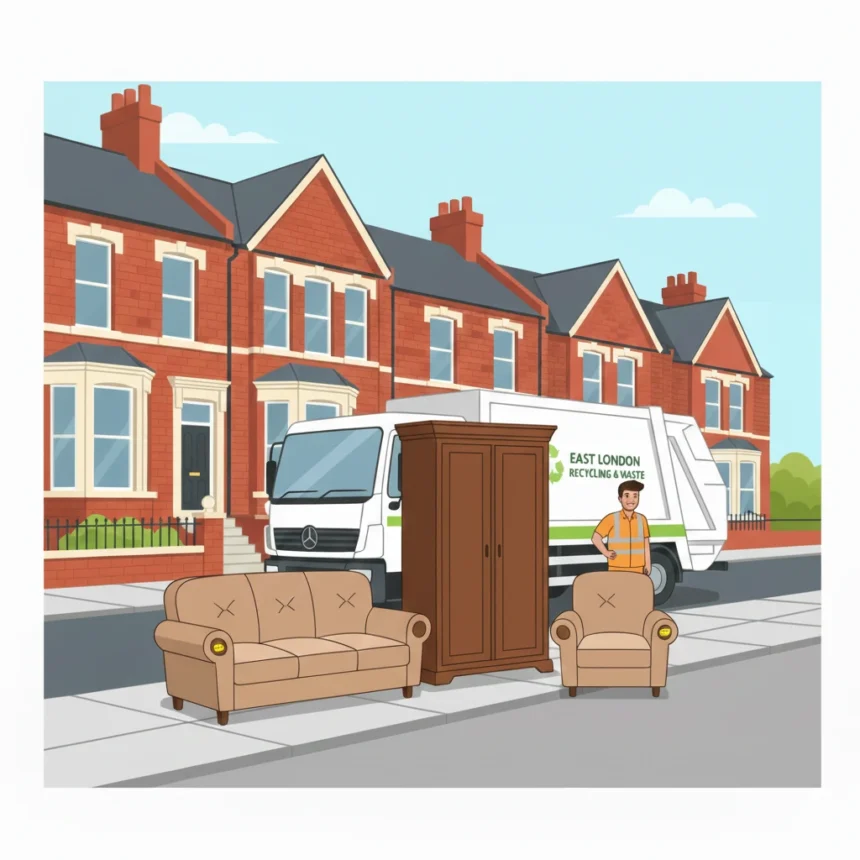
Clearing out old furniture can transform your home in East London, but figuring out the right disposal method often feels overwhelming. The council’s Bulky Waste service offers a reliable, eco-friendly solution tailored for residents dealing with items too large for standard bins, ensuring proper handling while minimizing environmental impact.
- Understanding Bulky Waste Services in East London
- Eligibility and What Counts as Bulky Waste
- Step-by-Step Guide to Booking a Collection
- Preparing Your Old Furniture for Collection
- Costs and Payment Options Explained
- What Happens After Collection: The Recycling Journey
- Alternatives if Bulky Waste Isn’t Suitable
- Common Mistakes to Avoid with Council Collections
- Borough-Specific Tips for East London Residents
- Environmental Impact of Using the Service
- Maximizing Value from Your Old Furniture Before Disposal
- Legal Responsibilities and Penalties
- Future of Bulky Waste Services in East London
East London councils, including those in Tower Hamlets, Newham, and Hackney, provide this service to manage everything from sofas to wardrobes efficiently. This guide walks you through the entire process, from preparation to collection, with tips optimized for local residents seeking sustainable waste solutions.
Understanding Bulky Waste Services in East London
Bulky Waste services across East London boroughs are designed specifically for household items that exceed regular bin sizes, such as old furniture, mattresses, and appliances. These programs stem from broader UK waste management regulations aimed at reducing landfill use and promoting recycling, a priority since the Household Waste Recycling Act of 2003 encouraged local authorities to expand collection options.
In practice, the service operates borough by borough, with slight variations in booking systems, fees, and item limits. For instance, Tower Hamlets Council coordinates collections through a centralized online portal, while Newham emphasizes mobile apps for quicker scheduling. This localized approach ensures residents receive prompt service without needing private haulers, which can cost significantly more.
The core benefit lies in its accessibility—most services charge a modest fee per collection, often covering up to five items, making it an affordable alternative to skips or fly-tipping fines, which can reach £1,000 in London boroughs. By using the council service, East Londoners contribute to the capital’s recycling targets, where bulky waste diversion from landfills has improved by over 20% in recent years through better sorting facilities.
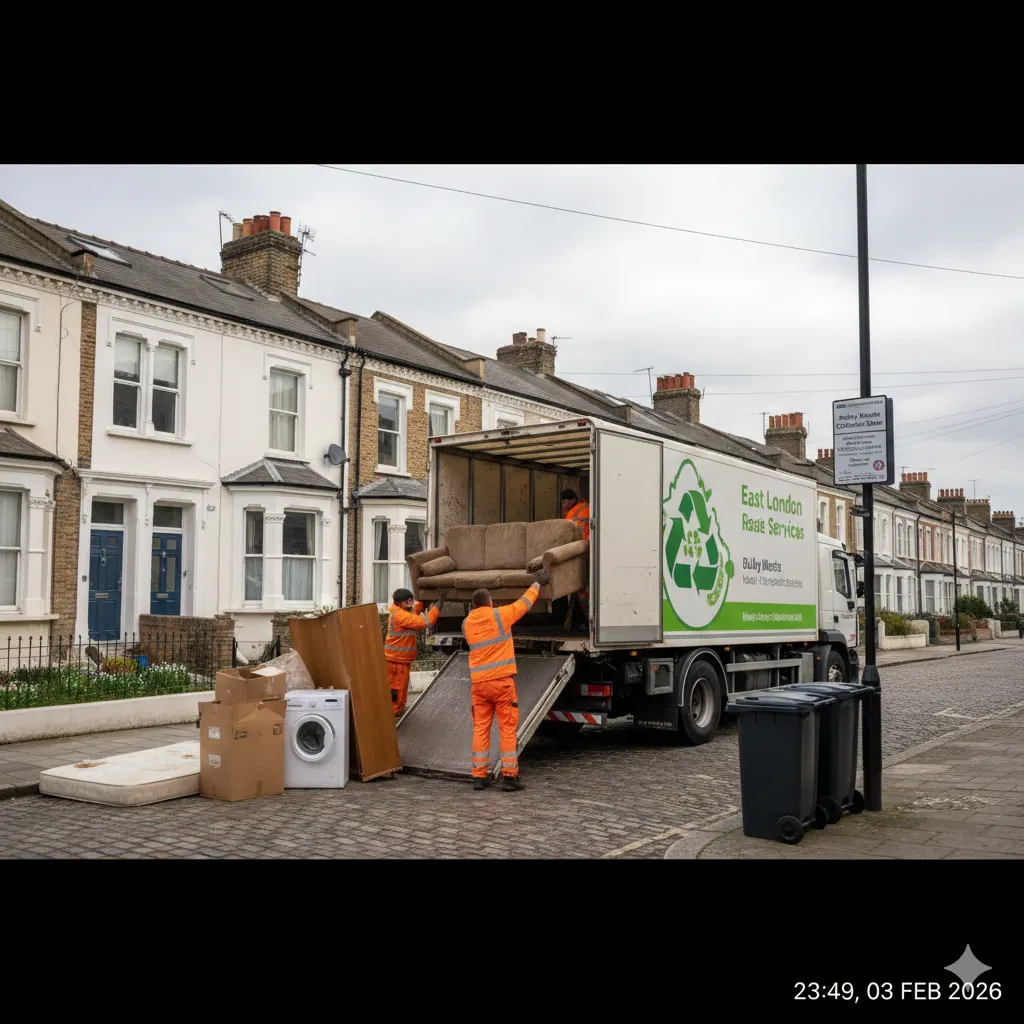
Eligibility and What Counts as Bulky Waste
Not every large item qualifies for council collection, so confirming eligibility starts with checking your borough’s guidelines. Typically, bulky waste includes furniture like armchairs, dining tables, bed frames, and chests of drawers—items too cumbersome for wheelie bins but generated from standard households.
East London councils exclude items containing hazardous materials, such as fridges with CFCs or paint-soaked upholstery, directing residents to specialized hazardous waste events instead. Garden waste like tree trunks or large branches often falls under separate green waste collections, though some boroughs bundle small amounts with bulky services during peak seasons.
Residents must live in the borough to access free or subsidized collections; renters and homeowners alike qualify, provided the property isn’t a business premises. Multi-occupancy buildings, common in East London’s high-rises, require coordination with landlords or managing agents for access on collection day, preventing delays.
Step-by-Step Guide to Booking a Collection
Booking a Bulky Waste collection begins online or via phone, with most East London councils offering 24/7 portals for convenience. Start by visiting your borough’s official website—search for “[Borough Name] bulky waste collection”—and select the furniture disposal option, where you’ll input your postcode to confirm service availability.
Next, describe your items accurately using dropdown menus or text fields; for old furniture, specify dimensions and condition to avoid rejection. Councils like Hackney limit collections to three to five free items, with extras at £10-£20 each, so prioritize essentials like that sagging sofa over minor pieces.
Choose a slot from available dates, often within 1-4 weeks, and provide payment details if required—fees range from £20-£50 for standard loads. You’ll receive a confirmation email with a reference number and exact pickup instructions, including leaving items on your property boundary for crew safety.
Phone bookings suit those less tech-savvy; lines like Tower Hamlets’ 020 7364 5001 operate weekdays, with operators verifying details to prevent scams. Always note your booking ID, as it’s essential for changes or cancellations, which most councils allow up to 48 hours prior without penalty.
Preparing Your Old Furniture for Collection
Proper preparation ensures smooth collection and maximizes recycling potential. Begin by disassembling furniture where possible—remove legs from tables or drawers from cabinets—to reduce volume and make handling easier for crews, who process thousands of tonnes annually across East London.
Clean items to remove personal belongings, food residue, or sharp edges; wrap mattresses in plastic if outdoors to protect from weather, as delays can occur due to rain. Councils require items to be accessible without entering your home, so position them neatly on the pavement or driveway by 6:30 AM on collection day.
Label bulky items with your booking reference using tape or marker for quick identification, especially in shared streets common in areas like Bethnal Green. Avoid obstructing paths or roads to comply with highway codes, preventing neighbor complaints or fines.
For eco-conscious prep, separate recyclable parts: strip metal frames or wooden panels if feasible, though full disassembly isn’t mandatory. This step aligns with East London’s circular economy goals, where over 60% of bulky furniture gets repurposed.
Costs and Payment Options Explained
While some councils offer limited free collections, most East London services charge based on item count or volume. A standard sofa and armchair might cost £30 in Newham, while adding a wardrobe bumps it to £45, reflecting operational costs like specialized vehicles and recycling plants.
Payments process online via card or at booking, with invoices sent for phone reservations. Low-income households can apply for exemptions through council welfare schemes, particularly in deprived wards like Poplar, where discretionary waivers support vulnerable residents.
Budget for potential extras: multiple collections or rapid slots (within 48 hours) incur surcharges. Compare this to private firms at £100+, highlighting the council service’s value—residents save an average of £50 per use while aiding public waste infrastructure.
What Happens After Collection: The Recycling Journey
Once collected, your old furniture heads to East London’s Materials Recovery Facilities (MRFs), like those operated by Veolia in Beckton. Crews sort items on-site: upholstered pieces go for fibre separation, while solid wood feeds into biomass or panel manufacturing.
Metals from bed frames get melted for reuse, and textiles from cushions enter the rag trade for insulation or new fabrics. This process diverts 80-90% of bulky waste from landfills, supporting the Greater London Authority’s net-zero ambitions by 2030.
Unsalvageable remnants become refuse-derived fuel for energy plants, closing the loop on waste. Donatable furniture in good nick routes to charities like Furniture Re-use Network partners, furnishing homes for those in need across Tower Hamlets and beyond.
Alternatives if Bulky Waste Isn’t Suitable
If council slots are booked or items exceed limits, consider freecycling via apps like Olio or Facebook Marketplace, where East Londoners snap up free furniture daily. Charities such as the British Heart Foundation collect reusable pieces for free, funding vital services.
Hire-a-skip options suit larger clearances, but check permits for street skips in congested areas like Whitechapel. Household Waste Recycling Centres (HWRCs), like Lea View in Leyton, accept drop-offs free for residents, ideal for spontaneous declutters.
Private firms offer same-day service at a premium, but verify licensing to avoid illegal dumping. Pairing these with council services creates a flexible disposal strategy for East London homes.
Common Mistakes to Avoid with Council Collections
Overloading bookings leads to frequent rejections; stick to listed items only, as crews skip unapproved extras like tyres or electrics. Failing to make items accessible—blocked by cars or gates—results in missed collections and rescheduling fees.
Ignoring weather prep risks damage claims, while not cancelling promptly wastes slots amid high demand. Fly-tipping temptations arise from delays, but £400+ fines and community service deter most, underscoring the service’s reliability.
Borough-Specific Tips for East London Residents
In Tower Hamlets, book via the myTowerHamlets app for real-time updates, with collections prioritizing social housing. Newham’s service integrates with their waste app, tracking carbon savings per load—a nod to eco-aware locals.
Hackney offers subsidized rates for pensioners, while Waltham Forest bundles bulky with electricals. Check seasonal peaks around spring cleans, booking early to secure weekends.
Environmental Impact of Using the Service
Opting for council Bulky Waste slashes illegal dumping, which litters East London’s canals and parks. Recycling old furniture conserves resources: one tonne of wood saves 17 trees, aligning with borough zero-waste pledges.
Communally, it fosters sustainability education, with schools in Bethnal Green using recycled materials for projects. Long-term, it cuts methane emissions from landfills by 50%, aiding London’s cleaner air goals.
Maximizing Value from Your Old Furniture Before Disposal
Before booking, assess resale: platforms like Gumtree thrive in East London for mid-century pieces. Donate viable items to shelters via Homeless London, extending furniture life cycles.
Upcycle creatively—turn pallets into shelves—or repair via local makerspaces in Dalston. These steps reduce collection needs, saving money and resources.
Legal Responsibilities and Penalties
UK law mandates proper disposal under the Environmental Protection Act 1990; councils track via CCTV, issuing Fixed Penalty Notices up to £1,000 for fly-tipping. Bulky Waste compliance shields residents from liability.
Businesses face commercial rates, so households must prove domestic use. Reporting illegal dumps via council apps keeps neighborhoods clean.

Future of Bulky Waste Services in East London
With EU-derived targets phasing post-Brexit, councils invest in AI sorting tech at facilities like Edmonton EcoPark, promising faster, greener collections. Expanded partnerships with apps could enable on-demand bookings by 2027.
Resident feedback shapes services, with pilots for free annual collections in high-density areas. Staying informed via borough newsletters ensures East Londoners adapt seamlessly.