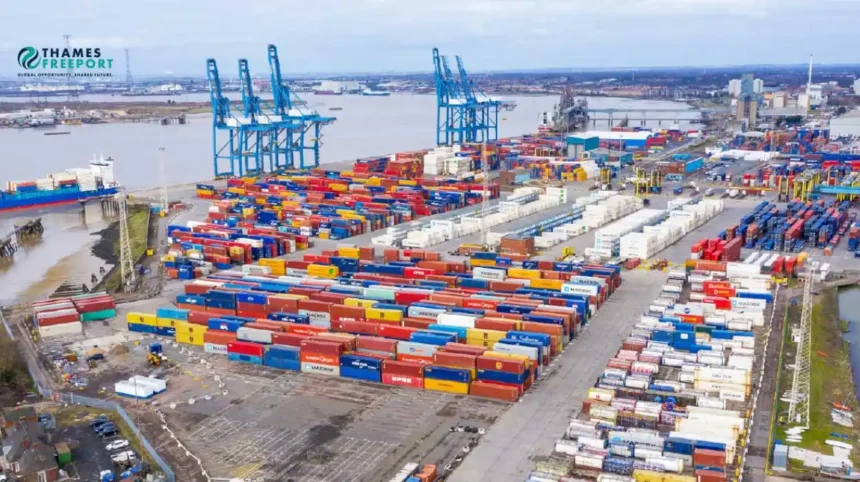
Thames Freeport offers valuable skills apprenticeships that blend practical work experience with formal training, particularly for residents in East London areas like Barking and Dagenham, Havering, and Thurrock. These programs support local economic growth by connecting individuals to jobs in key sectors such as logistics, manufacturing, and green energy.
- Understanding Thames Freeport
- What Are Thames Freeport Skills Apprenticeships?
- Benefits for East London Residents
- Eligibility Criteria
- Step-by-Step Registration Process
- Step 1: Research Available Opportunities
- Step 2: Prepare Your Application Materials
- Step 3: Apply Directly to Employers or Providers
- Step 4: Secure Employment and Enroll
- Funding and Financial Support
- Popular Apprenticeship Standards in Thames Freeport
- Role of SEATS and Local Partners
- Success Stories from East London
- Tips for a Successful Application
- Common Challenges and Solutions
- Future Outlook for Thames Freeport Apprenticeships
Understanding Thames Freeport
Thames Freeport spans the Thames Estuary, encompassing major sites like the Port of Tilbury and the Port of London, creating an economic zone focused on trade, innovation, and job creation. Launched with UK government approval, it aims to stimulate investment while prioritizing local skills development to ensure residents benefit from its expansion.
The Freeport’s skills initiatives, including the Thames Freeport Skills Fund and Skills Accelerator, address workforce needs in industrial clusters by partnering with local providers like SEATS, South Essex Colleges, and apprenticeship brokers. These efforts map skills gaps and deliver training pipelines, making apprenticeships a cornerstone for inclusive growth in East London and surrounding boroughs.
What Are Thames Freeport Skills Apprenticeships?
Skills apprenticeships under Thames Freeport are structured programs combining on-the-job training with off-the-job learning, leading to nationally recognized qualifications from Level 2 to Level 7. Funded partly by the Freeport and government incentives, they target sectors vital to the region, such as maritime operations, engineering, and digital skills, helping participants gain practical expertise while earning a wage.
Unlike traditional education, these apprenticeships require an employment contract for at least 52 weeks per year in a role that builds specific knowledge, skills, and behaviors, culminating in an End-Point Assessment. The SEATS brokerage, funded by Thames Freeport, simplifies access by matching employers with training providers and handling funding, ensuring programs like those in boatmaster or maritime engineering align with local industry demands.
Benefits for East London Residents
Participating in a Thames Freeport skills apprenticeship provides a direct pathway to stable employment in a booming economic zone, with apprentices earning while developing in-demand skills for Freeport businesses. For East Londoners in Barking and Dagenham or Havering, this means proximity to opportunities at ports and supply chains, fostering career progression without the debt of full-time study.

Financial perks include a minimum wage of £7.55 per hour for first-year apprentices from April 2025, full funding for those aged 21 or under, and employer incentives like £1,000 payments or National Insurance exemptions for under-25s. Long-term, completers often secure permanent roles, contributing to community revitalization as the Freeport drives levelling up in Thurrock and beyond.
Eligibility Criteria
To qualify for a Thames Freeport skills apprenticeship, applicants typically need to be at least 18 years old, though some programs accept younger candidates with minimum wage adjustments. Essential requirements include GCSE Grade C/4 or equivalent in Maths and English for many standards, an employment contract covering the full program duration (18 months to 4 years), and right-to-work status in the UK, such as British citizenship or three years’ residency.
No prior experience is mandatory, as programs suit school leavers, career changers, or upskilling staff, but the role must enable 20% off-the-job training. Local residency in Thames Freeport areas like Barking and Dagenham, Havering, or Thurrock prioritizes applicants, aligning with the initiative’s community focus.
Step-by-Step Registration Process
Step 1: Research Available Opportunities
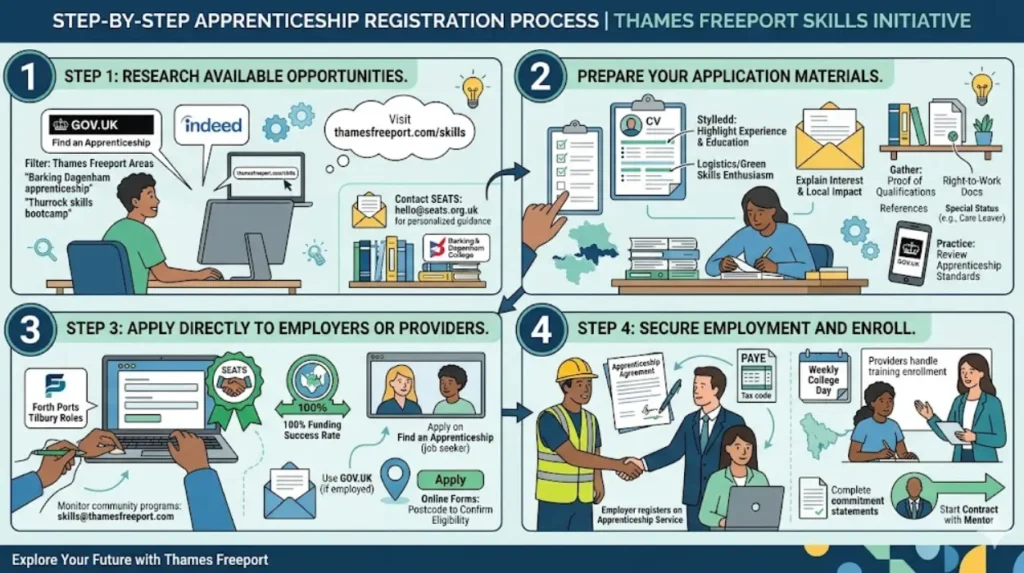
Begin by exploring apprenticeship vacancies on national platforms like GOV.UK’s Find an Apprenticeship service or local job sites such as Indeed, filtering for Thames Freeport areas and keywords like “Barking Dagenham apprenticeship” or “Thurrock skills bootcamp.” Visit thamesfreeport.com/skills for Skills Accelerator updates and SEATS resources, which list funded programs in high-demand fields.
Contact SEATS at [email protected] for personalized guidance on matching your skills to employer needs, as they broker connections at no cost. Check borough college sites like Barking & Dagenham College for aligned courses in business, construction, or health.
Step 2: Prepare Your Application Materials
Tailor a CV highlighting relevant experience, education, and enthusiasm for Freeport sectors like logistics or green skills, even if entry-level. Prepare a cover letter explaining your interest in Thames Freeport’s growth and how the apprenticeship fits your career goals, referencing local impact in East London.
Gather proof of qualifications, right-to-work documents, and references. For funded spots, note any special status like care leaver for extra incentives. Practice for interviews by reviewing apprenticeship standards on GOV.UK, focusing on knowledge, skills, and behaviors.
Step 3: Apply Directly to Employers or Providers
Submit applications via employer portals, such as Forth Ports for Tilbury roles or through SEATS matchmaking, which has a 100% success rate in securing funding. Use GOV.UK’s apprenticeship training finder if employed, or apply as a job seeker on Find an Apprenticeship.
For Thames Freeport-specific funds, monitor [email protected] for community programs, though individuals apply via jobs rather than direct fund tenders. Expect online forms requesting details like your postcode to confirm local eligibility.
Step 4: Secure Employment and Enroll
Upon selection, sign an apprenticeship agreement with the employer, ensuring it meets 30-40 hours weekly and program length. The employer registers on the Apprenticeship Service (gov.uk/apply-apprenticeship-service) using PAYE details to access levy funds or government support.
SEATS or providers handle training enrollment, scheduling off-the-job sessions like weekly college days. Complete commitment statements and start your contract, with mentors guiding progress toward assessment.
Funding and Financial Support
Apprenticeships are largely funded: levy-paying employers (£3m+ payroll) use Digital Apprenticeship Service accounts, while smaller firms pay 5% (often covered by transfers via SEATS). Government covers 95% for non-levy employers, with full funding for under-21s and extras like £1,000 incentives.
No National Insurance for apprentices under 25 earning below £50,270, and minimum wage rises support earners. Thames Freeport’s Skills Fund enhances this through brokers, ensuring accessibility without upfront costs.
Popular Apprenticeship Standards in Thames Freeport
In the Freeport’s logistics hub, standards like Supply Chain Practitioner (Level 3) build warehouse and transport skills for Port of London operations. Engineering apprenticeships, such as Maritime Engineer (Level 3, 4 years), offer £26,000 training in fitting or fabrication, tailored to Thames needs.
Green skills programs via the Skills Accelerator target energy transition, including Advanced Technical Skills at South Essex Colleges. Digital and leadership standards up to Level 7 suit career climbers, with over 700 options available.
Role of SEATS and Local Partners
SEATS, funded by Thames Freeport, demystifies apprenticeships by advising employers on standards, funding, and mentoring, achieving full funding via levy shares. They support all business sizes, from startups to ports, prioritizing East London hires.
Partners like ITEC Learning Technologies and Ortu academies provide training, while colleges deliver day-release sessions, creating a coordinated pipeline from schools to jobs. Contact them for barrier support, ensuring diverse access.
Success Stories from East London
Apprentices at Port of Tilbury have developed lifelong skills during Apprenticeship Week visits, transitioning to full roles amid Freeport growth. SEATS-backed programs have busted myths, enabling upskilling for mid-career locals in Havering firms.
Thames Skills Academy’s Boatmaster trainees gained specialist maritime expertise, employed at 30+ hours weekly with college integration. These stories highlight retention and impact, with completers powering Freeport innovation.
Tips for a Successful Application
Stand out by demonstrating local ties and sector passion in your application, using Freeport news from thamesfreeport.com. Network via LinkedIn or community events, and seek SEATS feedback pre-submission.
Prepare for assessments by reviewing standards and practicing scenarios. Persistence pays—reapply seasonally, as 2026 Forth Ports intakes open February. Track progress with a skills portfolio for interviews.
Common Challenges and Solutions
A key hurdle is securing an employer; overcome by using SEATS brokerage or GOV.UK vacancies. Balancing work-study requires discipline—employers must allocate 20% off-the-job time.
Funding worries dissolve with levy tools; small firms get 95% coverage. For barriers like transport, leverage community funds or local providers.
Future Outlook for Thames Freeport Apprenticeships
As the Skills and Apprenticeship Levy evolves in 2026, shorter flexible units will expand options, per government plans. The Freeport’s talent pipeline, linking schools to investors, promises more spots in green and digital fields.
With ongoing Skills Fund tenders and accelerator growth, East Londoners can expect sustained access, driving economic transformation.