
If your adult son or daughter needs their own social housing, you cannot usually “report” them to be rehoused separately in your place. Instead, they (or you on their behalf) must make a separate housing application to the relevant East London council, and the council will assess their need and priority under its allocations policy. This normally involves proving where they live now, why they cannot reasonably stay there, and that they meet immigration and residency rules.
- Why this issue matters to local residents
- Step-by-step actions to solve the problem
- 1. Work out which council is responsible
- 2. Decide who will make the application
- 3. Check eligibility and priority
- 4. Complete the social housing application
- 5. Provide supporting documents
- 6. Ask your current landlord to confirm overcrowding or housing need
- 7. Consider a homeless or “threatened with homelessness” approach
- 8. Keep records and follow up
- Which council service handles it
- Information or documents needed
- Expected response time
- What to do if follow‑up is required
- Rights and responsibilities under UK rules
- Practical tips to avoid problems in future
Why this issue matters to local residents
Social housing in East London is under extreme pressure, with long waiting lists in Newham, Tower Hamlets, Hackney, Waltham Forest, Redbridge, and Barking & Dagenham. Councils have to follow strict legal rules on who is eligible and who has priority for a home.
For many local residents, an adult son or daughter is still living in a crowded family home or in an unsuitable, sometimes unsafe, private rent. Helping them apply correctly can reduce overcrowding, improve their safety, and prevent homelessness in future. It also protects the main tenant’s own tenancy, because you stay within the rules rather than informally “moving people in and out” without telling the landlord.
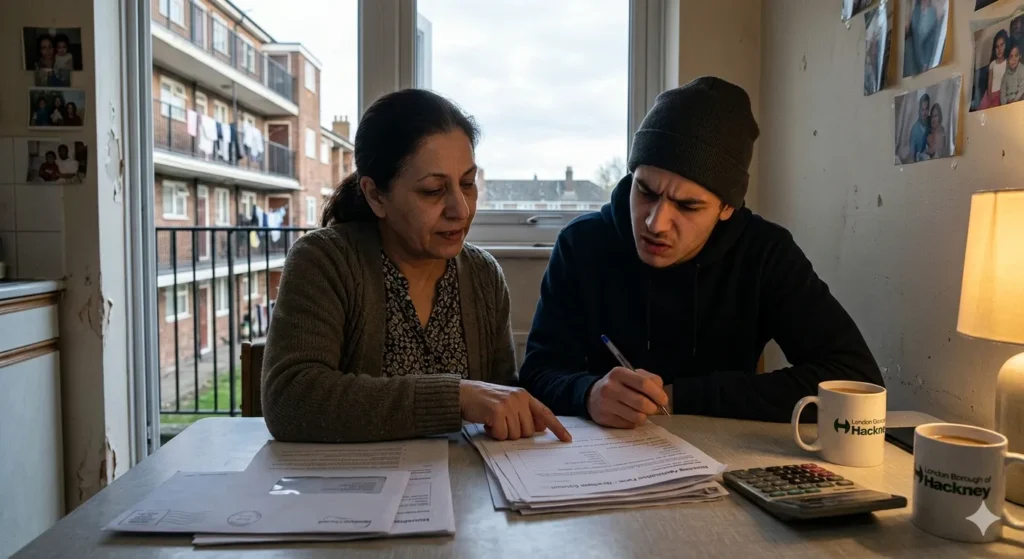
Step-by-step actions to solve the problem
Use these steps if you want your adult son or daughter to be considered for separate social housing in East London.
1. Work out which council is responsible
Your son or daughter usually applies to the council where they normally live or have a strong local connection. This is often where they:
- Have lived for several years
- Work or study
- Have close family who rely on them
For example, a young adult who has always lived in Plaistow would normally apply to Newham council, while someone based in Poplar would apply to Tower Hamlets council.
2. Decide who will make the application
An adult child can:
- Make their own housing application; or
- Ask a parent or carer to help them complete the forms
If they lack capacity or have serious health issues, a representative (such as a parent, advocate, or support worker) may act on their behalf, but the council will still assess the son or daughter as the applicant.
3. Check eligibility and priority
Before starting, check:
- Immigration status (they must usually be lawfully in the UK and not subject to certain immigration controls)
- Local connection rules (residence, work, or family in the borough)
- Whether they are already on a housing register elsewhere
Each East London council has its own allocations scheme, but all follow national rules on eligibility and “reasonable preference” (extra priority for homelessness, overcrowding, serious health needs, etc.).
4. Complete the social housing application
Your son or daughter will normally need to:
- Create an online account for the East London council they are applying to
- Fill in a housing application form, giving details of their current address, people they live with, work, income, and health
- Declare any criminal convictions or previous tenancy issues honestly
If they move between boroughs (for example, between Hackney and Waltham Forest), they might need to reapply under the new borough’s scheme.
5. Provide supporting documents
Most councils will not assess an application until they have seen evidence (see the detailed list in the “Information or documents needed” section below). Make sure you upload or send copies promptly to avoid delays.
6. Ask your current landlord to confirm overcrowding or housing need
If your son or daughter lives with you in social housing, it can help if the landlord (Newham council, Tower Hamlets council, another East London council, or a housing association) confirms:
- The size and layout of your current property
- How many people live there and how rooms are used
- Any serious disrepair or health and safety issues
This supports arguments about overcrowding, lack of privacy, or unsuitability.
7. Consider a homeless or “threatened with homelessness” approach
If your son or daughter is at risk of losing their home within 56 days (for example, if they are being asked to leave, or sofa-surfing), they can approach the council’s homelessness service. The council has legal duties to assess their situation and may:
- Prepare a Personalised Housing Plan
- Offer help to keep them where they are, or
- Help them find other accommodation, which might include social housing in some cases
8. Keep records and follow up
Keep copies of:
- Forms submitted
- Emails and letters from the East London council
- Notes of phone calls and dates
These records are important if you need to challenge a decision later, ask for a review, or complain.
Which council service handles it
Different teams may be involved depending on the situation.
For most applications by a son or daughter seeking their own council or housing association home:
- The Housing Needs / Allocations / Lettings Team manages the housing register and banding
- The Housing Advice or Homelessness Team deals with urgent cases, including people at risk of homelessness
In Newham, Tower Hamlets, Hackney, Waltham Forest, Redbridge, and Barking & Dagenham, these teams sit within the housing department and work closely with social care, adult services, and sometimes children’s services where there are safeguarding concerns.
If your current tenancy is with an East London council or a housing association, its local housing office or tenancy management team may also get involved, especially if the issue is overcrowding.
Information or documents needed
Exact requirements differ between boroughs, but your son or daughter should expect to provide:
- Proof of identity
- Passport, biometric residence permit, or full birth certificate
- National Insurance number (usually for anyone over 16)
- Proof of immigration status (if not British or Irish)
- Visa, settled or pre-settled status confirmation, or Home Office documents
- Proof of where they live and have lived
- Tenancy agreement or licence
- Council tax or utility bills
- Letters from landlords or parents confirming they live there
- Bank statements showing address
- Proof of relationship and household
- If they live with you, documents showing you are the tenant (tenancy agreement, rent statements)
- Papers showing who else lives in the home (benefit letters, school letters for younger siblings)
- Evidence of need or vulnerability (if relevant)
- GP or hospital letters about physical or mental health
- Social worker or support worker reports
- Evidence of overcrowding, harassment, or disrepair
- Income and savings
- Wage slips, benefit award letters, bank statements
Good-quality, up-to-date documents help the East London council make a quicker and more accurate decision.
Expected response time
Timescales vary between councils and according to how busy they are, but generally:
- Initial acknowledgment: Within a few days of submitting an online form
- Request for further evidence: Often within 2–4 weeks if anything is missing
- Full registration and banding decision: Commonly within 4–12 weeks, depending on complexity
If your son or daughter is at risk of homelessness, the homelessness team should speak to them much sooner and may offer an appointment within days. Even after registration, it can take months or years to be offered social housing in Newham, Tower Hamlets, Hackney, Waltham Forest, Redbridge, or Barking & Dagenham because demand is so high.
What to do if follow‑up is required
If you hear nothing or do not understand the decision, you can:
- Check the online housing account regularly for updates and messages
- Contact the housing needs or allocations team, quoting the application number
- Ask for a written explanation of the banding and how it was worked out
- Request a review of the decision within the council’s stated timescale if you think:
- The facts they have used are wrong; or
- They have not properly considered medical or overcrowding evidence
If problems continue, your son or daughter can use the council’s complaints process. In social housing, complaints about the landlord or how they have handled things may eventually go to the Housing Ombudsman, after the landlord’s own procedure has finished. Complaints about how a local authority has applied its allocation policy can sometimes be escalated to the Local Government and Social Care Ombudsman after the council’s complaints stages.
Rights and responsibilities under UK rules
Under UK housing law and each borough’s allocations policy:
- Your son or daughter has the right to apply for social housing and to have their application considered fairly and lawfully
- They have the right to know the decision, including their band or priority level, and reasons for it
- They may have a right to review certain decisions, such as eligibility, qualification for the register, or medical priority
- If they are homeless or threatened with homelessness, they have rights under homelessness legislation to an assessment and a personal housing plan
At the same time, they must:
- Be honest and accurate about their situation
- Tell the council about any changes (moving address, new job, change in income, different household members)
- Avoid deliberately worsening their circumstances (for example, leaving suitable accommodation when they could have stayed) because this can reduce priority
- Follow the bidding rules on any choice-based lettings scheme
Parents and carers must also avoid giving false information or encouraging their son or daughter to do so. Providing misleading details can lead to an application being cancelled, a tenancy being ended, or even legal action.
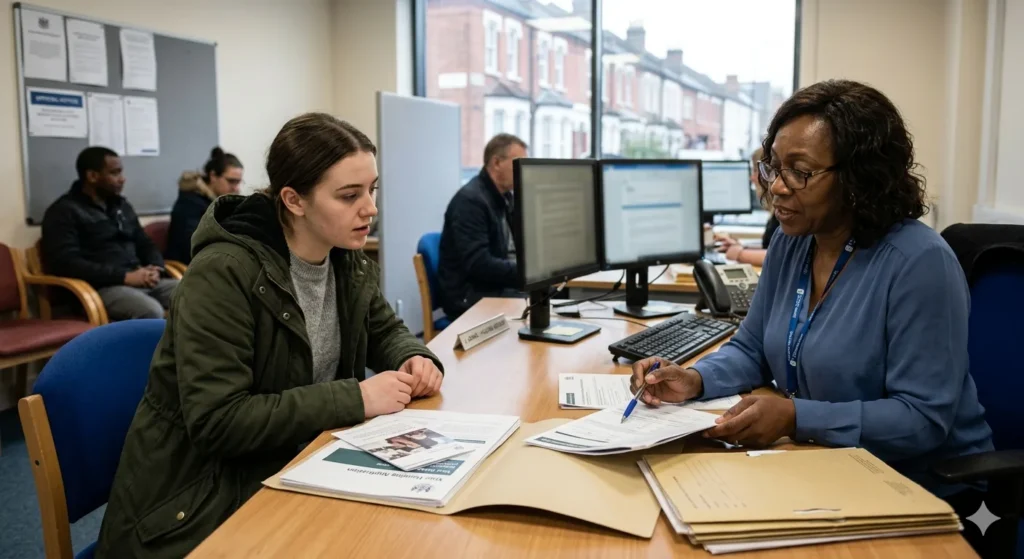
Practical tips to avoid problems in future
To reduce stress and delays for your family:
- Start early
- Do not wait until relationships have broken down at home. If you know an adult child will need their own place, encourage them to apply in good time.
- Keep paperwork organised
- Save copies of ID, tenancy agreements, and key letters in one place.
- Make scanned or photographed copies to upload quickly when needed.
- Be realistic about timescales
- In East London, social housing is scarce. Separate social housing for a son or daughter is usually a long-term goal rather than a quick fix.
- Explore other options alongside social housing
- Private renting with help from the council’s advice service or deposit schemes.
- Supported housing or schemes for young people or those with additional needs.
- Lodgings or shared accommodation, where appropriate.
- Communicate clearly with landlords
- If your home is overcrowded because adult children are still living with you, let your council or housing association know formally.
- This helps them record your situation and may support both your own and your son or daughter’s housing cases.
Handled carefully, applying for separate social housing for an adult son or daughter can help them move towards independence while protecting the stability of the whole household. The key is to follow your East London council’s process, provide clear evidence, and keep expectations realistic about what social housing can offer and how long it may take.
How can I anonymously report a son or daughter for separate social housing?
You can report concerns about a son or daughter wrongly claiming or applying for separate social housing by contacting your local council’s housing fraud or social services team. Most councils allow anonymous reports through an online form, phone line, or email. Provide as much detail as possible (name, address, and the issue), but you can choose not to give your own identity.