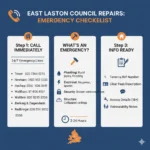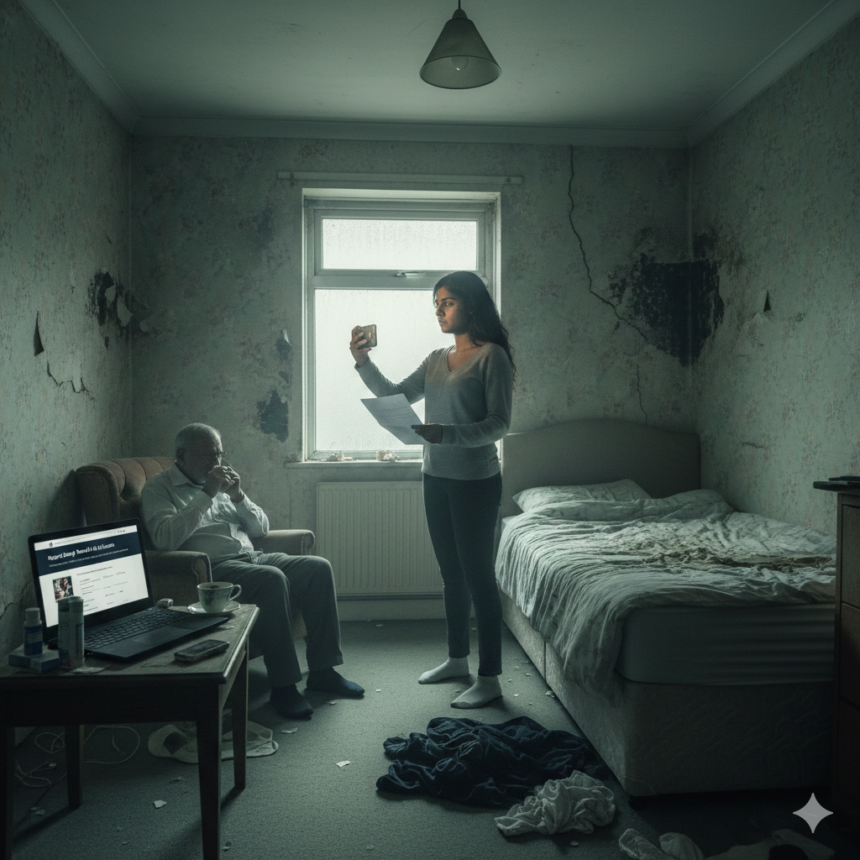
To report damp and mould in East London, contact your local council’s housing or repairs team via their online form, phone line, or email, providing photos and details of the issue. For council tenants in areas like Newham, Tower Hamlets, Hackney, Waltham Forest, Redbridge, and Barking & Dagenham, use dedicated reporting portals; private renters should first notify their landlord in writing.
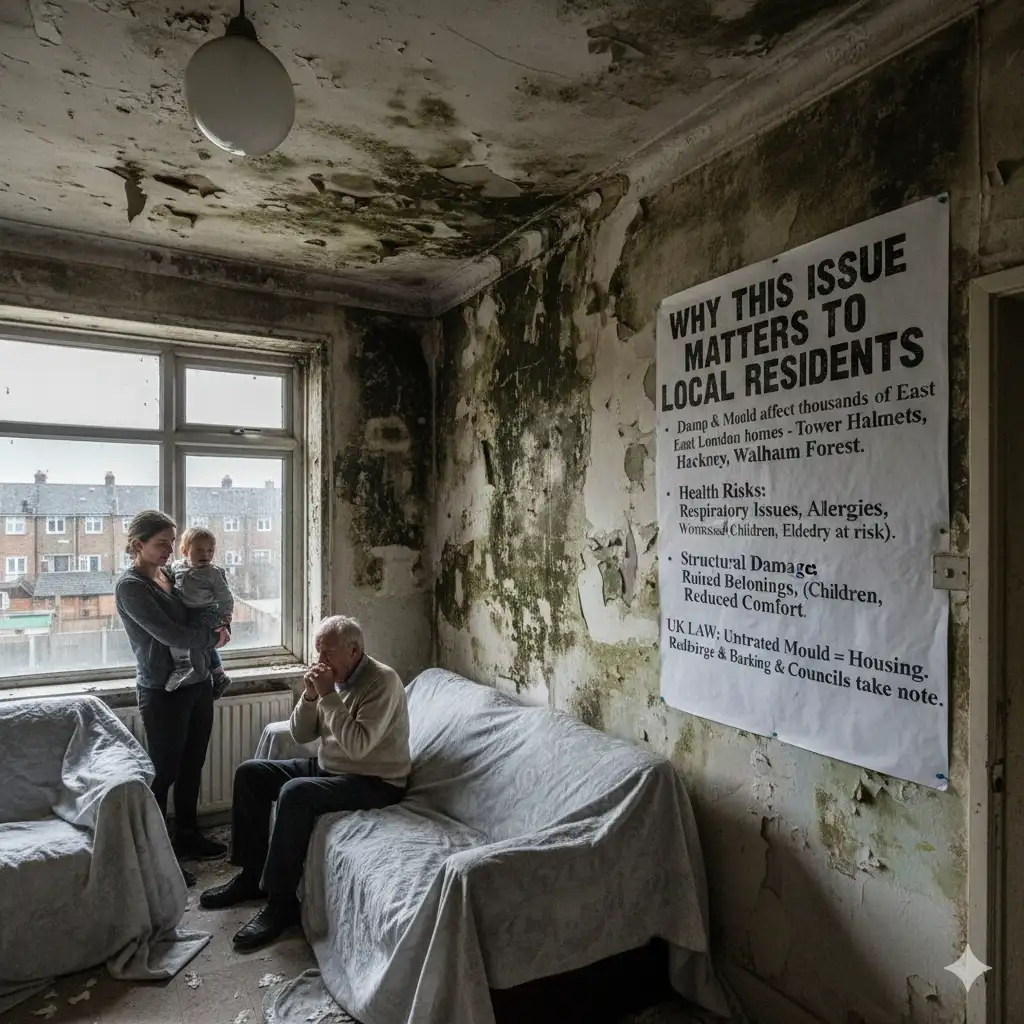
Why This Issue Matters to Local Residents
Damp and mould affect thousands of homes across East London, particularly in older properties common in Newham council and Tower Hamlets council areas. These problems arise from condensation, poor ventilation, or structural issues, leading to black spots on walls and ceilings that release spores into the air.
Health risks are significant for local residents, including respiratory issues, allergies, and worsened asthma, especially in families with children or elderly members in Hackney or Waltham Forest. Beyond health, damp weakens home structures, damages belongings, and reduces living comfort in the humid East London climate.
Councils like those in Redbridge and Barking & Dagenham prioritise this because untreated mould signals broader housing hazards under UK law, impacting community wellbeing in densely populated East End boroughs.
Step-by-Step Actions to Solve the Problem
Follow these practical steps to report and address damp and mould effectively.
- Identify the issue: Check for damp patches, musty smells, or black mould on walls, windows, or ceilings. Note if it worsens in winter or after cooking, common in East London flats.
- Document everything: Take dated photos or videos showing the extent, location, and growth over time. Keep a log of when mould reappears after cleaning.
- Initial self-help: Improve ventilation by opening windows, using extractor fans, and wiping mould with mould spray, but do not paint over it.
- Report formally: For council tenants, submit via your borough’s online form (e.g., Newham council survey or Tower Hamlets council portal). Private renters email or text landlords first, copying in evidence.
- Request inspection: Ask for a property services officer visit to diagnose causes like rising damp or leaks.
- Follow up: If no response, escalate using council complaints processes.
These actions ensure quick resolution while building a record for legal protection.
Which Council Service Handles It
In East London, damp and mould reports go to specific council housing teams tailored to your borough.
Newham council tenants use the Damp, Condensation and Mould service, while private renters start with landlords before environmental health. Tower Hamlets council directs reports to housing repairs for council properties.
Hackney council handles via general repairs, prioritising mould in social housing. Waltham Forest, Redbridge, and Barking & Dagenham councils route through tenancy management or property services, often with online forms for efficiency.
Local residents should check their East London council website’s “repairs” or “housing” section for the exact service, as procedures align with national standards.
Information or Documents Needed
Prepare these essentials to speed up your report across East London councils.
Key details include your full address, tenancy type (council or private), and a description of the damp/mould location, size, and history (e.g., “mould returns weekly after cleaning”).
Attach photos or videos as proof, plus any medical notes if health is affected. For council tenants in Newham or Tower Hamlets council areas, provide your tenancy reference number.
Private renters need landlord contact details and copies of prior written notifications. No formal ID is usually required, but keep rent agreements handy for verification.
Expected Response Time
Councils in East London aim for prompt action on damp and mould reports.
High-priority cases, like widespread mould impacting health, trigger visits within 24-48 hours in boroughs such as Camden (similar to Hackney standards) or Newham council.
Standard reports receive assessments within 5-10 working days, with repairs scheduled based on severity—urgent fixes in days, others in weeks. Track progress via reference numbers provided upon reporting.
Delays may occur in peak winter, but UK guidelines push East London councils for swift handling to prevent escalation.
What to Do if Follow-Up Is Required
If initial responses fall short, local residents have clear escalation paths.
Contact the original service after the expected timeframe, referencing your report number. For no action, use stage one complaints to the housing team in your East London council.
Escalate to stage two if unresolved, involving senior officers. Persistent issues allow referral to the Housing Ombudsman after exhausting council processes.
Private renters can involve environmental health officers for inspections if landlords ignore reports, enforcing repairs legally.
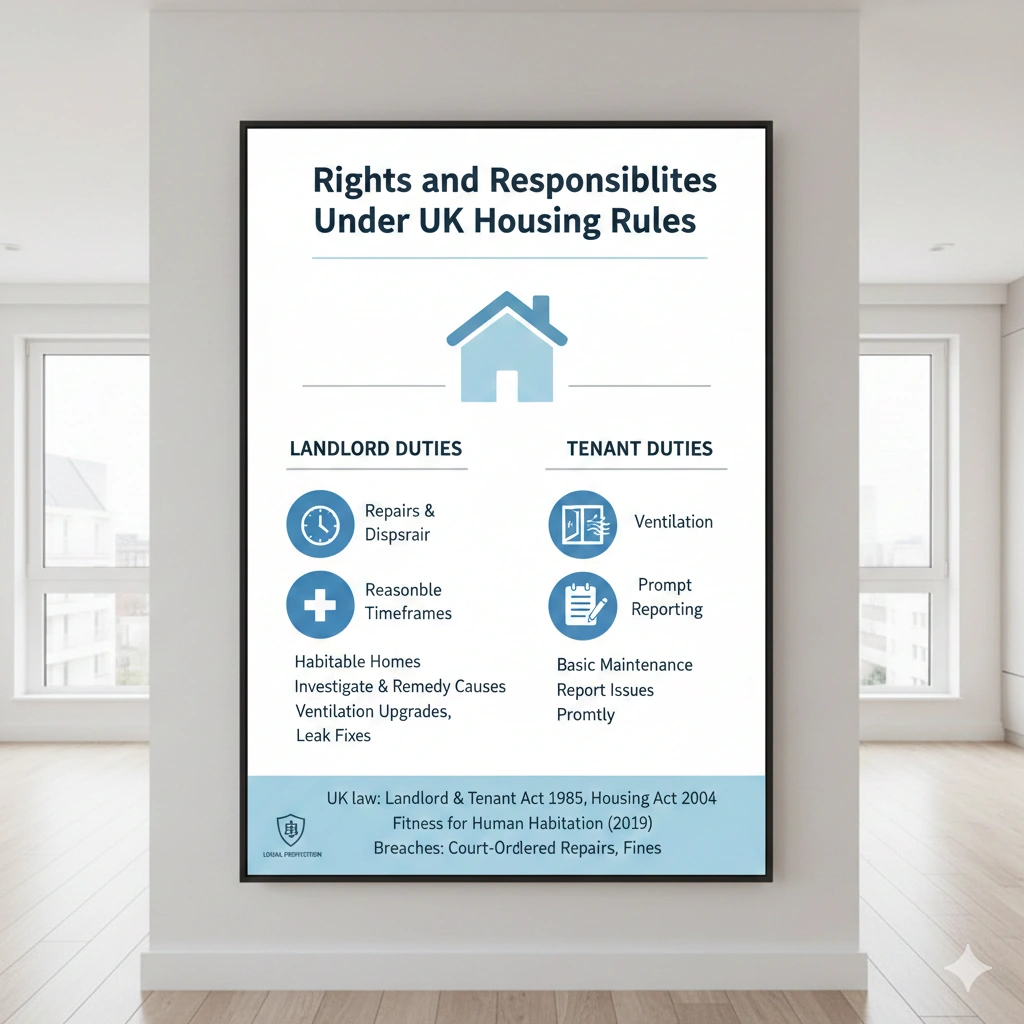
Rights and Responsibilities Under UK Rules
UK law, including the Landlord and Tenant Act 1985 and Housing Act 2004, mandates habitable homes free from serious damp and mould.
Landlords and councils must investigate and remedy causes like disrepair within reasonable timeframes, covering ventilation upgrades or leak fixes. Tenants’ rights include compensation if health or possessions suffer due to neglect.
Residents’ responsibilities involve basic maintenance, like ventilating rooms and reporting promptly, to avoid disputes. Fitness for Human Habitation rules (since 2019) reinforce councils’ duties in Newham, Tower Hamlets council, and beyond.
Breaches can lead to court-ordered repairs or fines, protecting East London families.
Practical Tips to Avoid the Problem in Future
Prevent damp and mould with these East London-friendly habits.
Maintain warmth above 18°C in unused rooms and use dehumidifiers in humid areas like bathrooms. Improve airflow by keeping trickle vents open and avoiding drying clothes indoors.
Check for leaks under sinks or around windows regularly, sealing gaps with caulk. In older Hackney or Waltham Forest homes, insulate walls and use anti-mould paint after professional fixes.
For high-rise flats in Barking & Dagenham or Redbridge, coordinate with neighbours on shared ventilation issues. Annual deep cleans with vinegar solutions help, but address root causes first.
Reporting damp and mould empowers East London residents to secure safe homes quickly. By following these steps with Newham council, Tower Hamlets council, or others, you uphold your rights while partnering on solutions. Stay vigilant for lasting results.