
Two American tech giants, days apart, moving in opposite directions. One barely spends on AI and keeps hitting records. The other got caught on the wrong side of the AI boom and lost $67 billion in an afternoon. Earnings season looks like a scorecard for last quarter. It’s a referendum on the quarter ahead, and increasingly, on how a company plans to power it.
When I started my finance degree, I assumed an earnings report was a scorecard. If a company performed well, its shares would rise. If it performed badly, its shares would fall. Neat, mechanical, fair.
Three years of studying financial statements later, I’ve learned that it’s almost the opposite. The marker rarely pays you for the quarter you just had. It pays you for the one it thinks is coming. This week gave the clearest illustration I have seen.
Same Industry, Opposite Directions
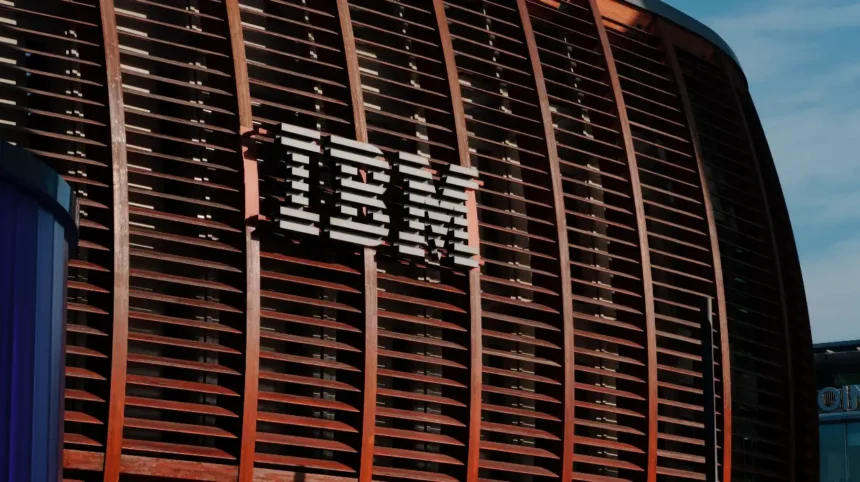
On 14 July, IBM shares fell 25% in a single day. Its worst on record. Worse than Black Monday in 1987. Around $67 billion of market value gone before dinner, on a preliminary warning that quarterly revenue came in at $17.2 billion, roughly $660 million under what analysts expected.
A miss, yes. But a 1% revenue shortfall does not, on its own, vaporise a quarter of a company, so what actually happened?
Meanwhile Apple spent the same fortnight climbing back into record territory, up around 16% on the year, the best performer of the Magnificent Seven. Now here is the part that should make you stop. Apple is winning partly because it’s barely spending on AI. Its 2025 capital expenditure was around $12.7 billion. Microsoft, Alphabet, Amazon and Meta are collectively expected to spend around $650 billion this year. Apple is spending roughly one-fifteenth of that, and the market currently appreciates it more for the restraint.
Two companies. Same sector. One punished for being on the wrong side of AI, one rewarded for sitting the arms race out. To understand why, you have to know what the market is actually reading when the numbers drop.
What Analysts Are Really Looking At
Before a company reports, analysts publish estimates: mainly revenue (total sales) and earnings per share, or EPS (profit divided by the number of shares). Average those forecasts and you get the consensus, the number the market has quietly agreed to expect. The consensus, not zero, is the bar. Beat it and you’ve already done well. Miss it and you have not, regardless of whether the business grew.
This is the part I used to dwell on a lot. A company can grow in revenue, raise profit, and still get hammered, because the consensus already assumed all of that and a bit more. The share price bakes in expectations weeks ahead. Results just settle the bet.
Which is why the reaction so often seems upside down. Beat and fall. Miss and rise. It essentially depends on what was priced in beforehand.
Then there is guidance, and guidance is where the real damage or delight lived. Guidance is the company’s own forecast for coming quarters. A business can post a fine quarter and then guide cautiously, and the shares drop, because investors value the future more than the past. IBM’s problem wasn’t the miss. It was what the miss revealed about where its customers are taking their money.
One more piece of jargon worth owning: forward price-to-earnings. The P/E ratio is a company’s share price divided by its earnings per share; a rough gauge of how much investors will pay for each pound of profit. Forward P/E uses next year’s expected earnings instead. A high forward P/E means the market is paying today for growth that it expects tomorrow. It is optimism that is priced. And optimism, when it breaks, breaks hard.
Why IBM Actually Crashed
Back to the crash, because it isn’t only an IBM story. It’s a signal about the whole AI trade.
IBM’s own explanation, from chief executive Arvind Krishna, was that customers are shifting their IT budgets. There is a severe memory-chip shortage right now, because AI data centres are hoovering up the high-bandwidth memory that everything else also relies on. So corporate buyers are spending on hardware, chips and servers, and deferring the software, consulting and mainframe deals that are IBM’s bread and butter. Infrastructure revenue down 7%. Software up a weak 5% against a double-digit target. Big deals slipping.
Read that closely and it’s quietly alarming. The AI boom isn’t only lifting the winners. Rather it’s actively draining budgets away from the companies one ring down. IBM didn’t get smaller because it failed. It got smaller because the gravity of AI spending pulled its customers’ money somewhere else. That is a second-order effect that most people watching the AI rally aren’t pricing in, and I suspect that IBM will not be the last to feel it.
The Metric Nobody Taught Me to Read
Here’s where my two interests collide, and where I think the genuinely under-appreciated story sits.
All serious earnings calls in 2026 now spends real time on things that used to be footnotes. Energy demand. AI electricity consumption. Data-centre Capex. Water usage. Supply-chain resilience. These aren’t just ESG box ticking anymore. They’ve become straightforward financial risk, and the market has started pricing them as such.
Look at what actually drove this week. A chip shortage caused, in part, by the enormous energy-and-hardware appetite of AI infrastructure. When Microsoft or Amazon reports over the next fortnight, the number that I’ll be watching isn’t headline EPS. It’s capital expenditure, and more specifically how much is going into data centres and the power to run them. Because the research is starting to bite: Epoch AI documented in June that hyperscaler Capex is growing about 70% per year while their operating cash flow grows around 23%. Those lines have crossed. The biggest companies on earth are now, collectively, spending every dollar they earn from operations on AI infrastructure, and then some.
Apple’s premium, right now, is partly a bet that staying out of that spending race is the smarter financial position. Whether that holds is the question of the next year
Why This Matters from East London
You don’t need a Bloomberg terminal for this to reach you. If you hold a pension, and most working people effectively do, you own a slice of these companies through index funds. When IBM lost $67 billion, some fraction of that was pension money, including the retirement savings of people in Newham and Tower Hamlets who have never read an earnings call and never need to.
There’s a slower point underneath too. The data centres absorbing all this capital are landing in and around London, competing for the same electricity and grid capacity as everything else, including housing. The capital-allocation decisions are being narrated on these earnings calls are, eventually, decisions about whose lights and whole developments get plugged in first. That contest is coming east.
What I’ll Be Watching
Over the next two weeks the big names report, and I’ll be reading past the headline beat-or-miss for the things that actually move the story: capital expenditure over EPS, guidance over history, cloud growth, and how each company talks about the energy and chips its AI ambitions demand.
Because the lesson of this week is simple, even if the mechanics aren’t. Markets don’t pay for what a company did. They pay for what they believe it will do, and belief now runs straight through data centres, power grids and supply chains.
IBM forgot to watch where its customers were taking their money. Don’t make the same mistake with yours.