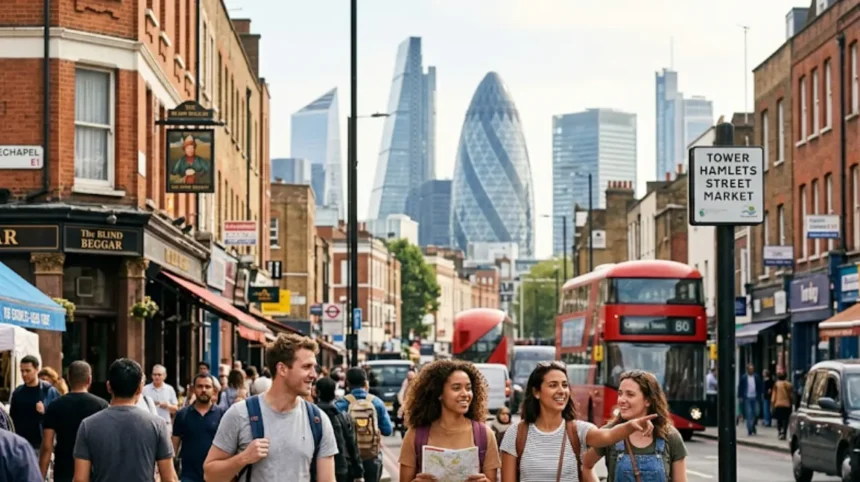
Tower Hamlets is a dynamic East London borough offering world-class attractions, diverse dining, historic landmarks, and excellent transport connections for weekend visitors seeking an authentic London experience beyond the tourist trail.
- What Is Tower Hamlets and Why Visit for a Weekend Break?
- What Are the Must-See Attractions and Landmarks in Tower Hamlets?
- Which Historic Sites Define Tower Hamlets?
- Which Modern Attractions Complement Historic Sites?
- Where Can Visitors Experience the Best Markets, Shopping, and Local Culture?
- Which Markets Should Weekend Visitors Prioritise?
- Which Cultural Venues Enhance the Market Experience?
- Which Parks and Green Spaces Offer Relaxation in Tower Hamlets?
- What Makes Victoria Park Essential for Visitors?
- Which Smaller Parks Offer Unique Experiences?
- Where Should Weekend Visitors Eat and What Are the Best Food Experiences?
- Which Traditional East London Food Experiences Are Essential?
- Which Canary Wharf Restaurants Provide High-Quality Dining?
- Which Independent Cafés and Bakeries Enhance the Experience?
- How Do Visitors Get Around Tower Hamlets and What Are the Transport Options?
- Which Public Transport Modes Serve the Borough?
- Which Payment Methods and Planning Tools Simplify Travel?
- Where Can Weekend Visitors Stay and What Accommodation Options Exist?
- Which Hotels Provide Best Value for Weekend Breaks?
- Which Upscale Hotels Suit Luxury Weekend Stays?
- What Weekend Itineraries Work Best for First-Time and Repeat Visitors?
- How Should First-Time Visitors Structure Two Days?
- Which Hidden Gems Enhance Repeat Visits?
- What Practical Information Should Weekend Visitors Know Before Arriving?
- Which Entry Requirements and Accessibility Considerations Apply?
- Which Safety and Emergency Contacts Should Visitors Note?
What Is Tower Hamlets and Why Visit for a Weekend Break?
Tower Hamlets is a London borough in East London combining historic landmarks like the Tower of London, modern business districts such as Canary Wharf, diverse cultural communities, and over 120 parks and green spaces ideal for weekend exploration.
Tower Hamlets occupies the eastern side of central London, stretching from the City of London boundary to Stratford and the Olympic Park. The borough encompasses neighbourhoods including Spitalfields, Bethnal Green, Whitechapel, Shoreditch, Brick Lane, Poplar, Limehouse, the Isle of Dogs, and Canary Wharf.
The area attracts weekend visitors for several compelling reasons. The Tower of London, a UNESCO World Heritage Site and one of the world’s most famous fortresses, draws millions annually to view the Crown Jewels and explore nearly 1,000 years of royal history. Canary Wharf offers a striking contrast with its glass skyscrapers, upscale dining, and shopping destinations.
Cultural diversity defines Tower Hamlets. Brick Lane’s curry houses, Columbia Road’s flower market, and the East London Mosque reflect centuries of immigration from Huguenot silk weavers to Jewish communities to contemporary Bangladeshi residents. The borough’s 120 parks and open spaces, including the 213-acre Victoria Park, provide green respite amid urban density.
Transport connectivity makes Tower Hamlets exceptionally accessible for weekend trips. Nine Underground stations, seven Overground stations, and 17 Docklands Light Railway (DLR) stations serve the borough, with Canary Wharf alone recording 50.9 million tube entries and exits in 2017.
What Are the Must-See Attractions and Landmarks in Tower Hamlets?
Tower Hamlets features iconic attractions including the Tower of London, Tower Bridge, Canary Wharf skyscrapers, historic markets like Spitalfields and Brick Lane, and cultural institutions such as the Museum of Immigration and the Royal Air Force Museum.
Which Historic Sites Define Tower Hamlets?
The Tower of London stands as the borough’s centrepiece. Built by William the Conqueror in the 1070s, this fortress houses the Crown Jewels, the White Tower, and the famous ravens. Visitors can join guided tours by Yeoman Warders and explore the medieval palace, armours, and execution sites.
Tower Bridge, completed in 1894, spans the Thames adjacent to the Tower. The high-level walkways offer panoramic views, while the Victorian engine rooms demonstrate the hydraulic mechanisms that once raised the bridge for river traffic.
As you explore the modern site, you are crossing land with a deep heritage. Read about the full [Tower Hamlets historical background and archives] to understand its origins.
Spitalfields Market, operating since the 17th century, reflects the area’s mercantile history. The market transitioned from silk and textile trading to antiques, fashion, and food, now hosting weekend traders and independent designers.
Which Modern Attractions Complement Historic Sites?
Canary Wharf represents one of the world’s leading financial centres. The 71-storey One Canada Square and surrounding towers house multinational banks, law firms, and media companies. Visitors can access sky-high viewpoints, waterside promenades, and the Crossrail Place roof garden featuring plants from six continents.
The Museum of Immigration and Diversity at 19 Princelet Street preserves the stories of communities arriving in East London from the 17th century onwards. Exhibits cover Huguenot refugees, Irish labourers, Jewish escapees from persecution, and post-war Caribbean and South Asian migrants.
Where Can Visitors Experience the Best Markets, Shopping, and Local Culture?
Tower Hamlets offers diverse markets including Spitalfields Market for fashion and antiques, Brick Lane Market for vintage and street food, Columbia Road Flower Market for Sunday blooms, and Roman Road Market for local produce and crafts.
Which Markets Should Weekend Visitors Prioritise?
Spitalfields Market operates Thursday through Sunday, with Thursday focusing on vintage clothing and records, Friday on antiques and collectables, and weekends featuring designer fashion, jewellery, and street food. The market houses over 250 traders and hosts independent boutiques year-round.
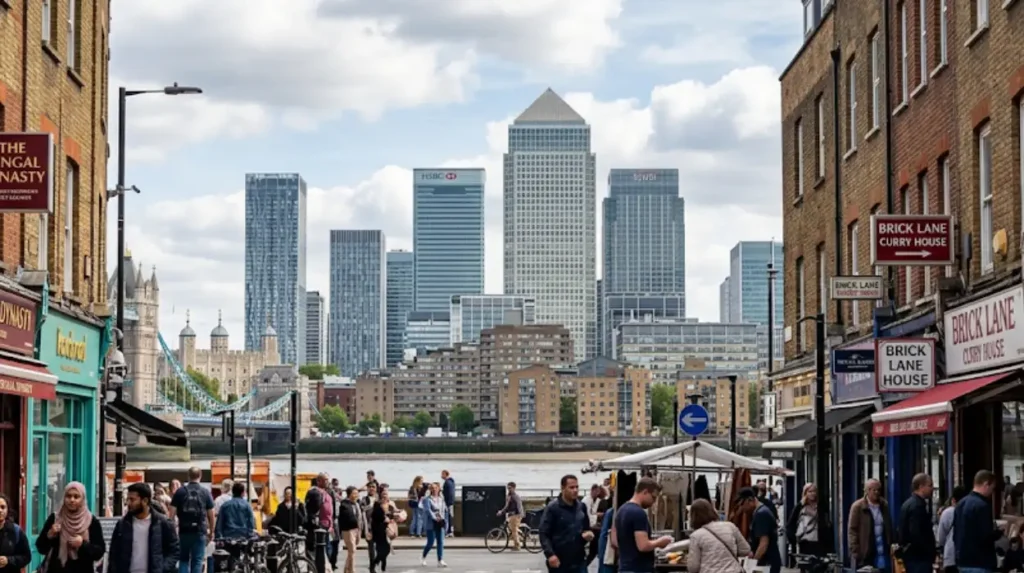
Brick Lane Market, centred on the historic thoroughfare, runs weekends with vintage clothing, vinyl records, street art, and diverse food stalls serving Bangladeshi curry, bagels from Beigel Bake, and modern fusion cuisine. The area’s street art, including works by Banksy and local artists, forms an outdoor gallery.
Columbia Road Flower Market opens every Sunday from 9am to 3pm, offering fresh blooms, potted plants, and gardening supplies. Independent shops lining the street sell antiques, ceramics, and artisan foods, creating a full-day destination.
Roman Road Market in Bow operates weekdays, providing local produce, household goods, and affordable clothing reflecting East London’s working-class heritage.
Which Cultural Venues Enhance the Market Experience?
The Whitechapel Gallery, founded in 1901, presents contemporary art exhibitions and has launched careers of artists including Picasso, Pollock, and Banksy. The gallery hosts free exhibitions and educational programmes.
Rich Mix in Shoreditch offers cinema, theatre, live music, and art exhibitions celebrating East London’s multicultural identity. The venue screens independent films and hosts festivals celebrating South Asian, Caribbean, and Middle Eastern cultures.
Which Parks and Green Spaces Offer Relaxation in Tower Hamlets?
Tower Hamlets contains over 120 parks including Victoria Park’s 213 acres with lakes and monuments, Mile End Park’s ecology pavilion and Green Bridge, and Mudchute Park’s urban farm, providing diverse outdoor experiences.
What Makes Victoria Park Essential for Visitors?
Victoria Park, known as the “People’s Park,” spans 213 acres across Bethnal Green and Bow. Opened in 1845 for East End working-class residents, it features two lakes, the Chinese Pagoda, war memorials, cafés, and sports facilities. The park hosts major events including Field Day festival and British Summer Time concerts.
Which Smaller Parks Offer Unique Experiences?
Mile End Park extends 32 hectares from Limehouse to Victoria Park, incorporating the Ecology Park with rare London flora, the Green Bridge crossing Mile End Road, and children’s play pavilions. The Art Pavilion hosts exhibitions and workshops.
Mudchute Park on the Isle of Dogs contains Europe’s largest urban farm, with livestock, gardens, and environmental education programmes. The park overlooks the Thames and offers waterside walks.
King Edward Memorial Park in Shadwell provides 8.2 acres with riverside views, a children’s playground, and tennis courts. Island Gardens in Millwall, a 2.8-acre Victorian park, offers Thames vistas and historic bandstands.
Tower Hamlets Cemetery Park in Mile End preserves 33 acres of Victorian woodland cemetery with ancient trees, wildlife habitats, and guided heritage walks.
Where Should Weekend Visitors Eat and What Are the Best Food Experiences?
Tower Hamlets offers diverse dining from Brick Lane curry houses and Beigel Bake’s salt beef, to Canary Wharf’s international restaurants, Spitalfields Market street food, and Columbia Road cafés, catering to all budgets and tastes.
Which Traditional East London Food Experiences Are Essential?
Brick Lane’s curry houses, concentrated along the street and side alleys, serve Bangladeshi and Indian cuisine ranging from budget-friendly thalis to upscale dining. Aladin, Brick Lane Curry House, and Tayyabs rank among established favourites.
Beigel Bake on Brick Lane operates 24 hours, serving salt beef bagels with mustard and pickles for under £5, a Tower Hamlets institution since 1977. Beigel Shop nearby offers similar fare.
Spitalfields Market’s food stalls present global street food including Korean fried chicken, Ethiopian injera, Venezuelan arepas, and British gourmet burgers.
Which Canary Wharf Restaurants Provide High-Quality Dining?
Canary Wharf hosts over 300 dining options. Lina Stores serves authentic Italian pasta, antipasti, and wood-fired pizzas in a deli-style setting at Crossrail Place.
Nora offers Turkish mezze, charcoal-grilled meats, and fresh breads inspired by Istanbul’s neighbourhood mangals.
JWD Hand-Pulled Noodle Bar prepares Lanzhou-style noodles fresh to order, while Ong Lai Kopitiam brings Malaysian kopitiam classics including laksa and kaya toast.
Forty Bank Street and Twenty Water Street provide pre-theatre dining with seasonal British menus and extensive wine lists.
Which Independent Cafés and Bakeries Enhance the Experience?
Ozone Coffee Roasters in Shoreditch and Bethnal Green serves specialty coffee, brunch, and light meals in industrial-chic spaces.
Cafe Seek in Canary Wharf offers authentic Japanese baking with breads, cakes, and teas.
The Culpeper rooftop in Spitalfields provides herb garden-inspired cocktails and seasonal British fare with city views.
How Do Visitors Get Around Tower Hamlets and What Are the Transport Options?
Tower Hamlets features extensive transport with nine Underground stations, seven Overground stations, 17 DLR stops, 26 bus routes, and 24-hour Night Tube services on Fridays and Saturdays via the Jubilee Line and selected Overground stations.
Which Public Transport Modes Serve the Borough?
The London Underground serves Tower Hamlets through the Jubilee, Central, District, Circle, and Hammersmith & City lines. Canary Wharf station recorded 50.9 million entries and exits in 2017, ranking ninth busiest on the network. Whitechapel connects the District, Hammersmith & City, and Elizabeth lines.
The Docklands Light Railway operates 17 stations within Tower Hamlets, connecting the Isle of Dogs, Canary Wharf, Limehouse, and Stratford. The automated light rail provides frequent services with Thames views.
London Overground runs north-south through Whitechapel, Shoreditch High Street, Wapping, and Shadwell, with 14.4 million annual entries at Whitechapel in 2018/19.
Twenty-six daytime bus routes traverse the borough, with 24-hour services on key routes. Night buses and Night Tube services operate Friday and Saturday nights.
Which Payment Methods and Planning Tools Simplify Travel?
Transport for London (TfL) accepts contactless bank cards, Oyster cards, and mobile payments across all modes. Daily and weekly fare caps apply, with contactless offering the best value for weekend visitors.
TfL’s website and mobile apps, including Citymapper and Google Maps, provide real-time journey planning, service alerts, and route optimisation.
Santander Cycles operates docking stations across Tower Hamlets, with hourly rentals available via debit or credit card. Cycle training is free for residents, workers, and students in the borough.
Where Can Weekend Visitors Stay and What Accommodation Options Exist?
Tower Hamlets offers 200+ hotels ranging from luxury properties like The Tower Hotel and Batty Langley’s to mid-chain options including Premier Inn Canary Wharf, Holiday Inn Express Limehouse, and budget-friendly Travelodge and ibis properties.
Which Hotels Provide Best Value for Weekend Breaks?
Premier Inn London Canary Wharf (Westferry) offers contemporary rooms, on-site dining, and proximity to DLR and Jubilee Line services.
Holiday Inn Express London Limehouse provides complimentary breakfast, modern amenities, and access to DLR and Overground connections.
CitizenM Tower of London delivers compact, design-led rooms with 24-hour check-in, co-working spaces, and walkable access to the Tower and Spitalfields.
Which Upscale Hotels Suit Luxury Weekend Stays?
Batty Langley’s in Spitalfields features a bar, garden terrace, and boutique rooms in a historic building near Liverpool Street and Spitalfields Market.
Town Hall Hotel Shoreditch occupies a Grade II-listed Edwardian town hall, offering a restaurant, fitness centre, and proximity to Shoreditch High Street Overground.
Hilton London Canary Wharf provides a steam room, fitness centre, and multiple restaurants with direct underground access to Canary Wharf station.
The Tower Hotel overlooks Tower Bridge and the Thames, offering river-view rooms and proximity to Tower Gateway DLR and Tower Hill Underground.
What Weekend Itineraries Work Best for First-Time and Repeat Visitors?
A two-day Tower Hamlets itinerary covers Day 1: Tower of London, Tower Bridge, Spitalfields Market, and Brick Lane curry; Day 2: Canary Wharf, Columbia Road Flower Market (Sunday), Victoria Park, and Whitechapel Gallery, with transport via tube, DLR, and walking.
How Should First-Time Visitors Structure Two Days?
Day 1 – Historic Tower Hamlets:
- Morning: Tower of London (arrive 9am opening, 3–4 hours)
- Lunch: Beigel Bake salt beef bagel or Spitalfields Market street food
- Afternoon: Tower Bridge exhibition, Thames riverside walk to St Katharine Docks
- Evening: Brick Lane curry house and street art exploration
Day 2 – Modern and Cultural Tower Hamlets:
- Morning: Canary Wharf (Crossrail Place roof garden, One Canada Square views)
- Lunch: Lina Stores pasta or Nora Turkish mezze
- Afternoon: Columbia Road Flower Market (Sundays only) or Whitechapel Gallery
- Late afternoon: Victoria Park walk and lakeside café
- Evening: Spitalfields Market dinner or Shoreditch restaurant
Which Hidden Gems Enhance Repeat Visits?
Mudchute urban farm offers livestock encounters and Thames views away from crowds.
Tower Hamlets Cemetery Park provides guided heritage walks through Victorian woodland.
Rich Mix cinema and theatre screenings present independent and multicultural programming.
The Culpeper rooftop bar serves herb-infused cocktails with panoramic city views.
King Edward Memorial Park delivers riverside picnics with Canary Wharf backdrops.
What Practical Information Should Weekend Visitors Know Before Arriving?
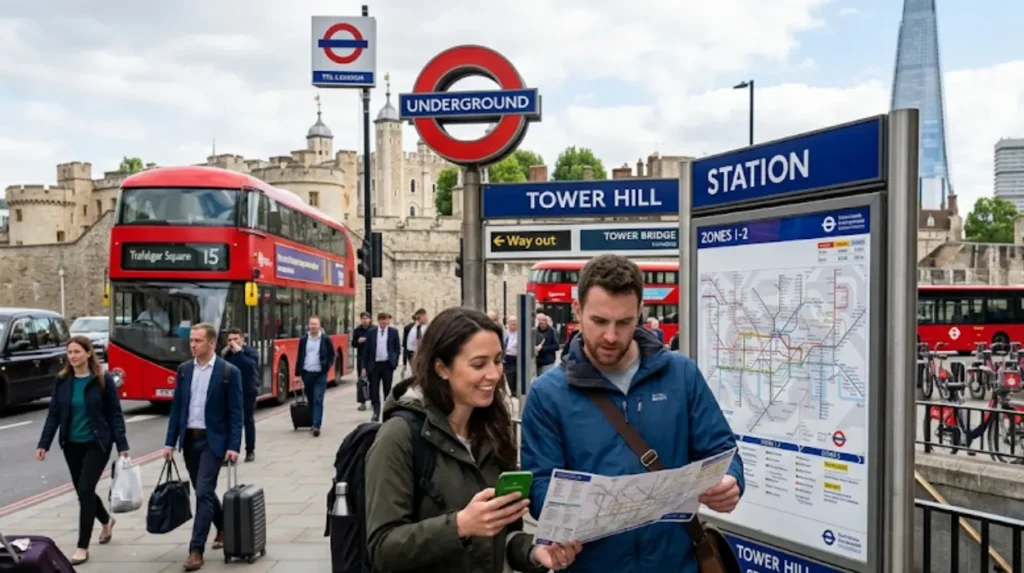
Weekend visitors should note Tower Hamlets spans travel zones 1–2, accepts contactless payments across all transport, operates 24-hour Night Tube on Fridays/Saturdays, and offers free walking routes, cycle hire, and park access year-round.
Which Entry Requirements and Accessibility Considerations Apply?
UK and international visitors require valid passports or ID. EU, EEA, and Swiss citizens can use national identity cards. Visa requirements apply based on nationality.
Most attractions, including the Tower of London, Tower Bridge, and Canary Wharf, provide wheelchair access, lifts, and accessible toilets. Victoria Park and Mile End Park feature accessible pathways.
Which Safety and Emergency Contacts Should Visitors Note?
Emergency services: dial 999 for police, fire, ambulance. Non-emergency police: 101.
Tower Hamlets Council tourist information provides maps, walking routes, and cultural trail guidance at local libraries and online.
Transport helpline: 0800 148 8586 (Monday–Friday 10am–8pm, Saturday 10am–3pm) for journey assistance and service updates.
Weekend visitors to Tower Hamlets experience a borough where nearly 1,000 years of history at the Tower of London coexists with 21st-century skyscrapers at Canary Wharf, where Victorian parks border street art galleries, and where global cuisines from Bangladeshi curries to Japanese noodles define the culinary landscape.