Key Points
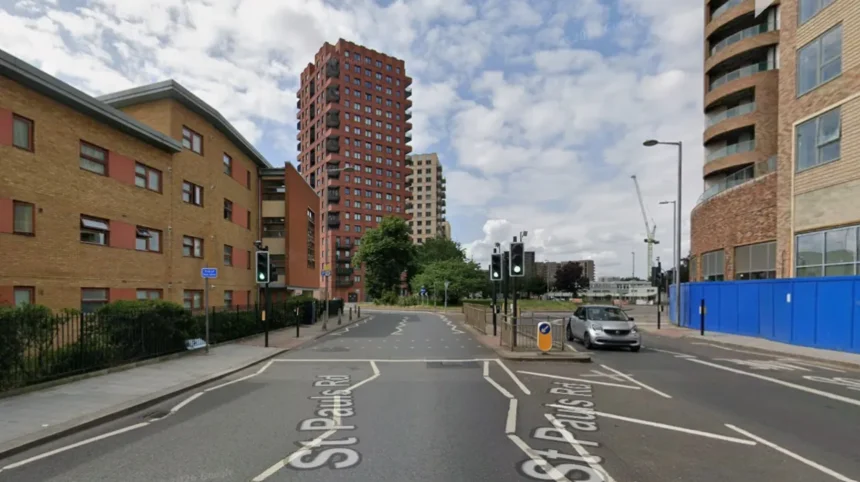
- A four-year-old girl has died in hospital following a fall from height at a residential tower block on St Paul’s Road in Barking, east London.
- Emergency services, including the Metropolitan Police, London Ambulance Service, and London’s Air Ambulance, responded to the incident at approximately 11:00 am on Saturday, 24 October 2026.
- Emergency first aid was administered to the child at the scene prior to transport to a London major trauma centre, where she subsequently succumbed to her injuries.
- Metropolitan Police investigators confirmed an inquiry into the full circumstances remains ongoing, though officers do not currently treat the incident as suspicious.
- Authorities have urged members of the public with any relevant information to contact police via 101, referencing log CAD 2424/24OCT.
Barking (East London Times) October 26, 2026 — A four-year-old girl has died after falling from a residential tower block on St Paul’s Road in Barking, east London, prompting an immediate investigation by law enforcement and emergency services. Emergency personnel were dispatched to the address shortly before 11:00 am on Saturday, 24 October 2026, following emergency calls reporting a child injured after falling from a height. The young girl was treated at the location by paramedics and doctors before being transferred to a London major trauma centre, where she was pronounced dead later the same day. Metropolitan Police authorities have launched an inquiry to establish the sequence of events leading up to the fall, maintaining that preliminary findings suggest no suspicious circumstances.
What Emergency Response Was Mobilised To St Paul’s Road?
As reported by Charlie Moloney of The Guardian, emergency personnel responded to an urgent request for assistance at the St Paul’s Road site at 11:00 am. A multi-agency medical deployment was activated to manage the critical condition of the child upon initial arrival.
As reported by standard medical dispatch logs quoted in national news reports, a spokesperson for the London Ambulance Service outlined the extensive medical resources deployed to the scene. The spokesperson stated that the service dispatched:
- Ambulance crews
- A clinical team manager
- An incident response officer
- An advanced paramedic practitioner
- London’s Air Ambulance medical team
As reported by The Guardian, the spokesperson for the London Ambulance Service stated:
“We treated a child at the scene before taking the patient to a London major trauma centre.”
Medical teams administered emergency first aid immediately upon arrival at the residential building. Despite rapid stabilization efforts by attending clinicians and swift transport to specialized trauma units, the child’s injuries proved fatal.
What Is The Current Status Of The Police Investigation?
As reported by Holly Bancroft of The Independent, the Metropolitan Police confirmed that inquiries remain active into the circumstances surrounding the fatal incident.
As reported by The Metropolitan Police Press Office, a police spokesperson stated:
“Officers attended the scene alongside the London Ambulance Service, where emergency first aid was administered. The girl, aged four, was taken to hospital but, very sadly, later died from her injuries. Our thoughts and deepest sympathies are with the child’s family and loved ones at this incredibly difficult time.”
The spokesperson further clarified the official position regarding potential criminal elements, stating:
“An investigation into the circumstances surrounding this tragic incident is ongoing. However, at this time, the incident is not believed to be suspicious.”
As reported by Rucsandra Moldoveanu of The Mirror, police have formally requested public assistance to ensure all potential testimonies regarding the event are logged into the official record. The Metropolitan Police spokesperson stated:
“We urge anyone with information about the incident, to contact police on 101, quoting CAD 2424/24OCT.”
Background To Building Safety Concerns And High-Rise Incidents
The tragic death of a four-year-old child in Barking highlights ongoing discussions across the United Kingdom regarding building safety, window restrictors, and balcony security in multi-storey residential structures. Over recent years, local councils, housing associations, and tenant advocacy organizations across London have routinely re-examined infrastructure standards to minimize safety hazards for young children residing in high-rise accommodations.
The borough of Barking and Dagenham features significant numbers of high-density housing developments and high-rise apartment blocks constructed during various stages of urban regeneration. Standard safety guidelines established by the Royal Society for the Prevention of Accidents (RoSPA) and UK housing regulations require landlord and municipal compliance regarding window restrictors, which limit openings to no more than 100 mm to prevent accidental falls.
When incidents involving falls from height occur within residential blocks, standard multi-agency protocols require local authority housing teams, health and safety executive inspectors, and social services to audit the structural features of the property. Previous multi-agency reviews into high-rise domestic incidents in London have consistently examined key architectural factors, including:
- Window Safety Catch Standards: Compliance and maintenance checks of safety catches, catch releases, and lock functions.
- Balcony Barrier Heights: Evaluation of balustrade heights and structural integrity relative to UK Building Regulations (Part K).
- Tenant Awareness Campaigns: Communication between local councils and families residing above ground floor level regarding the dangers of placing furniture near windows or balcony edges.
Prediction: How This Development May Affect Local Residents, Housing Authorities, And Policy Makers
The fatality in Barking is likely to trigger immediate administrative, regulatory, and practical repercussions across several key groups involved in residential housing management and local community welfare.
1. Local Residents and Tower Block Tenants
Families residing in high-rise accommodation across Barking and wider London are likely to seek heightened reassurance regarding domestic safety standards. Tenant associations may request immediate structural reviews and urgent maintenance checks on window restrictors and safety catches within council-managed and private-rented residential properties. The event may also increase local demands for clear safety guidance tailored to households with young children.
2. Housing Associations and Local Authorities
London local authorities and registered providers of social housing are anticipated to conduct preventative internal audits across similar high-rise developments. Maintenance departments may prioritize emergency repairs for reported defects on window hinges, catches, and balcony enclosures. Furthermore, local councils may re-evaluate existing tenant risk assessments to ensure vulnerable families are allocated appropriate ground-floor or lower-level housing units when vacancies arise.
3. Regulatory Bodies and Public Safety Organizations
Child safety advocates and public health organizations, such as RoSPA, are expected to reiterate national public awareness campaigns focusing on child safety within high-rise environments. This development may accelerate discussions among policymakers surrounding compulsory annual inspections of child-safety window locks across all managed high-density housing blocks in the United Kingdom.