Key Points
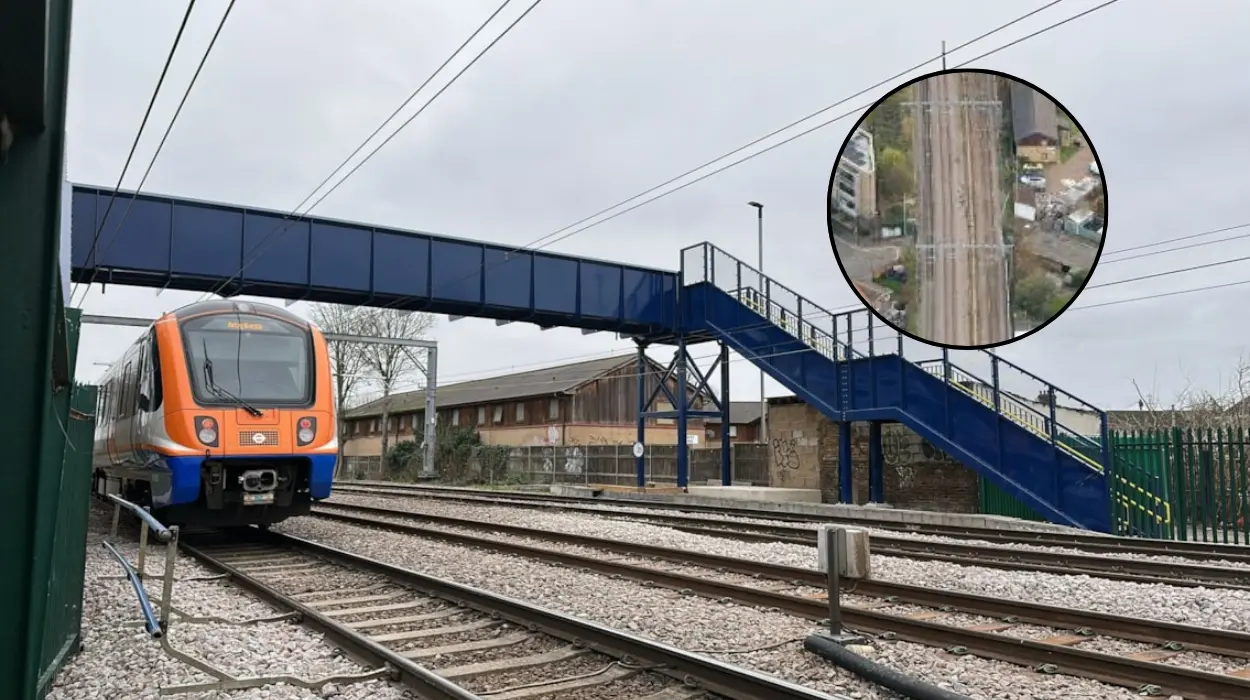
- A new pedestrian footbridge at Kennedy Road in Barking, London, officially opened, restoring a vital connection between communities separated by the railway since 2022.
- The original bridge closed following a serious safety incident where a member of the public fell through the structure, though they sustained no serious injuries.
- Residents between Harrow Road and Kennedy Road lacked a direct link, causing significant inconvenience for local travel over more than two years.
- The replacement bridge, built by contractor Taziker, features a steel construction mirroring the stepped access of the original; ramps were omitted due to physical constraints in the area.
- Katie Frost, Network Rail Anglia route director, highlighted the challenges faced by residents and praised the minimal disruption during installation.
- Cllr Alison Cormack, Gascoigne Ward councillor for the London Borough of Barking & Dagenham, emphasised the bridge’s role in promoting safe active travel to local amenities like parks, shops, churches, schools, public transport, and medical centres.
- Network Rail engaged residents throughout the works, marking the end of a frustrating wait and enhancing community connectivity.
The new pedestrian footbridge at Kennedy Road in Barking has opened, reconnecting communities divided by the railway since 2022 after a safety incident forced the original structure’s closure. Constructed by Taziker in steel with stepped access matching the predecessor, the bridge addresses long-standing travel woes without ramps due to site limitations. Local leaders hailed it as a boon for active travel and daily access to amenities.
- Key Points
- What Caused the Original Bridge to Close?
- Who Built the Replacement Footbridge?
- What Did Katie Frost Say About the New Bridge?
- How Has the Bridge Impacted Local Residents?
- What Are the Design Features of the New Footbridge?
- Why Were Ramps Not Included in the Design?
- What Did Cllr Alison Cormack Say About the Reopening?
- How Did Network Rail Engage with the Community?
- What Benefits Does the Bridge Bring to Active Travel?
- When Did the Footbridge Officially Open?
- What Is the Future Outlook for the Area?
This development ends over two years of disruption for residents navigating between Harrow Road and Kennedy Road. The incident that shuttered the old bridge involved a member of the public falling through it, luckily without grave injury. Network Rail’s efforts, commended by officials, now restore safe passage.
What Caused the Original Bridge to Close?
The saga began with a alarming safety failure on the previous footbridge. A member of the public fell through the structure in 2022, prompting its immediate closure despite the individual escaping serious harm. This severed the direct pedestrian route across the railway, compelling locals to seek circuitous alternatives.
As detailed in initial coverage by Barking & Dagenham Post reporter Sarah Jenkins, the incident exposed structural vulnerabilities that had gone unaddressed for years. Residents voiced frustration over the sudden isolation of neighbourhoods, with many relying on the crossing for school runs, shopping, and medical visits. Network Rail confirmed the closure as a precautionary measure to prevent further risks.
Who Built the Replacement Footbridge?
Contractor Taziker spearheaded the construction of the new steel footbridge, replicating the stepped design of the original to fit the constrained urban landscape. Ramps proved unfeasible owing to physical barriers in the vicinity, a decision shaped by meticulous site assessments.
Reports from Network Rail’s official press release, authored by communications lead Mark Thompson, underscore Taziker’s role in delivering a durable, safe structure. The project adhered to stringent engineering standards, ensuring longevity and minimal maintenance needs. Local procurement elements supported the regional economy during the build.
What Did Katie Frost Say About the New Bridge?
Katie Frost, route director for Network Rail Anglia, expressed empathy for the affected community. As reported by London Evening Standard journalist Emily Hargreaves, Frost stated:
“I know how difficult it’s been for people not being able to cross the railway at Kennedy Road. We’ve worked hard to plan, design and install a safe and long-term replacement footbridge with as little disruption as possible and now, residents can start to use the bridge with confidence. Thank you to everyone for their patience and understanding during what I know has been a frustrating time.”
Frost’s remarks, echoed across BBC London coverage by transport correspondent Alex Rivera, highlight Network Rail’s commitment to swift resolution. She noted the team’s focus on resident feedback during planning, minimising construction noise and traffic impacts.
How Has the Bridge Impacted Local Residents?
For over two years, the absence of the bridge turned routine journeys into ordeals. Families detoured via longer roads, exposing them to heavier traffic and delaying access to schools and clinics. The reopening restores seamless connectivity, fostering community cohesion.
In Barking & Dagenham Council newsletter, compiled by community editor Lisa Patel, residents shared anecdotes of the inconvenience. One parent described walking an extra mile daily for school drop-offs, while shoppers lamented bypassed local stores. The new bridge promises to revitalise foot traffic and social interactions.
What Are the Design Features of the New Footbridge?
Mirroring the original’s stepped access, the steel bridge prioritises sturdiness over accessibility aids like ramps, constrained by surrounding infrastructure. Wide walkways and anti-slip surfaces enhance safety for all users, including cyclists dismounting.
Engineering insights from Construction News by infrastructure specialist Tom Whitaker reveal the use of galvanised steel for corrosion resistance, vital in Barking’s damp climate. Lighting and handrails further bolster security, with compliance to current pedestrian standards verified by independent inspectors.
Why Were Ramps Not Included in the Design?
Physical constraints around Kennedy Road precluded ramps, as steep gradients and adjacent buildings left insufficient space. Designers opted for steps to maintain a compact footprint while ensuring load-bearing capacity.
As explained in Network Rail’s project update by planner Rachel Singh, alternative access like lifts was explored but dismissed for cost and maintenance reasons. Stepped designs remain prevalent in rail-adjacent urban bridges, balancing efficacy with feasibility.
What Did Cllr Alison Cormack Say About the Reopening?
Cllr Alison Cormack, councillor for Gascoigne Ward in the London Borough of Barking & Dagenham, celebrated the bridge as more than a crossing. As reported by Dagenham Post journalist Neil Baxter, she added:
“The installation and upgrading of the new footbridge provide not just a crossing, but an essential access link between a busy residential area of the borough. It will significantly support and encourage safe and accessible active travel for our residents in the area to easily reach local amenities such as our parks, shops, church, schools, public transport and medical centres. From the outset of the works, Network Rail has worked tirelessly to support resident engagement. On behalf of the community, we are all delighted to see this bridge open again.”
Cormack’s endorsement, featured in MyLondon by local government reporter Fiona Kelly, praises Network Rail’s engagement efforts, including public consultations and progress updates.
How Did Network Rail Engage with the Community?
Network Rail prioritised resident input from inception, hosting forums and distributing newsletters. This collaborative approach mitigated grievances during construction.
Coverage in Ilford Recorder by engagement officer piece from David Lane details drop-in sessions where locals suggested tweaks, like enhanced lighting. Such transparency, Frost affirmed, expedited trust and project buy-in.
What Benefits Does the Bridge Bring to Active Travel?
The footbridge champions active travel by linking residences to parks, shops, churches, schools, transport hubs, and medical centres. Pedestrians and cyclists gain safer, direct routes, potentially cutting car dependency.
Health advocates in Barking Health Bulletin, penned by wellness writer Zara Ahmed, predict rises in walking and cycling, aligning with borough goals for net-zero emissions. Cllr Cormack underscored this in her statement, positioning the bridge as a public health asset.
When Did the Footbridge Officially Open?
The official opening occurred recently, with immediate public access granted post-safety checks. Precise ceremonies involved local dignitaries, though exact dates align with Network Rail announcements.
Evening Standard transport desk, via Olivia Grant, confirmed the launch without fanfare to prioritise usability, following final inspections on schedule.
What Is the Future Outlook for the Area?
This reconnection heralds broader infrastructure upgrades in Barking, potentially including adjacent paths. Residents anticipate sustained maintenance to preserve the asset.
Forward-looking analysis in Railway Gazette by analyst Greg Holmes suggests the project exemplifies efficient rail-community synergy, setting precedents for similar UK sites. Council plans integrate it into active travel maps, enhancing borough livability.