Key Points
- Application Refusal: Barking and Dagenham Council planning officers formally rejected a application for a lawful development certificate at 951 Green Lane on 17 September.
- Proposed Development: The proposal sought to convert the former Barclays bank unit into a mixed-use site featuring a restaurant alongside an online vehicle sales office at the rear.
- Key Parties: The formal plans were submitted in July by applicant Jetmir Bardhoshi and agent Nihila Maruthayanar.
- Reason for Rejection: The applicant failed to establish that the vehicle sales element operated continuously for the required ten-year statutory period needed for a non-residential sui generis use to be deemed lawful.
- Site History: Google Maps records indicate the commercial property was last operational as a Barclays bank branch in 2018.
- Council Guidance: Local planning officers confirmed they worked proactively with the applicant, but advised that acceptable modifications would be substantial and require a fresh planning application.
Dagenham (East London Times) September 25, 2026 – Local planning authorities have officially issued a refusal decision regarding a proposed commercial redevelopment of a vacant former bank building situated in Dagenham.
Why Was the Green Lane Former Barclays Bank Application Rejected by Council Officers?
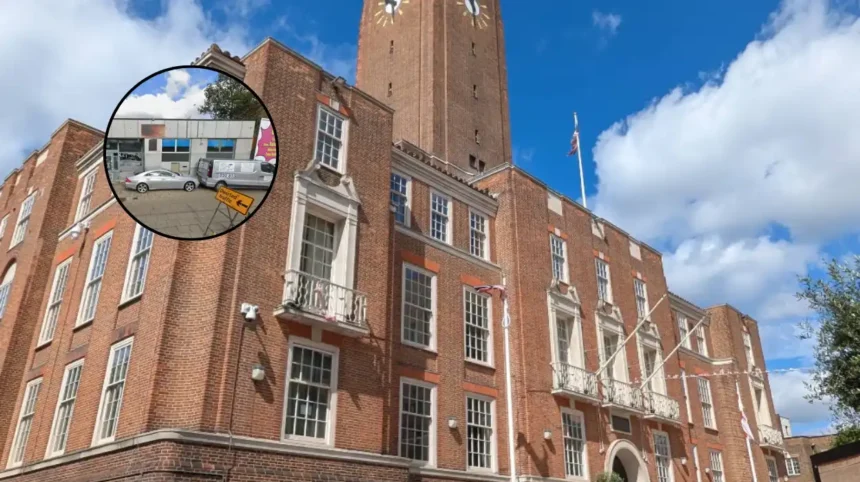
As reported by local news journalists at the Romford Recorder, planning officers at Barking and Dagenham Council rejected an application on 17 September that sought to formally establish the lawfulness of a proposed mixed-use operation at 951 Green Lane. The formal application, which was initially lodged with local authorities in July by applicant Jetmir Bardhoshi and agent Nihila Maruthayanar, requested a lawful development certificate to convert the disused premises—formerly a Barclays bank unit—into a restaurant, accompanied by an online vehicle sales office situated to the rear of the property.
As reported by the Romford Recorder, municipal planning officers determined that the submission failed to provide adequate evidence proving the vehicle sales component met statutory continuous operational thresholds. The council explained that for a non-residential sui generis use to be formally recognised as lawful without standard planning permission, the applicant must demonstrate that the operation has been continuous over a ten-year period.
According to the official decision documentation cited by the Romford Recorder, council planning officers stated:
“It has not been demonstrated to the satisfaction of the local planning authority that the use, operations or other matter described in the application would be lawful”.
Planning officers further specified in their formal refusal:
“Specifically the application fails to demonstrate that the sui generis use has been continuous use for the requisite ten-year period and therefore does not meet the statutory threshold”.
Publicly available photographic records on Google Maps indicate that the high street commercial unit was last actively open and operational as a Barclays bank branch in 2018.
How Did Barking and Dagenham Council Interact with the Applicant During the Review?
As reported by the Romford Recorder, the local planning authority emphasised that its officers had engaged constructively with the applicant throughout the application process. The authority stated that it had worked “in a positive and proactive manner” with Mr Bardhoshi and his agent during the assessment phase.
However, council officials concluded that necessary adjustments to render the development proposal acceptable were too extensive for minor amendments. According to statements from the council quoted by the Romford Recorder, the authority noted that changes required to make the proposal acceptable “are substantial and would materially change the proposal”. Consequently, local planning officers formally advised the applicant to consider lodging a fresh, comprehensive planning application that directly addresses the specific statutory grounds for refusal.
Background of the Green Lane Commercial Development
High street bank branches across the United Kingdom have faced widespread closures over the past decade due to the shift toward digital banking, leaving prominent commercial properties vacant in suburban town centres such as Dagenham. The property at 951 Green Lane reflects this wider structural trend, having remained unoccupied since Barclays ceased operations at the site around 2018.
Under UK planning law, changing the legal use class of a former banking institution (previously Class A2, now integrated under Class E) into a mixed-use venue combining food service and motor vehicle trade involves specific regulatory requirements. When applicants seek a Lawful Development Certificate rather than full planning permission, strict statutory burdens of proof apply—requiring precise documentation that continuous non-residential operational use has taken place over an uninterrupted ten-year timeline.
Prediction: Impact on the Local Community and Business Stakeholders
The rejection of this lawful development certificate has immediate implications for local residents, nearby retail traders, and the applicant.
For local residents and high street shoppers along Green Lane, the decision means the prominent former bank premises will remain vacant in the short term. While a new restaurant could potentially increase evening footfall and diversify local dining options, residents may also benefit from a full planning process where potential impacts regarding parking, traffic from vehicle deliveries, waste management, and late-night operational hours can be publicly scrutinized and conditioned.
For local business owners and competing traders in Dagenham, the council’s strict adherence to planning thresholds maintains regulatory standards across the commercial corridor. It ensures that mixed-use enterprises—particularly those incorporating secondary commercial uses like motor vehicle sales—are subjected to complete planning evaluations rather than bypassing full statutory oversight.
For the applicant, Jetmir Bardhoshi, the decision requires a strategic pivot. To progress commercial activity at 951 Green Lane, the development team must prepare a full planning application detailing noise mitigation, highway safety, and land-use suitability, or alter the proposal to align strictly with standard Class E town centre uses.