Key Points:
- Member of Parliament Margaret Mullane held a high-level meeting with the Prime Minister to discuss the impact of wildfires across Dagenham and Rainham.
- Following a direct request from Number 10 Downing Street, Mullane submitted an official policy paper to help inform an upcoming national summit on countering wildfires.
- The submitted paper highlights the 2022 heatwave fires that destroyed over 30 homes in Wennington Village and Ballards Lane, Dagenham.
- The report draws attention to ongoing smoke pollution and fire threats stemming from the former illegal landfill site at Launders Lane, alongside the operational strain placed on the London Fire Brigade.
- Policy recommendations include mandatory perimeter fire breaks on field boundaries, with legal enforcement mechanisms for non-compliant landowners.
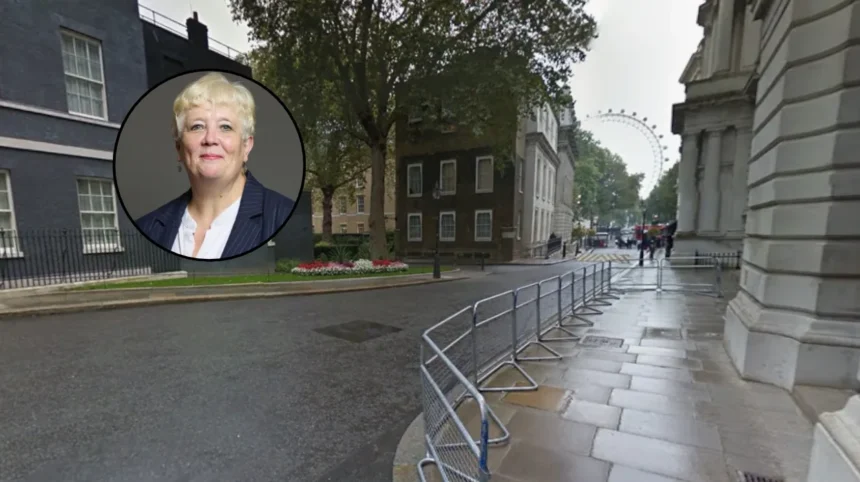
Dagenham (East London Times) October 31, 2026 – Member of Parliament for Dagenham and Rainham, Margaret Mullane, has formally submitted a policy document to Number 10 Downing Street to shape strategy at a government summit on countering wildfires, following a private meeting with the Prime Minister.
Why Has Margaret Mullane Submitted Wildfire Proposals to the Prime Minister?
As reported by local news outlets covering East London parliamentary affairs, Margaret Mullane stated that during a recent meeting with the Prime Minister, the head of government requested details regarding the severe fire incidents suffered across Dagenham and Rainham over recent years. Following that initial discussion, Number 10 issued a formal request for Mullane to compile a submission detailing regional experiences and proposed solutions to inform an upcoming national wildfire summit.
In her official paper, Mullane detailed the events of the 2022 heatwave, during which major blazes destroyed more than 30 residential properties across Wennington Village and Ballards Lane in Dagenham. The document also outlined the chronic fire risks and toxic smoke pollution originating from the former illegal landfill site at Launders Lane, alongside the severe operational strain experienced by London Fire Brigade personnel deployed across the constituency.
What Legislation Is Being Proposed to Protect Communities from Future Wildfires?
To address the recurring threat of grass fires and field blazes during periods of high temperature, Mullane set out specific statutory recommendations for land management.
As outlined by Mullane in her submission to Number 10, landowners must be legally required to cut and maintain perimeter fire breaks around open fields adjacent to residential areas. Mullane stated that should private landowners fail to cooperate voluntarily, perimeter maintenance must be made compulsory by law and strictly enforced by authorities to safeguard homes, infrastructure, and the surrounding natural environment.
Background of the Particular Development
The submission to Downing Street follows years of heightened wildfire vulnerability across the outer East London borderlands. During the record-breaking European heatwave of July 2022, extreme temperatures exceeding 40 degrees Celsius triggered grass fires across the dry marshlands and agricultural fields of Havering and Barking and Dagenham. The most severe incident occurred in Wennington Village on 19 July 2022, where a fast-moving field fire destroyed 19 houses, damaged numerous outbuildings, and led to the evacuation of dozens of residents. On the same day, a separate blaze along Ballards Lane in Dagenham destroyed additional residential properties and severely strained local emergency service resources.
Concurrently, the persistent subterranean fires at the former illegal landfill on Launders Lane in Rainham have presented a prolonged public health and safety hazard. The site, composed of unmanaged waste deposited over decades, routinely ignites during warm weather, producing dense, acrid smoke that affects nearby housing estates. Local representatives and community campaigns have repeatedly called for comprehensive remediation of the site and tighter enforcement against unmanaged commercial plots bordering residential zones.
Predictions for How This Development Will Affect East London Residents and Landowners
If the recommendations submitted by Margaret Mullane are adopted into national policy following the Downing Street summit, the development will impact local residents, emergency services, and agricultural landowners in several key ways:
- Residential Property Owners: Homeowners in rural-urban fringe areas such as Wennington, Rainham, and Dagenham could see enhanced physical protection from sweeping grass fires. Statutory fire breaks around field edges would reduce the risk of surface blazes spreading directly to garden boundaries and structural walls during summer heatwaves.
- Agricultural and Commercial Landowners: Owners of unmanaged plots, fields, and former industrial sites across East London and wider green belt regions would face strict legal obligations to clear dry vegetation along property boundaries. Non-compliance could result in municipal enforcement actions, fines, or local councils carrying out compulsory works at the landowner’s expense.
- Emergency Service Allocations: Formalizing wildfire prevention standards would reduce the frequency of large-scale grass fires requiring multi-pump responses, easing operational pressure on the London Fire Brigade during summer demand peaks.
- Public Health and Pollution Control: Standardized regulation targeting unmanaged land such as Launders Lane could accelerate long-term site remediation, directly reducing smoke inhalation risks and air quality warnings for residents in surrounding neighborhoods.