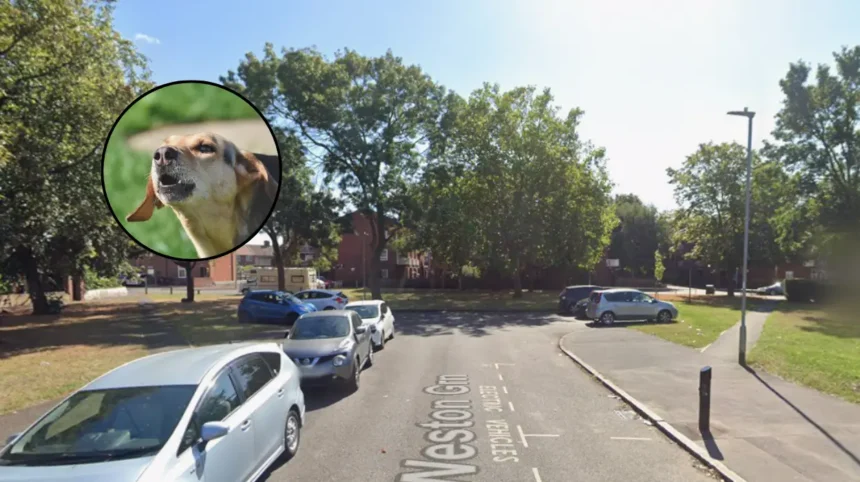
Key Points
- Defendant: Billy Adam Cockle, residing at Weston Green, Dagenham.
- Legal Action: Convicted of two breaches of an Environmental Protection Act 1990 abatement notice.
- Financial Penalty: Ordered to pay a total of £3,222.50 in fines, costs, and victim surcharges.
- Court Date: Sentenced at Barkingside Magistrates’ Court on 21 July 2026 after being found guilty in absence.
- Evidence Gathered: Council noise app recordings and direct witnessing by Environmental Enforcement officers confirmed continuous, unreasonable noise.
- Enforcement Timeline: Initial notice served on 3 October 2025; breaches witnessed on 6 December 2025 and 5 January 2026.
Dagenham (East London Times) August 13, 2026 – A local resident from Weston Green has been ordered by Barkingside Magistrates’ Court to pay more than £3,200 after failing to comply with an official council abatement notice regarding persistent dog barking that disrupted the lives of neighbouring residents.Billy Adam Cockle, of Weston Green, Dagenham, appeared before Barkingside Magistrates’ Court on 21 July 2026, where he was found guilty in his absence of two distinct breaches of a statutory abatement notice.
The legal measure had originally been served under Section 80 of the Environmental Protection Act 1990 following sustained complaints regarding domestic noise levels.
Barking and Dagenham Council initially served the formal abatement notice on 3 October 2025. The step was taken after multiple local residents contacted the local authority to report that a dog kept at the Weston Green property was barking incessantly.
To substantiate their claims, affected neighbours submitted audio recordings via the council’s designated noise monitoring application. Subsequent analysis of these recordings by environmental health officers confirmed that the sound was ongoing, intrusive, and unreasonable, thereby exceeding acceptable domestic noise thresholds.
Despite the formal legal warning instructing the occupant to manage the animal and suppress the disturbance, council officers noted further non-compliance.
Environmental Enforcement officers conducted site visits following subsequent calls from neighbours and directly witnessed statutory noise breaches on two separate dates: 6 December 2025 and 5 January 2026. On both occasions, officers reported hearing prolonged and continuous barking that prevented nearby residents from the peaceful enjoyment of their premises.
Because Cockle failed to attend the scheduled hearing at Barkingside Magistrates’ Court on 21 July 2026, the magistrates proceeded with the case in his absence.
Upon reviewing the documentary evidence and officer testimony provided by Barking and Dagenham Council, the court issued the following financial penalties:
- Fines: £1,320 across two proven statutory offences (£660 per breach).
- Council Costs: £1,374.50 awarded to Barking and Dagenham Council for prosecution and investigation expenses.
- Victim Surcharge: £528 mandatory statutory surcharge.
- Total Payable: £3,222.50 to be collected via court enforcement mechanisms.
Barking and Dagenham Council cabinet members reiterated that while the local authority prefers to resolve domestic disputes amicably through early intervention, persistent failure to comply with legal notices will result in swift judicial action to protect community wellbeing.
Explore More Dagenham News
MP Margaret Mullane Backs Disposable Barbecue Ban: Havering 2026
Firefighters Tackle Major Waste Facility Blaze on Chequers Lane, Dagenham 2026
What Is the Background of Statutory Noise Abatement Enforcement in Barking and Dagenham?
Under Section 80 of the Environmental Protection Act 1990, local authorities in England and Wales possess a statutory duty to inspect their areas for statutory nuisances, which includes noise emitted from premises that is prejudicial to health or a nuisance.
When a council is satisfied that a statutory nuisance exists, or is likely to occur or recur, it is legally obligated to serve an abatement notice on the person responsible.
In recent years, Barking and Dagenham Council has integrated digital reporting tools, including mobile noise monitoring applications, into its environmental health workflow.
These tools enable residents to log timestamped digital recordings directly to council investigation teams, reducing the time required to establish evidence of repeated disturbances.
If an abatement notice is served and subsequently ignored, failure to comply without reasonable excuse constitutes a criminal offence under Section 80(4) of the Act.
Prosecutions in the Magistrates’ Court can result in unlimited fines for residential occupiers, alongside mandatory contributions toward the local authority’s legal costs and statutory victim surcharges. Cases of repeated non-compliance may also lead to further civil measures, such as Criminal Behaviour Orders (CBOs) or visual surveillance and monitoring regimes by environmental enforcement teams.
How Will This Legal Outcome Impact Local Residents and Property Owners?
This judicial outcome establishes a clear enforcement precedent for residents, property owners, and local authorities across the London Borough of Barking and Dagenham and surrounding regions.
Neighbours experiencing chronic noise pollution gain validation regarding the official pathways available for remediation. The court’s decision underlines that noise monitoring applications and logging procedures carry significant weight in legal proceedings.
Residents can expect local councils to utilize submitted digital evidence alongside officer inspections to secure formal court penalties against offenders, potentially deterring future anti-social noise behavior in residential streets.
Dog owners and tenants across the borough face heightened accountability regarding animal control and domestic management.
The heavy financial penalty—exceeding £3,200 for two recorded incidents—demonstrates that ignoring legal notices issued under the Environmental Protection Act 1990 carries severe financial consequences.
Pet owners living in high-density or terraced housing are incentivised to address behavioural issues, seek professional animal training, or implement sound-proofing measures early to avoid municipal enforcement and court appearances.