Key Points
- Barkingside Magistrates’ Court ordered Dagenham resident Peter Hewitt to pay £3,756.16 in fines, court costs, and victim surcharges over ongoing noise breaches.
- Magistrates convicted Hewitt in his absence on 18 August 2026.
- The court granted a forfeiture order allowing Barking and Dagenham Council to permanently dispose of seized sound equipment, DJ gear, and electronics.
- Legal action followed repeated complaints about loud music, earlier enforcement visits, a police-assisted warrant, and a previous conviction earlier in 2026.
- Council officers prosecuted the case under Section 80 of the Environmental Protection Act 1990 after Hewitt continuously breached a statutory Abatement Notice.
Dagenham (East London Times) August 28, 2026– A resident of Dagenham has been ordered to pay over £3,700 by a magistrates’ court and stripped of his electronic entertainment equipment following a protracted series of statutory noise nuisance offences that disrupted neighbours in Bentry Road.
- Key Points
- What Led to the £3,700 Court Fine for the Dagenham Resident?
- How Did Local Authorities Execute the Equipment Seizure Warrant?
- What Have Local Officials Said Regarding the Prosecution?
- Background of the Particular Development
- Prediction: How Will This Development Affect Local Residents and Housing Communities?
What Led to the £3,700 Court Fine for the Dagenham Resident?
As reported by the official communications unit of the London Borough of Barking and Dagenham Council, Mr Peter Hewitt, residing at Bentry Road, Dagenham, was found guilty in his absence on 18 August 2026 at Barkingside Magistrates’ Court on two distinct counts of breaching an Abatement Notice issued under the Environmental Protection Act 1990.
The legal proceedings stem from specific incidents recorded by municipal environmental protection officers on 16 March 2026 and 29 May 2026. On both occasions, local authority personnel verified that loud amplified music emanating from Mr Hewitt’s property was causing a severe statutory noise nuisance to surrounding households.
During the hearing at Barkingside Magistrates’ Court, the presiding magistrate penalised Mr Hewitt with a fine of £1,000. Furthermore, the court mandated that the defendant pay full prosecution costs to Barking and Dagenham Council amounting to £2,356.16, alongside a statutory victim surcharge of £400, bringing the total monetary liability to £3,756.16.
In addition to financial sanctions, magistrates granted the local authority’s application for a forfeiture order covering all sound-generating equipment confiscated from the premises. Under statutory guidelines, this permits the council to dispose of or destroy the items permanently once the mandatory appeal timeframe expires.
How Did Local Authorities Execute the Equipment Seizure Warrant?
The escalation to court action followed a physical raid on the Bentry Road address executed in June 2026. According to statements published by the London Borough of Barking and Dagenham Council, municipal enforcement officers secured a formal entry warrant from Barkingside Magistrates’ Court after establishing that previous warnings, fixed penalty notices, and initial judicial fines had failed to deter the disturbances.
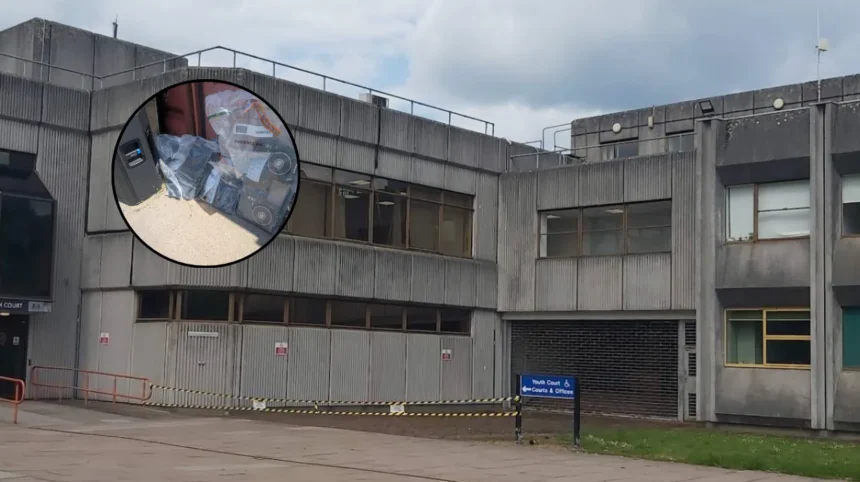
Supported by officers from the Metropolitan Police Service and a professional locksmith, local authority personnel entered the residential address to confiscate items used to generate the noise. The seized property included complete DJ sets, audio speakers, microphones, a laptop, a digital tablet, and a large widescreen television screen.
As detailed in earlier reporting by the Barking and Dagenham Council press department regarding the initial proceedings against the same address, local enforcement teams originally intervened on 6 May 2025 following reports of loud music causing structural vibrations. An Abatement Notice under Section 80 of the Environmental Protection Act 1990 was formally served on 7 May 2025, requiring the immediate cessation of excessive noise. Over the subsequent months, council logs registered 37 separate complaints from neighbours regarding continuous non-compliance.
Prior to the latest August 2026 trial, Mr Hewitt was prosecuted on 3 February 2026 at Barkingside Magistrates’ Court for initial breaches, resulting in a fine and costs totaling £2,094. However, subsequent reports in March and May 2026 triggered the secondary phase of legal escalation, culminating in the seizure warrant and higher financial penalties.
Explore More Barking And Dagenham News
East London Primary Teacher Permanently Banned After Conviction: Dagenham 2026
Barking Roadrunners and Dagenham 88 Impress Across Busy Week in Barking 2026
What Have Local Officials Said Regarding the Prosecution?
As quoted in the official press statement released by the London Borough of Barking and Dagenham Council, Councillor Syed Ghani, Cabinet Member for Enforcement and Community Safety, emphasized the local authority’s stance on residential disturbances:
“No resident should have to put up with ongoing noise nuisance that affects their quality of life. The offender continued to ignore his responsibilities and the impact his behaviour was having on neighbours. This successful prosecution sends a clear message that we will not tolerate persistent noise nuisance in Barking and Dagenham. We encourage residents to continue reporting noise nuisance so we can take action where it is needed.”
Background of the Particular Development
Under United Kingdom environmental law, statutory noise nuisance falls under the jurisdiction of Part III of the Environmental Protection Act 1990. Local councils are legally obligated to investigate complaints of noise emanating from residential, commercial, or industrial premises. When a council’s environmental health team determines that noise unreasonably interferes with the use or enjoyment of a home, or is harmful to health, they must serve a legal document known as an Abatement Notice.
An Abatement Notice requires the recipient to reduce or stop the noise within a specified timeframe. Breaching an abatement notice without a reasonable excuse constitutes a criminal offence. For residential properties, initial non-compliance may result in Fixed Penalty Notices (FPNs) or prosecution in a Magistrates’ Court.
In cases where non-compliance is persistent, local authorities hold statutory powers under Section 81 of the Act to apply to a Magistrates’ Court for a warrant to enter a property—using reasonable force alongside police officers if necessary—to seize equipment used to commit the offence. Confiscated items are held until court proceedings determine whether they should be returned or forfeited for permanent disposal or destruction.
Prediction: How Will This Development Affect Local Residents and Housing Communities?
The successful prosecution and court-mandated forfeiture order are expected to have direct consequences for various groups across the London Borough of Barking and Dagenham and broader municipal areas:
Impact on Local Residents and Victims of Anti-Social Behaviour
For neighbouring households in the immediate vicinity of Bentry Road, the court-ordered forfeiture of all electronic equipment effectively halts the physical mechanism used to produce the nuisance. More broadly, the high financial penalty exceeding £3,700, combined with the loss of expensive electronics, establishes a tangible legal precedent. It reassures community members that persistent reporting of anti-social behaviour through official council logs can yield concrete legal results, likely encouraging higher rates of direct public reporting.
Impact on Potential Noise Offenders
For individuals repeatedly failing to comply with local noise regulations or abatement notices, this ruling signals a significant elevation in enforcement severity. The combination of criminal records, escalating judicial fines, mandatory council legal costs, and the permanent loss of personal property (including televisions, computers, and DJ equipment) serves as a strong economic and personal deterrent against ignoring local authority notices.
Impact on Council Enforcement Teams and Housing Management
For municipal enforcement departments, the conviction provides a clear procedural framework for tackling severe, chronic statutory nuisances. Demonstrating that the court will grant entry warrants and permanent forfeiture applications encourages local authorities to pursue rigorous multi-agency operations alongside the Metropolitan Police Service, setting a routine operational standard for managing severe residential anti-social behaviour cases across urban boroughs.