Key Points
- Controversial Proposals: Hackney Council has launched proposals for a £3 million Transport for London (TfL)-funded ‘Liveable Neighbourhood’ scheme in Dalston to address severe road traffic collisions and heavy rat-running traffic.
- Safety Crisis: Police collision data covering 2020 to 2024 revealed that nearly six in ten injuries within the project boundary affected pedestrians and cyclists, with specific local hotspots recording dozens of collisions.
- Traders’ Outrage: Historic market vendors at Ridley Road Market claim a proposed ban on vehicles turning left out of Ridley Road onto Dalston Lane will severely disrupt delivery networks and devastate wholesale customer access.
- Mixed Consultation Feedback: Formal public consultation metrics revealed a sharp divide among local residents, with 45 per cent of respondents opposing the left-turn ban compared to 44 per cent in favor.
- Procedural Backlash: Market stallholders criticized the Town Hall for relying heavily on digital surveys, arguing that non-digital traders and those speaking English as a second language were effectively disenfranchised.
- Council Response: Cabinet members stress that measures are imperative to prevent cut-through driving and protect pedestrians, while offering to explore targeted time-specific exemptions for market loading.
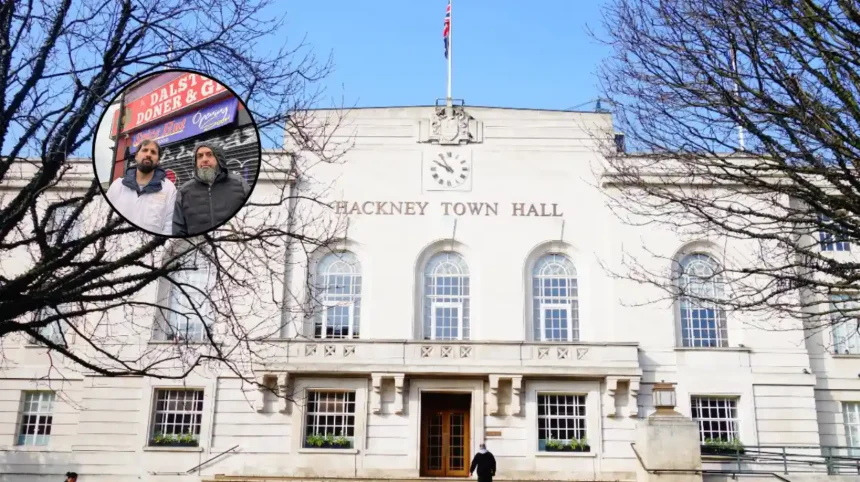
Dalston (East London Times) November 9, 2026 — Market traders have hit out at Hackney Council’s plans for new traffic controls in Dalston, as some vendors warn it could force them out of business. In October, the local authority put its proposals for a ‘Liveable Neighbourhood’ in Dalston out for final statutory consultation in a bid to curb dangerous traffic levels on residential roads. The scheme, financed by nearly £3 million in Transport for London (TfL) funding, includes new School Streets, a 24-hour bus gate, and new pedestrian crossings. However, a specific traffic restriction designed to curb rat-running has sparked intense friction with vendors operating along the historic Ridley Road Market.
- Key Points
- Will the proposed Dalston traffic restrictions force historic market vendors out of business?
- How divided is the local community over the Dalston Liveable Neighbourhood scheme?
- Why is Hackney Council insisting that traffic intervention is urgent?
- What is the background of the Dalston Liveable Neighbourhood development?
- How could this development affect local traders, shoppers, and residents in Dalston?
Will the proposed Dalston traffic restrictions force historic market vendors out of business?
The primary catalyst for vendor anxiety stems directly from a planned ban on vehicles turning left out of Ridley Road onto Dalston Lane. According to municipal planners, the restriction is required to stop the market street from operating as a shortcut for motor traffic traveling between the main A10 corridor and Pembury Circus.
Local traders contend that blocking this exit route will choke their operational supply lines. As reported by Local Democracy Reporter Josef Steen of MyLondon, market representative Edwards told the Local Democracy Reporting Service (LDRS) that the restriction would cut off traders’ usual delivery routes and force them onto already congested thoroughfares on Dalston Lane and Graham Road. Edwards emphasized that regular commercial clients who buy wholesale goods from Ridley Road depend on motor vehicles to transport large quantities of produce, stating:
“You can’t get 20 boxes of oranges and 10 boxes of bananas on a push bike.”
Edwards added that the measure is “not sensible at all, it’s just more pressure on traders, more difficulty for all of us. We’re going to lose more customers.”
The human impact on long-standing independent merchants has emerged as a central point of debate. As reported by Josef Steen of MyLondon, fishmonger Sikander Akram, 52, who has traded from the historic bazaar for 30 years, expressed deep alarm that the physical restrictions would ultimately force him to give up his stall. Akram told the LDRS:
“I don’t know how to do anything else.”
Concerns were echoed across the market, where stallholders noted that while they generally support bicycle infrastructure, restricting motor access to their loading zones threatens their baseline commercial survival.
How divided is the local community over the Dalston Liveable Neighbourhood scheme?
Public feedback collected during the public consultation phase underscores a deep divide across the borough. Statistical breakdowns from consultation reports compiled for Hackney Council show that community consensus remains finely balanced across multiple proposed measures:
| Scheme Proposal | In Favor (%) | Opposed (%) | Undecided (%) |
| Ridley Road Left-Turn Ban | 44% | 45% | 11% |
| Shacklewell Lane Bus Gate | 48% | 43% | 9% |
| Cecilia Road Traffic Filters | 46% | 43% | 12% |
| Cecilia Road School Street | 57% | 29% | 14% |
| Arcola Street School Street | 57% | 28% | 15% |
The data indicates that vehicle owners, carers, and disabled residents reported higher rates of opposition to traffic filtering, whereas non-car-owning residents expressed broad support for traffic reduction.
In addition to contesting the physical restrictions, market traders criticized the consultation methodology employed by Town Hall officials. As reported by Josef Steen of the Hackney Citizen, Sikander Akram and fellow traders criticized the council’s reliance on online consultation forms rather than direct door-to-door engagement and local physical outreach. Vendors highlighted that a substantial portion of the market’s long-standing trading community possesses limited digital literacy or speaks English as a second language, leaving them largely excluded from online feedback portals.
Hackney Council maintained that statutory notices were published on lamp columns, in local newspapers, and in the London Gazette, alongside a direct leaflet distribution to local residents and businesses. Town Hall officials also pointed out that previous feedback had successfully altered designs—such as scrapping proposed works at St Mark’s Rise after traders flagged its importance for loading operations.
Why is Hackney Council insisting that traffic intervention is urgent?
The local authority’s drive to implement the Dalston Liveable Neighbourhood scheme is rooted in road safety statistics and environmental targets. Police collision data covering the five-year period from 2020 to 2024 revealed that nearly six out of every ten individuals injured within the scheme boundary were vulnerable road users, specifically pedestrians and cyclists. Council collision analyses across designated hotspots in the wider Hackney borough highlighted localized areas recording up to 99 traffic accidents in a single year, highlighting the urgency for infrastructure interventions.
Addressing the business community’s anxieties, municipal leaders insist that public safety and pedestrian movement must be prioritized to sustain the high street over the long term. As reported by Josef Steen of MyLondon, the council cabinet member responsible for climate change, environment, and transport stated that stopping cut-through traffic remains vital to protecting shoppers and improving air quality around the commercial core. However, in an effort to reach a compromise, the council confirmed to the LDRS that it would “actively consider tailored exemptions and access arrangements beside the market at specific times of day to support loading and operations.”
What is the background of the Dalston Liveable Neighbourhood development?
The Dalston Liveable Neighbourhood project forms part of a broader, long-term urban transport strategy spearheaded by Hackney Council and Transport for London. Over the past decade, inner London boroughs have progressively introduced Low Traffic Neighbourhoods (LTNs), bus gates, and School Streets to curb vehicular emissions, encourage active travel, and reduce casualty rates on residential side streets.
Ridley Road Market itself holds historic significance in East London, having operated continuously since the late 1880s. Over the decades, it has evolved into a essential hub for affordable fresh produce, exotic groceries, and general merchandise, catering to diverse multicultural communities. Tension between municipal environmental interventions and traditional street markets has mounted in recent years across urban centers, as space allocation between pedestrianized retail zones, cycling infrastructure, and commercial delivery logistics becomes increasingly contested.
How could this development affect local traders, shoppers, and residents in Dalston?
The execution of the Dalston Liveable Neighbourhood scheme stands to alter the operational and socio-economic dynamics of the area across several distinct stakeholder groups:
- Market Traders and Commercial Suppliers: If implemented without flexible loading exemptions, the left-turn restriction risks extending vehicular transit times for vendors sourcing goods from regional hubs such as New Spitalfields Market. Increased congestion on alternative bypass routes like Graham Road and Dalston Lane could drive up overhead fuel costs and logistics delays, potentially threatening the financial viability of margin-sensitive micro-businesses.
- Wholesale and Retail Shoppers: Consumers who rely on Ridley Road Market for bulk purchases using private vehicles may find vehicular access more circuitous, potentially altering regional shopping patterns. Conversely, local foot shoppers and cyclists stand to experience a safer, less congested market environment with cleaner ambient air quality.
- Local Residents and Surrounding Road Networks: Neighborhoods within the designated scheme boundaries are expected to see marked reductions in vehicular cut-through volumes and traffic-related accidents, aligning with borough-wide casualty reduction targets. However, residents living along major arterial roads bordering the scheme—such as Dalston Lane and Graham Road—may experience temporary spikes in displacement traffic during peak hours as motor vehicles re-route around filtered zones.