Key Points
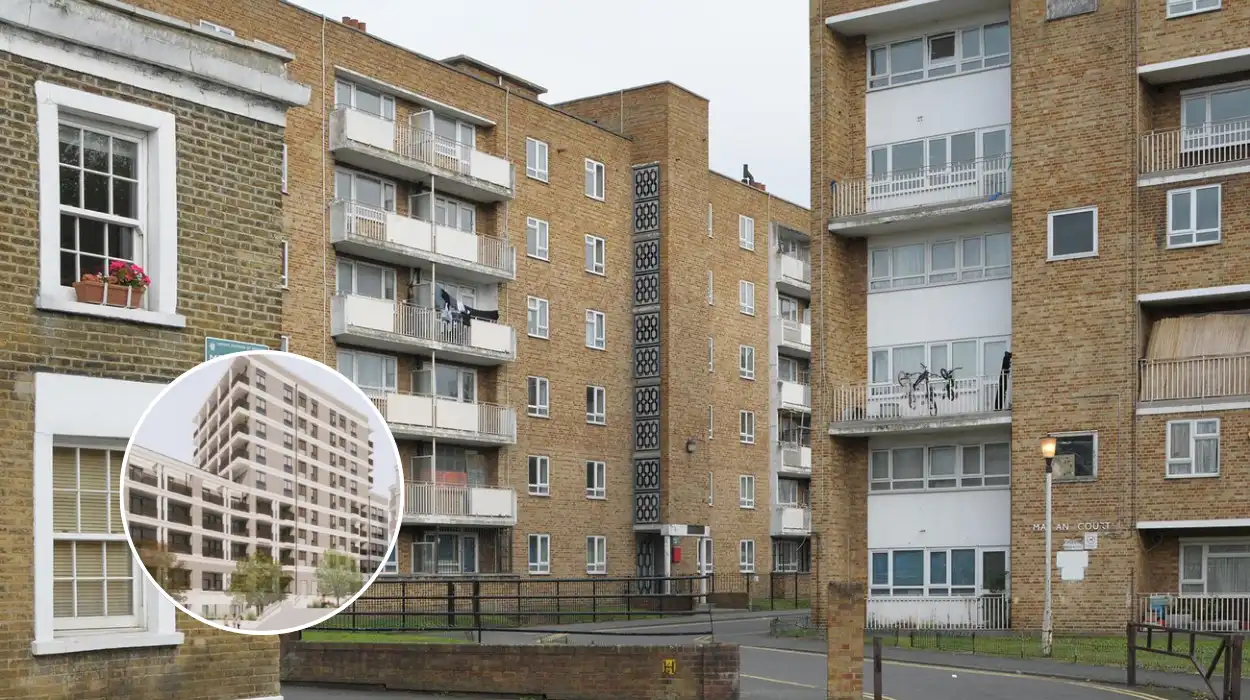
- Hackney Council and construction partner Mulalley have drawn up new plans for a residential development on the site of Marian Court on Homerton High Street in east London, prompted by changes in fire safety regulations.
- The revised proposals include 163 new homes (up from 160), all with private outdoor space, a 187 sqm community centre, and four commercial units down from ten in the original scheme.
- Original planning permission was granted in 2018 for 160 mixed-tenure homes, including replacement council homes for social rent, across five buildings ranging from 3 to 12 storeys, following demolition of all existing structures.
- The consented scheme was designed by Adam Khan Architects and Muf Architecture/Art, featuring active street frontages to Homerton High Street and Ponsford Street, public courtyards, and links to the surrounding area.
- Significant rises in construction costs due to Brexit, the Covid-19 pandemic, and new building and fire safety regulations have necessitated a Section 73 planning amendment to the 2018 permission.
- Mulalley and the council have worked on designs to meet new regulations without compromising design quality, retaining core principles of the original scheme.
What Triggered the Revival of Marian Court Plans?
As detailed in the core announcement from The Construction Index, Hackney Council and Mulalley have redrawn proposals for the Homerton High Street site after planning permission lapsed due to external pressures. The original scheme, granted in 2018, envisioned demolition of all existing buildings and structures to build five new blocks from 3 to 12 storeys tall, delivering 160 mixed-tenure homes including social rent replacements. Since then, as noted in the same report, substantial changes to building safety and fire regulations have emerged, compounded by sharp construction cost increases.
- Key Points
- What Triggered the Revival of Marian Court Plans?
- How Do the Revised Proposals Differ from the 2018 Scheme?
- Why Have Construction Costs Risen So Dramatically?
- What Community Benefits Will the Development Bring?
- Who Are the Key Players Behind the Project?
- When Will the Section 73 Amendment Be Submitted?
- What Impact Will New Fire Regulations Have?
- How Does This Fit Hackney’s Broader Housing Goals?
These cost escalations stem from multiple factors, including Brexit supply chain disruptions, the Covid-19 pandemic’s labour shortages, and stringent new fire safety mandates introduced post the 2017 Grenfell Tower tragedy. The Construction Index highlights that Mulalley and the council have collaborated closely on revised designs to ensure compliance without sacrificing aesthetic or functional quality. They are now preparing a formal Section 73 application to amend the consented permission, a legal mechanism under the Town and Country Planning Act 1990 allowing variations to approved schemes.
How Do the Revised Proposals Differ from the 2018 Scheme?
The updated plans maintain the essence of the original while adapting to realities, increasing homes to 163 from 160, with every unit gaining private outdoor space such as balconies or terraces. A key addition is a 187 square metre community centre, enhancing local amenities alongside four retained commercial units—reduced from ten to optimise viability amid cost pressures. The Construction Index reports that the consented scheme, designed by Adam Khan Architects and Muf Architecture/Art, proposed active street frontages on Homerton High Street and Ponsford Street, public courtyards, and seamless connections to neighbouring areas.
These elements persist in the revisions, preserving pedestrian-friendly design and community integration. All homes will span mixed tenures, prioritising affordable and social rent options to replace those lost from Marian Court demolition. The slight unit increase reflects efficient space utilisation under new regulations, ensuring the project remains deliverable.
Why Have Construction Costs Risen So Dramatically?
Rising costs have stalled many UK developments, and Marian Court is no exception. As per The Construction Index’s coverage, Brexit has inflated material prices through import tariffs and labour shortages, while Covid-19 exacerbated supply chain bottlenecks and workforce gaps. New fire safety regulations, mandated after Grenfell, demand enhanced cladding, sprinklers, and evacuation measures, significantly hiking expenses—often by 20-30% on mid-rise projects.
Hackney Council emphasises that these amendments safeguard the project’s future without diluting its community benefits. Mulalley, the appointed contractor, brings expertise in social housing and regeneration, having delivered similar schemes across London. The partnership’s focus on regulatory adherence positions the revival as a pragmatic response to a challenging economic landscape.
What Community Benefits Will the Development Bring?
Local residents stand to gain substantially from the revived plans. The 187 sqm community centre will host events, classes, and services, filling a gap in Homerton High Street’s offerings. Four shops will revitalise the streetscape, supporting independent retailers and boosting footfall in this diverse east London neighbourhood.
Public courtyards and active frontages will foster social interaction, linking to nearby green spaces and transport hubs like Homerton Overground station. Replacement council homes ensure no net loss of social housing, aligning with Hackney’s housing strategy amid London’s affordability crisis. The project underscores council commitment to inclusive growth.
Who Are the Key Players Behind the Project?
Hackney Council leads as landowner and developer, partnering with Mulalley, a specialist in affordable housing and public sector builds. The original architects, Adam Khan Architects and Muf Architecture/Art, shaped the 2018 vision; their influence endures in retained features. No specific journalists are named in the primary source, but The Construction Index breaks the story, attributing details directly to council and contractor statements
Councillors and Mulalley executives have not issued named quotes in available coverage, but the council’s planning team drives the Section 73 submission. Stakeholders include Homerton ward residents, consulted during original approval and likely again for amendments.
When Will the Section 73 Amendment Be Submitted?
Preparations for the Section 73 application are advanced, with submission imminent to Hackney’s planning portal. Processing typically takes 8-13 weeks, subject to public consultation. If approved, construction could commence in 2026, delivering homes by 2028-29, depending on funding and market conditions.
Delays since 2018 highlight planning system’s flexibility via Section 73, used nationwide for post-permission tweaks. Approval is anticipated given retained design merits and regulatory necessities.
What Impact Will New Fire Regulations Have?
Post-Grenfell reforms, enshrined in the Building Safety Act 2022, mandate second staircases for buildings over 18m, non-combustible materials, and robust fire engineering. Marian Court’s tallest blocks (up to 12 storeys) necessitate redesigns, integrated into revisions. These ensure resident safety without aesthetic compromise, as affirmed by Mulalley and council efforts.
How Does This Fit Hackney’s Broader Housing Goals?
Hackney faces acute housing shortages, with 15,000+ on waiting lists. Marian Court advances the borough’s 6,000-home target by 2030, blending market, affordable, and social units. It exemplifies adaptive planning in regeneration hotspots like Homerton.
The revival signals optimism amid sector woes, potentially unlocking stalled sites UK-wide. Residents await consultation, but core benefits—homes, centre, shops—promise lasting value.