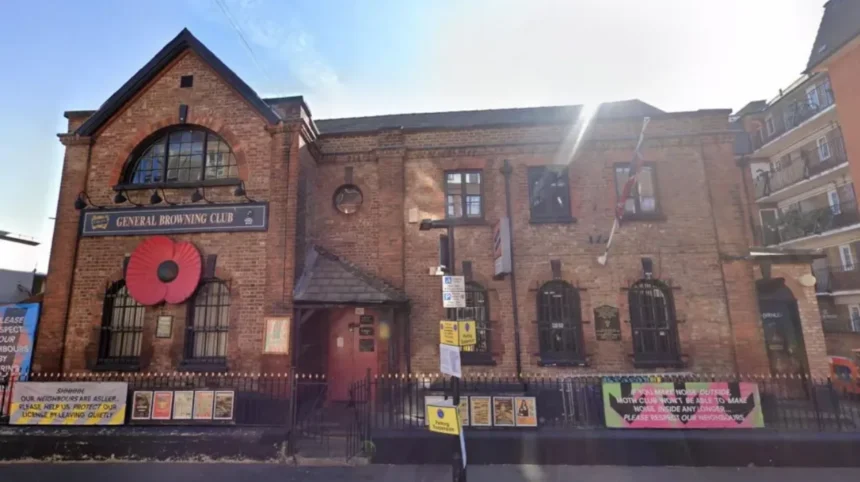
Key Points
- Hackney Council has officially refused a developer’s planning application to build seven flats and a commercial unit next to the Moth Club.
- The planning decision marks the venue’s second victory of the year, following the rejection of an initial proposal from the same developer in March.
- Town hall planners cited concerns over noise disturbances for future residents and a complete lack of affordable housing provision.
- More than 36,000 people signed a petition to protect the east London live music and comedy venue.
- The campaign received widespread backing from industry bodies, including the Music Venue Trust, the Night Time Industries Association (NTIA), Save Our Scene, and Hackney Nights.
- Venue leadership confirmed plans to celebrate the outcome by hosting a public event as previously promised to supporters.
Hackney (East London Times) November 6, 2026 – Hackney Council’s planning department formally turned down a proposal submitted by developer Ganatra to construct a mixed-use development adjacent to the Moth Club in east London. The rejected plans outlined the construction of seven residential flats alongside a ground-floor commercial unit directly next door to the live music and comedy venue.
According to official council documentation, town hall planners determined that the developer failed to prove the new residential units would be adequately shielded from the operational noise of the establishment. The planning decision notice specified that the applicant “failed to demonstrate that the proposed development would not give rise to undue noise and disturbance to future occupiers.”
Furthermore, local authority officers highlighted significant policy shortfalls regarding community housing requirements. Planners noted that the proposed building made no provision for affordable housing, concluding that the scheme would “fail to adequately contribute towards the provision of mixed and balanced communities and housing needs in the local area.”
How Did the Local Community and Industry Bodies React to the Decision?
The decision follows months of sustained campaigning by venue management, local residents, patrons, and national grassroots music organisations. A public petition initiated to protect the Moth Club gathered over 36,000 signatures prior to the council’s ruling.
Industry advocacy groups mobilized support to oppose the construction, raising concerns that future noise complaints from residents of the proposed flats could lead to operational restrictions or the ultimate closure of the venue. The campaign drew formal backing from the Music Venue Trust, the Night Time Industries Association (NTIA), Save Our Scene, and the local initiative Hackney Nights.
Following the announcement of the refusal, Moth Club founder Keith Miller expressed gratitude to the public and local authority figures involved in reviewing the case. Miller publicly thanked the venue’s “amazing” supporters, as well as Hackney Council and its planning department for exercising “due diligence” throughout the evaluation process.
In joint statements released after the decision, Miller and Moth Club general manager Edie Kench-Andrews confirmed that the establishment intends to fulfil a promise made to campaign supporters during the height of the planning dispute. The management team announced that the venue will host “the greatest party Moth has ever witnessed” to mark the planning refusal.
What Precedent Was Set by Previous Planning Disputes at the Site?
Thursday’s refusal represents the second time in 2026 that Hackney Council has blocked residential development plans at the property adjacent to the Moth Club. The same developer, Ganatra, submitted an initial planning application earlier in the year, which was formally rejected by town hall planners in March.
The March refusal similarly focused on potential conflicts between late-night entertainment operations and incoming residential occupants. Under UK planning guidance and the “Agent of Change” principle, developers building near existing venue spaces are required to design adequate soundproofing measures to ensure existing businesses are not subjected to restrictive noise complaints from new neighbors.
The consecutive rejections by Hackney Council establish a clear regulatory boundary regarding residential densification directly adjoining established cultural and night-time economy sites within the borough.
Background to the Moth Club Planning Dispute
The Moth Club, situated on Old Street in Hackney, operates out of a historic hall originally established as a venue for the Memorable Order of Tin Hats, an ex-servicemen’s organization founded after the First World War. Over the past decade, the site transitioned into one of east London’s most prominent independent cultural hubs, hosting live indie music performances, stand-up comedy nights, film screenings, and community gatherings.
In recent years, small and independent music venues across the United Kingdom have faced increasing commercial pressure due to rising operational costs, redevelopment projects, and urban residential expansion. The conflict surrounding the Moth Club mirrors broader national debates regarding the balance between housing development and the preservation of urban cultural infrastructure.
Grassroots venue advocates frequently point to planning disputes involving nearby residential builds as a primary operational threat. When residential developments are constructed adjacent to long-standing venues without sufficient acoustic shielding, subsequent noise complaints from new occupants often lead to local authorities imposing strict decibel limits, curtailed operating hours, or costly legal obligations on the venue owners.
The application by Ganatra to build seven flats and a commercial unit adjacent to the site re-ignited these industry-wide concerns. The subsequent organizing effort by Save Our Scene, the Music Venue Trust, the NTIA, and Hackney Nights highlighted the Moth Club as a landmark case for testing local authority enforcement of planning protections designed for existing cultural spaces.
Future Outlook and Impact of the Ruling
The rejection of the planning application directly affects several key stakeholder groups across the real estate, cultural, and local government sectors in east London.
For Independent Venues and the Cultural Sector
The ruling provides immediate operational stability for the Moth Club, allowing venue operators to maintain standard programming, late-night events, and booking schedules without the immediate threat of noise-driven restrictions. For the wider grassroots music network, the decision reinforces the application of the Agent of Change principle within Hackney. Independent operators across London may view the outcome as confirmation that local planning authorities are willing to turn down small-scale residential schemes that threaten established night-time economy assets.
For Developers and Landowners
Property developers operating in high-density urban areas with active night-time economies face clear guidance regarding application standards. The decision indicates that proposals lacking comprehensive acoustic impact assessments, robust sound mitigation plans, and required affordable housing allocations are unlikely to pass council scrutiny. Developers targeting sites adjacent to mid-to-late-hour entertainment venues will need to allocate greater capital toward pre-application acoustic engineering and community consultation to meet local policy thresholds.
For Local Residents and the Housing Sector
While the rejection protects a key community amenity, it also halts the addition of seven housing units and a commercial space in a high-demand London borough. However, by explicitly citing the lack of affordable housing provisions in its decision, Hackney Council has signaled to the local community that future residential approvals will remain strictly tied to meeting balanced housing distribution guidelines rather than prioritizing market-rate infill projects alone.