Key Points
- Major Funding Secured: Barking, Havering and Redbridge University Hospitals NHS Trust (BHRUT) has been awarded £42 million by the government to transform the Accident & Emergency (A&E) department at Queen’s Hospital.
- Project Timeline: Construction work is scheduled to begin next month and will take more than two-and-a-half years to complete, with full completion expected in 2029.
- Campaign Duration: The securing of funds follows a 643-day (22-month) public campaign led by the trust, alongside local MPs, staff, and community members.
- Capacity Expansion: Originally constructed in 2006 to accommodate 325 patients per day, the current facility routinely treats more than double that figure.
- Key Patient Improvements: The redevelopment will drastically reduce the walking distance from the main hospital entrance to adult A&E from 335 steps down to 50 steps, eliminate corridor care, introduce dedicated waiting areas, improve natural light, and increase space for 195 patients at any given time.
- Children’s & Mental Health Enhancements: The project will unite the paediatric A&E and assessment area by removing the dividing corridor, add a dedicated paediatric resuscitation zone, and expand mental health provision.
- Digital Partnership: BHRUT will collaborate with UCLPartners to design and implement a modern digital management system for the new department.
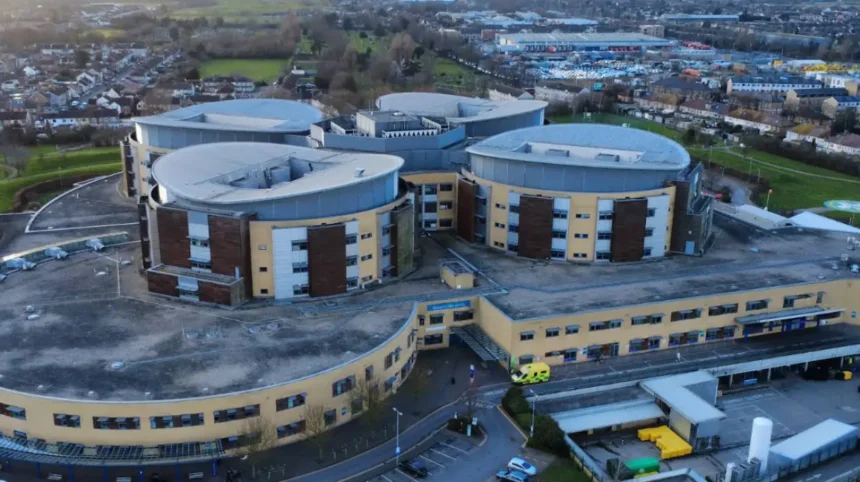
Romford (East London Times) November 6, 2026 — Construction work is scheduled to start next month on a multi-million-pound redevelopment of the Accident & Emergency department at Queen’s Hospital, following a formal capital allocation of £42 million from the government. The complex overhaul will span more than two-and-a-half years, with overall completion slated for 2029.
- Key Points
- Why Is the Emergency Department at Queen’s Hospital Undergoing a Major Overhaul?
- What Specific Structural Changes Are Planned for Adult and Paediatric Care?
- Structural and Accessibility Modifications
- Paediatric Department Integration
- Mental Health & Digital Integration
- How Have Hospital Leaders and Representatives Responded to the Announcement?
- Background to the Queen’s Hospital A&E Development
- Prediction: How This Development Will Affect Key Stakeholders
The decision to fund the structural overhaul comes exactly 643 days after the trust initiated its public campaign. Over the course of nearly two years, hospital leaders, regional healthcare partners, and elected officials lobbied national health authorities for capital investment to resolve persistent capacity shortages.
Prior to the funding commitment, the emergency unit had been operating under severe continuous pressure due to patient volume significantly exceeding the physical constraints of the existing facility.
Why Is the Emergency Department at Queen’s Hospital Undergoing a Major Overhaul?
The existing emergency infrastructure at Queen’s Hospital was built in 2006 with a design capacity intended to treat up to 325 patients each day. In recent years, demographic shifts and increased demand across East London and Essex have resulted in daily patient attendances routinely reaching more than double the original capacity.
As reported by Daniel Gay of The Barking & Dagenham Post, the trust’s campaign highlighted that the current layout functions as a “rabbit warren,” forcing emergency attendees to navigate complex corridors without access to a dedicated adult waiting area. Under the existing configuration, patients entering through the main hospital entrance are required to walk 335 steps to reach the adult emergency department.
Furthermore, reporting from The Evening Standard detailed that overcrowding has frequently forced clinical teams to deploy Rapid Assessment and Focused Treatment (RAFT) protocols in suboptimal spaces, leading to widespread reliance on corridor care and extended waiting times. Official data published by NHS England highlighted that Barking, Havering and Redbridge University Hospitals NHS Trust recorded among the longest emergency department waiting times across London.
What Specific Structural Changes Are Planned for Adult and Paediatric Care?
The £42 million transformation will alter the architectural footprint and patient routing within the emergency department:
Structural and Accessibility Modifications
- Reduced Walking Distance: Reconfiguring the layout will cut the distance from the main entrance to adult A&E from 335 steps to 50 steps.
- Dedicated Waiting Infrastructure: The creation of purpose-built waiting rooms designed to replace non-designated seating areas.
- Sightline Optimization: Improving visibility for clinical staff to continuously monitor patients awaiting assessment.
- Increased Direct Capacity: Provision of dedicated, modern treatment spaces for up to 195 patients inside the department at any single point in time.
- Natural Lighting: Expanding exterior window installations to enhance natural light within clinical and waiting areas.
Paediatric Department Integration
- Removal of Internal Corridor: Demolishing the partition wall and corridor currently separating the Children’s A&E from the paediatric assessment area to create a single unified unit.
- Resuscitation Facilities: Construction of a dedicated paediatric resuscitation bay.
- Decompression Spaces: Creation of calm, low-stimulation rooms for children and young people experiencing sensory overload or acute distress.
Mental Health & Digital Integration
- Mental Health Spaces: Dedicated treatment rooms for patients presenting with urgent psychiatric and mental health needs.
- Digital Infrastructure: BHRUT is partnering with health innovation organization UCLPartners to develop digital tracking and administrative systems designed to streamline patient movement.
How Have Hospital Leaders and Representatives Responded to the Announcement?
Statements from healthcare administrators and public figures emphasized both the operational necessity and the long-term intent of the capital investment.
As reported by Building Better Healthcare, Fiona Wheeler, Interim Chief Executive of Barking, Havering and Redbridge University Hospitals NHS Trust, stated that:
“This is a landmark moment for our residents and our staff. The £42 million allows us to build on the work our teams have already done to improve the service we provide in our A&E, reduce waiting times and the need for corridor care. It will put an end to staff working in cramped conditions and create a better clinical environment. A new A&E department will restore dignity, improve safety and create a setting for our teams to deliver the best possible care. We are planning on collaborating with UCLPartners to support further digital innovation. We’re looking forward to getting the spades in the ground and transforming our A&E into one we can be proud of.”
Commenting on the commencement timeline, Julia Lopez, Member of Parliament for Hornchurch & Upminster, noted via her official office communications that:
“Following the redevelopment, the steps required to access care will be reduced to just 50 steps. This investment represents a major step towards delivering a modern emergency department for Queen’s Hospital, improving the experience of patients and providing NHS staff with facilities better suited to delivering high-quality emergency care.”
Additionally, as detailed by Nesil Caliskan, Member of Parliament for Barking, the project forms part of wider national health infrastructure investment:
“Securing £42 million to rebuild the A&E department at Queen’s Hospital is part of a broader national commitment to address capacity challenges across emergency services. Continued work will focus on improving local health services across Barking and Dagenham to ensure residents receive timely medical care.”
Background to the Queen’s Hospital A&E Development
Queen’s Hospital in Romford was opened in 2006 under a Private Finance Initiative (PFI) contract, consolidating services from several older facilities, including the former Oldchurch and Rush Green hospitals. At the time of its commissioning, the hospital’s emergency department was scaled to accommodate East London’s projected population demographics for the mid-2000s, handling an estimated 325 attendances per day.
Over the subsequent two decades, rapid population growth across the outer East London boroughs of Havering, Barking and Dagenham, and Redbridge dramatically increased demand on emergency care services. By the early 2020s, daily attendances regularly exceeded 700 to 800 patients. This volume forced clinical staff to manage severe spatial bottlenecks, utilize non-clinical hallways for patient observation, and contend with rising wait times.
In response to these systemic operational pressures, BHRUT initiated a formal campaign in early 2025 requesting targeted capital allocation to rebuild the emergency layout. The 643-day effort involved submitting operational safety data to NHS England and the Department of Health and Social Care, culminating in the £42 million capital grant award.
Prediction: How This Development Will Affect Key Stakeholders
The multi-year redevelopment of the emergency department at Queen’s Hospital will produce distinct operational and clinical impacts across several primary groups:
1. Local Patients and Residents
During the construction phase running through 2029, patients accessing Queen’s Hospital may experience temporary internal route diversions and localized noise as building work proceeds adjacent to active clinical areas. Upon completion, patients will experience shorter walking distances to access treatment, reduced waiting times in dedicated waiting spaces, enhanced privacy, and an elimination of standard emergency treatment delivered in public corridors.
2. Clinical and Emergency Hospital Staff
For doctors, nurses, and allied health professionals, the transition to a modern facility will resolve long-standing physical constraints. Improved sightlines into waiting areas will reduce clinical risks associated with unmonitored deterioration. The removal of cramped working conditions is expected to boost staff retention and lower burnout rates caused by spatial overcrowding.
3. Regional Emergency Services and the NHS Trust
The inclusion of modernized triage facilities and digital patient management systems developed with UCLPartners will accelerate handovers for London Ambulance Service crews, allowing ambulances to return to active community duty more quickly. Systemically, the increased capacity will assist BHRUT in meeting national four-hour emergency care targets and relieve downstream pressure on surrounding acute hospitals across the North East London Integrated Care System.
To gain further visual insight into the political and community announcements surrounding the trust’s campaign and funding package, you can view the coverage on Labour announces £42 million investment into Queen’s Hospital. This report provides local parliamentary context on how the capital grant was allocated to the Romford facility.