Key Points
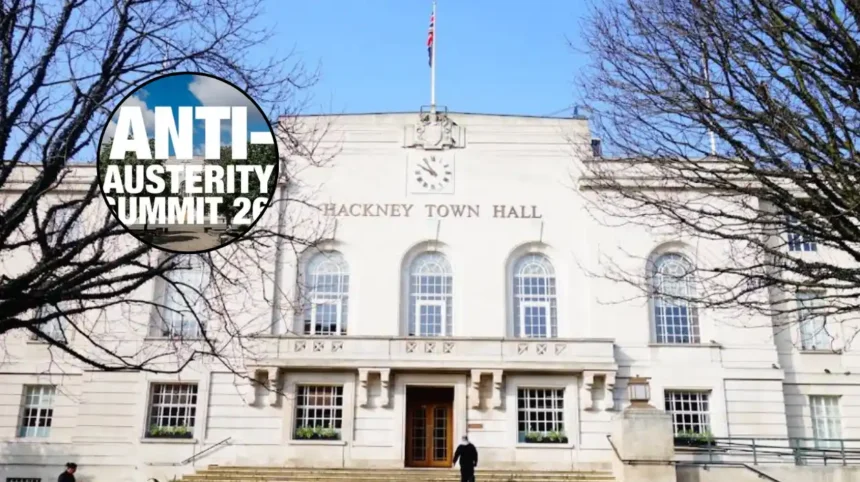
- Emergency Gathering: Hackney Town Hall will host a national Anti-Austerity Summit on 9 September to address the severe financial pressures facing local authorities.
- Broad Coalition: The event brings together council leaders, councillors of all political affiliations, trade union representatives, community campaign groups, and partner organisations.
- Addressing Long-Term Deficits: The summit directly targets the impact of more than 15 years of national government-led austerity that has severely strained essential public services.
- National Campaign Launch: The summit serves as the launching pad for a coordinated national movement aimed at holding the central government accountable.
- Strategic Output: Attendees intend to formulate a unified national vision and a practical roadmap to secure sustainable funding for local communities.
Hackney (East London Times) August 10, 2026 – Hackney Town Hall is hosting an emergency Anti-Austerity Summit bringing together local government leaders, cross-party councillors, trade unions, and community campaign groups to confront a national financial crisis threatening the survival of essential public services. Convened in response to more than 15 years of continuous central government funding cuts, the summit marks the official launch of a unified national campaign aimed at forcing a shift in central government fiscal policy and establishing a practical roadmap for sustainable local service delivery.
- Key Points
- Why Is an Emergency Anti-Austerity Summit Being Held at Hackney Town Hall?
- Who Is Participating in the Hackney Anti-Austerity Summit?
- What Are the Core Objectives and Strategic Goals of the Summit?
- What Is the Background to the Local Government Funding Development?
- How Will This Development Affect Local Authorities, Public Services, and Residents?
Why Is an Emergency Anti-Austerity Summit Being Held at Hackney Town Hall?
The decision to convene an emergency summit stems from the widespread financial distress currently experienced by local authorities across the United Kingdom.
According to official announcements issued by Hackney Council and event organisers, local government budgets have been reduced progressively over more than a decade and a half, leaving authorities struggling to maintain statutory obligations in adult social care, children’s services, housing, and waste management.
The event at Hackney Town Hall on 9 September aims to move beyond isolated local responses by creating a single, coordinated platform for local authorities.
Organisers emphasize that the deepening financial shortfall is no longer a localized issue limited to specific boroughs, but a systemic national failure that requires collective advocacy.
By hosting the summit, Hackney provides a physical and political space for municipal leaders to document the cumulative damage of reduced central grant allocations and rising service demand.
Who Is Participating in the Hackney Anti-Austerity Summit?
The summit is structured to ensure representation across political, operational, and community sectors. Rather than operating as a single-party initiative, the conference explicitly convenes representatives from councils of all political affiliations, reflecting the widespread nature of current budget deficits across urban, suburban, and rural authorities.
Key participant groups include:
- Council Leaders and Elected Members: Representatives from local authorities across the country sharing frontline data regarding budget deficits and service delivery constraints.
- Trade Union Representatives: Delegation leaders representing public sector staff, social care providers, and municipal workers who face job insecurity and increased operational pressure.
- Grassroots Campaign Groups and Community Organisations: Advocates representing local service users, housing campaigns, and voluntary sector groups directly affected by reduced municipal grant funding.
Organisers highlight that uniting trade unions with municipal leadership and local community groups is intended to build a cohesive alliance capable of mounting effective national advocacy.
What Are the Core Objectives and Strategic Goals of the Summit?
As detailed in the event declaration, the Hackney summit is structured around three primary deliverables designed to reshape the relationship between central and local government:
- Launching a National Campaign: Establishing an organized, ongoing national movement to hold the central government directly accountable for the financial condition of local public services.
- Formulating a Unified Vision: Synthesising diverse local authority experiences into a coherent policy framework that articulates what adequately funded local government must look like.
- Developing a Practical Roadmap: Drafting detailed policy proposals and funding mechanisms to ensure central government grants match the actual cost of delivering statutory and discretionary community services.
By establishing these concrete outcomes, the summit aims to shift public debate from managing local cuts to demanding structural reform of municipal financing models.
Explore More Hackney Council News
Hackney Mayor Criticised Over Haifa Twinning 7 October Deadline London 2026
Hackney Council Votes to End Haifa Twin City Deal, London 2026
What Is the Background to the Local Government Funding Development?
The background to this development lies in the cumulative impact of central government fiscal policy introduced following the 2008 financial crisis.
Over the past 15 years, successive national administrations implemented significant reductions in core central government funding for local authorities, known as the Revenue Support Grant.
While central funding allocations declined, local authorities simultaneously faced escalating demands in statutory services, particularly in social care, temporary accommodation, and special educational needs support.
Furthermore, legislative constraints on local tax generation—such as caps on council tax increases without local referendums—strictly limited the capacity of councils to replace lost revenue through local taxation.
Consequently, dozens of local authorities across England and Wales have reported severe financial instability, with a growing number forced to issue Section 114 notices—effectively declaring technical insolvency.
The assembly at Hackney Town Hall follows years of warnings from local government associations that statutory services face systemic collapse without immediate reinvestment.
How Will This Development Affect Local Authorities, Public Services, and Residents?
The launch of this unified national campaign represents a pivotal moment for local government administration, municipal staff, and community members. The potential impact of this development spans several key areas:
- For Local Authorities and Municipal Governance: If the summit succeeds in shifting central government policy, local authorities could secure multi-year funding settlements that allow for long-term strategic planning rather than emergency annual budget reductions. Conversely, if central fiscal policies remain unchanged, councils will continue facing mandatory service reductions, asset sales, and potential statutory failure.
- For Public Sector Staff and Trade Unions: A sustained anti-austerity campaign could stabilize public sector employment, alleviate severe workload pressures, and reduce the risk of compulsory redundancies across municipal departments.
- For Local Residents and Communities: For residents relying on public services, the outcomes of this campaign directly influence the availability of essential resources, including youth services, community centres, library hours, street maintenance, and social care provision. Successful advocacy could protect vulnerable populations from further service retrenchment, whereas persistent underfunding will inevitably result in reduced service access and higher local council tax burdens.