Key Points
- Licence Variation Request: Howl At The Moon, a popular Irish pub on Hoxton Street, East London, has applied to Hackney Council to permit up to 30 customers to drink outside until 10:00 pm and allow up to 30 people to smoke outside after 10:00 pm.
- Current Operational Limits: Under its existing licence, the venue is permitted a maximum of 15 people outside for smoking or drinking after 10:00 pm.
- Community Concerns: Local residents and the Shoreditch Society community group have raised objections, stating that patrons already block narrow pavements, forcing pedestrians onto a busy road and leaving elderly neighbours feeling intimidated.
- Political Opposition: Local Hoxton West Ward Councillor Ben Hayhurst has formally objected to the application, citing ongoing public nuisance, anti-social behaviour, and safety risks to pedestrians.
- Premises Management Position: The applicant argues that increasing the external capacity and formalising queue controls will allow staff to manage crowds more effectively and prevent haphazard congregating on the pavement.
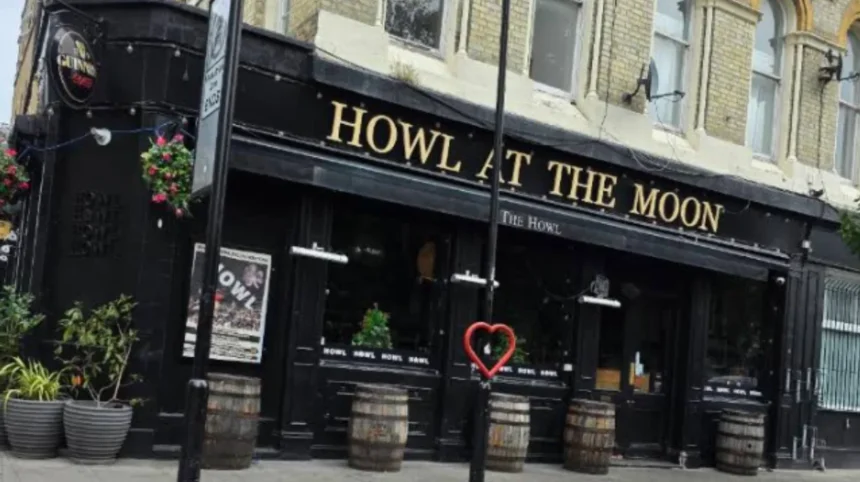
Hoxton (East London Times) October 23, 2026 – An East London Irish pub’s bid to allow more drinking and smoking outside its premises at night has brewed deep anxiety among local residents, who claim patrons already packing the narrow pavement have left elderly community members feeling intimidated and pushed pedestrians into oncoming traffic. Howl At The Moon, situated on Hoxton Street, has formally requested a variation to its premises licence from Hackney Council. The establishment seeks permission to allow up to 30 punters to drink in an outside area until 10:00 pm, while permitting the same number of customers to use the exterior space for smoking after 10:00 pm. However, the proposal has encountered a sharp backlash from local elected officials and neighbourhood action groups, who contend that existing operations already cause significant disruption and public safety hazards.
- Key Points
- Why Has the Hoxton Pub Licence Application Caused Controversy?
- What Are the Specific Objections Raised by Residents and Representatives?
- How Does the Exterior Gathering Impact Pedestrian Safety?
- Why Do Local Neighbours Feel Intimidated?
- What Position Has the Local Councillor Taken?
- What Is the Pub Management’s Argument for the Licence Variation?
- Background of the Development
- Predictions: How This Development Could Affect the Local Community and Stakeholders
Why Has the Hoxton Pub Licence Application Caused Controversy?
The dispute centres on the balance between sustaining local hospitality venues and protecting the residential amenity of Hoxton Street. The venue currently operates under a licence that restricts the number of people allowed outside to 15 after 10:00 pm for smoking or drinking. According to official council documentation, the management of Howl At The Moon believes that expanding the outdoor cap to 30 individuals will enable staff to better organise patrons into a defined, managed area rather than having dispersed groups blocking the public footway.
However, nearby residents and local representatives argue that the pub has consistently struggled to contain its patrons within reasonable boundaries, leading to overcrowded pavements and heightened noise levels late into the evening.
As reported by political reporter Julia Gregory of the Local Democracy Reporting Service, local residents expressed grave concerns that any increase in external capacity would exacerbate long-standing issues on Hoxton Street. In formal representations submitted to Hackney Council’s licensing sub-committee, neighbours highlighted that footpaths surrounding the venue are already narrow, making passage difficult during peak operating hours.
What Are the Specific Objections Raised by Residents and Representatives?
Opposition to the licence variation has been led by local residents, the Shoreditch Society, and Hoxton West Ward Councillor Ben Hayhurst. The primary grievances focus on public safety, accessibility, anti-social behaviour, and the impact of night-time noise on vulnerable community members.
How Does the Exterior Gathering Impact Pedestrian Safety?
Local community groups contend that pubgoers routinely obstruct the pavement outside Howl At The Moon, forcing individuals walking past—including parents with pushchairs and residents using mobility aids—to step off the curb and onto the main carriageway.
As reported by local democracy correspondent Lineker Zhang of the East London Advertiser, representation from the Shoreditch Society noted that the current arrangement forces pedestrians into the line of traffic on Hoxton Street, creating an avoidable risk of collision and injury. The society argued that doubling the permitted number of exterior punters would inevitably worsen footway congestion, regardless of any conditions proposed by the applicant.
Why Do Local Neighbours Feel Intimidated?
In written submissions to the council, residents highlighted the psychological and social effect of dense groups gathering outside the premises. Older members of the community, in particular, reported feeling vulnerable when attempting to navigate through crowds of intoxicated punters on their way home.
As reported by news reporter Maya Higgins of the Hackney Citizen, one local resident detailed in a statement to the licensing panel that elderly neighbours have felt intimidated when walking past the pub late at night, describing situations where patrons spill out past the venue’s frontage, shouting, drinking, and ignoring requests to leave space for passers-by. The resident stressed that the atmosphere outside the pub during weekends creates a barrier for long-standing residents who live in the immediate vicinity.
What Position Has the Local Councillor Taken?
Councillor Ben Hayhurst, representing the Hoxton West ward, has officially lodged a formal objection against the application, supporting the complaints raised by his constituents.
As reported by council affairs writer James Blake of the London Evening Standard, Councillor Ben Hayhurst stated that “the current situation on Hoxton Street outside Howl At The Moon already creates a significant public nuisance, with footpaths rendered impassable at peak times.” Councillor Hayhurst further remarked that “allowing double the number of people onto the street outside will only compound the disturbance, late-night noise, and safety risks faced by local residents who are entitled to peaceful enjoyment of their homes.”
What Is the Pub Management’s Argument for the Licence Variation?
In response to the objections, representatives for Howl At The Moon maintain that the application aims to resolve existing street management issues rather than generate additional noise or anti-social behaviour.
The applicant contends that establishing a clear, permitted capacity of 30 people outside until 10:00 pm for drinking, followed by a maximum of 30 smokers after 10:00 pm, will give security staff and venue management a definitive framework to operate effectively. Under the proposed measures, dedicated door supervisors would monitor the exterior area, ensuring patrons stay within designated boundaries and keep the primary pedestrian pathway clear. Management argues that without a structured exterior allocation, patrons naturally gather outside in an unregulated manner, which is more difficult for staff to control.
Background of the Development
Howl At The Moon is a well-established independent pub located on Hoxton Street in the London Borough of Hackney. Over the past decade, the surrounding area of Hoxton and Shoreditch has undergone extensive urban transition, shifting from a traditionally working-class residential district into one of London’s primary night-time economy hubs. This shift has led to an increasing concentration of bars, pubs, restaurants, and late-night entertainment venues operating in close proximity to long-standing residential developments, housing estates, and converted properties.
Hackney Council introduced a Special Policy Area (SPA) framework across parts of Shoreditch and Hoxton to manage the cumulative impact of licensed premises. Under these planning and licensing guidelines, the council scrutinises applications for extended hours, increased capacities, or expanded outdoor drinking areas to prevent cumulative noise, litter, and public disorder from harming the residential character of the neighbourhood.
In recent years, the demand for outdoor drinking and smoking spaces across London pubs has risen markedly, following the national smoking ban introduced in 2007 and the post-pandemic emphasis on outdoor socialising. However, because many historic East London thoroughfares feature narrow Victorian pavements, proposals to expand street-level drinking areas frequently lead to regulatory friction between venue operators seeking commercial viability and local resident associations advocating for public safety and noise abatement.
Predictions: How This Development Could Affect the Local Community and Stakeholders
If Hackney Council approves the licence variation for Howl At The Moon, the decision is likely to set a notable precedent for licensed venues along Hoxton Street and across the wider borough.
For local residents, particularly elderly individuals and families living adjacent to the pub, an approval could lead to increased ambient noise levels, persistent pavement obstruction, and heightened frustration regarding local governance. If street crowding worsens, residents may experience prolonged late-night disruption, potential anti-social behaviour, and reduced mobility along a main pedestrian thoroughfare. This could prompt further formal noise complaints, code violation reports, and requests for council reviews of the venue’s overall licensing conditions.
For the venue operators and staff, gaining permission for 30 exterior patrons would offer greater operational flexibility and higher customer throughput during peak evening hours. However, it would also place a strict legal burden on management to maintain effective door control and clear footways. Failure to adequately manage the larger crowd could expose the pub to formal enforcement action, financial penalties, or a future reduction of operating hours by Hackney Council’s licensing committee.
Conversely, if the licensing sub-committee refuses the application or imposes restrictive conditions, it will signal to other hospitality businesses in Hoxton that Hackney Council prioritises residential protection over night-time economy expansion in congested residential corridors. While this outcome would alleviate safety and noise concerns for local neighbours, it could lead local venues to seek alternative business modifications to maintain profitability in an increasingly competitive market.