


Key Points
- A ground-floor 1950s apartment in Hackney, East London, has undergone a comprehensive redesign by Studio Naama, transforming it into a light, airy residence with elements of discovery and playfulness.
- The project, named Skyler House, is located in a two-storey block, one of four on site, creating an illusion of a semi-detached house due to a side entrance for the upper flat.
- Studio Naama, founded by Natalie Savva and Mark Rist, collaborated closely with clients, incorporating fun interactions like on-site furniture building and shared meals to reflect the clients’ individuality.
- Key design features include perforating the corridor with windows and curtains, removing an interior wall for open spaces, adding a hatch between office and kitchen, and a new door for the family dog Sky’s garden view.
- Architectural gestures emphasise diagonal views, light play, hidden elements like a pull-down bedframe and built-in fireplace, balancing eclecticism and pluralism.
- Clients, though unfamiliar with design, became tremendous learners, understanding design constraints during collaborative processes.
- Studio Naama’s philosophy prioritises moments of discovery in briefing, design, and final projects.
- The redesign makes the home ideal for hosting, living, and relaxing.
- Article authored by Tianna Williams, Wallpaper’s staff writer, published on 28 November 2025.
What is Skyler House and Where is it Located?
Skyler House represents a thoughtful refurbishment of a 1950s apartment situated in Hackney, East London. As reported by Tianna Williams of Wallpaper, the apartment occupies the ground floor of a two-storey block, one of four on the site, with a side entrance for the upper flat positioned around the corner. This layout crafts an illusion of a semi-detached house via its own front entrance.
- Key Points
- What is Skyler House and Where is it Located?
- Who are the Architects Behind the Redesign?
- What Key Changes Were Made to the Apartment’s Layout?
- How Did the Collaboration with Clients Unfold?
- What Materials and Design Philosophy Drive the Project?
- Why Does This Redesign Matter for East London Homes?
- How Does Studio Naama’s Work Fit into London’s Architecture Scene?
- What Makes This Apartment Ideal for Modern Living?
The architecture studio collaborated intimately with the clients to foster a warm, inviting atmosphere. Studio Naama emphasised turning collaboration into enjoyable interactions, ensuring the design echoed the clients’ unique personalities.
Who are the Architects Behind the Redesign?
Studio Naama, a London-based firm founded by co-founders Natalie Savva and Mark Rist, spearheaded the project. As quoted by Natalie Savva and Mark Rist in Wallpaper,
“We wanted to create a balance of eclecticism and pluralism as an approach. We believe projects must include moments of discovery, be it through our briefing or the design process or the final project”.
They further elaborated:
“While unfamiliar with design approaches, we found the clients to be tremendous learners for both design and procurement, understanding the various forces and constraints of design. Multiple times over the course of the project, we met on site and built furniture together, dyed the plywood for the kitchen island, made a dining table and nightstands, shared meals and exchanged stories”.
Studio Naama’s portfolio includes prior East London works, such as the 2022 Lubetkin Apartment refurbishment in Berthold Lubetkin’s Grade II-listed Sivill House on Columbia Road. There, the studio employed timber throughout, exposed original concrete beams, removed partition walls, and added metal structures linking to common areas, enhancing tactility, colour, and light, as documented by Building On The Built.
What Key Changes Were Made to the Apartment’s Layout?
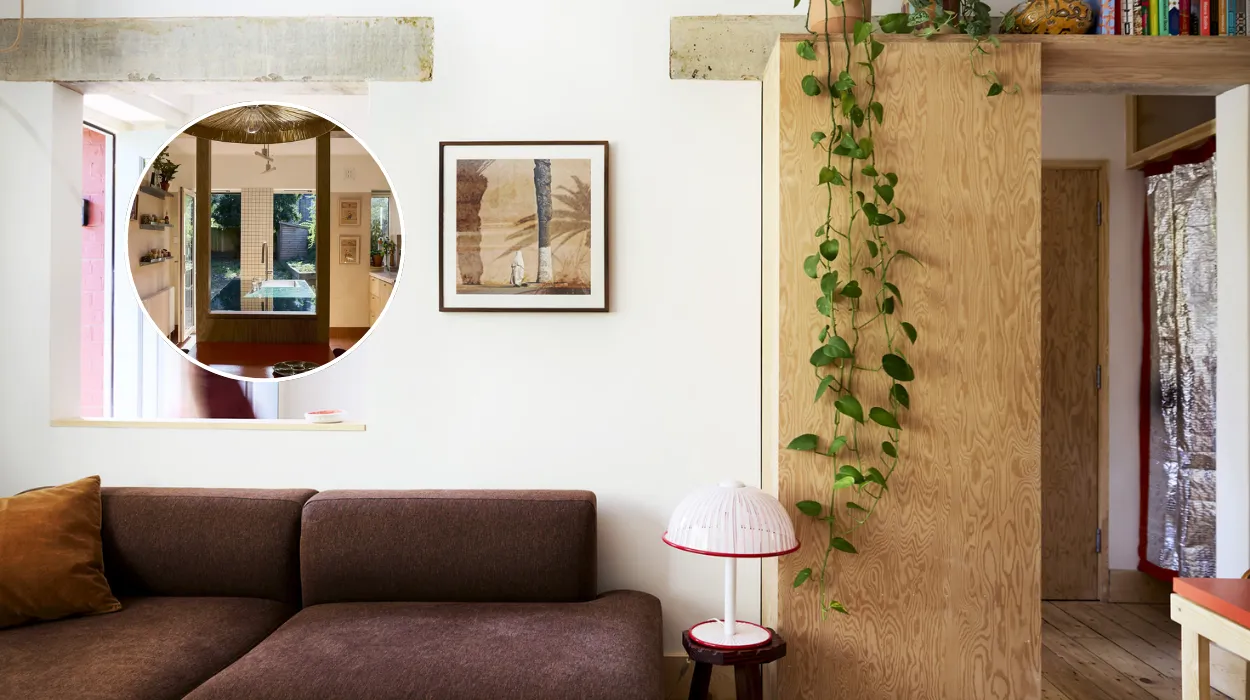
Significant structural alterations opened up the space dramatically. Tianna Williams of Wallpaper reports that Studio Naama perforated the corridor with windows, curtains, and enlarged throughways while removing an interior wall that once divided the apartment, enabling spaces to blend seamlessly.
Additional features include a new hatch connecting the office to the kitchen and a bespoke door providing a garden view for Sky, the family dog.
These modifications play with diagonal views and natural light, lowering windows and incorporating hidden surprises like a pull-down bedframe and built-in fireplace to spark curiosity.
How Did the Collaboration with Clients Unfold?
Close partnership defined the process, with Studio Naama prioritising client involvement. As per Natalie Savva and Mark Rist in Wallpaper, on-site meetings involved hands-on tasks:
“we met on site and built furniture together, dyed the plywood for the kitchen island, made a dining table and nightstands, shared meals and exchanged stories”.
The clients, initially new to design, evolved into adept participants, grasping procurement challenges and design limitations.
This approach infused playfulness, aligning the home with the family’s vibrant character.
What Materials and Design Philosophy Drive the Project?
Eclecticism and pluralism underpin the aesthetic, with emphasis on discovery at every stage. The result primes the residence for versatile use—hosting, daily living, and relaxation—as Tianna Williams notes in Wallpaper.
Light optimisation capitalises on morning and evening beams, enhancing openness.
Studio Naama’s broader ethos, evident in projects like the Lubetkin Apartment, favours tactile materials such as timber and exposed concrete, promoting spatial fluidity.
Why Does This Redesign Matter for East London Homes?
This Hackney transformation exemplifies adaptive reuse in a dense urban setting. By illusioning a standalone house and maximising light in a compact footprint, Skyler House offers a blueprint for boutique renovations.
It contrasts with bolder rebuilds, such as a 1950s South-East London semi rebuilt into a 200 sq m three-storey home by unnamed architects, retaining only the front elevation after planning delays, as covered by UKEstates.
Similarly, Kirk Architecture’s full refurbishment of a 1950s Hackney block flat focused on spatial improvements, per their project page.
How Does Studio Naama’s Work Fit into London’s Architecture Scene?
Studio Naama maintains a practice in London E9 5LN, spanning architecture, urbanism, and scenography, contactable at [email protected].
Their Hackney projects, including Skyler House and earlier efforts like the Lubetkin Apartment, showcase a commitment to revealing original structures while injecting contemporary vitality.
Tianna Williams, Wallpaper’s staff writer specialising in design and architecture, highlighted the project’s nuances, drawing from interviews with emerging architects.
What Makes This Apartment Ideal for Modern Living?
The final design fosters fluidity and joy. Open-plan blending suits family life, with pet-friendly details like Sky’s garden door enhancing usability.
Hidden elements encourage exploration, from the bedframe to fireplace, embodying the studio’s discovery ethos.
Primed for social and solitary pursuits, it reflects client-driven innovation in East London’s evolving residential landscape.

