Key Points
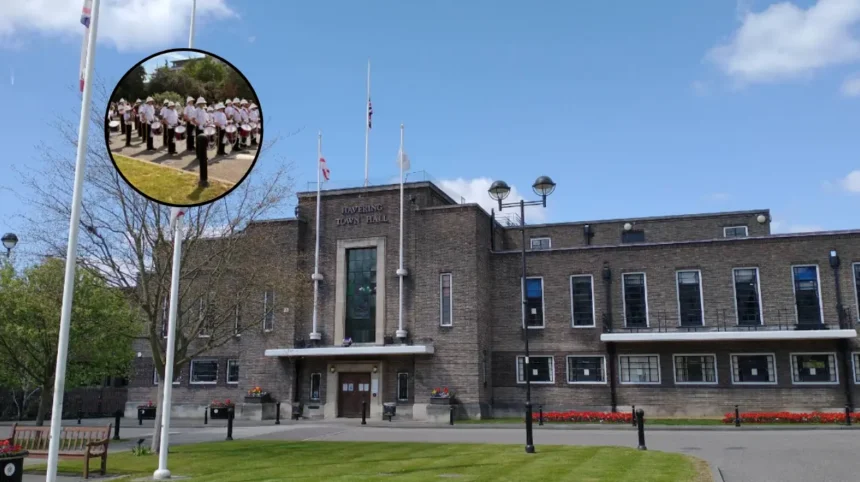
- Havering marked Armed Forces Day with a parade through the centre of Romford.
- Veterans, serving personnel, cadets and supporters took part in the event.
- The borough’s three MPs — Andrew Rosindell, Margaret Mullane and Julia Lopez — attended.
- Havering Council was represented by Council Leader Councillor Keith Prince.
- Deputy Lieutenant Nick Bracken OBE and Mick Murray MBE were also present.
- Havering Police were represented by Inspector Connolly, who attended with officers.
- The event was described as a day of pride, remembrance and gratitude for the Armed Forces.
Havering (East London Times) June 29, 2026, came together in Romford to mark Armed Forces Day with a parade that brought together veterans, serving personnel, cadets, councillors, police representatives and local supporters in a public show of respect for those who have served, and continue to serve, in the British Armed Forces.
What happened in Romford?
Havering celebrated Armed Forces Day with a parade through the heart of Romford, according to the borough’s own report.
The event was framed as a community tribute to service personnel past and present, with the borough highlighting an atmosphere of pride and remembrance throughout the day.
The report said the parade drew together several strands of local civic life, including elected representatives, uniformed personnel and members of the public.
The account stated that veterans, serving personnel and cadets marched through the town centre as supporters looked on.
The event was presented as one of collective recognition, with the borough’s message centred on gratitude for the Armed Forces and those connected to them.
Who attended the parade?
The borough reported that Havering’s three Members of Parliament — Andrew Rosindell, Margaret Mullane and Julia Lopez — were in attendance. It also said Havering Council was represented by Council Leader Councillor Keith Prince, while Deputy Lieutenant Nick Bracken OBE and Mick Murray MBE joined the celebrations.
Havering Police were represented by Inspector Connolly, who attended alongside officers in support of the event.
The inclusion of political, civic and police representatives underlined the broad local backing for the parade and its message of recognition for service.
Why is Armed Forces Day marked?
Armed Forces Day is used to recognise the work of serving personnel, veterans, cadets and military families, and local ceremonies often combine public ceremony with community participation.
In this case, Havering’s account presented the parade as a borough-wide act of tribute, with the event designed to bring people together in a visible expression of support.
The report did not set out policy changes, funding decisions or any wider administrative announcement linked to the parade.
Instead, it focused on the ceremonial and community elements of the day, with emphasis placed on respect, remembrance and gratitude.
How did the borough describe the day?
Havering described the event as “a memorable day of pride, remembrance and gratitude” for the Armed Forces.
That wording was used to frame the parade as a commemorative moment rather than a political or operational announcement.
The borough also invited readers to view a picture story from the event, suggesting that the visual record formed part of how the celebration was being shared with residents. The report positioned the parade as a civic occasion rooted in public recognition and local participation.
What does the parade show about local support?
The turnout of MPs, council leadership, deputy lieutenants and police representatives suggests the event carried strong symbolic importance within the borough.
The report indicates that Havering wanted the occasion to function not only as a parade, but also as a public demonstration of respect for military service.
The participation of cadets and serving personnel also gave the event a multi-generational character, linking current service with past contributions.
By bringing these groups into one parade, the borough underlined the continuity of military tradition and local civic support.
Background to the development
Armed Forces Day is an annual moment for public recognition of the Armed Forces, and local authorities often use it to host parades, ceremonies or commemorative events.
In Havering, the day was marked in Romford with a parade and local attendance from civic leaders, elected representatives and police.
The borough’s report did not mention a new initiative launched alongside the parade, nor did it announce any changes to local Armed Forces support services. Its focus remained on the ceremony itself and on the symbolic importance of the occasion.
Prediction: what could this mean for residents and service communities?
For residents, events like this can strengthen awareness of local military connections and encourage attendance at future civic commemorations.
For veterans, serving personnel and cadets, the parade may help reinforce a sense of public recognition and community belonging.
For local authorities, such ceremonies can also help maintain visible links between the council, police, MPs and community groups on occasions of shared national significance.
In practical terms, the main effect is likely to be reputational and ceremonial rather than administrative, with the event reinforcing Havering’s public support for the Armed Forces.