Key Points:
- Misinformation and online rumours have targeted Havering Council’s newly opened Family Welcome Centre in Harold Hill, East London.
- Council Leader Keith Prince publicly refuted claims regarding who is residing at the facility and how it is being operated.
- Official statements clarify that the centre is exclusively designed to house local Havering families currently in temporary accommodation to whom the local authority owes a statutory housing duty.
- The facility provides secure, short-term accommodation for local parents and children while the council assists them in securing long-term housing solutions.
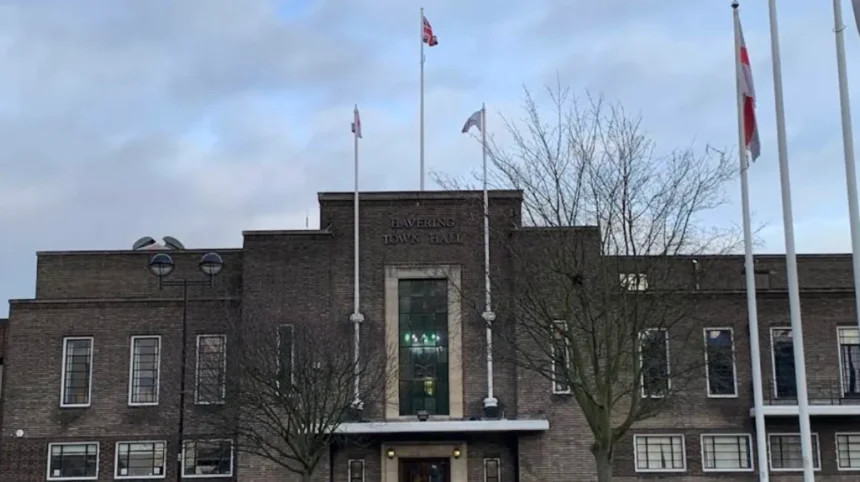
Harold Hill (East London Times) August 24, 2026 —Havering Council leader Keith Prince has issued a direct rebuttal against what he described as deliberate false rumours and misinformation spreading on social media platforms concerning the borough’s newly established housing facility in Harold Hill. The controversy centers on allegations regarding the demographic background and legal status of the residents accommodated within the site, which was recently opened to address local housing pressures.
Addressing the rising volume of online speculation, Councillor Prince sought to set the record straight regarding the operational purpose of the Family Welcome Centre. As reported by local news outlets covering the council’s declaration, Councillor Keith Prince stated that:
“There has been a lot of misinformation, and in some cases, deliberate untrue rumours, being spread on social media about the families moving into Havering’s new family welcome centre in Harold Hill.”
He further emphasised the local authority’s clear mandate regarding the site’s occupants, stating:
“Let me be absolutely clear: the claims being made about who is living at the centre and how it is being used are completely false.”
Who is actually being accommodated at the Harold Hill facility?
According to official council statements, the centre was specifically designed, built, and opened to provide temporary relief for families with strong local ties to the borough who are currently experiencing homelessness or severe housing instability. The council affirmed that access to the facility is strictly governed by statutory housing criteria rather than external placements.
Elaborating on the legal obligations and focus of the venue, Councillor Prince noted:
“The family welcome centre has been built to support Havering families who are in temporary accommodation and to whom the council already has a housing duty.”
He went on to highlight the domestic focus of the service:
“Its purpose is to provide local families, including children, with a safe, secure and comfortable place to live while they are being supported into longer-term housing.”
Explore More Harold Hill News
Harold Hill Building the Future Event: Police, Council Invite
Harold Hill Met Police and Havering Council partnership wins national award for crime crackdown
Background of the particular development
The establishment of dedicated family welcome centres represents a cornerstone of local government strategies across London to manage an escalating temporary accommodation crisis. In outer London boroughs like Havering, the pressure on housing stock has grown significantly over recent years due to rising private market rents, cost-of-living challenges, and a limited supply of affordable social housing.
Local authorities possess a legal duty under UK housing law to provide shelter to families with dependent children who become homeless through no fault of their own.
Traditionally, councils have been forced to rely heavily on commercial bed-and-breakfasts or private hotel bookings to meet these emergency demands—an approach that is both financially unsustainable for council budgets and disruptive for children’s education and family well-being.
Purpose-built facilities like the Family Welcome Centre in Harold Hill are designed to mitigate these challenges by offering self-contained, high-quality temporary accommodation within the borough boundary. This ensures that children can remain enrolled in their local schools and families can retain access to local healthcare services and community support networks while permanent housing options are processed.
Prediction: How this development will affect local residents and service users
The public intervention by council leadership is likely to have immediate effects across several key groups within the community:
- For families residing in the centre: Clarifying the nature of the facility offers a measure of protection and reassurance to vulnerable families currently staying at the site. Misinformation campaigns can lead to targeted online harassment or local tension, so firm public rebuttals help safeguard residents’ security and privacy.
- For the broader Harold Hill community: Clear communication from local leadership aims to quell community anxiety generated by unverified social media commentary. By re-establishing that the centre serves long-standing local residents experiencing housing distress, the council seeks to foster neighbourhood integration rather than friction.
- For Havering Council’s policy execution: Countering false narratives promptly will enable local housing officers to maintain focus on service delivery without facing administrative delays or security complications at council properties. Moving forward, transparent updates regarding local housing deployments are likely to become standard practice to head off further misinformation.