Key Points
- Havering Council, London’s only Reform UK-led council, cancelled its annual Pride flag-raising ceremony with just three days’ notice on Friday, 30 May 2026
- The ceremony had been held every year since 2016 at the start of Pride Month in June at Havering Town Hall in Romford
- UNISON Greater London condemned the decision as “a cynical attempt to ignite culture wars in the borough”
- The union stated members were informed with less than 74 working hours’ notice following a policy change by the new Reform UK-led administration
- Labour councillors Matt Stanton and Trevor McKeever joined trade unions and community groups outside Havering Town Hall on Monday 1 June to protest the cancellation
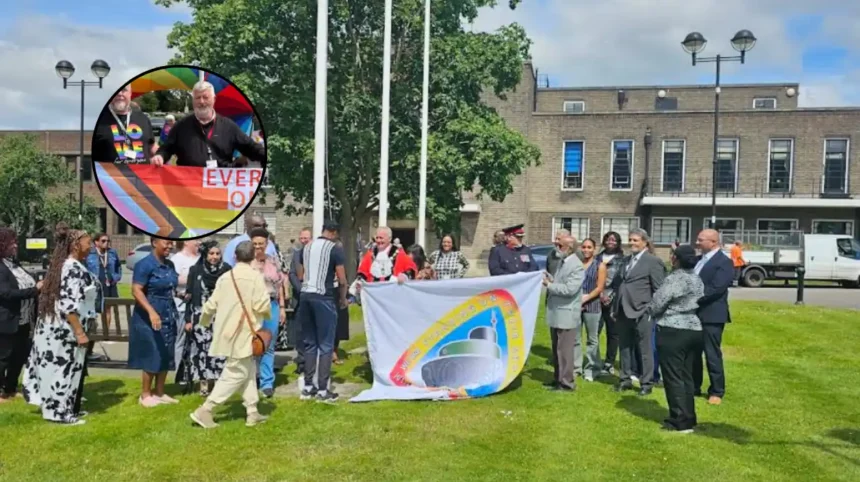
- Despite the official cancellation, UNISON members, councillors and activists held a solidarity gathering to ensure Pride month was still marked
- Carrie Kendall, a lifelong borough resident, said Havering “no longer feels like home” following the decision
- The council had previously raised the Progress Pride Flag in February 2026 to mark LGBT+ History Month
- UNISON members plan to gather outside Havering Town Hall at 11:50am on Monday 1 June to demonstrate solidarity with LGBT+ residents
- The Pride flag’s presence at Town Hall was the result of sustained local campaigning since 2018 when Labour councillors first pushed for it
Romford (East London Times) June 4, 2026 —Havering has become the focal point of a growing culture war debate after London’s only Reform UK council cancelled its annual Pride flag-raising ceremony with just three days’ notice, leaving residents feeling the borough “no longer feels like home”.
- Key Points
- What Exactly Happened to Havering’s Pride Flag Ceremony?
- Why Did The New Reform Leadership Cancel The Event?
- How Did Residents And Community Groups Respond?
- Did Havering Council Fly The Pride Flag Before 2026?
- What Is UNISON’s Position On The Cancellation?
- Who Are The Key Political Figures Involved?
- What Happened During The Solidarity Gathering?
- Background: The Development of Havering’s Pride Flag Ceremony
- Prediction: How This Development Can affect Havering Residents
What Exactly Happened to Havering’s Pride Flag Ceremony?
Havering Council announced on Friday, 30 May 2026 that the Pride flag ceremony would not go ahead, despite the event having been held every year since 2016 at the start of Pride Month in June. The official civic event was cancelled by the incoming Reform UK-led administration following a new policy change.
As reported by UNISON Greater London, members were informed with
“less than 74 working hours’ notice that the planned ceremony would no longer go ahead following a policy change introduced by the borough’s new Reform UK-led administration”.
Why Did The New Reform Leadership Cancel The Event?
The incoming Reform UK-led administration introduced a policy change preventing the Pride flag from being flown outside Havering Town Hall. UNISON has described the move as
As reported by The Havering Daily,
“The cancellation comes despite the Pride flag’s presence at Havering Town Hall being the result of sustained local campaigning. In 2018, Labour councillors Matt Stanton and Trevor McKeever first pushed for the flag to be raised”.
How Did Residents And Community Groups Respond?
Carrie Kendall, who has lived in the borough all of her life, said Havering “no longer feels like home” following the cancellation.
Labour councillors Matt Stanton and Trevor McKeever joined trade unions and local community groups outside Havering Town Hall on Monday 1 June 2026 to protest the decision.
The official civic event was cancelled, but local residents, UNISON representatives and activists held a solidarity gathering to ensure the occasion was still marked.
UNISON members, councillors and campaign groups will gather outside Havering Town Hall at 11:50am on Monday 1 June to demonstrate solidarity with LGBT+ residents, workers and families during Pride month.
Did Havering Council Fly The Pride Flag Before 2026?
Yes. The Pride flag ceremony had been held annually since 2016 at the start of Pride Month in June. Additionally, Havering Council raised the Progress Pride Flag on 2 February 2026 to mark the start of LGBT+ History Month 2026.
The flag raising on 2 February
“signals the start of a month of activities to celebrate LGBT+ history”.
This confirms the council had previously supported LGBT+ visibility before the new Reform UK leadership took control.
What Is UNISON’s Position On The Cancellation?
UNISON Greater London has condemned Havering Council’s decision, stating the cancellation
“signals Reform intent to stoke division in Havering”.
The union said the move prevents the Pride flag from being flown outside Havering Town Hall.
As reported by UNISON on their official statement,
“While the new Reform-led Council has chosen to cancel and ban the annual LGBT+ Pride flag display, our support for fairness, respect and equality remains unwavering”.
Who Are The Key Political Figures Involved?
- Matt Stanton – Labour councillor who first pushed for the Pride flag in 2018
- Trevor McKeever – Labour councillor who joined Stanton in campaigning for the flag
- Carrie Kendall – Lifelong Havering resident who said the borough “no longer feels like home”
- Reform UK-led administration – New council leadership that introduced the policy banning the Pride flag
What Happened During The Solidarity Gathering?
Despite the cancellation of the official event, UNISON members, councillors and campaign groups held a solidarity gathering outside Havering Town Hall on Monday 1 June 2026. The gathering included trade unions, local community groups and activists who ensured Pride month was still marked in the borough.
UNISON Havering Local Government posted on Instagram:
“While the new Reform-led Council has chosen to cancel and ban the annual LGBT+ Pride flag display, our support for fairness, respect and equality remains unwavering”.
Background: The Development of Havering’s Pride Flag Ceremony
The Pride flag at Havering Town Hall is not a new addition but the result of years of local campaigning. In 2018, Labour councillors Matt Stanton and Trevor McKeever first pushed for the flag to be raised outside the Town Hall in Romford. Their efforts led to the ceremony becoming an annual event starting in 2016, held every year at the beginning of Pride Month in June.
The council demonstrated continued support for LGBT+ visibility when it raised the Progress Pride Flag on 2 February 2026 to mark LGBT+ History Month.
The Progress Pride Flag includes all colours of the original rainbow flag plus additional colours representing marginalised communities within the LGBT+ population.
The ceremony had become a fixed part of Havering’s cultural calendar, with the flag’s presence at Town Hall being
“the result of sustained local campaigning”
over nearly a decade. The 2026 cancellation breaks this seven-year tradition despite no previous cancellations since 2016.
Prediction: How This Development Can affect Havering Residents
This cancellation can significantly affect LGBT+ residents, workers and families in Havering by creating a sense of exclusion from their local community. Carrie Kendall’s statement that Havering
“no longer feels like home”
illustrates the emotional impact on lifelong residents who viewed the flag ceremony as a symbol of inclusion.
LGBT+ youth in the borough may feel less supported when their local council removes a visible symbol of acceptance.
The solidarity gathering organised by UNISON and Labour councillors indicates that community resistance is already forming, which could lead to increased political activism among residents who oppose the Reform UK administration’s decision.
Trade union members and community groups in Havering may become more engaged in local politics as a result of this controversy. The fact that UNISON organised a solidarity event within days of the cancellation shows that organised labour and community groups are ready to challenge the council’s policy.
Residents who value diversity and inclusion may reconsider their relationship with the borough, potentially affecting community cohesion. The cancellation has already sparked a culture war debate, which could polarise the community between those supporting the Reform UK administration’s policy and those defending LGBT+ visibility.
The solidarity gathering at 11:50am on Monday 1 June demonstrates that despite the official cancellation, community support for LGBT+ residents remains strong. This suggests that while the council has removed an official symbol, grassroots support for equality continues to thrive in Havering.